

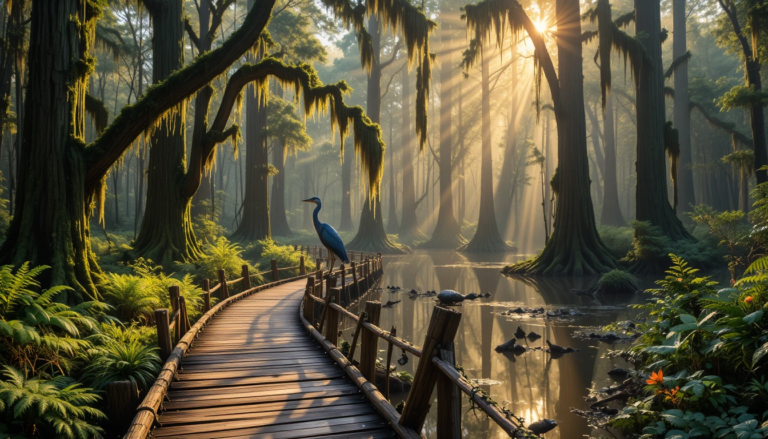
Nestled just outside Columbia, South Carolina, Congaree National Park remains one of America’s most underrated national parks. Unlike parks famous for towering mountains or dramatic deserts, Congaree captivates visitors with something equally extraordinary—its ancient floodplain forest filled with towering hardwood trees, winding waterways, abundant wildlife, and peaceful hiking trails.
Many travelers drive past South Carolina without realizing that it protects one of the most unique ecosystems in the United States. The park’s enormous champion trees, tranquil boardwalks, rich biodiversity, and quiet wilderness provide a completely different national park experience than places like Yellowstone or Yosemite. Here, nature unfolds slowly, inviting visitors to pause, listen to birdsong, paddle through calm creeks, and admire centuries-old forests.
Whether you’re planning a weekend getaway, a family vacation, or a road trip through the Southeast, this guide to 13 Treasures To Explore In Congaree National Park will help you uncover the park’s hidden gems, must-see attractions, outdoor adventures, and expert travel tips.
Quick Answer
Looking for the best experiences inside Congaree National Park? The park is home to one of the largest old-growth hardwood forests in North America and offers unforgettable adventures like walking the Boardwalk Loop, kayaking Cedar Creek, spotting wildlife, camping beneath giant trees, hiking peaceful forest trails, photographing towering cypress trees, and witnessing the magical synchronous fireflies that illuminate the forest each spring.
Why Congaree National Park Is Worth Visiting
Many people assume every national park is filled with towering mountains or dramatic canyons. Congaree proves that incredible beauty can also be found in quiet forests and slow-moving rivers.
Established as a national park in 2003, Congaree protects more than 26,000 acres of one of the largest intact old-growth bottomland hardwood forests remaining in North America. These ancient forests once covered much of the southeastern United States, but today only small portions remain.
Visitors come here to disconnect from busy city life and reconnect with nature. Instead of crowded overlooks, you’ll discover peaceful walking trails shaded by towering trees, reflective wetlands, abundant wildlife, and unforgettable paddling experiences.
The park also offers free admission, making it one of America’s most affordable national park adventures.
Congaree National Park at a Glance
| Feature | Details |
| State | South Carolina |
| Nearest City | Columbia |
| Entrance Fee | Free |
| Best Time to Visit | Spring & Fall |
| Famous For | Old-growth forest |
| Activities | Hiking, kayaking, camping, birdwatching |
| Family Friendly | Yes |
| Pet Friendly | Limited areas |
Your First Stop Inside the Park
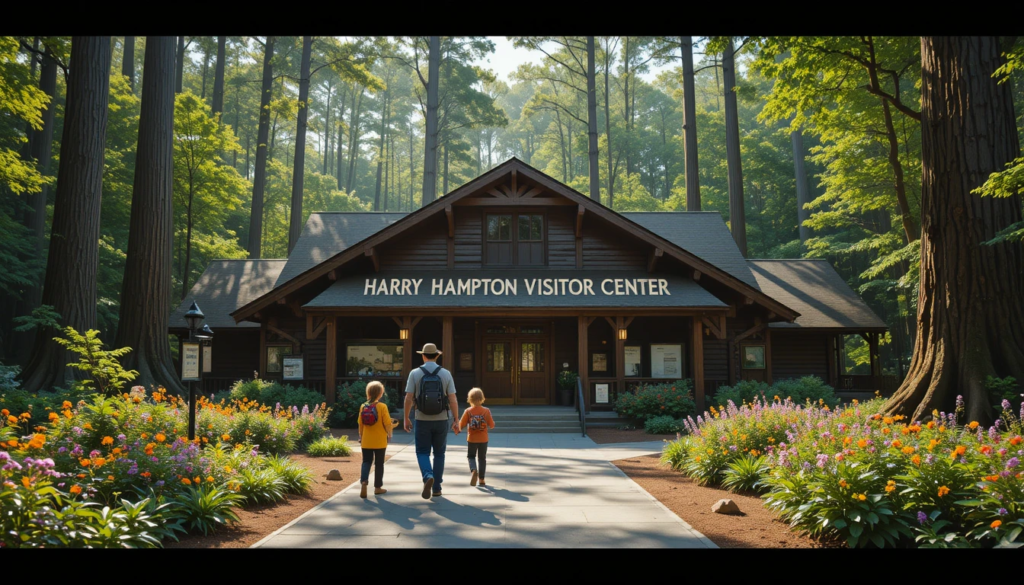
Every great national park adventure begins with understanding the landscape, and Harry Hampton Visitor Center is the perfect place to start. Located near the park entrance, the visitor center offers maps, exhibits, educational displays, and friendly park rangers who are eager to help you plan your day.
If this is your first visit, spend at least 20–30 minutes here before heading onto the trails. The exhibits explain how flooding shapes the forest, why Congaree is so biologically diverse, and what wildlife you might encounter during your visit.
The visitor center also provides updated trail conditions, weather information, and safety advice. Since seasonal flooding can temporarily close certain trails, checking current conditions here can save time and help you adjust your plans.
Families traveling with children will appreciate the Junior Ranger Program, which offers fun educational activities designed to help young visitors learn about the park while exploring its unique environment.
Highlights
- Free maps
- Educational exhibits
- Friendly park rangers
- Junior Ranger activities
- Gift shop
- Restrooms
- Water refill station
Photography Tip
Capture the visitor center early in the morning when the surrounding forest is beautifully lit by soft sunlight filtering through the trees.
The Most Famous Walk in Congaree
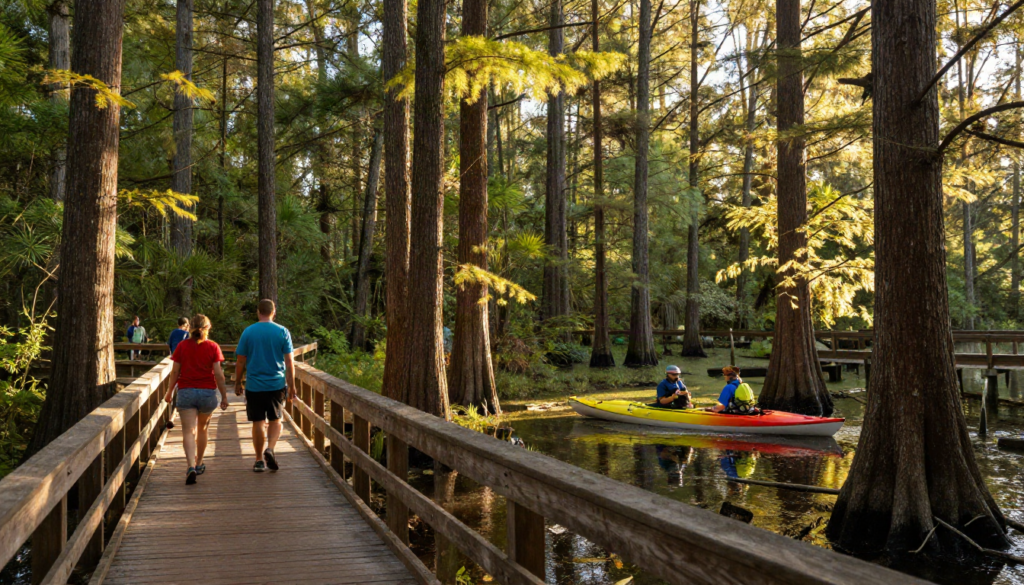
If you only have time for one experience inside the park, make it the Boardwalk Loop Trail. This elevated wooden pathway is one of the most iconic attractions in Congaree National Park and provides visitors with easy access to the heart of the old-growth forest.
Stretching approximately 2.6 miles, the loop takes hikers through towering hardwood trees, bald cypress, water tupelo, and lush vegetation without requiring difficult hiking skills.
The elevated boardwalk protects the delicate ecosystem while allowing visitors to experience flooded forests up close. Along the way, interpretive signs explain the park’s ecology, wildlife, and natural history.
One of the greatest aspects of the Boardwalk Loop is its accessibility. Families with young children, older adults, and visitors using wheelchairs can enjoy much of this remarkable trail.
Every season offers a different experience. Spring brings fresh greenery and blooming wildflowers. Summer fills the forest with birds, frogs, and insects. Autumn paints the trees in warm shades of gold and orange, while winter provides clearer views through the leafless canopy.
What You’ll See
- Giant loblolly pines
- Ancient hardwoods
- Bald cypress trees
- Water tupelo
- Forest wetlands
- Birds
- Squirrels
- Deer
- Colorful fungi
Trail Facts
| Feature | Information |
| Distance | 2.6 miles |
| Difficulty | Easy |
| Time | 1.5–2 hours |
| Wheelchair Accessible | Mostly Yes |
| Best Time | Morning |
Experience Congaree’s Quiet Side
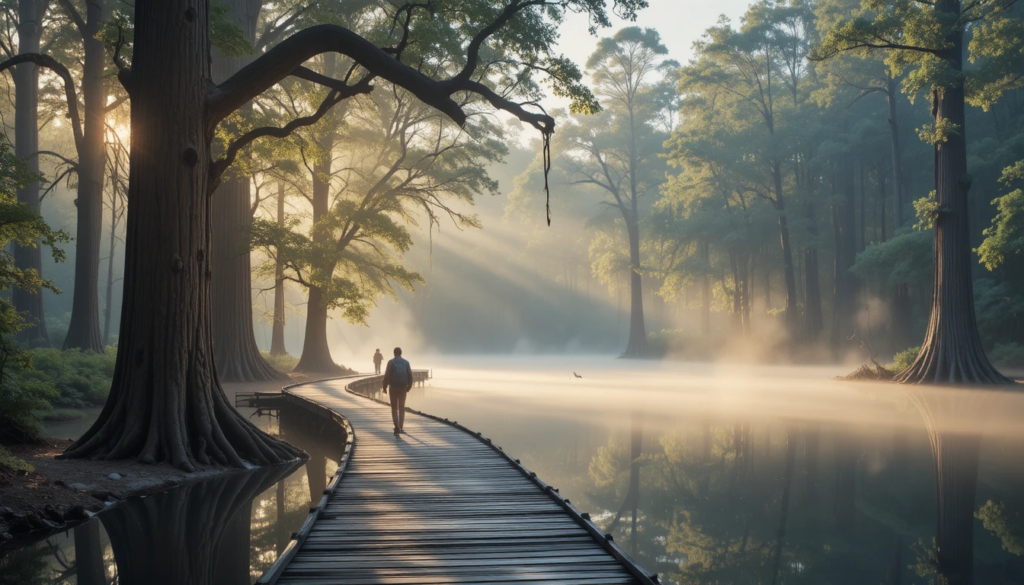
While the Boardwalk Loop attracts most first-time visitors, those looking for a more peaceful adventure should continue onto Weston Lake Loop Trail.
This scenic trail extends deeper into the forest, where crowds begin to disappear and nature becomes even more immersive. The path meanders beneath towering trees before reaching the tranquil waters of Weston Lake.
Although called a lake, Weston Lake is actually an old channel of the Congaree River that became separated over time. Today, it serves as an important habitat for turtles, fish, amphibians, and countless bird species.
Birdwatchers often consider this one of the park’s best wildlife-viewing locations. Depending on the season, visitors may spot woodpeckers, barred owls, herons, hawks, and colorful migratory birds.
The quiet atmosphere also makes this trail perfect for photographers seeking reflections of giant trees mirrored in calm water.
Unlike many crowded national park destinations, Weston Lake offers moments of true solitude. You may walk for several minutes without encountering another visitor, allowing you to appreciate the sounds of rustling leaves, singing birds, and distant frogs.
Why Visit Weston Lake?
- Peaceful hiking
- Excellent birdwatching
- Beautiful reflections
- Less crowded
- Scenic photography
- Wildlife viewing
See the Forest From the Water
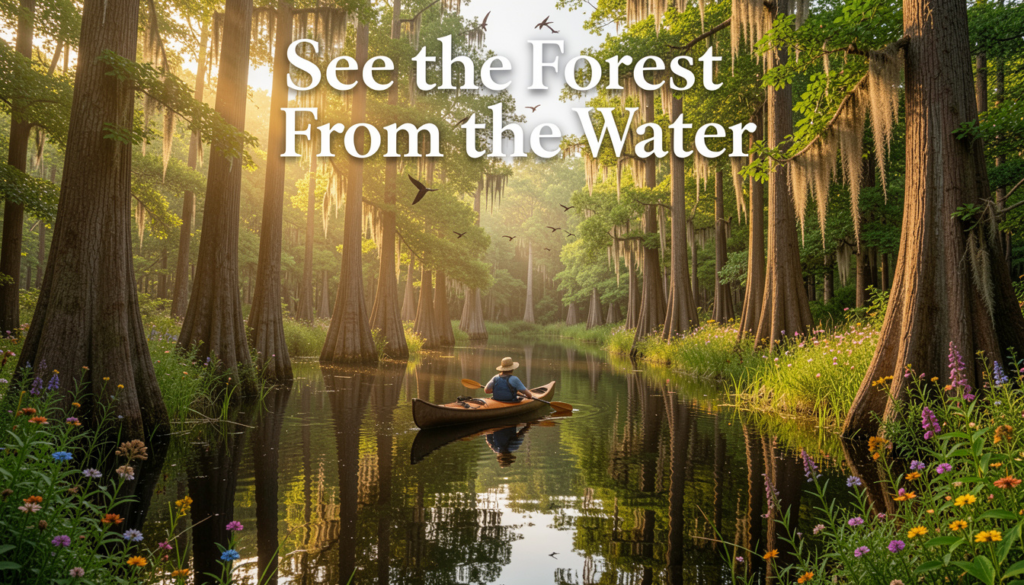
One of the most unforgettable ways to experience Congaree National Park is by kayaking or canoeing along Cedar Creek. While hiking reveals the beauty of the forest from the ground, paddling lets you glide silently through the heart of this remarkable ecosystem.
As you float beneath towering trees draped in Spanish moss, you’ll gain a completely different perspective of the park. The calm water reflects the massive trunks above, creating stunning mirror-like scenes that photographers love.
Cedar Creek is generally slow-moving, making it suitable for beginners during normal water conditions. Guided tours are available for those new to paddling, while experienced kayakers can enjoy self-guided adventures.
Wildlife sightings are common along the creek. Turtles bask on fallen logs, great blue herons hunt in shallow water, and river otters occasionally make playful appearances. Keep an eye out for owls resting in the trees and fish breaking the water’s surface.
The peaceful rhythm of paddling through the old-growth forest offers one of the most memorable experiences in Congaree National Park, especially during the quiet hours of early morning or late afternoon when wildlife is most active.
Discover Some of the Tallest Trees in Eastern North America
One of the biggest reasons travelers include 13 Treasures To Explore In Congaree National Park on their bucket list is the opportunity to see some of the tallest trees in the eastern United States. Congaree National Park is internationally recognized for its remarkable collection of champion trees—massive specimens that have reached extraordinary heights thanks to the park’s rich soil and regular flooding.
Unlike mountain forests where trees compete on steep slopes, Congaree’s floodplain provides fertile ground that allows hardwoods to grow for centuries. Many of these giants are over 100 feet tall, creating a breathtaking canopy that filters sunlight into beautiful rays throughout the forest.
Walking beneath these towering trees is a humbling experience. Looking upward, visitors often feel as though they are standing inside a natural cathedral, with enormous trunks rising high above the forest floor.
Trees You May See
- Loblolly pine
- Sweetgum
- Cherrybark oak
- American elm
- Water tupelo
- Bald cypress
- Overcup oak
- Green ash
- American beech
These impressive trees support hundreds of plant and animal species, making them a vital part of one of the most biologically diverse forests in North America.
Photography Tip
Bring a wide-angle lens or use your smartphone’s ultra-wide camera mode to capture the incredible height of the trees. Early morning light creates dramatic sunbeams through the canopy.
A True Wilderness Adventure
If you’re looking for a more rugged experience, the Kingsnake Trail is one of the park’s hidden gems. Unlike the elevated Boardwalk Loop, this natural trail takes hikers deep into the untouched wilderness of Congaree.
The trail passes through dense forest, seasonal wetlands, and remote sections where you’ll feel completely immersed in nature. During wetter months, portions of the trail may become muddy or even flooded, adding to the adventure.
This trail is best suited for hikers who enjoy exploring less-developed paths and don’t mind getting their boots dirty.
What Makes It Special?
Unlike many heavily visited national parks, Kingsnake Trail offers genuine solitude. It’s common to hike long stretches without seeing another person, making it ideal for those seeking peace and quiet.
Nature lovers often choose this trail for:
- Wildlife photography
- Forest immersion
- Birdwatching
- Quiet hiking
- Nature journaling
Trail Snapshot
| Feature | Details |
| Difficulty | Moderate |
| Trail Type | Natural surface |
| Best Season | Fall and Spring |
| Family Friendly | Older children |
| Dogs Allowed | No |
Safety Tip
Wear waterproof hiking boots and insect repellent. Trail conditions can change after heavy rain, so check updates at the visitor center before setting out.
A Short Hike With Big Rewards
The Bluff Trail is one of the easiest ways to experience the transition between Congaree’s upland forests and its famous floodplain ecosystem.
Although it’s shorter than many other trails, it offers an excellent introduction to the park’s changing landscapes. The elevated terrain provides different vegetation, allowing visitors to compare two distinct forest environments within a single walk.
Because the trail is relatively dry year-round, it’s often a great choice after periods of heavy rain when lower trails may be flooded.
Why Families Love It
The Bluff Trail is perfect for visitors who:
- Have limited time
- Prefer easier walks
- Are traveling with children
- Want excellent wildlife opportunities
- Enjoy peaceful forest scenery
Interpretive signs along the route explain how flooding shapes the surrounding environment and why the floodplain supports such extraordinary biodiversity.
One of America’s Most Spectacular Natural Events
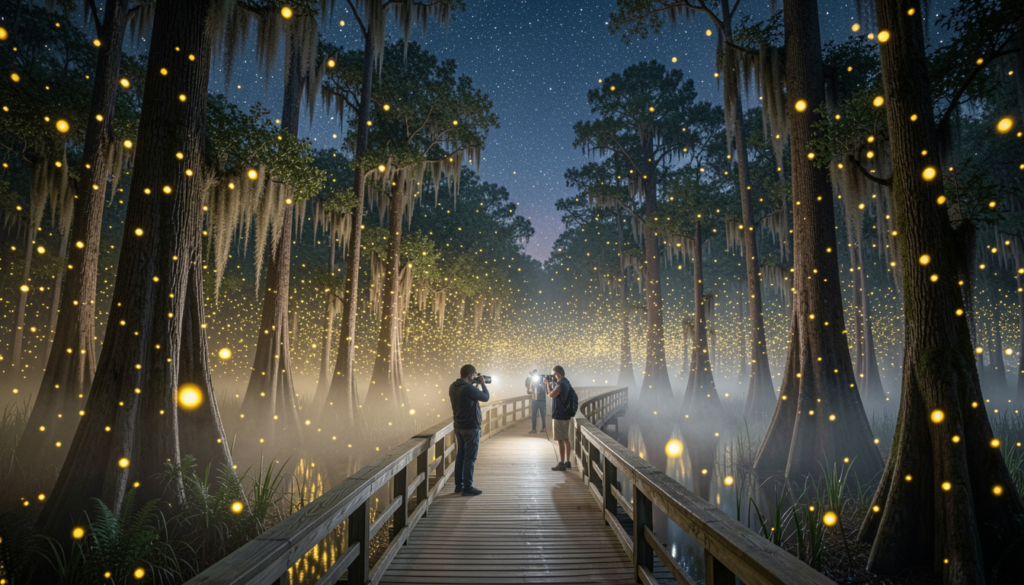
Perhaps the most magical experience among the 13 Treasures To Explore In Congaree National Park is witnessing the famous synchronous fireflies.
Every year, usually during late spring, thousands of fireflies flash together in near-perfect synchronization. The forest transforms into a glowing wonderland as tiny lights blink in harmony beneath the towering trees.
Only a handful of places in the world offer this extraordinary phenomenon, making Congaree one of the most unique national parks in the United States.
Because the event has become increasingly popular, visitor access is managed through a lottery system to help protect the fragile ecosystem.
Why Are They Special?
Unlike ordinary lightning bugs that flash randomly, synchronous fireflies coordinate their flashes with one another.
Scientists continue studying why they behave this way, but many believe synchronized flashing helps attract mates while improving reproductive success.
Best Viewing Tips
- Visit during late spring.
- Arrive before sunset.
- Wear dark clothing.
- Avoid using bright flashlights.
- Use a red-light flashlight if needed.
- Stay on designated trails.
- Respect quiet viewing areas.
Photography Advice
Capturing fireflies requires patience and a tripod. Long-exposure photography produces the best results while minimizing disturbance to other visitors.
Nature Lovers Will Feel Right at Home
Wildlife watching is one of the biggest highlights of visiting Congaree National Park.
Because the park protects one of the largest remaining floodplain forests in the Southeast, it supports an incredible variety of animals throughout the year.
Keep your eyes open and you may encounter:
Mammals
- White-tailed deer
- Bobcats (rare)
- River otters
- Raccoons
- Gray foxes
- Opossums
- Wild pigs (occasionally)
Birds
Congaree is considered one of the best birdwatching destinations in South Carolina.
Popular sightings include:
- Great blue herons
- Pileated woodpeckers
- Barred owls
- Red-shouldered hawks
- Prothonotary warblers
- Wood ducks
- Wild turkeys
Spring migration brings even more colorful songbirds to the park, making it an excellent destination for bird photographers.
Reptiles and Amphibians
Visitors may also encounter:
- Turtles
- Frogs
- Salamanders
- Water snakes
- Kingsnakes
- Lizards
Remember that snakes play an important role in the ecosystem and are generally not aggressive if left undisturbed.
Best Wildlife Viewing Times
| Time | Wildlife Activity |
| Sunrise | Excellent |
| Early Morning | Excellent |
| Midday | Moderate |
| Late Afternoon | Very Good |
| Sunset | Excellent |
| Night | Frogs, owls, insects |
Comparing the Most Popular Activities
| Activity | Difficulty | Time Needed | Best For |
| Boardwalk Loop | Easy | 2 Hours | Families |
| Kayaking | Moderate | 3–4 Hours | Adventure seekers |
| Wildlife Watching | Easy | 1–3 Hours | Nature lovers |
| Kingsnake Trail | Moderate | Half Day | Experienced hikers |
| Firefly Viewing | Easy | Evening | Photographers |
| Visitor Center | Easy | 30 Minutes | First-time visitors |
Why Congaree Is Different From Other National Parks
Many travelers compare Congaree with parks like the Great Smoky Mountains, Everglades, or Shenandoah. While those destinations each have their own appeal, Congaree offers something truly distinctive.
| Feature | Congaree National Park | Typical Mountain Park |
| Main Attraction | Old-growth floodplain forest | Mountain scenery |
| Crowds | Usually light | Often heavy |
| Entrance Fee | Free | Often requires a fee |
| Best Activity | Hiking and kayaking | Hiking and scenic drives |
| Wildlife | Birds, amphibians, river life | Large mammals, birds |
| Landscape | Wetlands and towering hardwoods | Peaks, valleys, forests |
This unique combination of peaceful forests, giant trees, and calm waterways makes 13 Treasures To Explore In Congaree National Park an unforgettable experience for visitors seeking a quieter side of America’s national parks.
- Treasure #13 – Seasonal Scenic Drives & Nearby Attractions
- Best Time to Visit
- Seasonal Comparison Table
- Visitor Checklist
- Pros & Cons Table
- Expert Tips
- Common Mistakes to Avoid
Spend a Night in One of America’s Quietest National Parks
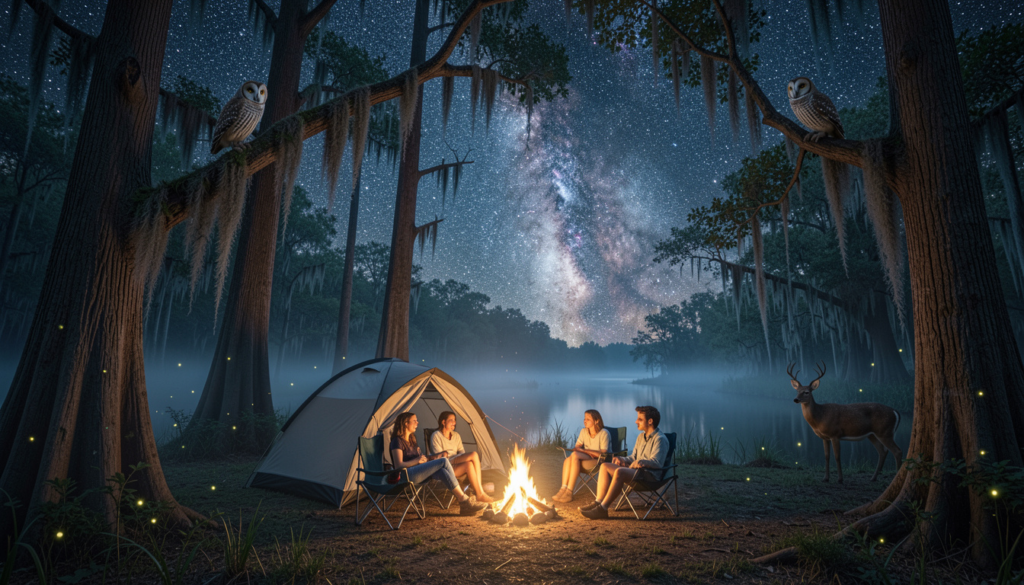
If you truly want to experience the magic behind 13 Treasures To Explore In Congaree National Park, consider staying overnight. Once the day visitors leave, the park becomes even more peaceful. The sounds of birds fade into the chorus of frogs, crickets, and owls, creating an unforgettable wilderness experience.
Camping allows you to enjoy sunrise over the floodplain, cooler morning temperatures, and excellent wildlife viewing before the trails become busy.
Congaree National Park offers both frontcountry and backcountry camping, giving visitors the chance to choose the experience that best matches their adventure level.
Frontcountry Camping
Located within walking distance of the parking area, frontcountry campsites are ideal for families and first-time campers.
Benefits include:
- Easy access
- Nearby restrooms
- Picnic tables
- Fire rings (where permitted)
- Convenient hiking access
Backcountry Camping
For experienced outdoor enthusiasts, backcountry camping provides a deeper wilderness experience. After obtaining the required permit, campers can hike into remote areas and spend the night surrounded by towering hardwood forests.
This option offers incredible opportunities for:
- Stargazing
- Wildlife observation
- Nature photography
- Solitude
- Backpacking adventures
Camping Essentials Checklist
- Tent
- Sleeping bag
- Sleeping pad
- Headlamp
- Extra batteries
- Water bottles
- Water filter
- First-aid kit
- Insect repellent
- Rain jacket
- Hiking boots
- Snacks and meals
- Portable charger
- Map or offline GPS
A Paradise for Bird Lovers
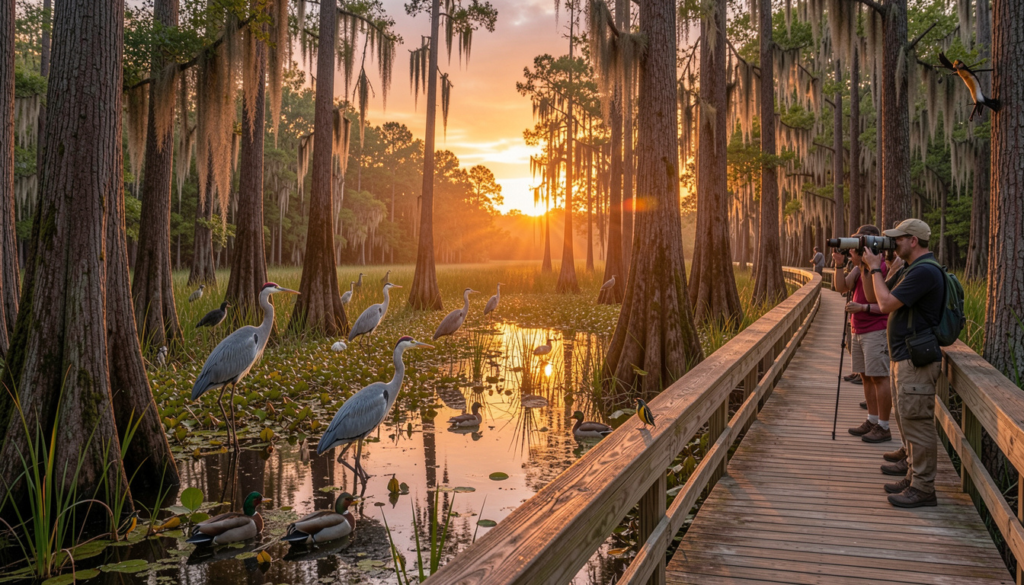
Congaree National Park is recognized as one of the best birdwatching destinations in the southeastern United States. More than 200 bird species have been recorded here, making it a favorite spot for both beginner birders and experienced wildlife photographers.
The combination of wetlands, forests, and waterways creates ideal habitats for resident and migratory birds throughout the year.
Birds You Might See
- Pileated Woodpecker
- Barred Owl
- Great Blue Heron
- Green Heron
- Red-Shouldered Hawk
- Wild Turkey
- Wood Duck
- Prothonotary Warbler
- Carolina Wren
- Northern Cardinal
- Red-Bellied Woodpecker
Spring migration is especially rewarding, as colorful songbirds return to the forest and fill the air with their calls.
Best Birdwatching Locations
- Boardwalk Loop Trail
- Weston Lake Loop
- Cedar Creek
- Bluff Trail
- Harry Hampton Visitor Center area
Best Time for Birdwatching
| Season | Bird Activity |
| Spring | Excellent |
| Summer | Very Good |
| Fall | Excellent |
| Winter | Good |
Pro Tip
Bring binoculars and arrive shortly after sunrise when birds are most active. Walk slowly and pause often.many species reveal themselves through movement or song before they’re visible.
Every Corner Is Picture-Perfect
Whether you’re carrying a professional DSLR or simply using your smartphone, Congaree National Park offers endless opportunities for incredible photography.
The park’s towering trees, reflective waterways, seasonal wildflowers, and rich wildlife create dramatic compositions throughout the year.
Best Photography Subjects
- Giant champion trees
- Bald cypress reflections
- Cedar Creek
- Forest boardwalks
- Moss-covered logs
- Wildflowers
- Mushrooms
- Fireflies (seasonal)
- Wildlife
- Sunrise light rays
Golden Hour Photography
The hour after sunrise and before sunset produces the most beautiful lighting in the forest. Soft sunlight filtering through the trees creates dramatic beams and enhances the rich green colors of the landscape.
Rainy Days Can Be Magical
Don’t cancel your plans because of light rain. Wet leaves become more vibrant, tree trunks darken with moisture, and puddles create beautiful reflections. Mist drifting through the forest can also add an enchanting atmosphere to your photos.
Photography Gear Checklist
- Camera or smartphone
- Wide-angle lens
- Telephoto lens for wildlife
- Tripod
- Polarizing filter
- Extra batteries
- Lens cloth
- Waterproof camera bag
Extend Your South Carolina Adventure

While Congaree National Park is the highlight of the region, several nearby attractions make it easy to turn your visit into a memorable weekend getaway.
Columbia, South Carolina
Located about 30 minutes from the park, Columbia offers restaurants, museums, shopping, and family-friendly attractions.
Popular stops include:
- Riverfront Park
- South Carolina State Museum
- Columbia Canal
- Soda City Market (weekends)
- Local barbecue restaurants
Congaree River Blue Trail
Outdoor enthusiasts can continue their adventure by paddling additional sections of the Congaree River. The Blue Trail provides scenic water routes that showcase South Carolina’s natural beauty from a different perspective.
Sesquicentennial State Park
Often called “Sesqui,” this nearby park features picnic areas, fishing, paddleboats, and family-friendly hiking trails, making it a great complement to a Congaree itinerary.
Historic Columbia
History lovers can explore preserved homes, gardens, and museums that tell the story of South Carolina’s past.
Best Time to Visit Congaree National Park
Each season offers something unique, so the best time to visit depends on the type of experience you’re looking for.
| Season | Why Visit | Things to Keep in Mind |
| Spring | Wildflowers, bird migration, pleasant weather, fireflies | Busy during firefly event |
| Summer | Lush forest, kayaking, long days | Heat, humidity, mosquitoes |
| Fall | Cooler temperatures, colorful foliage | Great hiking conditions |
| Winter | Quiet trails, fewer visitors, clear views | Some wildlife less active |
Overall Recommendation
For most travelers, spring and fall provide the best combination of comfortable weather, active wildlife, and excellent hiking conditions.
Visitor Checklist
Before heading to Congaree National Park, make sure you’ve packed everything you need for a safe and enjoyable trip.
Essentials
- ✔ Comfortable hiking shoes
- ✔ Water bottle
- ✔ Sunscreen
- ✔ Hat
- ✔ Bug spray
- ✔ Lightweight rain jacket
- ✔ Snacks
- ✔ Camera
- ✔ Binoculars
- ✔ Portable phone charger
- ✔ Printed or downloaded trail map
- ✔ Small first-aid kit
Pros and Cons of Visiting Congaree National Park
| Pros | Cons |
| Free entrance | Mosquitoes during warmer months |
| Incredible old-growth forest | Humid summers |
| Excellent kayaking | Seasonal flooding can affect trails |
| Easy hiking options | Limited food services inside the park |
| Great wildlife viewing | Fewer amenities than larger parks |
| Less crowded than many national parks | Public transportation is limited |
Expert Tips for Visiting Congaree National Park
- Start your day early to enjoy cooler temperatures and better wildlife sightings.
- Check water levels before hiking or kayaking, especially after heavy rain.
- Wear lightweight, moisture-wicking clothing to stay comfortable in the humid climate.
- Stay on marked trails and boardwalks to help protect the fragile ecosystem.
- Bring plenty of drinking water, even on shorter hikes.
- Download offline maps since cell service can be unreliable in some areas.
- Use binoculars to spot birds and wildlife from a respectful distance.
- Visit during weekdays if possible to enjoy a quieter experience.
- If you’re planning to see the synchronous fireflies, apply for the seasonal viewing lottery well in advance.
- Leave no trace by packing out all trash and respecting wildlife.
Common Mistakes Visitors Make

Many first-time visitors underestimate the unique conditions of Congaree National Park. Avoid these common mistakes to make the most of your trip.
Forgetting Insect Repellent
Mosquitoes and other insects are common, especially during spring and summer. A quality insect repellent can make your visit much more enjoyable.
Wearing the Wrong Footwear
Some trails can become muddy after rain. Waterproof hiking shoes or boots provide better comfort and traction.
Ignoring Weather and Flood Conditions
Heavy rainfall can temporarily flood certain trails. Always check current park conditions before heading out.
Bringing Too Little Water
Even easy walks can feel more demanding in warm, humid weather. Carry enough water to stay hydrated.
Expecting Mountain Views
Congaree is famous for its towering trees, wetlands, and peaceful waterways—not dramatic peaks. Embrace its unique beauty.
Feeding Wildlife
Feeding animals disrupts their natural behavior and can be harmful to both wildlife and visitors.
Rushing Through the Park
Congaree rewards slow exploration. Take your time to notice birds, wildflowers, fungi, and the quiet beauty of the ancient forest.
FAQs
What is Congaree National Park best known for?
Congaree National Park is best known for protecting one of the largest remaining old-growth bottomland hardwood forests in North America. Visitors come to admire its towering champion trees, scenic boardwalks, peaceful kayaking routes, rich biodiversity, and the famous synchronous fireflies that light up the forest each spring.
How many days do you need to explore Congaree National Park?
Most visitors can experience the park’s highlights in one full day, including the Boardwalk Loop Trail, Harry Hampton Visitor Center, and a short hike. However, spending two to three days allows time for kayaking, camping, birdwatching, wildlife photography, and exploring quieter trails.
Is Congaree National Park worth visiting?
Absolutely. Although it doesn’t have mountains or waterfalls like some other national parks, Congaree offers a completely different experience. Its ancient forest, giant trees, peaceful atmosphere, and excellent wildlife viewing make it one of the most unique parks in the United States.
What is the best time to visit Congaree National Park?
Spring and fall are generally the best seasons to visit. Spring brings blooming wildflowers, pleasant weather, active wildlife, and the spectacular firefly display, while fall offers cooler temperatures and colorful foliage that make hiking especially enjoyable.
Can beginners kayak in Congaree National Park?
Yes. Cedar Creek is usually calm and suitable for beginners during normal water conditions. Guided kayaking tours are available for visitors who are new to paddling, making it an accessible adventure for most travelers.
Are there bears or dangerous animals in Congaree National Park?
Black bears are not commonly seen in the park. Most wildlife includes deer, river otters, birds, turtles, snakes, and amphibians. As with any natural area, visitors should observe wildlife from a safe distance and avoid feeding animals.
Is Congaree National Park family-friendly?
Yes. Families enjoy the accessible Boardwalk Loop Trail, educational exhibits at the Harry Hampton Visitor Center, Junior Ranger activities, wildlife viewing, and easy nature walks. It’s a great destination for visitors of all ages.
Is there an entrance fee for Congaree National Park?
No. One of the best things about visiting Congaree National Park is that admission is completely free, making it an excellent destination for budget-conscious travelers.
What should I pack for a trip to Congaree National Park?
Pack comfortable hiking shoes, lightweight clothing, insect repellent, sunscreen, a refillable water bottle, snacks, a rain jacket, binoculars, a camera, and a trail map. If you’re camping or kayaking, bring the appropriate gear and check weather conditions before your trip.
What are the top experiences included in the 13 Treasures To Explore In Congaree National Park?
Some of the top experiences include:
- Walking the Boardwalk Loop Trail
- Visiting the Harry Hampton Visitor Center
- Seeing champion trees
- Hiking the Weston Lake Loop
- Exploring the Kingsnake Trail
- Kayaking Cedar Creek
- Watching synchronous fireflies
- Camping beneath ancient trees
- Birdwatching
- Photographing the park’s beautiful floodplain forest
Conclusion
Congaree National Park may not be the largest or most famous national park in the United States, but it delivers an unforgettable experience for travelers who appreciate nature, tranquility, and outdoor adventure. From the towering champion trees and scenic Boardwalk Loop Trail to the peaceful waters of Cedar Creek and the magical glow of synchronous fireflies, every visit reveals a different side of this remarkable landscape.
Whether you’re planning a quick day trip from Columbia or a relaxing weekend immersed in the wilderness, these 13 Treasures To Explore In Congaree National Park showcase why this hidden gem deserves a place on every travel bucket list. With free admission, family-friendly activities, diverse wildlife, and one of the country’s most impressive old-growth forests, Congaree offers memories that last long after your hike ends.
So pack your hiking boots, bring your camera, and take time to slow down. The quiet beauty of Congaree National Park is waiting to be explored.
Read More India Travel Guide 2026: 25 Stunning Places You Must Visit This Year
