

Planning a spiritual journey becomes more meaningful when you understand the Hindu calendar and the traditions connected with each day. Aaj Ka Panchang for 29 September 2026 provides useful details about Tithi, Nakshatra, Hindu observances, and important time periods. These details can help travelers plan temple visits, prayers, fasting, cultural experiences, and peaceful moments during their journey.
For travelers interested in Hindu spirituality and cultural exploration, Aaj Ka Panchang can be a helpful starting point for organizing a thoughtful trip. Whether you are visiting a famous temple, exploring an ancient pilgrimage city, or planning a family spiritual getaway, understanding the day’s Panchang can add cultural depth to your experience. Always check location-specific timings before making final travel or religious plans..
Quick Travel Overview
| Information | Details |
| Travel Theme | Spiritual, temple, cultural and pilgrimage travel |
| Date | Tuesday, 29 September 2026 |
| Panchang Reference | Hindu lunar calendar and daily time markers |
| Tithi | Krishna Paksha Tritiya, changing to Krishna Chaturthi |
| Nakshatra | Ashwini, changing to Bharani |
| Special Observance | Vighnaraja Sankashti |
| Example Destination | Varanasi, Uttar Pradesh, India |
| Recommended Duration | 2–3 days for a focused spiritual trip |
| Best Trip Style | Temple visits, heritage walks, ghats, prayer and cultural experiences |
| Currency | Indian Rupee (INR) |
| Main Transport | Air, train, road and local taxis/auto-rickshaws |
| Important Note | Panchang timings vary by location; verify locally before travel |
What Is Aaj Ka Panchang?
A Panchang is a traditional Hindu almanac that brings together several astronomical and calendrical elements. The word is associated with five principal parts: Tithi, Vara, Nakshatra, Yoga and Karana.
People use Panchang information for many purposes, including:
- Religious rituals
- Temple visits
- Fasting
- Festivals and observances
- Muhurat selection
- Family ceremonies
- Spiritual planning
- Understanding the lunar calendar
For travelers, the Panchang can add another layer to a journey. Instead of simply visiting a temple because it is famous, you can understand the religious calendar connected with the date of your visit.
It is important to remember that a Panchang is location-specific. Sunrise, sunset, moonrise and muhurat calculations can change from one city to another.
September 29, 2026 Panchang at a Glance
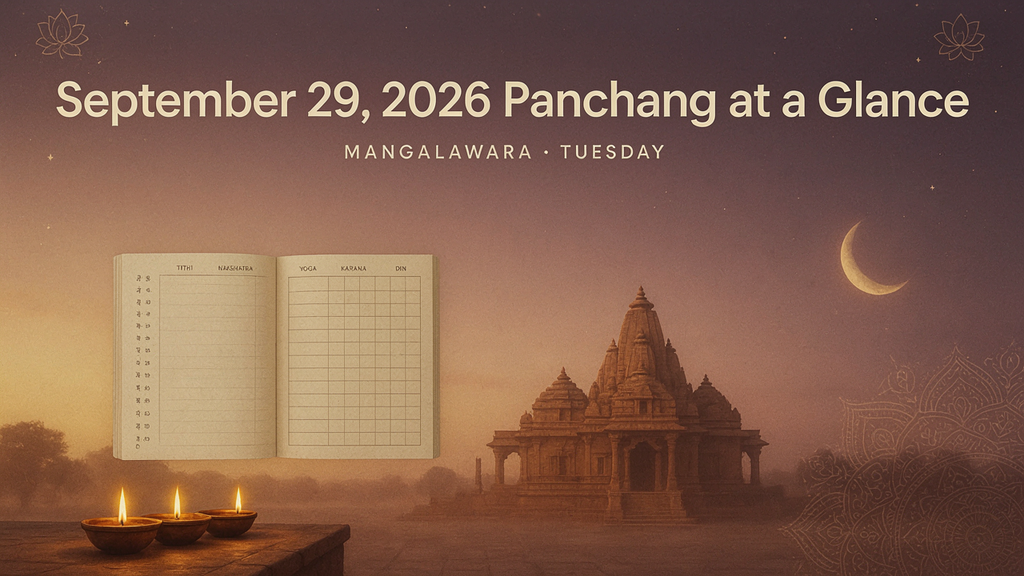
For New Delhi, the September 29, 2026 Panchang shows Ashwina Krishna Paksha Tritiya until 5:09 PM, after which Krishna Chaturthi begins. Ashwini Nakshatra continues until about 9:03 AM before Bharani begins. The day is Tuesday, or Mangalawara.
The same date is associated with Vighnaraja Sankashti, and Sankashti Chaturthi begins when Chaturthi starts later on September 29. The exact moonrise time varies by location.
| Panchang Element | September 29, 2026 Reference |
| Weekday | Tuesday / Mangalawara |
| Paksha | Krishna Paksha |
| Tithi at the start of the day | Tritiya |
| Tritiya ends | Around 5:09 PM in New Delhi |
| Next Tithi | Krishna Chaturthi |
| Nakshatra | Ashwini, followed by Bharani |
| Special observance | Vighnaraja Sankashti |
| Sunrise | Around 6:13 AM in New Delhi |
| Sunset | Around 6:10 PM in New Delhi |
| Moonrise | Around 7:44 PM in New Delhi |
These times are examples for New Delhi, not universal times. A traveler in another city should use that city’s Panchang rather than copying Delhi timings.
Image Caption: A traditional Hindu calendar showing Tithi, Nakshatra and spiritual travel planning for September 29, 2026.
Why Location Matters When Using the Panchang
One of the most important points for travelers is that Panchang calculations are not identical everywhere.
For example, the September 29, 2026 Panchang for Peshawar, Pakistan shows Tritiya until about 4:39 PM and Ashwini until approximately 8:33 AM. The same source lists local sunrise at about 6:06 AM and sunset at about 6:01 PM.
Karachi also has different timings. Its listed Rahu Kalam is approximately 3:22–4:51 PM, while Abhijit Muhurat is around 11:58 AM–12:46 PM.
This means travelers should check:
- Their destination city
- Local sunrise and sunset
- Moonrise
- Tithi ending time
- Nakshatra transition
- Rahu Kalam
- Muhurat
- Temple opening and closing hours
Do not use Delhi, Karachi, Peshawar or another city’s Panchang for a different destination without checking the local calculation.
How to Plan a Spiritual Trip Around the September 29 Panchang
The most useful approach is to divide your day according to the activities you want to perform rather than trying to fit every religious activity into one timetable.
Morning
Morning is suitable for beginning a spiritual day calmly.
You might:
- Take a bath and prepare for prayer.
- Visit a nearby temple.
- Attend morning worship where available.
- Spend quiet time in meditation.
- Explore a historic religious neighborhood.
- Have a simple breakfast before sightseeing.
Afternoon
The afternoon can be used for cultural sightseeing, local food, rest, or travel between nearby attractions.
If your religious practice follows a particular muhurat or avoids certain periods, consult the local Panchang before scheduling an important ritual.
Evening
September 29 transitions into Krishna Chaturthi, making the evening particularly relevant for travelers observing Sankashti Chaturthi. The exact observance and moonrise timing depend on location.
Best Spiritual Destinations for a Panchang-Based Journey
Because Aaj Ka Panchang does not identify a particular destination, travelers can choose a pilgrimage city according to their interests.
Varanasi
Varanasi is one of India’s best-known spiritual destinations. It is famous for the Ganga ghats, temples, religious traditions, old lanes and cultural heritage.
The official Incredible India tourism guide describes Varanasi as a major spiritual destination and highlights experiences such as the ghats, Ganga, temples, old city lanes and sunrise boat rides.
Haridwar and Rishikesh
These destinations are suitable for travelers interested in riverfront spirituality, yoga, temples and Himalayan cultural experiences.
Ayodhya
Ayodhya appeals to travelers interested in Ram-related religious heritage, temples and pilgrimage traditions.
Ujjain
Ujjain is an important Hindu pilgrimage city associated with Mahakaleshwar Temple and the wider religious heritage of Madhya Pradesh.
Mathura and Vrindavan
These destinations are especially relevant for travelers interested in Krishna traditions, temples, devotional music and religious festivals.
Things to Do on a Panchang-Inspired Spiritual Trip
A Panchang-based trip does not have to be limited to temple visits.
Consider combining spiritual activities with cultural exploration.
Temple Visit
Choose one or two important temples rather than trying to visit too many in one day.
Sunrise Experience
A sunrise at a riverfront, hilltop or peaceful temple area can create a calm beginning to the day.
Heritage Walk
Explore old neighborhoods, traditional markets, temple lanes and historic architecture.
Local Prayer or Meditation
If appropriate to your personal practice, set aside quiet time for meditation, chanting or prayer.
Traditional Food Experience
Try local vegetarian dishes and sweets associated with the region.
Evening Cultural Experience
Depending on the destination, you may find an evening aarti, devotional music, cultural performance or riverfront ceremony.
Best Time to Travel for a Spiritual Experience
The best travel season depends on the destination rather than the Panchang date alone.
For example, Incredible India describes October through March as a particularly pleasant period for exploring Varanasi, while September can still be warm.
| Travel Period | General Experience |
| October–March | Generally more comfortable for outdoor sightseeing in North India |
| April–June | Hot in many northern destinations; plan outdoor activities carefully |
| July–September | Monsoon conditions can affect roads and outdoor plans |
| Major festival periods | Spiritually vibrant but potentially much busier |
If your goal is to travel specifically on September 29, the Panchang date may matter more than seasonal preference. If you have flexibility, compare the religious calendar with local weather and crowd conditions before choosing your final date.
How to Reach a Spiritual Destination
Transportation depends completely on the city you choose.
By Air
Major pilgrimage destinations such as Varanasi have airports serving domestic and, in some cases, international travelers. Varanasi is served by Lal Bahadur Shastri International Airport (VNS).
After landing, travelers can generally use local taxis or other available city transportation. Confirm current airport transfer options before traveling.
By Train
Rail travel is particularly useful for pilgrimage trips within India. Varanasi has several important railway stations, including Varanasi Junction and other major stations serving the metropolitan area.
By Road
Buses, private cars and taxis can connect pilgrimage cities with nearby destinations. Travel times depend on road conditions, traffic and the starting city.
By Local Transport
Depending on the destination, options may include:
- Auto-rickshaws
- Taxis
- City buses
- Ride-hailing services
- Walking
- Private cars
For old temple districts, walking can sometimes be more practical than driving, but travelers should check local access restrictions.
Distance & Travel-Time Planning
Since the title does not specify a starting city, there is no single accurate distance table for this Panchang date.
A better planning method is:
| Journey Type | Planning Approach |
| Airport to hotel | Check the current airport transfer route |
| Railway station to temple | Check local traffic and restricted-access zones |
| City-to-city pilgrimage | Compare train, road and flight schedules |
| Temple-to-temple | Group nearby temples together |
| Evening religious visit | Allow extra time for queues and traffic |
Avoid relying on a generic “X-hour journey” figure when the starting point is unknown.
Where to Stay During a Spiritual Trip
Choose accommodation based on the type of experience you want.
Budget Stay
Look for:
- Guesthouses
- Dharamshalas where available
- Simple hotels
- Hostels
- Family-run accommodation
Mid-Range Stay
Mid-range hotels can offer a useful balance between comfort and access to major attractions.
Luxury Stay
Luxury properties are suitable for travelers who want more amenities, private transportation or a quieter base.
Family-Friendly Accommodation
Families should consider:
- Easy road access
- Private bathrooms
- Elevator availability where needed
- Family rooms
- Nearby food options
- Distance from crowded temple lanes
Hotel prices vary substantially according to city, season, festivals and booking date, so current rates should be checked before booking.
Food to Expect on a Spiritual Journey
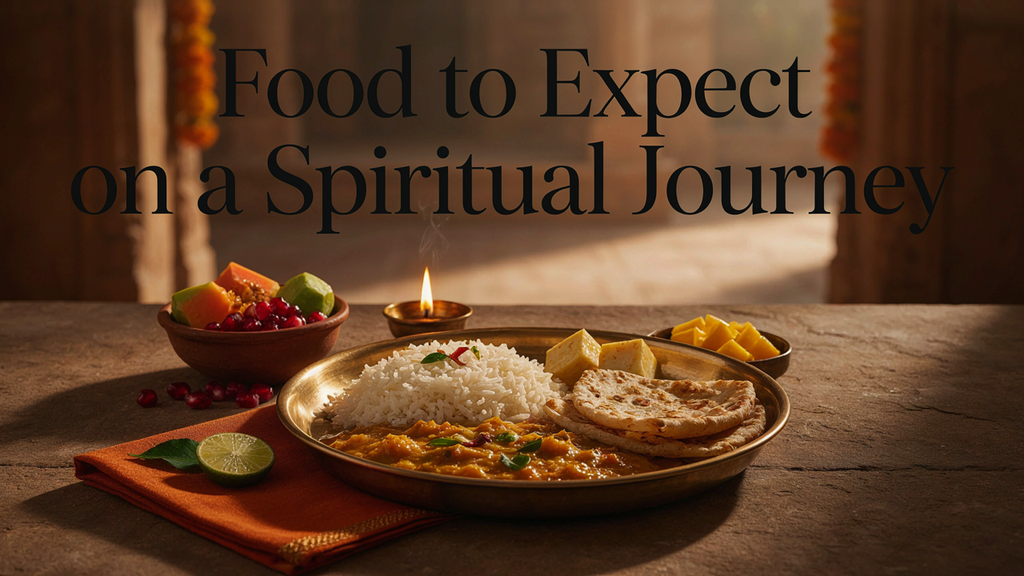
Food is an important part of cultural travel.
Depending on the destination, travelers may encounter:
- Vegetarian thalis
- Dal and rice
- Roti and seasonal vegetables
- Kachori
- Samosa
- Lassi
- Local sweets
- Fruit
- Temple or devotional foods where offered
For a spiritual trip, many travelers prefer simple vegetarian meals, although dietary practices differ from person to person.
Food Travel Tips
- Drink water from reliable sources.
- Choose busy, clean food outlets.
- Ask about ingredients if you have allergies.
- Carry light snacks during long temple visits.
- Keep meals simple if you plan extensive walking.
Spiritual Travel Budget
Because no destination or departure city is given, exact costs cannot responsibly be quoted.
Use the following framework when preparing a budget:
| Expense | Budget Traveler | Mid-Range Traveler | Luxury Traveler |
| Accommodation | Basic room/guesthouse | Comfortable hotel | Premium hotel |
| Food | Local eateries | Restaurants and local dining | Higher-end dining |
| Transport | Public transport/walking | Taxi + public transport | Private car |
| Attractions | Mostly low-cost/free | Mix of paid and free | Premium experiences |
| Activities | Self-guided | Guided experiences | Private guides/experiences |
| Daily total | Destination-dependent | Destination-dependent | Destination-dependent |
Prices can change because of holidays, festivals, hotel demand, transport availability and exchange rates. Check current local prices immediately before booking.
A 2-Day Panchang-Based Spiritual Itinerary
A short trip works well when the traveler wants spiritual experiences without rushing.
| Day | Morning | Afternoon | Evening |
| Day 1 | Temple visit and prayer | Heritage area and local lunch | Riverfront or cultural experience |
| Day 2 | Sunrise experience | Main pilgrimage attraction | Evening prayer or quiet reflection |
For a September 29 trip, travelers observing Sankashti should build their evening around the local Chaturthi and moonrise schedule rather than relying on a timing from another city.
Family-Friendly and Picnic-Friendly Ideas
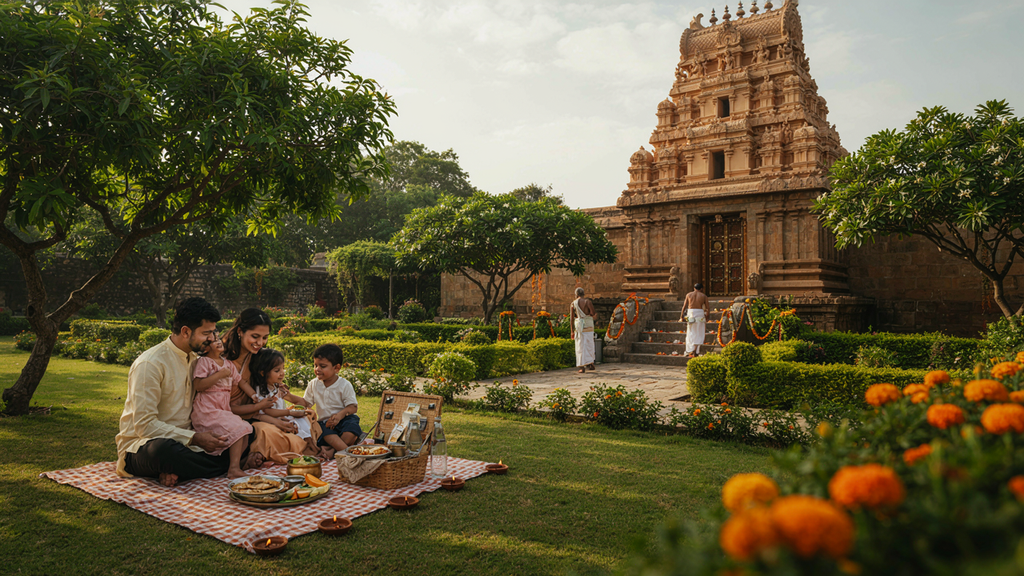
Spiritual travel can work well for families when the schedule includes breaks.
Look for:
- Riverside parks
- Botanical gardens
- Open public gardens
- Heritage areas with seating
- Scenic viewpoints
- Family-friendly cultural attractions
- Quiet areas outside the busiest temple zones
Avoid planning a full day of temple queues for young children. A better family itinerary alternates between religious, cultural and relaxed activities.
For a picnic, always check local rules before bringing food into religious or protected areas.
Best Photography and Scenic Spots
A Panchang-inspired trip can offer beautiful photography opportunities without turning every sacred place into a photo stop.
Good possibilities include:
- Sunrise over a river
- Temple architecture
- Historic streets
- Traditional markets
- Ghats and waterfronts
- Evening lamps
- Cultural details
- Landscapes around pilgrimage towns
Varanasi is particularly well known for its riverfront scenery, ghats, temple architecture and sunrise experiences.
Photography tip: Always respect signs and local instructions about photography inside temples and during private religious ceremonies.
Image Caption: Sunrise over a sacred riverfront, combining spiritual atmosphere with traditional Indian architecture.
Local Culture, Traditions and Travel Etiquette
Respect is central to spiritual travel.
Dress Modestly
Some temples require or strongly encourage modest clothing. Check local rules before visiting.
Remove Shoes Where Required
Many Hindu temples require visitors to remove footwear before entering sacred areas.
Ask Before Photographing People
Especially avoid photographing private rituals or individuals without permission.
Follow Temple Queues
Do not bypass queues or enter restricted areas.
Be Careful Around Rituals
Visitors should observe rather than interfere with ceremonies.
Respect Sacred Spaces
Keep voices low in prayer areas and follow instructions from temple staff.
Safety and Practical Travel Tips
A spiritual journey should be comfortable as well as meaningful.
Keep these points in mind:
- Carry identification and essential travel documents.
- Keep digital copies of important documents.
- Carry some local cash in addition to digital payment options.
- Use reliable transportation.
- Keep valuables secure in crowded religious areas.
- Check weather before long outdoor walks.
- Wear comfortable shoes for temple districts.
- Carry water during sightseeing.
- Confirm temple rules before visiting.
- Verify local Panchang times before scheduling religious activities.
For international travel, check current visa, passport and entry requirements through official government sources before departure.
Packing Guide for a Panchang-Based Trip
Your packing list should match the destination and season.
Essentials
- Comfortable walking shoes
- Modest clothing
- Light daywear appropriate for the weather
- Shawl or scarf where useful
- Reusable water bottle
- Sunscreen
- Sunglasses
- Personal medicines
- Phone and charger
- Power bank
- Identification and travel documents
For Temple Visits
- Easy-to-remove footwear
- Modest clothing
- Small bag
- Hand sanitizer
- A lightweight scarf or shawl
For Monsoon Areas
Add:
- Compact umbrella
- Quick-drying clothes
- Waterproof phone pouch
- Small rain cover
How to Use Aaj Ka Panchang for Future Spiritual Trips
The biggest benefit of using the Panchang for travel is planning with awareness rather than simply following a generic itinerary.
Before your next trip:
- Choose your destination.
- Check the local Panchang for that city.
- Note the Tithi and Nakshatra.
- Check sunrise and sunset.
- Check relevant muhurat periods.
- Look for important festivals or observances.
- Confirm temple schedules.
- Check weather and transportation.
- Reserve accommodation.
- Keep a flexible plan for crowds and delays.
This approach works particularly well for pilgrimage cities where religious calendars influence visitor numbers and temple activity.
Aaj Ka Panchang and Vighnaraja Sankashti on September 29, 2026
One of the notable features of September 29, 2026 is Vighnaraja Sankashti.
For New Delhi, Krishna Chaturthi begins at approximately 5:09 PM on September 29. A separate Sankashti calendar lists Vighnaraja Sankashti for this date, with the Chaturthi continuing into September 30. Moonrise varies according to the location.
This makes the date potentially meaningful for travelers whose personal religious practice includes Sankashti observance.
However, religious observance is personal. Travelers should follow their family tradition, local temple guidance or trusted Panchang source rather than assuming that every custom applies universally.
Why a Panchang Can Improve Spiritual Travel Planning
A normal travel itinerary answers questions such as where to go and what to see. A Panchang can add another question: when should the spiritual activities take place according to the local Hindu calendar?
That can help travelers organize:
- Temple visits
- Prayer
- Fasting
- Meditation
- Festival participation
- Family rituals
- Cultural experiences
- Evening observances
The result is a trip that connects the destination with its religious calendar rather than treating temples and traditions as ordinary sightseeing attractions.
FAQs
What is Aaj Ka Panchang for 29 September 2026?
Aaj Ka Panchang for 29 September 2026 includes Tithi, Nakshatra, Yoga, Karana, sunrise, sunset and other daily Hindu calendar details.
Exact timings depend on the location.
Is Aaj Ka Panchang the same in every city?
No, Panchang timings can change by city because sunrise, sunset and moonrise differ by location.
Always check the Panchang for your exact destination.
Which Tithi is observed on Aaj Ka Panchang September 29, 2026?
The day begins with Krishna Paksha Tritiya and later changes to Krishna Chaturthi.
The exact changeover time depends on the location.
What Nakshatra is shown in Aaj Ka Panchang on September 29?
Ashwini Nakshatra is followed by Bharani Nakshatra on this date.
The transition time varies slightly according to the location.
Does Aaj Ka Panchang show Sankashti Chaturthi on September 29, 2026?
Yes, September 29, 2026 is associated with Vighnaraja Sankashti as Krishna Chaturthi begins later in the day.
Moonrise and observance timings should be checked locally.
How can Aaj Ka Panchang help with spiritual travel planning?
It can help travelers understand Tithi, Nakshatra, fasting days and important observances.
This information can be combined with temple schedules and local travel plans.
What should travelers check along with Aaj Ka Panchang?
Travelers should also check weather, temple opening hours, transportation, accommodation and local customs.
These details can change and should be verified before departure.
Can Aaj Ka Panchang help plan a temple visit?
Yes, it can provide useful information about the Hindu lunar date and traditional time periods.
However, temple-specific darshan and entry timings should always be confirmed separately.
Which destinations are suitable for an Aaj Ka Panchang spiritual trip?
Varanasi, Haridwar, Rishikesh, Ayodhya, Ujjain, Mathura and Vrindavan are popular choices for Hindu spiritual and cultural travel.
Choose according to your interests, route and available time.
Is Aaj Ka Panchang useful for planning a family spiritual trip?
Yes, families can use it to plan temple visits, cultural activities, prayer time and relaxed sightseeing.
Keep the itinerary flexible and allow breaks for children and older travelers.
Conclusion
Aaj Ka Panchang for September 29, 2026 offers more than traditional calendar information for travelers.
It can help connect a spiritual journey with Tithi, Nakshatra and important Hindu observances.
Because timings vary by location, travelers should check the Panchang for their exact destination.
Temple schedules, weather and transportation should also be confirmed before travel.
With thoughtful planning, a short trip can become both meaningful and enjoyable.
Using Aaj Ka Panchang alongside practical travel information can make spiritual journeys easier to organize.
Destinations such as Varanasi, Ayodhya, Ujjain and Haridwar offer opportunities for cultural and religious experiences.
Travelers can combine temple visits with local food, heritage walks and peaceful sightseeing.
Respecting local customs and sacred spaces is an important part of the experience.
A flexible itinerary allows you to enjoy the journey without unnecessary stress.
Read More: Today’s Panchang 2026: Tithi, Nakshatra, Rahu Kalam & Spiritual Travel Guide
