

Planning a Hindu festival, temple visit, or spiritual journey becomes easier when you understand the lunar calendar. Tithi today helps travelers identify the current Hindu lunar day and understand its connection with important religious observances. Unlike the regular Gregorian calendar, tithi timings are based on the positions of the Sun and Moon, so they can change according to location. This makes a reliable tithi calendar especially useful when planning cultural and spiritual travel in 2026.
A tithi calendar can help you discover important dates such as Ekadashi, Purnima, Amavasya, Chaturthi, and other traditional observances. Tithi today information can also help travelers plan temple visits, festival experiences, and pilgrimage trips more carefully. Since exact timings may differ between cities, it is important to check the calendar for your destination and confirm temple or event schedules before traveling. This guide explains how tithi works and how to use a 2026 tithi calendar and calculator for better travel planning.
Quick Travel & Tithi Planning Overview
| Information | Details |
| Destination | India and Hindu cultural/pilgrimage destinations |
| Country | India, with Hindu communities worldwide |
| Best Time to Visit | Depends on the festival, region, weather, and personal travel plans |
| Recommended Duration | 1–7 days for a focused festival or spiritual trip |
| Main Experiences | Temple visits, festivals, cultural experiences, pilgrimage, local food and heritage |
| Calendar System | Hindu lunisolar calendar traditions |
| Important Dates | Tithi-based festivals such as Ekadashi, Purnima, Amavasya and Chaturthi |
| Transportation | Air, rail, road, buses, taxis and local transport vary by destination |
| Budget | Varies greatly by city, accommodation, season and festival demand |
What Is a Tithi?
A tithi is a lunar day used in traditional Hindu calendars. Rather than simply dividing the month into fixed 24-hour periods, the tithi system is connected to the relative positions of the Sun and Moon.
There are traditionally 30 tithis in a lunar month:
- 15 tithis in Shukla Paksha, the waxing phase
- 15 tithis in Krishna Paksha, the waning phase
The sequence runs through names such as Pratipada, Dwitiya, Tritiya, Chaturthi, Panchami, Shashthi, Saptami, Ashtami, Navami, Dashami, Ekadashi, Dwadashi, Trayodashi, Chaturdashi and Purnima or Amavasya, depending on the lunar phase.
For travelers, understanding this structure makes it easier to recognize why a festival calendar may list a lunar date alongside the familiar Gregorian date.
Image Caption: Traditional Hindu calendar and lunar-cycle concept used for planning cultural and spiritual travel.
How Does Tithi Today Work?
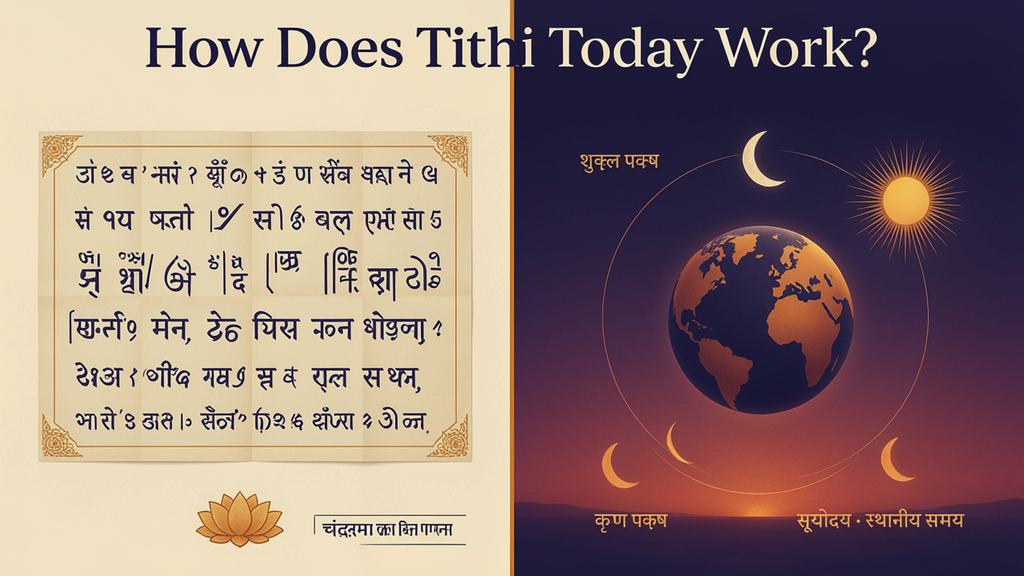
When you search for tithi today, you are looking for the lunar day prevailing at a particular location and time.
The important point is that a tithi does not necessarily start at midnight and end at the following midnight. It can change during the day.
For example, a particular tithi might continue through the morning and end in the afternoon, after which the next tithi begins. Consequently, two websites may appear to show different information if they use different locations, time zones, calculation methods, or calendar traditions.
For travel planning, always check:
- Your exact destination.
- The local date.
- Sunrise and sunset information.
- Tithi start and end times.
- The specific festival or observance you want to attend.
- Temple or event announcements.
Tithi Calendar 2026: How Travelers Can Use It
A 2026 Hindu calendar can help travelers identify lunar observances and organize trips around important cultural dates.
For example, the 2026 Indian festival calendar lists numerous celebrations according to their lunar dates, including observances associated with Purnima, Ekadashi, Chaturthi and other tithis.
A useful travel-planning process is:
Select the destination.
Find the local tithi calendar for that destination.
Identify the festival or observance.
Check the exact tithi timing.
Confirm the temple, procession, ceremony or event schedule.
Book transportation and accommodation after confirming the dates.
This approach is particularly useful for travelers visiting India during major religious festivals when accommodation and transport can become much busier than normal.
Shukla Paksha vs. Krishna Paksha
The Hindu lunar month is generally divided into two halves called paksha.
| Paksha | Lunar Phase | General Sequence |
| Shukla Paksha | Waxing Moon | Amavasya toward Purnima |
| Krishna Paksha | Waning Moon | Purnima toward Amavasya |
Shukla Paksha progresses toward the full Moon, while Krishna Paksha progresses toward the new Moon.
Travelers may see these terms when checking temple calendars, festival dates, pilgrimage schedules, or traditional observances.
The exact observance attached to a particular tithi can vary according to regional and religious traditions, so the lunar phase alone should not be treated as a complete travel schedule.
Important Tithis Travelers Should Know
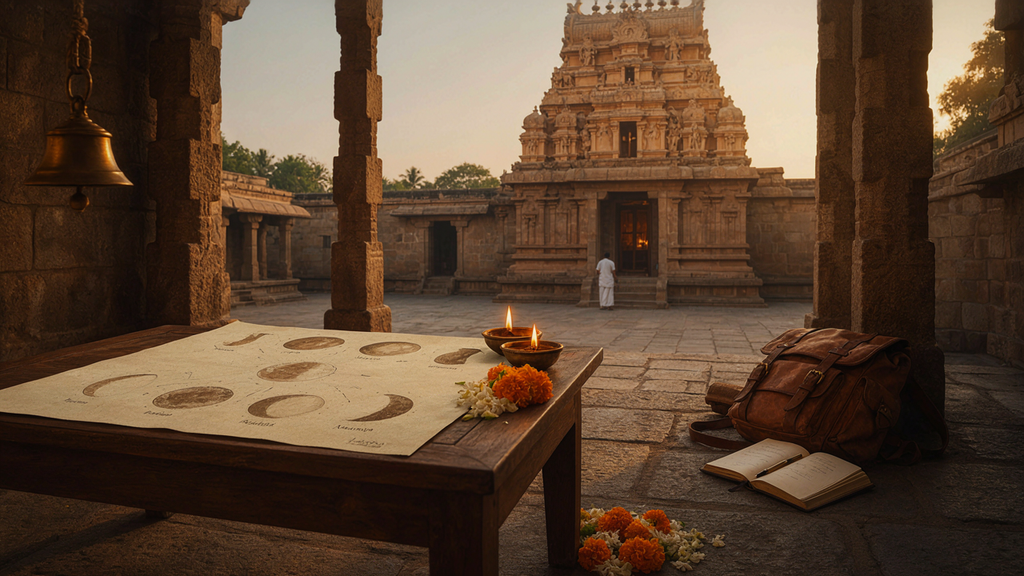
Some tithis appear frequently in Hindu festival and pilgrimage calendars.
Ekadashi
Ekadashi is the 11th tithi of each paksha. Many devotees observe fasting or other religious practices on Ekadashi.
Travelers interested in visiting temples during Ekadashi should check the local calendar and the individual temple’s schedule because practices can differ.
Purnima
Purnima is the full-Moon tithi. Various Hindu observances and festivals occur on Purnima dates.
For photographers and cultural travelers, full-Moon periods can also create opportunities for evening cultural experiences, although outdoor conditions depend on the destination.
Amavasya
Amavasya is the new-Moon tithi. Several religious and ancestral observances are associated with Amavasya.
Travelers should research the specific tradition associated with the destination rather than assuming that every Amavasya is celebrated in the same way.
Chaturthi
Chaturthi is the fourth tithi. It is especially familiar to travelers because Ganesh Chaturthi is associated with the fourth lunar day of the bright half in the relevant lunar month.
In 2026, Ganesh Chaturthi was observed on September 14 in India, although the Chaturthi tithi itself began on the preceding night, illustrating why festival dates and tithi timings need to be considered separately.
Ashtami
Ashtami is the eighth tithi. Several important religious observances are connected with Ashtami, including Krishna Janmashtami traditions.
In 2026, Janmashtami was observed on September 4, with city-specific timings being important for the observance.
How to Use a Tithi Calculator for Travel Planning
A tithi calculator can be particularly helpful when your trip depends on an exact lunar date.
Enter or select:
- Destination city
- Country
- Date
- Time zone
- Calendar tradition, if the calculator provides this option
Then check the displayed:
- Tithi
- Paksha
- Nakshatra
- Sunrise
- Sunset
- Moonrise
- Moonset
- Relevant observances
Do not use a generic result from another city when exact timing matters.
For example, a Panchang calculated for New Delhi on September 30, 2026 lists Krishna Chaturthi until 2:55 PM, followed by Krishna Panchami.
That timing is specifically for the stated location and should not automatically be transferred to another destination.
Planning Spiritual Travel Around Tithi Dates
A tithi calendar can be useful when planning trips to religious and heritage destinations such as:
- Varanasi
- Ayodhya
- Mathura and Vrindavan
- Haridwar
- Ujjain
- Tirupati
- Nashik
- Puri
- Rameswaram
- Amritsar and other culturally significant destinations
The goal should be to combine the lunar calendar with practical travel information.
Before booking, research:
- Festival dates
- Temple opening arrangements
- Special-entry requirements
- Local transportation
- Crowd expectations
- Accommodation availability
- Weather
- Local customs
- Any restrictions announced by authorities or temple management
A tithi can identify an important religious date, but it does not automatically tell you whether a particular attraction will be open or whether a special ceremony will be accessible to visitors.
Image Caption: Travelers visiting a historic Indian temple during a traditional religious festival.
Best Places for Tithi-Based Cultural Travel
Because tithi is a calendar concept rather than a destination, there is no single “best” city for every traveler.
Instead, choose the destination according to the experience you want.
| Travel Interest | Destination Types to Consider |
| Temple pilgrimage | Major temple cities |
| Krishna traditions | Mathura and Vrindavan |
| Shiva traditions | Varanasi, Ujjain and other Shiva pilgrimage centers |
| Ram-related traditions | Ayodhya |
| River and pilgrimage culture | Haridwar and Varanasi |
| Coastal temple heritage | Puri and Rameswaram |
| Cultural festivals | Major cities hosting regional celebrations |
Always check the destination’s official temple or local authority information before traveling for a specific ceremony.
Best Time to Plan a Tithi-Based Trip
There is no single best month for every tithi-focused journey.
Your ideal travel period depends on:
- The festival you want to attend
- Local weather
- Regional calendar
- Crowd levels
- Transportation availability
- Accommodation demand
- Your preferred travel experience
| Travel Goal | Planning Approach |
| Major festival | Check tithi first, then book early |
| Quiet temple visit | Consider non-peak dates |
| Photography | Consider weather and sunrise/sunset |
| Family trip | Prioritize comfortable weather and manageable crowds |
| Pilgrimage | Check temple-specific observance dates |
| Cultural research | Allow additional days around the main event |
Festival dates can occasionally create confusion because the relevant tithi may begin on one Gregorian date and continue into another.
The 2026 Ganesh Chaturthi calendar is one example of this issue, with the tithi beginning on September 13 but the festival date observed on September 14.
How to Reach Major Tithi Travel Destinations
Since tithi is not a physical destination, transportation depends entirely on the city you choose.
By Air
Major Indian cities are served by domestic and international airports. For a festival trip, compare:
- Airport distance from your accommodation
- Flight arrival time
- Local transfer options
- Festival-period traffic
Avoid booking a flight that arrives immediately before an important ceremony unless you have a reliable transfer plan.
By Road
Road travel can be convenient for nearby pilgrimage destinations.
Options may include:
- Intercity buses
- State transport buses
- Private cars
- Taxis
- Organized tours
Travel times vary substantially with traffic and festival crowds.
By Train
Rail travel can be practical for many Indian pilgrimage destinations.
Check the current railway schedule before booking because routes, departure times and availability can change.
By Local Transport
Depending on the destination, travelers may find:
- City buses
- Auto-rickshaws
- Taxis
- App-based rides
- Rental cars
- Walking routes
During major festivals, road closures or crowd-control arrangements may affect normal transport.
Distance & Travel-Time Planning
Because there is no single tithi destination, distance should be calculated from your departure city to the particular pilgrimage or festival location.
| Starting Point | Destination | Distance | Transport |
| Your home city | Selected pilgrimage city | Check current route | Air, rail or road |
| Nearby city | Festival destination | Check current route | Rail, bus or road |
| Airport | City center | Check local route | Taxi, bus or train where available |
| Railway station | Temple area | Check local route | Taxi, auto or local transport |
For festival travel, allow additional time because ordinary journey estimates may not reflect temporary traffic controls or crowds.
Where to Stay During a Tithi-Based Trip
Accommodation should be selected according to your actual destination.
Budget Stays
Useful for travelers who expect to spend most of the day visiting temples, markets and cultural sites.
Look for:
- Clean rooms
- Convenient transportation
- Recent guest reviews
- Flexible cancellation where available
Mid-Range Accommodation
Suitable for travelers wanting more comfort while maintaining a reasonable travel budget.
Consider location carefully. A hotel farther away may appear cheaper but could involve longer transfers during a crowded festival.
Luxury Accommodation
Luxury hotels can be useful for travelers who prefer additional comfort, on-site services and convenient access to major urban areas.
Family Accommodation
Families should prioritize:
- Convenient location
- Suitable room configuration
- Easy transport
- Quiet sleeping arrangements
- Access to food and basic services
Hotel prices can change significantly according to season, festival demand, availability and booking date, so current rates should always be checked before reserving.
Food to Try During a Cultural Trip
Tithi-based travel often takes you into destinations with strong regional food traditions.
Depending on the location, travelers may encounter:
- Vegetarian thali
- Regional sweets
- Fresh breads
- Seasonal fruits
- Temple-associated foods
- Local snacks
- Regional breakfast dishes
During fasting observances, food practices can be different from normal dining.
Some devotees may avoid particular grains or other foods depending on the tradition they follow. Travelers should ask restaurants about ingredients rather than assuming that a dish meets a particular fasting practice.
Tithi Travel Budget Guide
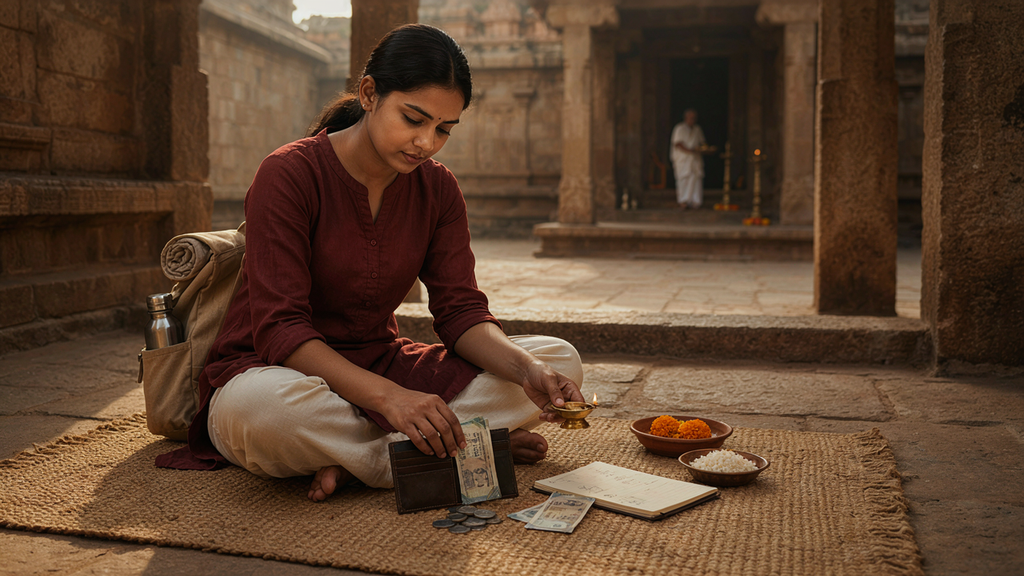
Because the focus is on calendar-based travel rather than one destination, there is no single accurate daily price.
| Expense | Budget Traveler | Mid-Range Traveler | Luxury Traveler |
| Accommodation | Basic guesthouse or budget hotel | Comfortable hotel | Premium hotel |
| Food | Local eateries | Restaurants and local dining | Higher-end restaurants |
| Transport | Public transport | Taxi + public transport | Private transfers |
| Attractions | Free/low-cost cultural sites | Paid attractions and experiences | Premium experiences |
| Activities | Self-guided visits | Guided experiences | Private guided experiences |
| Overall Budget | Destination-dependent | Destination-dependent | Destination-dependent |
Festival periods can increase demand for rooms and transportation. Compare current prices before finalizing your trip.
1-Day Tithi Travel Itinerary
A short trip can work well if the goal is a specific temple or festival.
| Time | Suggested Plan |
| Morning | Sunrise, breakfast and local temple/heritage visit |
| Late Morning | Main cultural attraction |
| Afternoon | Local lunch and rest |
| Evening | Festival, temple area or cultural experience |
| Night | Dinner and return to accommodation |
If attending a ceremony with a fixed tithi-based time, build the itinerary around the ceremony rather than trying to fit it between multiple attractions.
2–3 Day Spiritual Travel Plan
For a longer visit, consider this flexible structure:
Day 1
- Arrive
- Check in
- Explore the local area
- Visit an accessible temple or heritage site
Day 2
- Attend the main tithi-related observance
- Explore nearby cultural attractions
- Try regional food
- Photograph the surrounding area
Day 3
- Visit additional landmarks
- Shop for appropriate local handicrafts
- Enjoy a relaxed meal
- Depart or continue to another destination
This structure can be adjusted according to the actual festival schedule.
Family-Friendly and Picnic Experiences
Tithi-based travel does not need to be entirely focused on religious ceremonies.
Families can combine cultural visits with:
- Public parks
- Gardens
- Riverfront areas where permitted
- Heritage sites
- Museums
- Scenic viewpoints
- Family-friendly markets
For a picnic, use officially permitted public areas rather than assuming that food or recreational activities are allowed near a temple or religious site.
Families traveling during major festivals should also choose meeting points in case members become separated in crowded areas.
Best Photography and Scenic Opportunities
Tithi-related journeys can produce memorable cultural photographs.
Consider:
- Temple architecture
- Historic streets
- Riverfront scenery
- Traditional markets
- Sunrise views
- Sunset scenes
- Festival decorations
- Local crafts
- Cultural landscapes
Always follow photography rules at temples and religious ceremonies. Some areas may restrict cameras or photography, and visitors should respect those instructions.
Image Caption: Temple architecture and traditional decorations during a culturally significant lunar-calendar observance.
Local Culture, Customs and Festival Etiquette
Cultural awareness is especially important during religious travel.
Useful practices include:
- Dress modestly at religious sites.
- Follow signs and staff instructions.
- Remove footwear where required.
- Ask before photographing people.
- Respect queues and designated worship areas.
- Avoid blocking entrances or ceremonial routes.
- Follow food and temple rules.
- Keep public spaces clean.
- Do not interrupt religious ceremonies for photographs.
A tithi calendar can tell you when an observance occurs, but understanding local etiquette helps you participate as a respectful visitor.
Is Tithi the Same Everywhere?
No. Tithi calculations depend on astronomical positions and the location for which the Panchang is calculated.
This is one of the most important points for travelers.
For example, a September 30, 2026 Panchang listing for New Delhi shows Krishna Chaturthi lasting until 2:55 PM local time before Krishna Panchami begins.
Another city can show different sunrise, sunset and tithi timings. Therefore, travelers should use a calendar calculated specifically for their destination.
Common Mistakes When Checking Tithi Today
Avoid these common planning errors:
Using a Different City’s Calendar
A result calculated for Delhi should not automatically be used for Mumbai, Kathmandu, New York or another location.
Confusing Gregorian Dates With Tithis
A festival may be associated with a tithi that starts on one calendar date and continues into another.
Booking Before Checking the Festival Schedule
Confirm the actual observance date before purchasing non-refundable travel.
Assuming Every Temple Follows Identical Timings
Different temples and traditions can have different schedules.
Ignoring Regional Calendar Traditions
Calendar conventions can vary by region and religious tradition.
Treating a Tithi Calculator as a Travel Schedule
A calculator gives astronomical/calendar information. It does not replace official temple or event information.
Safety and Practical Travel Tips
For a comfortable trip:
- Keep digital and physical copies of important travel documents.
- Carry sufficient local currency for small purchases where needed.
- Keep your phone charged.
- Save your accommodation details offline.
- Check weather forecasts before leaving.
- Wear comfortable footwear for walking.
- Follow local dress and temple rules.
- Use official transportation or reputable providers.
- During large festivals, establish a family meeting point.
- Check current travel and event information before departure.
If traveling internationally, also verify current visa, passport and entry requirements through official government sources.
What to Pack for a Tithi-Based Cultural Trip
Your packing list should reflect the destination and season.
Clothing
- Comfortable, weather-appropriate clothing
- Modest clothing for religious sites
- Light layers where temperatures change
- Comfortable walking shoes
Travel Essentials
- Identification and travel documents
- Phone and charger
- Power bank
- Reusable water bottle
- Basic personal supplies
- Small day bag
For Temple Visits
- Easy-to-remove footwear
- Modest clothing
- A small bag for personal belongings
For Outdoor Activities
- Sun protection
- Weather-appropriate outerwear
- Comfortable walking gear
Do not carry unnecessary valuables when visiting crowded festival areas.
Tithi Today for Travel: A Simple Planning Checklist
Before leaving home, check these items:
- Correct destination selected
- Local tithi checked
- Tithi start and end time confirmed
- Festival date verified
- Temple schedule checked
- Transportation booked
- Accommodation confirmed
- Weather checked
- Local customs researched
- Important documents prepared
- Emergency/contact information saved
This simple checklist can prevent many calendar-related travel mistakes.
2026 Tithi Calendar and Festival Planning
The 2026 Hindu calendar includes a wide range of lunar-calendar observances. For example, the published 2026 Indian calendar identifies dates such as Vasant Panchami, Maha Shivaratri and other festivals alongside their corresponding lunar designations.
September 2026 also demonstrates why travelers need to distinguish between the Gregorian date and the underlying tithi. Ganesh Chaturthi was observed on September 14, while the Chaturthi tithi began the previous night.
Similarly, recent 2026 Panchang information shows that Pitru Paksha timing can create apparent date differences depending on which observance is being discussed.
For this reason, a 2026 travel calendar should be treated as a starting point. Confirm the final details for the city where you will actually be traveling.
FAQs
What does tithi today mean in the Hindu lunar calendar?
Tithi today means the lunar day currently observed according to the Hindu calendar.
Its exact timing can vary by location and local sunrise.
How can I check tithi today for my city?
Use a reliable Panchang or tithi calculator and select your exact city.
This helps provide more accurate local tithi start and end times.
Why can tithi today be different in different cities?
Tithi calculations depend on astronomical positions, location, and local time.
Therefore, the same tithi may begin or end at different clock times.
Can tithi today help me plan a Hindu festival trip?
Yes, it can help you identify important lunar dates connected with festivals.
Always confirm the final festival and temple schedule before traveling.
How is tithi today calculated?
A tithi is calculated from the changing angular relationship between the Sun and Moon.
This makes it different from a standard 24-hour calendar day.
Is tithi today the same as the Gregorian date?
No. A Gregorian date is based on the standard civil calendar, while a tithi follows the lunar cycle.
One tithi may begin or end during a single Gregorian date.
Which important Hindu observances use tithi today?
Many observances use tithi calculations, including Ekadashi, Purnima, Amavasya and Chaturthi.
The specific observance depends on the lunar month and regional tradition.
Can tithi today help with temple travel planning?
It can help travelers identify potentially important religious dates and observances.
Check the individual temple’s current timings and visitor rules before going.
How accurate is a tithi today calculator?
A good calculator can provide precise astronomical calculations when the correct location is selected.
For religious events, compare the result with a trusted local Panchang or official source.
Should I check tithi today before booking a festival trip?
Yes, especially if attending a festival or ceremony is the main purpose of your trip.
Confirm the local tithi, event date, transportation and accommodation before booking.
Conclusion
Understanding tithi today can make Hindu festival and spiritual travel much easier to plan.
A tithi connects the lunar calendar with many traditional celebrations and observances.
Travelers can use a 2026 tithi calendar to research important cultural dates in advance.
However, exact timings can vary according to location and calendar calculations.
Always verify local temple schedules and festival details before making travel plans.
Using tithi today information alongside practical travel research gives you a clearer trip plan.
Check the destination, lunar date, weather, transportation and accommodation before departure.
This is especially important when traveling during large festivals or busy pilgrimage periods.
With careful planning, you can enjoy cultural experiences while respecting local traditions.
A reliable tithi calculator can be a useful starting point for your 2026 travel planning.
Read More: आज की तिथि: September 2026 Tithi Calendar & Spiritual Travel Planning Guide
