


Discover Aaj Ki Tithi Kya Hai in 2026 with a simple guide to today’s Hindu calendar, including tithi, nakshatra, muhurat, and important lunar dates. Understanding the daily Panchang helps devotees plan prayers, fasting, temple visits, and religious activities according to Hindu traditions. Whether you are checking today’s tithi at home or preparing for a spiritual journey, knowing the correct date and timing can make your plans easier and more meaningful.
Aaj Ki Tithi Kya Hai is also useful for travelers who want to explore India’s famous temples, sacred places, and cultural destinations. From planning peaceful temple visits to attending religious festivals and experiencing local traditions, the Hindu lunar calendar can add meaning to your journey. This guide covers today’s tithi, its significance, spiritual travel tips, and practical information to help you plan your activities with confidence.
Quick Travel & Tithi Overview
| Information | Details |
| Topic | Aaj Ki Tithi Kya Hai 2026 |
| Current Date | October 1, 2026 |
| Day | Thursday |
| Hindu Lunar Date | Ashwina, Krishna Paksha |
| Tithi Example – New Delhi | Krishna Paksha Panchami until about 12:35 PM |
| Tithi Example – Lahore | Krishna Paksha Panchami until about 12:05 PM |
| Next Tithi | Krishna Paksha Shashthi |
| Travel Theme | Spiritual, cultural, temple and pilgrimage travel |
| Main Destinations | Varanasi, Ujjain, Ayodhya, Mathura-Vrindavan, Haridwar, Dwarka and others |
| Best Planning Method | Check the Panchang for the exact destination |
| Accommodation | Choose a location near the temple, ghat or transport hub |
| Currency | Depends on the country and destination |
| Transportation | Air, rail, road and local transport vary by destination |
| Budget | Depends heavily on destination, accommodation and trip length |
Important: The exact tithi, sunrise, sunset, nakshatra, yoga and muhurat should be checked for the city where you will actually perform the religious activity. Panchang calculations are location-specific.
What Does Aaj Ki Tithi Kya Hai Mean?
The phrase Aaj Ki Tithi Kya Hai simply means “What is today’s tithi?” in Hindi.
A tithi is a lunar day used in the Hindu calendar. The traditional lunar month is divided into two pakshas:
- Shukla Paksha – the waxing phase of the Moon
- Krishna Paksha – the waning phase of the Moon
Each paksha contains 15 tithis, beginning with Pratipada and progressing through the lunar cycle to Purnima or Amavasya depending on the phase.
Unlike the regular Gregorian date, a tithi does not necessarily begin at midnight. It can start or end during the daytime or nighttime. That is why the tithi shown for a particular date can change during the day.
For October 1, 2026, the New Delhi Panchang lists Krishna Paksha Panchami until approximately 12:35 PM, followed by Shashthi. Lahore’s Panchang gives a slightly earlier transition at approximately 12:05 PM.
Image Caption: A traditional Hindu Panchang showing tithi, paksha, nakshatra and other daily calendar details.
Today’s Tithi on October 1, 2026
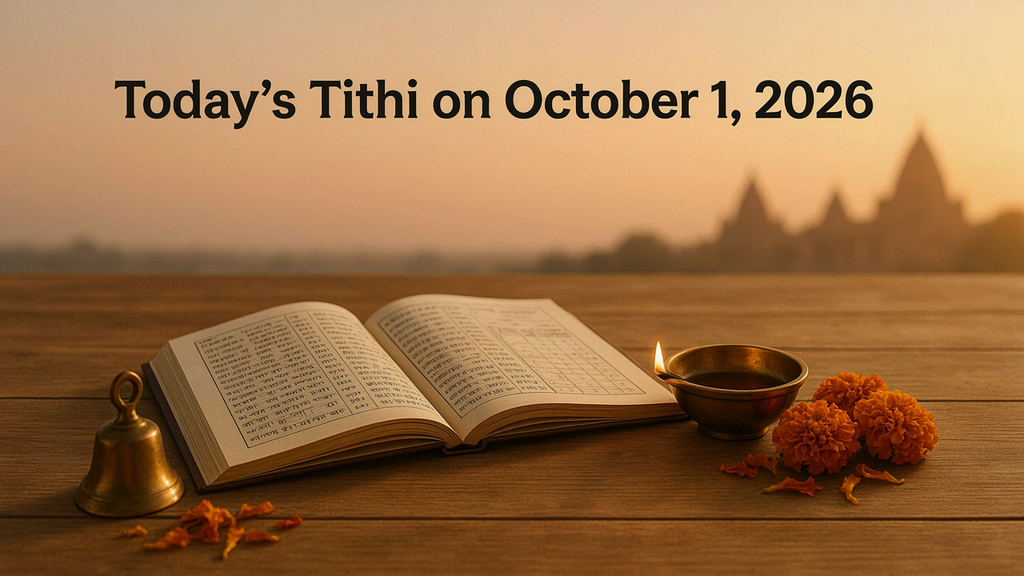
For travelers and devotees looking for today’s Hindu date on October 1, 2026, location matters.
New Delhi
The New Delhi Panchang identifies October 1, 2026 as:
- Ashwina month
- Krishna Paksha
- Panchami until approximately 12:35 PM
- Shashthi after Panchami ends
- Thursday
- Rohini Nakshatra continuing into October 2
- Siddhi Yoga continuing until approximately 9:18 PM
These times are local to New Delhi and should not automatically be applied to another city.
Lahore
For Lahore, Pakistan, October 1, 2026 is also listed as Ashwina Krishna Paksha Panchami. The Panchang gives Panchami until approximately 12:05 PM, followed by Krishna Shashthi. Local sunrise and sunset times also differ from New Delhi.
Why Are the Times Different?
The Moon’s position is continuous, while the civil clock and sunrise vary by geographical location. As a result, a tithi transition can occur at a different local clock time in different cities.
For religious observances, travelers should therefore use the Panchang calculated for the actual place of worship or destination.
How to Check Aaj Ki Tithi for Your Travel Destination
Before leaving for a temple town or pilgrimage destination, check these details:
- Select the exact city.
- Select the correct date.
- Check the tithi and its ending time.
- Check the nakshatra.
- Check sunrise and sunset.
- Review Rahu Kalam or other relevant daily periods if they matter to your practice.
- Check the temple’s own schedule for darshan, puja or special ceremonies.
- Recheck the information close to the travel date.
This is particularly important when traveling for a specific festival, fast, temple ritual or lunar observance.
A general online calendar can be useful for planning, but a city-specific Panchang is more appropriate for exact timing.
Best Spiritual Destinations for Tithi-Based Travel
There is no single destination associated with every tithi. Instead, travelers can combine their preferred lunar date with a spiritual destination that matches their interests.
Varanasi
Varanasi is one of India’s best-known spiritual cities. Travelers can explore temples, ghats, narrow historic lanes and the cultural life surrounding the Ganges.
It can suit visitors interested in:
- Hindu traditions
- Temple visits
- Riverfront experiences
- Spiritual photography
- Cultural heritage
Allow at least two days if you want time for both major spiritual experiences and relaxed city exploration.
Ujjain
Ujjain is a major pilgrimage center in Madhya Pradesh and is closely associated with temples and the sacred Kshipra River. The official tourism information describes it as a spiritual city with numerous temples, including Mahakaleshwar Temple.
Mathura and Vrindavan
Mathura and Vrindavan are strongly associated with Krishna traditions. Their temples, ghats, markets and religious celebrations make them natural choices for travelers interested in devotional culture.
Ayodhya
Ayodhya is an important Hindu pilgrimage destination associated with Lord Rama and the Sarayu River. It can be combined with temple visits and cultural sightseeing.
Dwarka
Dwarka in Gujarat is another major pilgrimage destination associated with Lord Krishna. Its coastal setting also adds a different landscape to a spiritual journey.
Haridwar
Haridwar combines pilgrimage, riverfront experiences, temples and cultural traditions. It can work well for travelers who want a spiritual trip with opportunities to explore the surrounding region.
Image Caption: Devotees and travelers experiencing the spiritual atmosphere of an Indian pilgrimage city.
Things to Do on a Tithi-Based Spiritual Trip
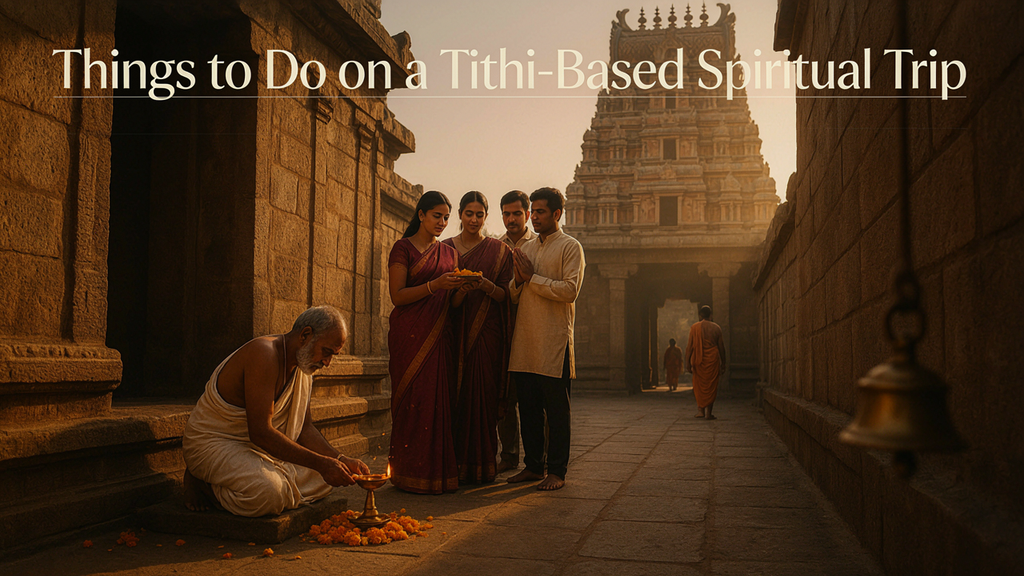
A tithi-focused journey does not need to be limited to temple visits.
Depending on your destination, you can:
- Visit an important temple.
- Attend a permitted puja or aarti.
- Spend quiet time at a sacred river or ghat.
- Explore historic temple architecture.
- Visit local markets.
- Try regional vegetarian food.
- Attend a cultural or devotional event.
- Visit a museum or heritage site.
- Take a guided walking tour.
- Photograph traditional architecture.
- Learn about local religious customs.
- Spend time at an ashram or spiritual center where visitors are welcome.
If your trip is connected with a particular ritual, confirm the rules and schedule directly with the temple or religious institution before traveling.
Best Time to Plan a Tithi-Based Spiritual Journey
There is no universal “best month” for every tithi-based trip because the ideal season depends on the destination.
| Travel Period | General Travel Consideration |
| October–November | Often attractive for many parts of northern and central India as temperatures become more comfortable |
| December–February | Generally pleasant in many plains regions, while Himalayan areas can be cold |
| March–April | Good for some destinations, but temperatures rise in many regions |
| May–June | Hot conditions can affect outdoor sightseeing in many inland areas |
| July–September | Monsoon conditions can affect roads, walking and outdoor plans |
| Festival Dates | Potentially more crowded and may require advance planning |
India has major regional differences in climate. The national tourism portal notes that the country experiences a wide range of conditions, from hot plains to cold Himalayan winters.
For a tithi-specific trip, consider both the lunar date and the destination’s weather.
How to Reach a Spiritual Destination
Because Aaj Ki Tithi Kya Hai is a calendar topic rather than a single destination, there is no one airport, railway station or road route that applies to every traveler.
By Air
Large spiritual destinations such as Delhi, Varanasi, Jaipur, Lucknow, Ahmedabad, Indore and other major cities have airport connections, but the most useful airport depends on your selected pilgrimage destination.
After arriving, travelers can usually continue by:
- Airport taxi
- Pre-booked private transfer
- Local taxi
- Bus
- Rail connection where available
Always check current flight schedules and airport transfer options before departure.
By Train
Rail travel can be practical for many pilgrimage journeys in India. The appropriate railway station depends on the city.
For example, travelers visiting Ujjain can use the city’s railway network, while other pilgrimage destinations have their own major or nearby stations.
Check current train schedules rather than relying on historical travel times.
By Road
Buses, taxis and private cars connect many pilgrimage towns with larger cities. Road travel can be particularly useful when combining several nearby temples.
Travel time can change because of traffic, weather, roadwork and festival crowds.
Local Transport
Depending on the city, options may include:
- Auto-rickshaws
- Cycle-rickshaws
- City buses
- Taxis
- App-based transport
- E-rickshaws
- Walking
For old temple districts and ghats, walking may sometimes be more practical than driving.
Distance and Travel-Time Planning

Since this guide does not assume a specific departure city, it is safer to plan distances after choosing your spiritual destination.
| Starting Point | Destination | Distance | Recommended Approach |
| Your home city | Selected pilgrimage city | Check current maps | Flight, train or road |
| Main airport | City center/temple area | Destination-specific | Taxi or local transfer |
| Railway station | Temple area | Destination-specific | Taxi, auto or local transport |
| Hotel | Main temple | Destination-specific | Walking or local transport |
| Main temple | Nearby attraction | Destination-specific | Walking, taxi or rickshaw |
Travel tip: During major religious festivals, ordinary journey times may increase because of road closures, crowds and transport demand. Confirm local arrangements before departure.
Where to Stay During a Tithi-Based Trip
Accommodation should be selected around the purpose of your trip.
Near the Main Temple
This is useful if your priority is early-morning darshan, temple rituals or avoiding long daily transfers.
Near a Railway Station
A railway-station area can be practical for short trips and travelers arriving by train.
Near the City Center
This can provide easier access to restaurants, markets and other attractions.
Quiet or Ashram Areas
Travelers seeking meditation or a slower spiritual experience may prefer quieter areas, where accommodation rules and facilities should be checked in advance.
Accommodation Comparison
| Stay Type | Best For | Planning Consideration |
| Budget guesthouse | Solo and budget travelers | Basic facilities may vary |
| Mid-range hotel | Couples and families | Good balance of comfort and location |
| Premium hotel | Comfort-focused travelers | Higher seasonal rates possible |
| Ashram/retreat | Spiritual-focused trips | Rules and schedules may apply |
| Family accommodation | Families and groups | Check room capacity and accessibility |
Hotel prices vary by city, season, festivals, weekends and booking date, so current rates should be checked before booking.
Food and Local Cuisine
Food is an important part of a cultural journey, but cuisine varies greatly by destination.
In many Hindu pilgrimage centers, travelers can find:
- Vegetarian thalis
- Dal and rice
- Roti and seasonal vegetables
- Khichdi
- Sweets
- Lassi
- Fresh fruit
- Regional snacks
- Temple-associated prasad
If you are traveling during a religious fast, confirm which foods are suitable according to your personal tradition.
Local Food Tips
- Choose busy, clean food establishments.
- Drink sealed or trusted drinking water where needed.
- Carry simple snacks during long temple visits.
- Check ingredients if you follow dietary restrictions.
- Avoid wasting food offered as prasad.
- Try regional dishes rather than relying only on familiar foods.
Spiritual Travel Budget Guide
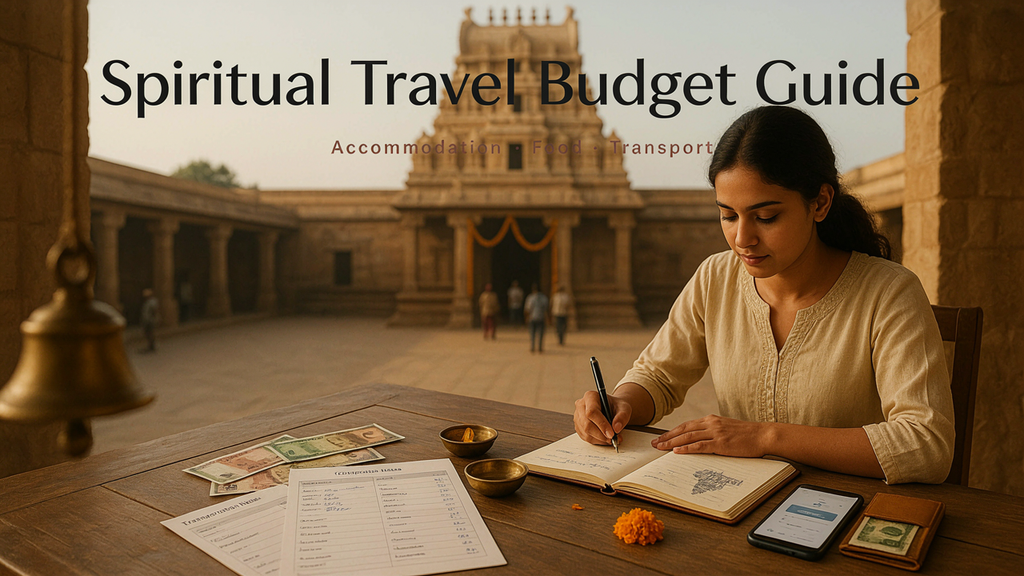
There is no reliable single budget for an Aaj Ki Tithi Kya Hai trip because the cost depends on where you travel.
| Expense | Budget Traveler | Mid-Range Traveler | Luxury Traveler |
| Accommodation | Guesthouse or basic stay | Comfortable hotel | Premium hotel |
| Food | Local eateries | Restaurants and local dining | Premium restaurants |
| Transport | Public transport/shared rides | Taxi + public transport | Private transfers |
| Attractions | Free/low-cost sites | Paid attractions + experiences | Premium experiences |
| Activities | Temple and cultural visits | Guided experiences | Private tours |
| Overall Cost | Destination-dependent | Destination-dependent | Destination-dependent |
The best way to build a realistic budget is to calculate:
Transport + hotel + food + local travel + entry fees + religious offerings + shopping + emergency allowance.
Prices can change quickly because of season, festivals, availability, exchange rates and local demand.
A Practical 1-Day Tithi Travel Itinerary
A one-day itinerary works well if you are visiting a nearby temple or pilgrimage town.
| Time | Activity |
| Morning | Check the local Panchang and visit the main temple |
| Late Morning | Breakfast and explore nearby heritage streets |
| Afternoon | Lunch and visit a museum, market or cultural site |
| Evening | Attend an appropriate aarti or riverfront experience |
| Night | Return to accommodation and prepare for departure |
If your religious observance depends on a particular tithi ending time, plan the temple visit around the local Panchang rather than using a generic clock time.
A Practical 2-Day Spiritual Itinerary
Day 1
- Arrive and check in.
- Visit the main temple.
- Explore the historic neighborhood.
- Enjoy local vegetarian cuisine.
- Attend an evening cultural or spiritual experience where permitted.
Day 2
- Begin with the day’s Panchang.
- Visit another important temple or sacred site.
- Explore a market or heritage attraction.
- Enjoy a relaxed local meal.
- Return home or continue to your next destination.
For larger pilgrimage cities, adding a third day gives you more time for surrounding attractions.
Family-Friendly and Picnic-Friendly Places

A tithi-based trip can also be suitable for families when the itinerary balances religious activities with rest.
Look for:
- Public gardens
- Riverside promenades
- Heritage areas
- Temple courtyards where visitors are permitted
- Scenic viewpoints
- Museums
- Cultural centers
- Family-friendly parks
- Nature areas outside busy temple districts
For young children, avoid planning an entire day around queues and crowded temple areas. Include regular breaks, water, meals and quieter sightseeing.
India’s official tourism platform lists spiritual travel alongside nature, heritage, recreation and family-oriented experiences, showing how these interests can be combined in one journey.
Image Caption: A peaceful family moment near a riverside or heritage area during a spiritual journey.
Best Photography and Scenic Spots
A tithi-focused journey can produce beautiful cultural photographs without needing elaborate equipment.
Good photography opportunities include:
- Temple exteriors
- Historic architecture
- River ghats
- Traditional markets
- Sunrise near a sacred river
- Sunset from permitted public viewpoints
- Festival decorations
- Floral offerings
- Traditional doors and courtyards
- Landscapes around pilgrimage towns
Always follow photography restrictions inside temples and religious buildings. Some ceremonies or worshippers may not want to be photographed.
For sunrise and sunset photography, arrive early and check local access rules.
Local Culture, Traditions and Temple Etiquette
Understanding local customs can make a spiritual trip more respectful.
Dress Respectfully
Many temples expect modest clothing. Requirements vary, so check the temple’s current visitor rules.
Remove Footwear Where Required
Shoes are commonly removed before entering designated temple areas.
Respect Rituals
Do not interrupt ceremonies for photographs or personal convenience.
Ask Before Photographing People
This is particularly important during prayer, worship and private religious moments.
Follow Queue Systems
Busy pilgrimage sites may have separate arrangements for different types of visitors or ceremonies.
Be Careful With Offerings
Use official or clearly identified counters where applicable and ask about donation or offering procedures if you are uncertain.
The details of etiquette vary from temple to temple, so local instructions should take priority.
Safety and Practical Travel Tips
A spiritual journey is usually easier when planned around practical details.
Keep Important Documents Safe
Carry:
- Passport or government ID
- Visa or travel authorization where required
- Hotel confirmation
- Transport tickets
- Emergency contacts
- Copies of important documents
Carry Some Cash
Small vendors, temple areas and local transport may not always accept cards or digital payments.
Stay Hydrated
Long queues and outdoor walking can be tiring, particularly in warm weather.
Check Weather Conditions
Weather can change the comfort and safety of outdoor sightseeing. India’s climate varies substantially by region.
Confirm Temple Timings
Temple schedules can change for festivals, special ceremonies, maintenance or crowd management.
Be Careful With Unofficial Services
Use clearly identified transportation, accommodation and ticketing services whenever possible.
Check Entry and Visa Rules
International travelers should verify current visa and entry requirements through official government sources before booking a trip.
What to Pack for a Tithi-Based Spiritual Trip
Your packing list should match the destination and season.
Essentials
- Comfortable walking shoes
- Modest temple-appropriate clothing
- Light layers
- Personal medicines
- Sunscreen
- Reusable water bottle
- Phone and charger
- Power bank
- Identification documents
- Small day bag
- Hand sanitizer
- Basic first-aid items
For Temple Visits
- Easy-to-remove footwear
- Clean, comfortable clothing
- A small cloth or scarf if appropriate
- Small amount of cash for local purchases
For Mountain Pilgrimages
If your destination is in the Himalayas or another high-altitude region, add suitable warm layers and weather-appropriate equipment. Mountain pilgrimage conditions can be substantially different from city temple visits; for example, Kedarnath is a high-altitude Himalayan pilgrimage destination.
How Tithi Can Improve Your Travel Planning
A Panchang can help organize a spiritual journey in a more meaningful way.
Instead of simply choosing a random travel date, you can:
- Identify the tithi you want to observe.
- Select a destination connected with your spiritual interests.
- Check the local Panchang for that destination.
- Confirm temple opening and ritual schedules.
- Book transportation early if the date coincides with a major festival.
- Reserve accommodation near your main activities.
- Leave extra time for crowds.
- Keep your itinerary flexible around religious observances.
Official Indian tourism resources also organize travel around spiritual, heritage, cultural and festival experiences, making it possible to combine pilgrimage with broader sightseeing.
Common Mistakes When Checking Aaj Ki Tithi Kya Hai
Using the Tithi From Another City
A tithi transition can occur at a different local time depending on location.
Assuming the Tithi Changes at Midnight
Unlike the Gregorian calendar date, a tithi can change during the day.
Ignoring Sunrise
Many Hindu calendar calculations and religious observances use sunrise as an important reference.
Planning Only Around the Calendar Date
If you are traveling for a temple ritual, also check the temple’s own schedule.
Leaving No Time for Crowds
Festival and pilgrimage dates can make popular spiritual destinations much busier than usual.
SEO-Friendly Search Terms for This Guide
This guide naturally covers related searches such as:
- Aaj Ki Tithi Kya Hai
- Aaj ki tithi 2026
- today’s tithi
- today Hindu tithi
- Hindu calendar today
- today’s Panchang
- today’s tithi and nakshatra
- Aaj Ka Panchang
- Krishna Paksha tithi
- Shukla Paksha tithi
- Hindu lunar calendar
- today’s Hindu calendar
- tithi today in India
- tithi today in Pakistan
- spiritual travel in India
- Hindu pilgrimage travel guide
- temple travel guide
- Panchang for travel planning
Suggested Image ALT Text
- Aaj Ki Tithi Kya Hai 2026 Hindu Panchang guide
- Hindu Panchang showing today’s tithi and nakshatra
- Krishna Paksha Panchami Hindu calendar
- Spiritual travel and Hindu temple pilgrimage guide
- Traditional Panchang calendar for daily tithi
- Hindu temple visit planned according to tithi
- Spiritual pilgrimage destination in India
- Devotees visiting a historic Hindu temple
- Hindu lunar calendar and tithi travel planning
- Aaj Ki Tithi Kya Hai today Panchang information
FAQs
What is Aaj Ki Tithi Kya Hai today in the Hindu calendar?
Aaj Ki Tithi Kya Hai depends on your location and the local Panchang calculation. The tithi can change during the day, so check your city’s timings.
How can I find Aaj Ki Tithi Kya Hai for my city?
Use a location-specific Hindu Panchang and select your exact city and date. This gives more accurate tithi, sunrise, nakshatra, and muhurat timings.
Does Aaj Ki Tithi Kya Hai change from one location to another?
Yes, the ending time of a tithi can vary by location. Differences in local sunrise and astronomical calculations can affect the reported time.
Why is Aaj Ki Tithi Kya Hai important for spiritual travel?
Tithi can help travelers plan temple visits, religious observances, fasting, puja, and other spiritual activities. It can also help organize trips around important Hindu dates.
Can Aaj Ki Tithi Kya Hai help with temple visit planning?
Yes. Checking the local Panchang before visiting can help you understand the day’s tithi and other timings. Temple opening and ritual schedules should also be confirmed separately.
How is Aaj Ki Tithi Kya Hai different from the normal calendar date?
A Gregorian date normally changes at midnight, while a Hindu tithi can begin or end at another time. Therefore, one calendar date may contain parts of two different tithis.
What should travelers check along with Aaj Ki Tithi Kya Hai?
Travelers should also check the nakshatra, sunrise, sunset, muhurat, weather, temple timings, transportation, and accommodation availability before their journey.
Is Aaj Ki Tithi Kya Hai useful for family spiritual trips?
Yes, families can use the Panchang to plan temple visits and cultural activities. It is helpful to keep the itinerary flexible for children and older travelers.
Can I plan a pilgrimage based on Aaj Ki Tithi Kya Hai?
Yes, a tithi can be one part of pilgrimage planning. Choose the destination, then check its local Panchang and confirm any special temple or festival arrangements.
Where should I check Aaj Ki Tithi Kya Hai before traveling?
Check a reliable location-based Panchang shortly before your trip. For important religious observances, also verify the information with the relevant temple or local authority.
Conclusion
Knowing Aaj Ki Tithi Kya Hai can make a spiritual journey easier to organize and more meaningful.
A location-specific Panchang provides better information than a general calendar.
Travelers can use it to plan temple visits, rituals, cultural activities, and pilgrimage dates.
It is also important to check local weather, transport, accommodation, and temple schedules.
With careful planning, a tithi-based trip can be peaceful, practical, and enjoyable.
Aaj Ki Tithi Kya Hai is only one part of planning a successful Hindu spiritual journey.
Travelers should also consider the destination, local customs, seasonal conditions, and available facilities.
Checking the exact tithi for the place you will visit helps avoid timing confusion.
A flexible itinerary is especially useful during festivals and busy pilgrimage periods.
This approach allows you to enjoy both the spiritual purpose and cultural experience of your trip.
