

If you want to plan your important activities at an auspicious time, checking Aaj Ka Choghadiya Tuesday 6 October 2026 can be helpful. Choghadiya is a traditional Hindu timekeeping system that divides the day into different periods considered favorable or unfavorable. It is commonly used for puja, travel, business activities, new beginnings, and other important work.
In this guide, you will find useful information about Aaj Ka Choghadiya Tuesday 6 October 2026, including today’s Shubh Muhurat, auspicious timings, and Rahu Kaal. The exact timings can vary depending on your city because they are calculated using local sunrise and sunset times. Use your local Choghadiya timings to plan your day more accurately.
Quick Spiritual Travel Overview
| Information | Details |
| Destination | India – spiritual and pilgrimage travel |
| Reference Location for Timings | New Delhi, India |
| Date | Tuesday, 6 October 2026 |
| Panchang Tithi | Krishna Paksha Ekadashi |
| Nakshatra | Ashlesha until 10:17 PM in New Delhi |
| Main Spiritual Destinations | Varanasi, Haridwar, Rishikesh, Ujjain, Mathura, Ayodhya, Nashik |
| Best Travel Style | Temple visits, pilgrimage, river ghats, yoga, meditation and cultural travel |
| Currency | Indian Rupee (INR) |
| Recommended Duration | 1–3 days for one spiritual city; longer for a multi-city pilgrimage |
| Main Transport | Flights, trains, buses, taxis and private cars |
| Budget | Highly variable; roughly ₹1,500–₹3,500/day for careful budget travel, with higher costs for comfort and luxury |
The daily budget is an indicative 2026 planning range rather than a fixed quotation. Travel costs vary substantially between cities and seasons.
What Is Choghadiya and Why Does It Matter for Travelers?
Choghadiya, also spelled Chaughadiya, Chogadia, or Choghadiya Muhurat, is a traditional Hindu timekeeping system used to identify favorable and unfavorable periods during the day and night. It has traditionally been associated with travel Muhurta and is now also commonly used to choose times for other important activities.
The daylight period from sunrise to sunset is divided into eight sections. The night from sunset until the next sunrise is divided into another eight sections. The length of each section changes because sunrise and sunset change from place to place and throughout the year.
The four traditionally favorable categories are:
| Choghadiya | Traditional Character | Useful Travel Application |
| Amrit | Best / highly favorable | Beginning important spiritual activities |
| Shubh | Good / auspicious | General auspicious starts |
| Labh | Gain / favorable | Business-related or important practical starts |
| Char | Neutral / movable | Often considered suitable for movement and travel |
| Rog | Traditionally unfavorable | Avoid for important new starts |
| Kaal | Traditionally unfavorable | Avoid for important new starts |
| Udveg | Traditionally unfavorable | Avoid important auspicious beginnings |
Choghadiya is a traditional astrological practice, so it should be treated as a cultural planning tool rather than a scientific guarantee of an outcome.
Aaj Ka Choghadiya Tuesday 6 October 2026: New Delhi Reference Timings
For Aaj Ka Choghadiya Tuesday 6 October 2026, Drik Panchang gives New Delhi sunrise at 6:17 AM and sunset at 6:01 PM. The daytime Choghadiya periods are calculated from that local solar interval.
Day Choghadiya
| Time in New Delhi | Choghadiya | Traditional Indication |
| 6:17 AM – 7:45 AM | Roga | Avoid important beginnings |
| 7:45 AM – 9:13 AM | Udvega | Traditionally unfavorable |
| 9:13 AM – 10:41 AM | Chara | Neutral / movement-oriented |
| 10:41 AM – 12:09 PM | Labha | Favorable |
| 12:09 PM – 1:37 PM | Amrita | Highly favorable |
| 1:37 PM – 3:05 PM | Kala | Traditionally unfavorable |
| 3:05 PM – 4:33 PM | Shubha | Favorable Choghadiya, but overlaps Rahu Kaal |
| 4:33 PM – 6:01 PM | Roga | Traditionally unfavorable |
These timings are for New Delhi only. They should not be copied directly for another Indian city because Choghadiya depends on local sunrise and sunset.
For nighttime planning, New Delhi’s reference table continues from sunset through the next sunrise, with Labha, Udvega, Shubha, Amrita, Chara, Roga and Kala periods.
The Most Useful Daytime Window for Travel
Among the New Delhi daytime periods, Chara from 9:13 AM to 10:41 AM is particularly relevant to travel because Chara is considered a movable or travel-oriented period. However, this exact window also coincides with Yamaganda, so travelers who follow multiple Panchang rules should not treat it as automatically ideal.
The 12:09 PM–1:37 PM Amrita Choghadiya is traditionally very favorable, but it coincides with Gulikai Kalam for the same New Delhi calculation. This illustrates why checking only one Panchang element can give an incomplete picture.
Image Caption: A traditional Indian Panchang and Choghadiya schedule beside a map used for planning a spiritual journey.
How Is a Choghadiya Calculator Calculated?
A Choghadiya calculator begins with the local sunrise and sunset. The period between sunrise and sunset is divided into eight roughly equal parts for the daytime schedule. The period between sunset and the next sunrise is similarly divided for the nighttime schedule.
The sequence of Choghadiya categories depends on the weekday and traditional planetary rulership. Tuesday therefore follows a different sequence from Monday, Wednesday, Thursday, or other weekdays.
A practical calculation process looks like this:
- Determine the exact local sunrise.
- Determine the local sunset.
- Calculate the length of daylight.
- Divide that daylight duration into eight parts.
- Assign the appropriate Tuesday Choghadiya sequence.
- Repeat the process between sunset and the following sunrise for night Choghadiya.
- Check other Panchang restrictions, such as Rahu Kaal, Yamaganda and Gulikai Kalam.
This is why a proper Choghadiya calculator should include your city rather than relying only on the calendar date.
Rahu Kaal and Shubh Muhurat on Tuesday, 6 October 2026
Rahu Kaal is another traditional period consulted when selecting a time to begin important activities. It is calculated from the local sunrise-to-sunset period and is traditionally considered unsuitable for starting auspicious work.
For New Delhi on October 6, 2026, the main timings are:
| Period | New Delhi Timing |
| Brahma Muhurta | 4:39 AM – 5:28 AM |
| Abhijit Muhurat | 11:46 AM – 12:33 PM |
| Vijaya Muhurta | 2:07 PM – 2:53 PM |
| Rahu Kaal | 3:05 PM – 4:33 PM |
| Yamaganda | 9:13 AM – 10:41 AM |
| Gulikai Kalam | 12:09 PM – 1:37 PM |
| Amrit Kalam | 8:44 PM – 10:17 PM |
| Sarvartha Siddhi Yoga | 6:17 AM – 10:17 PM |
These times are calculated for New Delhi and should be recalculated for another destination.
One important point is that Shubha Choghadiya runs from 3:05 PM to 4:33 PM in New Delhi, exactly overlapping with Rahu Kaal. Drik Panchang specifically advises rejecting an otherwise favorable Choghadiya when it overlaps with Rahu Kaal.
For a traveler who follows both systems, this means the afternoon Shubha period should not automatically be selected merely because its Choghadiya label is “Shubha.”
Best Spiritual Destinations in India for a Choghadiya-Based Journey
India offers a wide range of destinations where a timing-based pilgrimage can be combined with temples, riverfronts, meditation, heritage and local culture.
Varanasi, Uttar Pradesh
Varanasi is one of India’s most important spiritual cities. Its Ganga ghats, Kashi Vishwanath Temple, Assi Ghat, Dashashwamedh Ghat and historic lanes create a strong setting for a traditional pilgrimage. The official tourism portal also highlights sunrise experiences along the Ganga and the city’s long religious and scholarly heritage.
The city works especially well for travelers who enjoy:
- Temple visits
- Sunrise by the Ganga
- Ganga Aarti
- Heritage walks
- Spiritual photography
- Local food and traditional markets
Haridwar, Uttarakhand
Haridwar is centered around the Ganga and the famous Har Ki Pauri. The official tourism authority identifies Har Ki Pauri as a major spiritual landmark and notes that evening Ganga Aarti takes place at Brahmakund.
Haridwar suits travelers seeking a classic pilgrimage environment, riverside rituals, temple visits and short spiritual escapes.
Rishikesh, Uttarakhand
Rishikesh combines spirituality with nature and wellness. It is known for yoga, meditation, ashrams, the Ganga, Triveni Ghat and nearby adventure experiences. The official tourism portal describes September–November and February–April as particularly suitable periods for spiritual exploration and outdoor activities.
Ujjain, Madhya Pradesh
Ujjain is particularly significant for Shiva devotees because of Mahakaleshwar Jyotirlinga. The city also has spiritual sites along the Kshipra River, including Ram Ghat.
Mathura and Vrindavan, Uttar Pradesh
Mathura is an important destination for Krishna-related pilgrimage, while nearby Vrindavan is home to temples and ashrams associated with Krishna and Radha. The official tourism portal highlights Banke Bihari Temple and ISKCON Temple among the area’s major attractions.
Ayodhya, Uttar Pradesh
Ayodhya is a major pilgrimage destination with Ram Mandir, Hanuman Garhi, Kanak Bhawan, Nageshwarnath Temple and sacred ghats along the Sarayu.
Nashik and Trimbakeshwar, Maharashtra
Nashik offers a combination of temple heritage, riverfront experiences and the sacred Panchavati area. Trimbakeshwar Temple is another important spiritual destination, with nearby Kushavarta Kund and Brahmagiri Hills.
Things to Do During a Choghadiya-Based Spiritual Trip
A Choghadiya-based journey does not need to be entirely focused on rituals. Travelers can combine spiritual activities with sightseeing and local experiences.
A balanced day might include a temple visit in the morning, a relaxed local breakfast, heritage sightseeing before the afternoon heat, and an evening riverfront experience.
Popular activities include:
- Visiting temples and sacred ghats
- Attending Ganga Aarti where available
- Taking part in permitted prayer or puja activities
- Practicing meditation or yoga
- Exploring old markets and spiritual bazaars
- Taking heritage walks
- Enjoying local vegetarian cuisine
- Photographing sunrise and sunset landscapes
- Visiting museums or historical landmarks
- Spending quiet time near a river or temple garden
For example, Rishikesh combines yoga and meditation with the Ganga and adventure activities, while Varanasi offers ghats, temples, cultural lanes and sunrise river experiences.
Best Time to Visit India for Spiritual Travel
There is no single perfect season for all of India because the country covers a huge geographical area. Northern pilgrimage destinations such as Varanasi, Haridwar and Rishikesh experience a different climate from southern and coastal regions.
October can be an appealing month for spiritual travel in many northern destinations because the monsoon season is winding down, although temperatures can still be warm in some locations. For example, Incredible India lists Varanasi’s October temperature range at approximately 16.4°C–35.9°C, while Rishikesh’s official tourism page identifies September–November as one of its favorable travel periods.
| Travel Period | What to Expect | Best For |
| October–November | Generally pleasant in many northern areas, but city-specific conditions vary | Pilgrimage and sightseeing |
| December–February | Cooler conditions in much of northern India | Heritage and temple exploration |
| March–April | Warmer, with many regions still comfortable | Short spiritual breaks |
| May–June | Hot conditions in many inland cities | Early-morning-focused trips |
| July–September | Monsoon influence varies by region | Green landscapes and select spiritual trips |
Always check the local weather forecast before departure because conditions can affect roads, outdoor activities and walking routes.
How to Reach India’s Main Spiritual Destinations
Because this guide covers several cities, transport should be chosen according to your selected pilgrimage circuit.
By Air
Major spiritual destinations are served by regional or major airports. Varanasi has Lal Bahadur Shastri International Airport (VNS), while Ujjain is served through nearby Indore airport, and Haridwar is accessible through Dehradun’s Jolly Grant Airport as well as Delhi.
Ayodhya also has Maharishi Valmiki International Airport, with Lucknow providing another airport option.
For flights, always verify the latest schedules and airport transfer options before booking.
By Train
Train travel is particularly useful for pilgrimage routes in northern and central India. Varanasi has Varanasi Junction, Ujjain has Ujjain Junction, Haridwar has Haridwar Junction, Nashik is connected through Nasik Road, and Ayodhya has Ayodhya Junction.
By Road
Buses, intercity coaches, taxis and private vehicles can be useful for shorter pilgrimage circuits. Road conditions and travel times depend heavily on traffic and weather, so allow extra time if you need to arrive before a particular Muhurat.
Local Transport
Once there, travelers commonly use:
- Auto-rickshaws
- App-based taxis where available
- Local taxis
- City buses
- E-rickshaws in some pilgrimage areas
- Walking around compact temple and market districts
- Private cars for multi-site day trips
Temple zones can become crowded, so walking can sometimes be more practical than driving directly to a major shrine.
Distance and Travel Time from Delhi: Practical Reference Routes
For travelers using Delhi as a starting point, these routes give a sense of the scale of a spiritual journey. They are approximate reference figures, not fixed journey guarantees.
| Starting Point | Destination | Approx. Distance | Approx. Travel Time | Useful Transport |
| Delhi | Mathura | ~145–164 km | ~1 hr 20 min by train; ~2–3 hrs by road | Train/car |
| Delhi | Haridwar | ~193–220 km | ~4–6 hrs depending on mode | Train/bus/car |
| Delhi | Ujjain | ~671 km road; ~747 km city-to-city reference | Around 8–13+ hrs depending on route/mode | Train/road |
| Delhi | Varanasi | ~828 km by fastest road corridor | ~13 hrs by road in favorable conditions | Flight/train/car |
| Delhi | Nashik | Over 1,000 km | Long-distance journey; flight/train can be more practical | Flight/train |
Current route sources show substantial differences depending on whether road, rail or straight-line distance is used, so travelers should check the exact route immediately before departure.
Where to Stay During a Spiritual Journey
Accommodation works best when it matches your itinerary rather than simply choosing the cheapest room.
For temple-centered trips, consider staying within convenient reach of the main pilgrimage area. In cities such as Varanasi and Haridwar, riverside or old-city areas may provide easier access to spiritual attractions, but they can also be busier.
| Traveler Type | Recommended Stay Style |
| Budget traveler | Hostel, guesthouse or simple hotel |
| Mid-range traveler | Comfortable city hotel or well-reviewed guesthouse |
| Family | Quiet hotel with easy road access and suitable room arrangements |
| Spiritual traveler | Ashram or pilgrimage-oriented accommodation where available |
| Luxury traveler | Premium hotel or resort with private transportation |
Hotel rates change according to city, festival dates, weekends, room type and booking date. Check recent rates and cancellation policies before committing.
Food and Local Cuisine on a Spiritual Trip
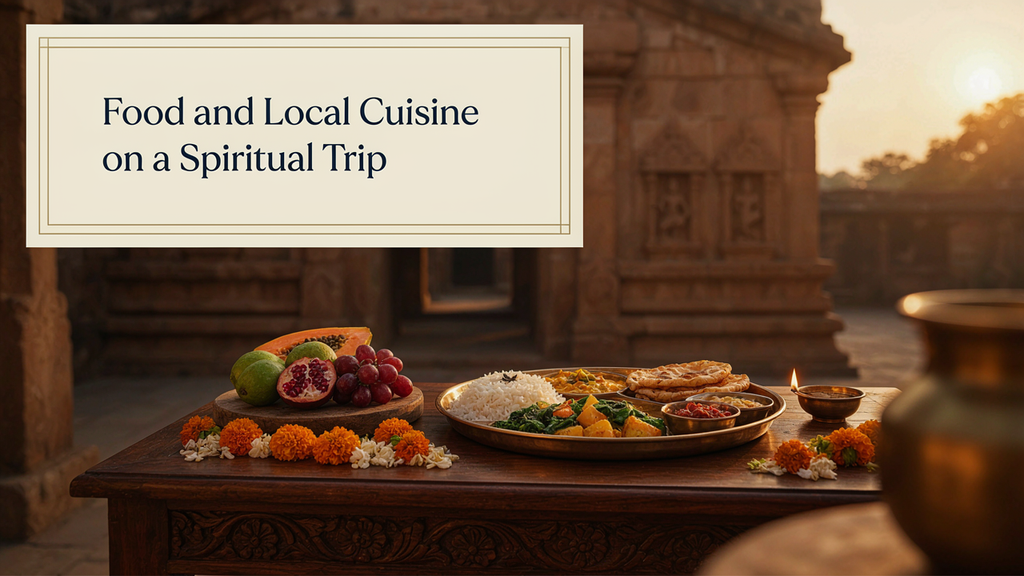
Food is an important part of pilgrimage travel, but the best choices depend on personal dietary preferences and religious practices.
Across northern and central India, travelers can find vegetarian thalis, dal, roti, rice, seasonal vegetables, poha, kachori, sweets, lassi and regional snacks.
| Food Experience | Where It Fits a Spiritual Trip |
| Vegetarian thali | Complete, filling meal |
| Local breakfast | Useful before temple sightseeing |
| Kachori and poha | Popular regional-style breakfast options |
| Lassi | Refreshment in northern pilgrimage areas |
| Seasonal fruit | Light option during busy days |
| Temple or devotional food | Try where permitted and appropriate |
In crowded pilgrimage districts, choose clean, busy establishments with good turnover and drink packaged or properly treated water where local water quality is uncertain.
India Spiritual Travel Budget for 2026
India allows several travel styles, from simple guesthouses and public transportation to high-end hotels and private drivers.
Recent 2026 travel-budget guides place economical travel at roughly ₹1,500–₹3,500 per person per day, while comfortable mid-range and luxury travel can cost significantly more. These figures exclude international airfare and vary by destination and travel style.
| Expense | Budget Traveler | Mid-Range Traveler | Luxury Traveler |
| Accommodation | ₹400–1,200+ | ₹2,000–4,000+ | ₹7,000–15,000+ |
| Food | ₹300–600 | ₹800–1,500 | ₹2,000–4,000+ |
| Local Transport | ₹150–400 | ₹500–1,200 | ₹1,500–3,000+ |
| Sightseeing | ₹300–700 | ₹500–900 | ₹700–1,200+ |
| Daily Total | About ₹1,500–3,000+ | About ₹4,500–8,000+ | ₹13,000–24,000+ |
These are planning estimates, not official tariffs. Prices can rise around festivals, major religious events and peak travel dates.
A Practical Three-Day Choghadiya Spiritual Travel Itinerary
A three-day journey is long enough to experience one major spiritual center without creating an exhausting schedule.
Suggested Three-Day Varanasi Itinerary
| Day | Morning | Afternoon | Evening |
| Day 1 | Sunrise near the Ganga and temple area | Rest, lunch and heritage lanes | Dashashwamedh Ghat / Ganga Aarti |
| Day 2 | Major temple visit and local breakfast | Sarnath or another cultural attraction | Riverside walk and relaxed dinner |
| Day 3 | Quiet sunrise experience | Shopping, temples or cultural sites | Departure planning |
Varanasi’s official tourism information highlights Dashashwamedh Ghat, Assi Ghat, Kashi Vishwanath Temple, Sarnath and the city’s historic lanes, making it especially suitable for a combination of spiritual and cultural travel.
For a Choghadiya-focused trip, use the local city calculation each morning and then fit flexible sightseeing around your selected periods. Do not force a temple visit into a supposedly favorable slot if temple entry procedures, queues, traffic or safety make the timing impractical.
Image Caption: Pilgrims and travelers exploring the sacred ghats of Varanasi during a three-day spiritual journey.
Family-Friendly and Picnic-Friendly Spiritual Travel

Spiritual travel can work well for families when the itinerary includes sufficient rest and avoids packing too many temples into one day.
Rishikesh offers riverside areas, spiritual sites and nature experiences, while Haridwar’s Ganga waterfront and surrounding attractions can provide a broader mix of sightseeing and religious experiences.
For families, plan around:
- Short walking distances where possible
- Morning sightseeing before stronger daytime heat
- Frequent water and meal breaks
- Comfortable footwear
- Child-friendly rest periods
- Less crowded alternatives when major shrines become busy
For a picnic, use designated public recreation or nature areas where permitted rather than eating in restricted temple or heritage zones.
Best Photography and Scenic Spots for a Spiritual Journey
India’s spiritual cities offer excellent opportunities for photography, particularly around sunrise and sunset.
Varanasi: the Ganga ghats at sunrise, riverfront architecture and evening Aarti atmosphere offer some of the most recognizable spiritual scenes in the country.
Haridwar: Har Ki Pauri and the Ganga waterfront provide strong options for riverside and devotional photography, especially around the evening Aarti.
Rishikesh: Triveni Ghat, the Ganga and surrounding Himalayan landscape create a combination of spiritual and natural scenery.
Ujjain: Ram Ghat and the sacred Kshipra riverfront are particularly atmospheric around devotional gatherings and evening rituals.
Always ask before photographing worshippers or ceremonies, particularly in sensitive religious spaces.
Image Caption: Golden-hour light over a sacred Indian riverfront, with temples and pilgrims creating a peaceful spiritual travel scene.
Local Culture, Customs and Spiritual Etiquette
Pilgrimage destinations are living religious communities, not simply sightseeing attractions. Travelers should behave respectfully even when they are visiting primarily for photography or cultural interest.
Dress modestly when entering temples or sacred places. Follow footwear rules, queue instructions and photography restrictions. Some temples have separate arrangements for men and women, restricted areas, security checks or special rules during festivals.
When visiting a ghat associated with cremation rituals, such as Manikarnika Ghat in Varanasi, maintain particular sensitivity and avoid intrusive photography. The official tourism portal describes it as one of the city’s significant and solemn sacred spaces.
During busy festivals, allow extra time for transport and queues. Temple schedules and entry rules can change, so confirm the latest information directly with the temple or local tourism authority before traveling.
Safety Tips and Packing Guide for a Choghadiya Travel Day
Choghadiya should complement practical travel planning, not replace it. A favorable time does not make an unsafe road journey safe, and a religious itinerary should always account for weather, traffic, local conditions and personal comfort.
India’s official tourism portal lists 112 as the national emergency number and 1363 as the tourist helpline.
International travelers should also check India’s official visa requirements before booking. The Government of India’s visa portal states that foreign nationals generally need a valid passport with an appropriate visa or qualifying eVisa/OCI status, subject to applicable exemptions.
Practical Packing Checklist
- Comfortable walking shoes or sandals
- Modest, breathable clothing
- Light shawl or scarf for temple visits
- Reusable water bottle
- Sunscreen and sunglasses
- Small personal first-aid kit
- Phone, charger and power bank
- Copies of essential travel documents
- Small day bag
- Any required personal medicines
- Lightweight rain protection during unsettled weather
- A simple notebook or phone app for recording local Panchang timings
For older travelers and families, comfortable footwear and a slower itinerary can make a major difference.
How to Use Aaj Ka Choghadiya Tuesday 6 October 2026 for Travel Planning
The most practical approach is to use Choghadiya as one layer of a larger travel plan.
First, select the destination. Next, calculate the Panchang for that exact city. Then check sunrise, sunset, Choghadiya, Rahu Kaal and any other Muhurta you personally follow. Finally, compare those times with actual transport schedules, temple entry rules, weather, meal breaks and walking time.
For example, if a traveler is visiting Varanasi, they should not simply copy the New Delhi timetable shown in this article. The official Panchang methodology itself emphasizes that Panchang is geo-location specific and that separate calculations are created for different cities.
This approach also prevents a common mistake: treating one “Shubh” label as more important than every other factor. On October 6 in New Delhi, the Shubha Choghadiya overlaps exactly with Rahu Kaal, while other auspicious periods overlap with Yamaganda or Gulikai Kalam.
A Simple Planning Formula
Destination → Local Sunrise/Sunset → Choghadiya → Rahu Kaal → Other Muhurat → Temple Timing → Transport → Actual Journey
That is a much more reliable way to turn a Panchang into a workable spiritual travel itinerary.
FAQs
What is Aaj Ka Choghadiya Tuesday 6 October 2026?
Aaj Ka Choghadiya Tuesday 6 October 2026 shows the day’s auspicious and inauspicious time periods. It helps people choose suitable times for important activities.
How can I check Aaj Ka Choghadiya Tuesday 6 October 2026?
You can check the Choghadiya based on your city and local sunrise and sunset times. This gives more accurate timings for your location.
What is the best Shubh Muhurat in Aaj Ka Choghadiya Tuesday 6 October 2026?
The best Shubh Muhurat depends on the specific activity and your location. Shubh Choghadiya periods are generally preferred for starting important work.
Does Aaj Ka Choghadiya Tuesday 6 October 2026 include Rahu Kaal?
Yes, Choghadiya guides commonly include Rahu Kaal along with other daily time periods. Rahu Kaal is traditionally avoided for starting auspicious activities.
Why is Aaj Ka Choghadiya Tuesday 6 October 2026 important?
It helps people identify favorable and unfavorable periods during the day. Many families use it when planning religious ceremonies, travel, or new beginnings.
Is Aaj Ka Choghadiya Tuesday 6 October 2026 the same everywhere?
No, Choghadiya timings can vary by location because they depend on local sunrise and sunset. Always use timings calculated for your city.
Can I use Aaj Ka Choghadiya Tuesday 6 October 2026 for starting a new business?
Yes, many people consult Choghadiya before starting a business or important project. Choose a suitable Shubh period according to your location and tradition.
Can Aaj Ka Choghadiya Tuesday 6 October 2026 help with travel planning?
Yes, Choghadiya can be used to select a traditionally favorable time for beginning a journey. Local timings should be checked before making plans.
What should I avoid during Aaj Ka Choghadiya Tuesday 6 October 2026?
Traditionally, people avoid starting important or auspicious activities during inauspicious periods. Rahu Kaal and other unfavorable Choghadiya periods are commonly avoided.
How accurate is Aaj Ka Choghadiya Tuesday 6 October 2026?
The accuracy depends on using the correct city and local sunrise and sunset data. Different locations may therefore have slightly different Choghadiya timings.
Conclusion
Aaj Ka Choghadiya Tuesday 6 October 2026 can help you plan important activities around traditionally favorable times.
It provides a simple way to understand Shubh Muhurat and other daily periods.
Many people use it for puja, travel, business, and new beginnings.
For the best results, always check timings based on your exact location.
This makes your daily planning more convenient and meaningful.
By following Aaj Ka Choghadiya Tuesday 6 October 2026, you can make informed choices about auspicious activities.
Choghadiya is a traditional timekeeping guide followed by many Hindu families.
Remember that timings can change from one city to another.
Use local sunrise and sunset information for better accuracy.
With the right timing, you can plan your important moments with greater confidence.
Read More: Choghadiya for Sunday, October 4, 2026 Aaj Ka Choghadiya, Shubh Muhurat & Choghadiya Timings
