

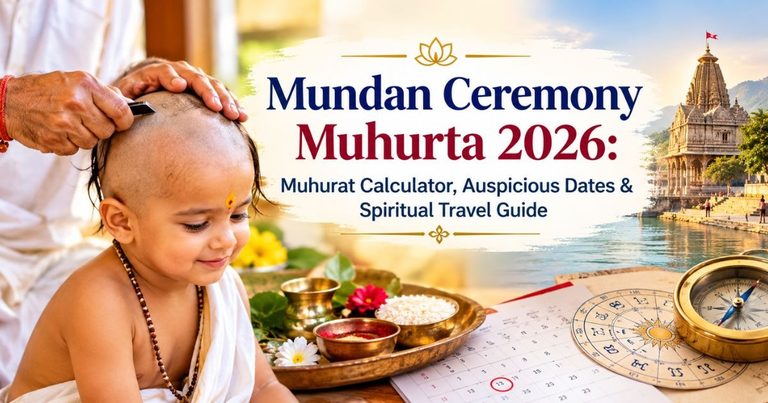
Planning an important Hindu ceremony often starts with choosing the right date and time. A suitable Mundan Ceremony Muhurta can help families select an auspicious time for a child’s first hair-cutting ceremony. Traditional Panchang factors such as Tithi, Nakshatra, weekday, and location may be considered when choosing the timing. With the right information, families can plan this special occasion with greater confidence and peace of mind.
A Muhurat Calculator can make it easier to explore auspicious timings for different Hindu ceremonies, including weddings, Grih Pravesh, Namkaran, and Mundan. When selecting a Mundan Ceremony Muhurta, families can consider traditional guidelines along with their preferred date and location. This guide explains how Muhurat calculations work and what to consider before finalizing the ceremony date. It also provides simple information to help families make a well-informed choice.
Quick Travel Overview
| Information | Details |
| Destination | India, with a focus on Hindu pilgrimage and temple travel |
| Country | India |
| Best Time to Visit | Choose the ceremony date first; for general North Indian sightseeing, cooler months are often more comfortable |
| Recommended Duration | 1–3 days for a ceremony-focused trip |
| Main Spiritual Bases | Varanasi, Haridwar, Ujjain, Ayodhya and other family-chosen pilgrimage centers |
| Language | Hindi and regional languages; English is widely useful in major tourist areas |
| Currency | Indian Rupee (INR) |
| Transportation | Flights, trains, buses, taxis and private cars |
| Approximate Budget | Highly variable by city, family size, transport and ceremony arrangements |
| Main Planning Tool | Location-specific Panchang/Muhurat calculator |
| Important Note | Verify the final date, time, temple rules and travel arrangements before booking |
What Is Mundan and Why Is the Muhurat Important?
Mundan, or Chudakarana, is traditionally described as a child’s first haircut and is counted among the important Hindu samskaras. The ritual is also known as Choula or tonsure. Traditional sources associate an auspicious performance with blessings such as longevity, strength and wellbeing; these are religious beliefs rather than medical claims.
The ceremony can be particularly meaningful when families connect it with prayer, darshan, offerings, blessings from elders and a visit to a sacred place. Some families choose to perform the ceremony at home, while others prefer a temple or pilgrimage setting that has significance for their family.
The word Muhurta refers to a selected period considered suitable for a particular activity. A Mundan Muhurat is therefore not simply a convenient appointment time. It is a time selected after considering relevant Panchang and astrological factors.
Family traditions differ considerably. The age of the child, preferred rituals, temple customs, regional practices and the advice of a family priest can all influence the final decision.
Image Caption: A family preparing for a traditional child’s first-hair ceremony in a sacred setting.
How a Muhurat Calculator Helps With Mundan Planning
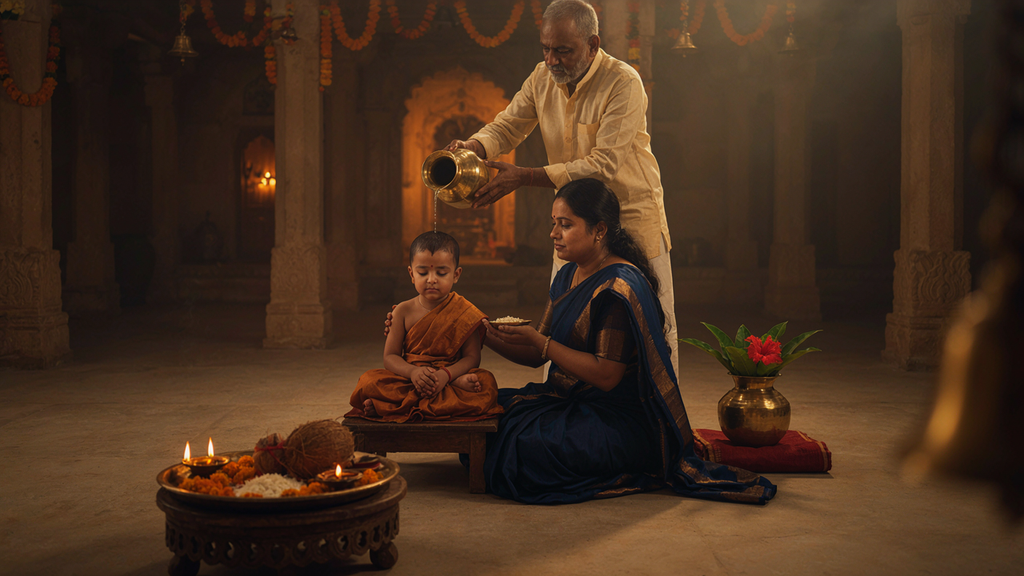
A Muhurat Calculator makes it easier to narrow down suitable periods instead of manually comparing every Panchang element. A typical calculation considers the selected city and date along with factors such as Tithi, Nakshatra, weekday and Lagna. Personalized calculations can also use the child’s birth information.
A practical calculation process looks like this:
| Step | What to Enter or Check |
| 1 | Year, such as 2026 |
| 2 | Ceremony city or exact location |
| 3 | Child’s birth details when a personalized calculation is required |
| 4 | Available dates |
| 5 | Tithi and Paksha |
| 6 | Nakshatra |
| 7 | Weekday |
| 8 | Lagna and other relevant factors |
| 9 | Dosha or prohibited periods |
| 10 | Final consultation with the family’s priest or qualified Panchang expert |
The most important travel lesson is simple: set the correct city before recording the Muhurat. Drik Panchang specifically notes that auspicious timings are location-based, and its 2026 pages demonstrate how available intervals change from one location to another.
For an overseas family traveling to India, calculate the ceremony according to the actual Indian destination rather than using a calculator set to the family’s home city abroad.
Mundan Ceremony Muhurta 2026: Traditional Factors to Check
There is no single universal formula accepted by every family or school of astrology. However, commonly referenced Mundana calculations consider several Panchang and astrological factors.
According to the 2026 Mundana guidance published by Drik Panchang, commonly considered factors include the following:
| Factor | Traditional Consideration |
| Tithi | Dwitiya, Tritiya, Panchami, Saptami, Dashami, Ekadashi and Trayodashi are listed as favorable |
| Nakshatra | Certain movable, gentle, friendly, short and selected other Nakshatras are preferred |
| Weekday | Monday, Wednesday, Thursday and Friday are generally considered favorable |
| Solar Months | Makara, Kumbha, Mesha, Vrishabha and Mithuna are listed as favorable in this calculation |
| Lagna | Certain Lagnas are avoided |
| Janma Factors | Janma Rashi and Janma Lagna may be considered |
| Planetary Conditions | Various planetary placements and strengths are assessed |
| Special Restrictions | Eclipse, Sankranti and certain other Panchang doshas may be avoided |
| Time of Day | Nighttime Mundana is traditionally avoided |
These rules should be treated as a traditional calculation framework, not as a substitute for the customs followed by your own family or community. Even apparently small differences in Panchang methods can change the selected window.
How Old Should a Child Be for Mundan?
Age is one of the questions parents commonly ask before selecting a date. One widely used calculation approach lists the third, fifth or seventh year for boys and even years for girls, while also noting that family customs can prevail. In some traditions, Mundan may be combined with another samskara, in which case the other ceremony’s Muhurat can affect the selection.
Do not assume that one age rule applies to every Hindu family. Confirm the practice followed by your community and family priest.
Where to Plan a Spiritual Mundan Trip in India
Because there is no destination in the title itself, the best approach is to treat India as the broader travel destination and select the actual city according to family tradition, priest availability and travel convenience.
Several major pilgrimage cities work well as spiritual travel bases because they combine temples, riverfronts, cultural experiences and established visitor infrastructure. This does not mean that every temple in these cities permits Mundan ceremonies, so ceremony arrangements must always be confirmed directly.
Varanasi
Varanasi is one of India’s best-known spiritual destinations, located along the Ganga and known for its temples, ghats, religious traditions and historic lanes. The official Incredible India tourism site highlights Kashi Vishwanath Temple, Dashashwamedh Ghat, Assi Ghat, Sarnath and other cultural attractions.
For families, Varanasi can combine the ceremony with a short pilgrimage, sunrise experiences, temple visits and time beside the Ganga.
Haridwar
Haridwar is another major pilgrimage center on the Ganga. Har Ki Pauri is its most recognized spiritual landmark, while nearby temples, ghats and bazaars provide additional experiences. Incredible India lists Haridwar Junction as the railway station and Jolly Grant Airport and Delhi airport as relevant air gateways.
Families should confirm in advance whether a preferred temple or priest permits the planned ceremony and what arrangements are required.
Ujjain
Ujjain, in Madhya Pradesh, is a major temple city on the Kshipra River. Its best-known shrine is Mahakaleshwar Temple, one of the twelve Jyotirlingas. The city also offers other temples, heritage sites and the Mahakal Lok area for visitors.
Ujjain is particularly appealing to families who want to combine ceremony planning with a deeper Shiva-focused pilgrimage.
Ayodhya
Ayodhya is an important Hindu pilgrimage destination associated with Lord Rama. The city includes major religious sites such as Shri Ram Janmabhoomi Mandir, Hanuman Garhi, Kanak Bhawan and the ghats along the Saryu.
For a family visit, plan enough time for crowd management, temple entry procedures and the child’s rest schedule.
Image Caption: Family pilgrimage travel in India can combine sacred rituals with temple visits and cultural sightseeing.
Best Time to Travel for a Mundan Ceremony
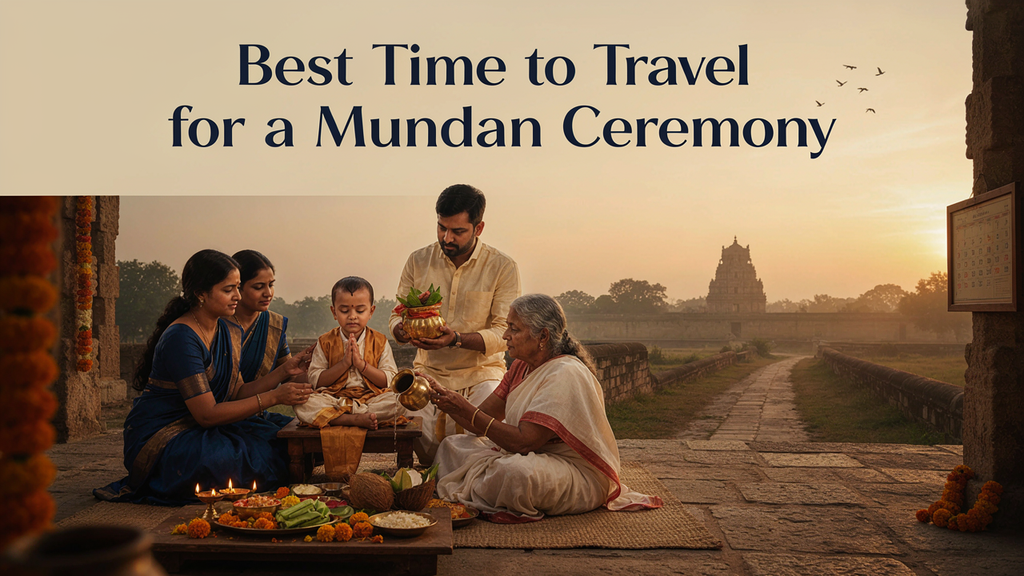
There are two different questions here: When is the Muhurat? and When is the most comfortable time to travel?
The first is determined by Panchang calculations and family tradition. The second depends on the destination’s climate, crowd levels and the needs of the child.
For a pilgrimage trip in North or Central India, many families find the cooler part of the year more comfortable for walking, temple visits and sightseeing. Varanasi’s official tourism guidance also highlights autumn as a particularly good season for visiting.
| Travel Period | General Planning View |
| October–November | Often comfortable for pilgrimage travel, but festivals can increase crowds |
| December–February | Cooler conditions can suit family sightseeing; mornings may be cold |
| March–April | Increasingly warm in many North Indian destinations |
| May–June | Hot conditions can make travel harder with small children |
| July–September | Monsoon conditions may affect outdoor plans and transport |
| Muhurat Date | Always governed by the selected Panchang calculation rather than the travel season alone |
The best strategy is to identify valid Muhurat dates first and then compare weather, transportation and accommodation options.
How to Reach the Main Pilgrimage Destinations
India has extensive air, rail and road networks, but the exact best route depends on where your family is traveling from.
By Air
For a Varanasi ceremony trip, Lal Bahadur Shastri International Airport is the main airport, with Varanasi Junction serving rail travelers.
For Haridwar, Jolly Grant Airport near Dehradun and Delhi’s Indira Gandhi International Airport are important gateways. Haridwar Junction is the principal railway station listed by Incredible India.
For Ujjain, travelers commonly use Devi Ahilyabai Holkar Airport in Indore, while Ujjain Junction is the city’s railway station.
For overseas travelers, visa and entry rules must be checked on the official Indian government portal before booking. The current government e-Visa system provides eligible travelers with online application procedures, while an e-Arrival card is separate from the visa process.
By Train
Train travel can be useful for larger families because it may reduce the need for multiple airport transfers. Check the current schedule, seat availability and station-to-hotel transfer before committing to a ceremony day.
Avoid arriving only a few hours before the planned Muhurat. A delay could affect an important ceremonial window.
By Road
Private cars, taxis, intercity buses and coaches can work well for nearby pilgrimage cities or families carrying ceremony items. For a child-focused trip, a private vehicle can also make it easier to manage food, naps, luggage and emergency stops.
Local Transport
Depending on the city, local travel can include taxis, auto-rickshaws, buses, app-based services and walking. In dense temple areas, vehicles may not be able to drop passengers directly at the shrine.
Always allow extra time for security checks, pedestrian areas, traffic, queues and festival crowds.
Distance and Travel-Time Planning
Because the actual starting point has not been specified, a single India-wide distance table would be misleading. The better method is to plan around the last major transport point.
| Travel Leg | What to Check | Best Choice for Families |
| Home → Major Airport | Flight duration and airport transfer | Flight for long-distance travel |
| Home → Major Railway Station | Current train schedule | Train for suitable domestic routes |
| Airport → Pilgrimage City | Road transfer and traffic | Pre-arranged cab |
| Railway Station → Hotel | Traffic and temple-area restrictions | Hotel transfer or trusted taxi |
| Hotel → Ceremony Venue | Walking distance and road access | Short private transfer where possible |
For a Muhurat-based ceremony, reliability matters more than choosing the cheapest possible route.
Where to Stay During the Ceremony Trip
Accommodation should be selected around the child’s needs rather than sightseeing alone. Look for a property with a convenient location, flexible check-in arrangements and easy transport access.
| Stay Type | Best For | Planning Priorities |
| Budget stay | Small families | Cleanliness, location and transport |
| Mid-range hotel | Extended family | Comfortable rooms and reliable transfers |
| Luxury hotel | Large family groups | Convenience, privacy and service |
| Family apartment | Families needing more space | Kitchen/living facilities where available |
| Hotel near pilgrimage zone | Walking-focused trips | Access restrictions and crowd levels |
| Hotel near transport hub | Short stays | Easier arrival and departure |
Hotel rates can change significantly with weekends, festivals, demand and booking dates. Check current prices directly before confirming the trip.
For the ceremony itself, ask the priest or temple authority whether the venue has any rules concerning clothing, photography, seating, offerings, hair collection or ceremonial items.
Food and Local Cuisine for a Family Pilgrimage
A ceremony trip works best when meals are simple, timely and suitable for the child. India’s pilgrimage cities offer very different regional cuisines, so food choices should be adapted to the location.
Typical options you may encounter include:
| Food Type | Why It Works for Travel |
| Fresh fruit | Easy daytime snack |
| Rice and dal | Simple and filling |
| Roti with vegetables | Familiar family meal |
| Khichdi | Gentle and convenient meal option |
| Poha | Common breakfast choice in several regions |
| Idli | Useful light meal in southern destinations |
| Kachori-sabzi | Popular North Indian local specialty, especially in pilgrimage cities |
| Sweets | Often part of local festive culture |
For a baby or young child, parents should prioritize foods the child already tolerates rather than introducing unfamiliar dishes on ceremony day.
Families observing a specific sattvic or vegetarian tradition should confirm ingredients and preparation methods at restaurants or with the event caterer.
Mundan Ceremony Travel Budget Guide
A Mundan trip can range from a simple one-day local visit to a multi-day family pilgrimage. There is no sensible single India-wide price because the total changes with city, family size, ceremony scale, transportation and season.
| Expense | Budget Traveler | Mid-Range Traveler | Luxury Traveler |
| Accommodation | Simple room or guesthouse | Comfortable hotel | Premium hotel |
| Transport | Train/bus + local taxi | Flight/train + private transfers | Premium flights + private vehicle |
| Food | Local restaurants | Mix of local and hotel dining | Higher-end dining/catering |
| Ceremony | Basic family arrangement | Priest + organized offerings | Larger family arrangement |
| Sightseeing | Free/low-cost sites | Paid attractions where applicable | Private experiences |
| Daily Planning | Keep transfers limited | Balance comfort and sightseeing | Prioritize convenience and privacy |
Treat these as planning categories, not fixed prices. Check current rates in the destination before booking.
A Practical Two-Day Mundan Pilgrimage Itinerary
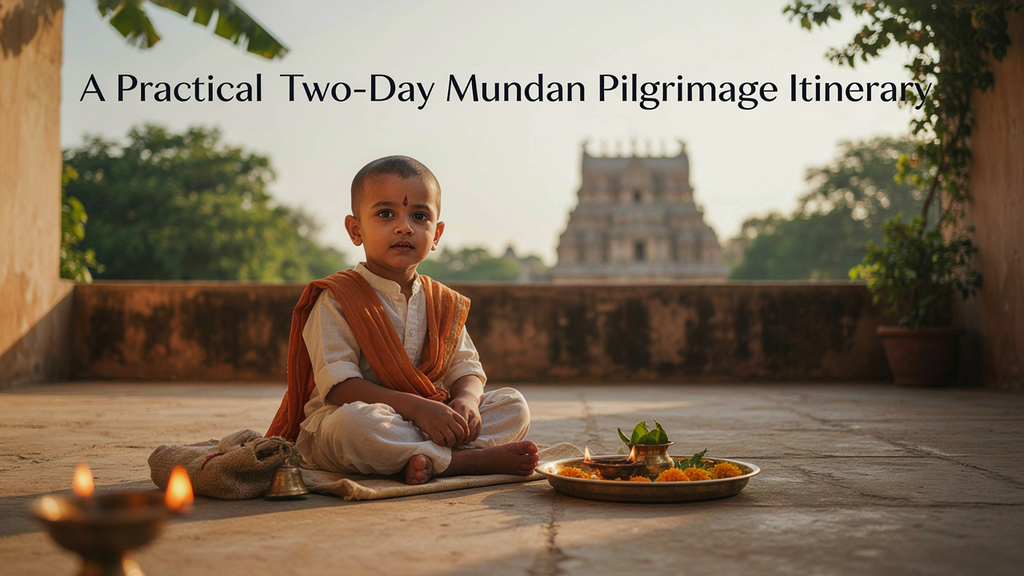
A two-day trip is often easier for families than trying to fit a ceremony, sightseeing and long-distance travel into one day.
| Day | Morning | Afternoon | Evening |
| Day 1 | Arrive and check in | Rest, visit nearby temple or sacred site | Confirm ceremony arrangements and prepare clothing/items |
| Day 2 | Mundan ceremony during the confirmed Muhurat | Family meal and relaxed sightseeing | Return to hotel or begin departure |
For longer journeys, consider arriving one day earlier. This creates a valuable buffer in case of delayed flights, trains, road traffic or problems with luggage.
Example: Varanasi Spiritual Extension
After the ceremony, families can consider a gentle Varanasi itinerary featuring the Ganga ghats, a temple visit and a cultural walk. Official tourism information highlights Dashashwamedh Ghat, Assi Ghat, Kashi Vishwanath Temple and Sarnath among the city’s major experiences.
Avoid packing too many attractions into the ceremony day itself.
Family-Friendly and Picnic-Friendly Ideas
A Mundan trip is usually more enjoyable when the itinerary leaves room for children to rest.
Good family-oriented choices include:
- Open riverfront areas where safe and permitted
- Large public parks
- Temple complexes with suitable visitor areas
- Gardens and cultural attractions
- Quiet hotel courtyards or family dining spaces
- Scenic locations visited outside the busiest hours
Riverfront areas require extra care around water, steps and crowds, particularly when traveling with toddlers. Never treat a sacred bathing area as a casual swimming location.
For a picnic, choose a permitted public area rather than setting up food or seating inside a restricted temple or heritage zone.
Best Photography and Scenic Spots
A Mundan journey can produce meaningful family photographs, but the ceremony should always come before photography.
Good photo opportunities can include:
Before the ceremony: family portraits at the hotel, traditional clothing, ceremony preparations and decorative details.
During the trip: temple exteriors, ghats, heritage streets, flower markets and scenic river views.
After the ceremony: a relaxed family portrait showing the child’s new hairstyle and traditional attire.
In Varanasi, the Ganga ghats are major visual landmarks, while Assi Ghat is known for its early-morning spiritual atmosphere. Haridwar’s Har Ki Pauri is another iconic riverside setting.
Never photograph a ritual, priest or worshipper closely without permission.
Image Caption: A respectful family portrait after a traditional Mundan ceremony at a pilgrimage destination.
Local Culture, Customs and Ceremony Etiquette
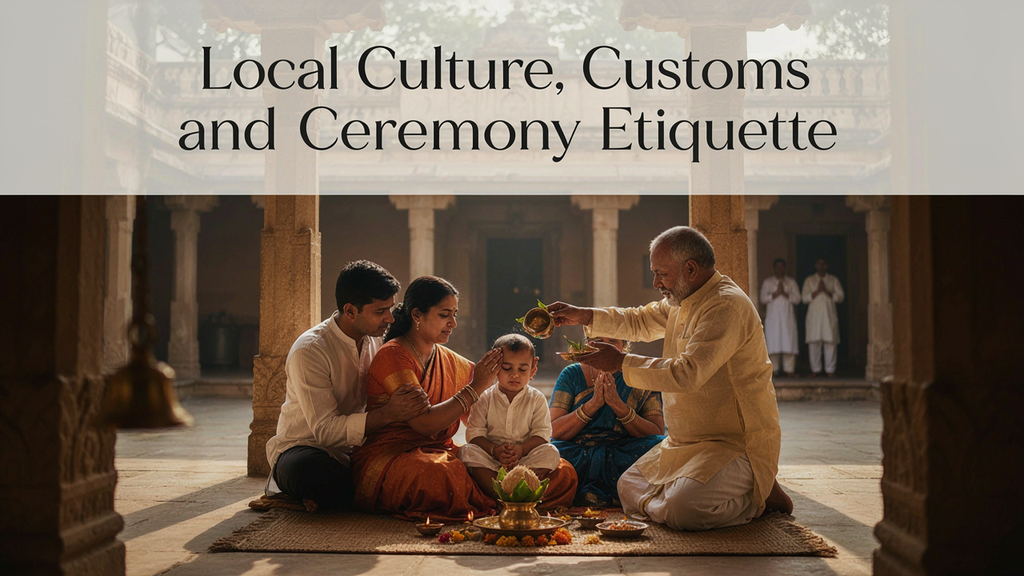
A temple-based Mundan ceremony is both a family event and a religious experience. Respect for the location matters just as much as the travel arrangements.
Dress modestly when visiting temples and sacred areas. Follow footwear rules, photography restrictions, queue systems and instructions from temple staff.
It is also wise to discuss ceremony details beforehand:
- Who performs the first cut?
- What items should the family bring?
- Where is the hair placed after cutting?
- Are offerings included?
- Is advance booking required?
- Are there restrictions on photography?
- Can extended family members participate?
- Is the ceremony permitted at the chosen location?
Varanasi and Haridwar, for example, are living pilgrimage destinations where ghats and temples are used for religious activity as well as tourism. Visitors should therefore behave as guests in a sacred environment rather than treating ceremonies as staged attractions.
Safety and Practical Travel Tips for Parents
Traveling with a young child requires more flexibility than a normal sightseeing trip.
Keep the ceremony day simple. Carry water, familiar snacks, diapers or child-care supplies, a change of clothes and any medicines the child normally needs.
Avoid scheduling a long road journey immediately before the Muhurat. An unexpected traffic delay can create unnecessary stress.
For crowded pilgrimage destinations, keep children physically close and establish a family meeting point in case someone becomes separated.
International visitors should check the latest passport, visa and entry requirements through official Indian government sources. The government specifically warns travelers to use the official visa portal rather than unauthorized intermediaries.
Most importantly, verify all of the following shortly before travel:
Mundana date, local Muhurat, temple opening rules, ceremony booking, transport schedules, accommodation availability and weather.
What to Pack for a Mundan Ceremony Trip
Use the child’s age, destination and ceremony style to build the final packing list.
Ceremony Essentials
- Traditional clothes for the child
- Extra clothes in case the child becomes uncomfortable
- Ceremony items requested by the priest
- Small towel or soft cloth
- Child-safe personal-care items
- Diapers and wipes where needed
- Familiar food and snacks
- Drinking water
- Any regular child-care medicines
- Plastic or washable bag for used clothing
Family Travel Essentials
- Government-issued identification
- Passport and visa documents for international travelers
- Hotel and transportation confirmations
- Phone chargers and power bank
- Comfortable walking shoes
- Light layers appropriate to the season
- Sun protection
- Small first-aid kit
Pack less for sightseeing and more for the ceremony-day routine. A tired child can make even a short spiritual trip unnecessarily difficult.
How the Other Muhurat Calculators Fit Into the Same Travel Plan
The title also refers to wedding Muhurats, Grih Pravesh Muhurat and Namkaran Muhurta. These are separate ceremony categories, each with its own calculation rules.
For example, current 2026 Muhurat resources distinguish between Mundana, Vivaha and Griha Pravesh calculations. Marriage Muhurat calculations can include Panchang and Lagna Shuddhi, while Griha Pravesh calculations consider factors such as Nakshatra, weekday, Tithi and lunar-month conditions.
This distinction matters because a date that is suitable for one ceremony should never automatically be assumed to be suitable for another.
A Simple Planning Workflow
Choose the ceremony → select the city → run the appropriate Muhurat calculation → confirm with family tradition → secure venue/priest → book travel → confirm everything again before departure.
This approach keeps spiritual planning and travel planning connected without confusing the rules for different ceremonies.
Why Location Matters So Much in a Muhurat Calculator
One of the most important lessons for 2026 is that a Muhurat is not necessarily a universal clock time.
Drik Panchang states that auspicious dates and timings are location-based. Its individual 2026 Mundana pages show this clearly: a Mundana window can be available in one city while another date or location may have a different interval or no suitable Muhurat at all.
For example, a Mundana date published for Agra in May 2026 included a late-morning interval, while another calculation for Los Angeles produced different local timings for a March ceremony.
That is why online dates should be treated as planning information until the correct city and family requirements have been applied.
Final Checklist Before Booking Your Mundan Trip
Before paying for tickets or accommodation, make sure these questions have been answered:
| Check | Status to Confirm |
| Child’s age | Confirm according to family tradition |
| Ceremony city | Enter the exact destination |
| Muhurat | Confirm local date and time |
| Priest/venue | Booking and availability confirmed |
| Temple rules | Ceremony, offerings and photography checked |
| Travel | Flight/train/car confirmed |
| Hotel | Check-in and checkout confirmed |
| Child supplies | Packed before departure |
| Weather | Forecast reviewed |
| Return journey | Leave enough time after the ceremony |
A good rule is to build a safety margin around the Muhurat. The ceremony time may be fixed, but traffic, weather and young children are not.
FAQs
What is Mundan Ceremony Muhurta?
Mundan Ceremony Muhurta is an auspicious date and time chosen for a child’s first hair-cutting ceremony. It is traditionally selected based on Hindu Panchang calculations.
How is Mundan Ceremony Muhurta calculated?
Mundan Ceremony Muhurta is calculated using factors such as the Hindu calendar, Nakshatra, Tithi, weekday, and planetary positions. A Muhurat Calculator can help identify suitable timings.
Which months are considered best for Mundan Ceremony Muhurta?
Traditionally, certain months are considered more favorable for Mundan Ceremony Muhurta. The best choice can vary based on the child’s birth details and local Panchang.
Can Mundan Ceremony Muhurta be different by location?
Yes, Mundan Ceremony Muhurta can vary by location because sunrise, sunset, and Panchang timings differ from place to place. Local time should be used for accurate results.
Can a Muhurat Calculator find Mundan Ceremony Muhurta?
Yes, a Muhurat Calculator can help find suitable Mundan Ceremony Muhurta based on date, location, and traditional Panchang factors. It makes the search easier and faster.
Is Mundan Ceremony Muhurta important in Hindu traditions?
Yes, many Hindu families consider Mundan Ceremony Muhurta important for beginning the ceremony at an auspicious time. It is viewed as part of traditional religious practices.
Can Mundan Ceremony Muhurta be selected for babies and toddlers?
Yes, Mundan Ceremony Muhurta is commonly selected for babies and young children. The appropriate timing depends on family traditions, age, and Panchang calculations.
What should I check before choosing Mundan Ceremony Muhurta?
Before choosing Mundan Ceremony Muhurta, check the child’s birth details, ceremony location, Panchang, Tithi, and Nakshatra. Consulting a knowledgeable priest can also be helpful.
Can Mundan Ceremony Muhurta be changed after selecting a date?
Yes, the date can usually be changed if the original timing is inconvenient. A new Mundan Ceremony Muhurta should be checked before making the final arrangements.
Where can I find the right Mundan Ceremony Muhurta?
You can use a reliable Muhurat Calculator to explore suitable dates and timings. For personalized guidance, a Hindu priest or astrologer can review the child’s details.
Conclusion
Choosing the right time for an important family ritual can make the occasion feel more meaningful and organized. A suitable Mundan Ceremony Muhurta helps families follow traditional customs with confidence.
Using Panchang details, location, and other important factors can make the selection more accurate.
Families can also consider their personal schedule when planning the ceremony.
The goal is to create a peaceful and auspicious beginning for the child.
With proper planning, the ceremony can become a memorable family celebration.
A Mundan Ceremony Muhurta can be selected more easily with a reliable Muhurat Calculator and traditional guidance.
It can help families compare dates and choose a convenient auspicious time.
Always consider the child’s details and the ceremony location when checking timings.
If you follow specific family traditions, include them in your planning as well.
With the right preparation, this special ceremony can be simple, joyful, and meaningful.
Read More: Monday, October 5, 2026 Choghadiya: Aaj Ka Choghadiya, Shubh Kaal, Daily Muhurt & Travel Guide
