

Planning your day according to Hindu Panchang traditions can help you choose favorable times for important activities. Today Choghadiya October 6 2026 provides a simple daily guide to Shubh Kaal, Choghadiya periods, and other traditional Muhurt timings. This Tuesday Choghadiya table can be useful for religious activities, travel, business work, and new beginnings.
Choghadiya divides the daytime and nighttime into different time periods, each traditionally considered favorable, neutral, or unfavorable. Today Choghadiya October 6 2026 can help you understand these periods and plan your activities accordingly. Since timings vary by location, it is important to check the Choghadiya according to your local sunrise and sunset.
Quick Travel & Choghadiya Planning Overview
| Information | Details |
| Travel Topic | Choghadiya-based spiritual and pilgrimage planning |
| Date | Tuesday, October 6, 2026 |
| Main Region | India and Hindu pilgrimage destinations |
| Reference City for Timings | New Delhi, India |
| Choghadiya Basis | Local sunrise and sunset |
| Day Periods | 8 divisions between sunrise and sunset |
| Night Periods | 8 divisions between sunset and next sunrise |
| Favorable Choghadiya | Amrit, Shubh, Labh, Chara |
| Less Favorable Choghadiya | Rog, Kaal, Udveg |
| Best Use for Travelers | Planning departures, temple visits, spiritual activities and important starts |
| Recommended Trip Length | 1–3 days for a focused spiritual visit |
| Main Example Destinations | Varanasi, Haridwar, Ujjain, Ayodhya |
| Currency | Indian Rupee (INR) |
| Important Note | Exact timings vary by location and should be checked locally |
Choghadiya sources describe four periods Amrit, Shubh, Labh, and Chara—as favorable, while Rog, Kaal, and Udveg are traditionally treated as less favorable. Chara is generally regarded as neutral-to-useful, particularly for travel.
What Is Choghadiya and Why Does It Matter for Travel?
Choghadiya, also spelled Chogadia or Chaughadia, divides the daylight and nighttime into eight segments each. The system is traditionally used for selecting suitable times for beginning activities, with travel being one of its traditional applications.
The word is commonly understood in the context of dividing a day into time periods, and the practical attraction of the system is its simplicity. Instead of requiring a traveler to interpret a large number of astrological factors, the daily chart provides recognizable labels such as Amrit, Shubh, Labh, Chara, Rog, Kaal, and Udveg.
For a spiritual traveler, that can be especially convenient. You might use a favorable period to begin the journey, reach a pilgrimage center, enter a planned temple visit, start a major ritual, or begin a long-distance transfer.
It is important, though, to treat Choghadiya as a traditional planning aid rather than a guarantee of an outcome. Practical factors such as transport schedules, temple entry rules, weather, health, traffic, and crowd conditions should always take priority when necessary.
Today Choghadiya October 6 2026: Verified New Delhi Reference Table
Because Choghadiya is location-specific, there is no single nationwide timetable that works for every city. The following table uses New Delhi as a clear reference location.
For New Delhi on October 6, 2026, sunrise is listed at 6:17 AM and sunset at 6:01 PM. The day and night segments are then divided according to the traditional Choghadiya sequence.
Day Choghadiya New Delhi
| Choghadiya | Time | Traditional Reading |
| Roga | 6:17 AM–7:45 AM | Unfavorable |
| Udvega | 7:45 AM–9:13 AM | Unfavorable |
| Chara | 9:13 AM–10:41 AM | Neutral |
| Labha | 10:41 AM–12:09 PM | Favorable |
| Amrita | 12:09 PM–1:37 PM | Very favorable |
| Kala | 1:37 PM–3:05 PM | Unfavorable |
| Shubha | 3:05 PM–4:33 PM | Favorable |
| Roga | 4:33 PM–6:01 PM | Unfavorable |
Night Choghadiya New Delhi
| Choghadiya | Time | Traditional Reading |
| Kala | 6:01 PM–7:33 PM | Unfavorable |
| Labha | 7:33 PM–9:05 PM | Favorable |
| Udvega | 9:05 PM–10:37 PM | Unfavorable |
| Shubha | 10:37 PM–12:09 AM | Favorable |
| Amrita | 12:09 AM–1:41 AM | Very favorable |
| Chara | 1:41 AM–3:13 AM | Neutral |
| Roga | 3:13 AM–4:45 AM | Unfavorable |
| Kala | 4:45 AM–6:17 AM | Unfavorable |
Image Caption: A traditional Choghadiya table showing favorable and unfavorable periods across the day and night.
How the Choghadiya Calculator Works
A Choghadiya calculator is primarily a location-based time calculation tool. It does not simply divide the clock into fixed one-hour blocks.
First, the calculator determines the local sunrise and sunset for the selected city. The period from sunrise to sunset is divided into eight daytime segments. The period from sunset to the following sunrise is divided into eight nighttime segments.
This is why a Choghadiya table can look slightly different in two cities on the same date. For example, New Delhi’s October 6 daytime schedule begins at 6:17 AM, while Karachi’s begins at 6:26 AM on the same date.
A simple planning formula is:
Day Choghadiya duration = daylight period ÷ 8
Night Choghadiya duration = nighttime period ÷ 8
A proper calculator also accounts for the local date and the next sunrise when generating the nighttime schedule.
Which Choghadiya Is Best for Starting a Journey?
Traditional Choghadiya guidance considers Amrit, Shubh, and Labh particularly favorable, while Chara is commonly treated as neutral and associated with movement or travel. Rog, Kaal, and Udveg are traditionally avoided for starting auspicious activities.
For travel planning, this can be interpreted practically:
Amrit can be chosen when a traveler wants a highly favorable window for an important beginning.
Shubh is suitable in traditional practice for favorable starts and planned spiritual activities.
Labh is associated with gain and is commonly regarded as positive for beginning activities.
Chara is especially interesting for travelers because movement and travel are among the traditional uses of Choghadiya.
In the New Delhi October 6 table, Labh falls from 10:41 AM to 12:09 PM, Amrit from 12:09 PM to 1:37 PM, and Shubh from 3:05 PM to 4:33 PM.
How to Plan a Spiritual Trip Around Choghadiya
The most useful way to apply Choghadiya to travel is to build a flexible plan rather than trying to force every activity into one narrow window.
For example, a traveler might use a favorable morning or midday period to start the main journey. Once at the destination, temple queues, transport connections, meal breaks, and local visiting rules can determine the rest of the schedule.
A practical sequence is:
| Trip Stage | Suggested Approach |
| Before leaving home | Check city-specific Choghadiya |
| Main departure | Prefer a traditionally favorable window when practical |
| En-route stops | Follow real transport schedules |
| Temple visit | Check the shrine’s latest darshan or entry rules |
| Ganga/riverfront activity | Confirm local safety and weather conditions |
| Evening prayer | Follow the venue’s actual schedule |
| Return journey | Recheck the next location’s local timings |
This approach keeps spiritual planning useful without allowing an auspicious-time chart to override practical travel needs.
Four Spiritual Destinations That Pair Well With Choghadiya Travel
India offers numerous pilgrimage destinations, and the Ministry of Tourism has specifically promoted major spiritual places including Ayodhya, Haridwar, Kashi/Varanasi, and Ujjain as important pilgrimage destinations.
Varanasi
Varanasi, also called Kashi or Banaras, is one of India’s major pilgrimage and cultural cities. Its riverfront ghats, temples, historic lanes, crafts, and spiritual atmosphere make it especially suitable for travelers who want both religious and cultural experiences.
The Kashi Vishvanath Temple is one of the city’s most important landmarks and is one of the twelve Jyotirlingas. Sarnath, around 10 km from Varanasi, adds a major Buddhist heritage experience to the trip.
Haridwar
Haridwar lies along the Ganges and is one of India’s major pilgrimage centers. Har Ki Pauri, Mansa Devi Temple, and Chandi Devi Temple are among its best-known spiritual attractions. The city also functions as a gateway to the Char Dham circuit of Uttarakhand.
The district administration lists Jolly Grant Dehradun Airport as about 72 km from Haridwar and identifies Haridwar Railway Station as the city’s major rail connection.
Ujjain
Ujjain is an important Hindu pilgrimage center in Madhya Pradesh. The Mahakaleshwar Temple is one of the twelve Jyotirlingas, while other attractions include Kal Bhairava, Harsiddhi Temple, the Shipra riverfront, and the city’s historic observatory.
Ujjain can be reached through Devi Ahilyabai Holkar Airport in Indore, listed about 53 km away, while Ujjain also has its own major railway station with connections to large cities.
Ayodhya
Ayodhya, on the banks of the Saryu River, is a major pilgrimage center associated with Lord Rama and is one of the destinations promoted by India’s Ministry of Tourism.
Key places include Ram Ki Paidi, Hanuman Garhi, Kanak Bhawan, and Nageshwar Nath Temple.
The district administration says Maharishi Valmiki International Airport is approximately 10 km from Ayodhya Dham, while Ayodhya Dham and Ayodhya Cantt are major railway stations.
Best Time of Year for a Choghadiya-Based Spiritual Journey
Choghadiya itself is calculated every day, so there is no one special season for using it. The better question is when the destination’s climate and travel conditions are comfortable.
For many North Indian spiritual destinations, October can be an appealing shoulder-period choice because the intense summer has passed and the main winter has not fully arrived. Still, temperatures differ significantly between Varanasi, Haridwar, Ujjain, and other regions.
| Travel Period | Who May Prefer It | What to Consider |
| October–November | Pilgrims, culture travelers, outdoor explorers | Comfortable period in many northern destinations, but festival crowds can rise |
| December–February | Travelers who prefer cooler weather | Cold mornings and nights may require warm clothing |
| March–May | Travelers comfortable with heat | Warmer daytime conditions |
| June–September | Monsoon-season travelers | Rain can affect roads, outdoor plans and riverfront activities |
Haridwar’s official tourism information, for example, highlights a broad range of attractions and also recommends different periods for nearby nature travel, illustrating why season should be considered alongside Choghadiya.
How to Reach India’s Main Spiritual Destinations
There is no single transport route for a Choghadiya journey because travelers may choose different pilgrimage cities. The following are useful verified examples.
| Destination | By Air | By Train | By Road |
| Varanasi | Varanasi airport | Major rail junction | Major intercity road and bus connections |
| Haridwar | Dehradun’s Jolly Grant Airport, about 72 km away | Haridwar Railway Station | Motorable road and bus connections |
| Ujjain | Indore Airport, about 53 km away | Ujjain Railway Station | Regular buses and road links |
| Ayodhya | Maharishi Valmiki International Airport, about 10 km from Ayodhya Dham | Ayodhya Dham and Ayodhya Cantt | UPSRTC and intercity road services |
By Air
Varanasi has an established airport and air connections to major Indian cities. Haridwar travelers commonly use Dehradun’s Jolly Grant Airport, while Ujjain travelers can use Indore Airport. Ayodhya now has Maharishi Valmiki International Airport close to Ayodhya Dham.
Flight schedules change, so travelers should confirm operating flights and transfer arrangements close to departure.
By Train
Rail is particularly useful for pilgrimage travel because Varanasi, Haridwar, Ujjain, and Ayodhya all have important railway stations or junctions.
Train availability varies by date, so a traveler planning to depart during a favorable Choghadiya period should first confirm that a suitable train actually operates in that window.
By Road
Road travel gives pilgrims more flexibility for short local transfers and multi-temple journeys. Ayodhya’s district administration notes bus services connecting the city with several important regional centers, while Ujjain has regular road links to surrounding cities.
Distance and Travel-Time Planning
Exact travel time should be calculated from the traveler’s actual starting point. A useful Choghadiya plan should leave a generous buffer rather than assuming the vehicle will reach the destination exactly when a favorable period begins.
| Route Example | Published Distance | Approx. Travel Time | Useful Transport |
| Dehradun Airport → Haridwar | 72 km | Varies with road conditions | Taxi/private car |
| Indore Airport → Ujjain | 53 km | Varies with traffic | Taxi/car |
| Ayodhya Airport → Ayodhya Dham | About 10 km | Short local transfer | Taxi/local transport |
| Varanasi → Sarnath | 10 km | Varies with traffic | Taxi/auto/local transport |
The published distances come from government and official tourism sources. Actual travel time can change with traffic, weather, road conditions, or local diversions.
Where to Stay During a Choghadiya Spiritual Trip
Accommodation is best selected according to the rhythm of the itinerary rather than only the hotel category.
For temple-focused travel, staying close to the main pilgrimage zone can reduce local transfer time. In Varanasi, travelers may prefer accommodation convenient to the old city or riverfront, while Haridwar visitors often choose places with easy access to major pilgrimage areas. In Ujjain and Ayodhya, staying within practical reach of the main temple areas can make early-morning and evening visits easier.
| Accommodation Type | Best For | Planning Advantage |
| Budget guesthouse/dharamshala | Pilgrims and solo travelers | Lower overall trip cost |
| Mid-range hotel | Couples and families | More comfort with reasonable flexibility |
| Premium hotel | Luxury travelers | Higher comfort and service |
| Family accommodation | Parents with children | Easier room arrangements and rest breaks |
| Near pilgrimage zone | Temple-focused trips | Less transfer time |
Hotel rates can vary substantially by city, festival dates, weekends, and booking lead time. Current prices should be checked directly before making a reservation.
Food and Local Cuisine on a Spiritual Journey
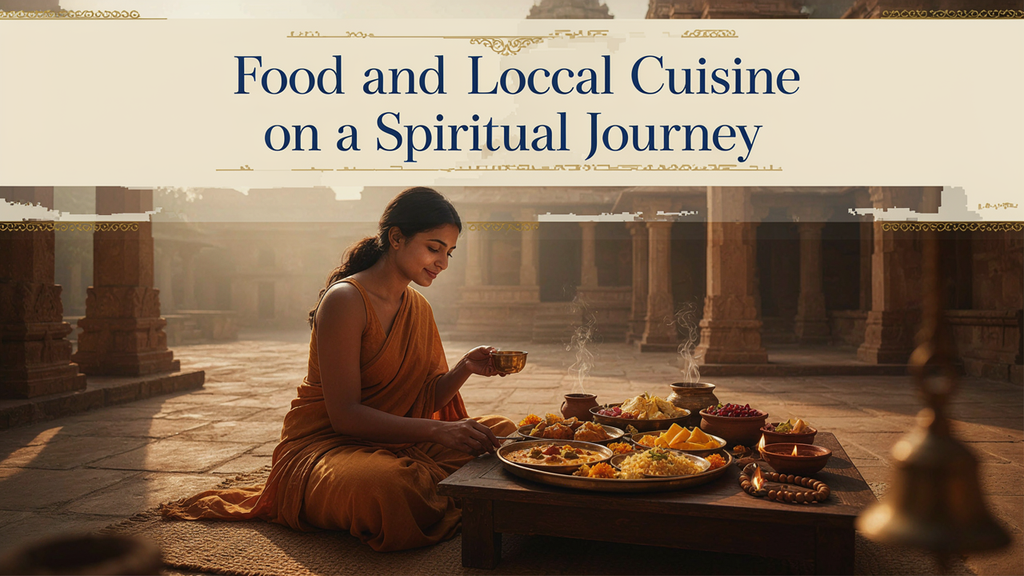
Food is an important part of a pilgrimage, but travelers should remember that different temples and religious institutions may follow their own dietary practices.
Varanasi is particularly well known for kachori-sabzi, lassi, chaat, baati chokha, Banarasi sweets, and Banarasi paan. Official tourism sources highlight the city’s strong street-food and culinary traditions.
Ayodhya’s tourism material lists foods and snacks such as Ram Ladoo, kachori-sabzi, aloo tikki, malaiyyo, litti chokha, and local chaat.
For a Choghadiya-based day, keep meals practical. A heavy breakfast immediately before a long road journey may be less comfortable than a lighter meal, while travelers attending temples should respect any food restrictions at the site.
What to Do on October 6, 2026
The date can be structured as a spiritual travel day rather than simply a checklist of attractions.
In New Delhi’s Panchang, October 6, 2026 is listed as Krishna Paksha Ekadashi, with Ashlesha Nakshatra continuing until 10:17 PM local time in that source. Panchang calculations are location-specific, so travelers should confirm the corresponding details for their own destination.
A practical day could include:
- Morning preparation and departure
- Temple or pilgrimage-site visit
- Local sightseeing during daylight
- Traditional vegetarian meal
- Riverfront or heritage walk
- Evening prayer or cultural experience
- Return travel or overnight stay
The Choghadiya chart should support the schedule rather than dictate every minute of it.
A Practical One-Day Spiritual Travel Itinerary
For a short temple-city trip, the goal is to keep travel distances manageable.
| Time of Day | Suggested Activity |
| Early morning | Breakfast, preparation, local departure |
| Morning | Main temple or sacred-site visit |
| Late morning | Heritage area or nearby attraction |
| Afternoon | Lunch and rest |
| Late afternoon | Secondary temple, market, museum or cultural stop |
| Evening | Ganga/riverfront experience or evening worship |
| Night | Dinner and return to accommodation |
When a favorable Choghadiya period is important to you, place the start of the main activity inside that period where practical. Do not risk missing a booked train, flight, temple slot, or official entry window merely to follow a traditional time period.
Family-Friendly and Picnic-Friendly Spiritual Travel

A Choghadiya-focused journey does not have to be limited to temples. Families can combine spiritual visits with open spaces, riverfront scenery, nature areas, and cultural attractions.
Haridwar offers the strongest combination of pilgrimage and nature-oriented travel among the examples in this guide. Uttarakhand Tourism identifies Rajaji National Park as part of the wider Haridwar experience, alongside Har Ki Pauri and the major hill temples.
Varanasi is more urban, but families can enjoy riverfront boat experiences, Sarnath, museums, crafts, and heritage walks. The district’s tourism information highlights the ghats, boat rides, Sarnath, arts and crafts, and sunrise experiences.
For family trips, plan rest periods between religious visits. Children may enjoy a mixed itinerary more than a day containing only queues and temple stops.
Image Caption: Families enjoying a peaceful spiritual and cultural day beside a historic Indian riverfront.
Best Photography and Scenic Spots
A Choghadiya journey can also become a strong photography trip.
Varanasi
The ghats are particularly atmospheric at sunrise, while the riverfront and evening Ganga Aarti create different visual moods. The official Varanasi tourism site specifically highlights dawn views of the ghats, boat rides, sunrise, and evening Ganga Aarti.
Haridwar
Har Ki Pauri provides a dramatic combination of river, lamps, pilgrims, and evening devotional activity. Mansa Devi and Chandi Devi also offer elevated views of the city and surrounding landscape.
Ujjain
The Shipra riverfront, historic temples, and old-city religious architecture provide opportunities for architectural and cultural photography.
Ayodhya
Ram Ki Paidi and the Saryu riverfront offer strong sunrise and evening photography opportunities, while temples such as Hanuman Garhi and Kanak Bhawan provide architectural subjects.
Always check the photography rules of individual temples, especially around sanctums and ritual areas.
Local Culture, Traditions and Spiritual Etiquette
A Choghadiya journey works best when travelers show the same respect for local traditions that they show toward timing.
Dress modestly at religious sites, follow footwear rules, and observe signs or instructions about photography. In busy pilgrimage areas, keep belongings secure and avoid blocking entrances, ceremonial paths, or queues.
Riverfront traditions should also be respected. Avoid treating sacred spaces as ordinary recreational areas, and follow local instructions regarding bathing, offerings, waste disposal, and photography.
In Ayodhya, Haridwar, Varanasi, and Ujjain, the spiritual atmosphere is closely connected with centuries of tradition. Each city has its own religious rhythms, so visitors should observe rather than assume that every custom is identical.
Safety Tips for Choghadiya-Based Travel
A favorable time window does not remove normal travel risks. Practical planning should always come first.
Keep your phone charged, carry identification and booking information, and maintain digital copies of important documents. During crowded festivals or major pilgrimage periods, allow extra time for transport and entry.
For riverfront activities, use officially available or reputable services and pay attention to local safety instructions. In hot weather, carry water and protect yourself from excessive sun exposure.
Travelers crossing international borders should independently verify current visa, entry, insurance, and transport requirements before departure, because these rules can change.
Most importantly, do not start a journey at an uncomfortable hour simply because a Choghadiya window is favorable. Safe roads, reliable transportation, sufficient rest, and official schedules are more important.
Choghadiya Packing Guide for a Spiritual Trip
Pack according to the season, destination, and activities. A useful checklist includes:
- Comfortable walking shoes or sandals suitable for temple visits
- Modest clothing for religious places
- A light shawl or layer for early mornings and evenings
- Reusable water bottle
- Phone charger and power bank
- Identification and travel confirmations
- Small personal medicine kit
- Sunscreen and sunglasses where appropriate
- Small bag for personal essentials
- Umbrella or rain protection during wet-season travel
- Cash plus a reliable digital payment option
- A notebook or phone app for recording Choghadiya and Panchang timings
For longer temple circuits, keep luggage light because local sightseeing may involve stairs, narrow lanes, queues, and frequent short transfers.
Travel Budget Guide
Because this article covers a Choghadiya planning method rather than one single city, giving one fixed rupee price would be misleading. Accommodation, food and transport can differ greatly between Varanasi, Haridwar, Ujjain, Ayodhya, and other pilgrimage destinations.
A more useful budget framework is:
| Expense | Budget Traveler | Mid-Range Traveler | Luxury Traveler |
| Accommodation | Guesthouse, dorm or simple stay | Comfortable private hotel | Premium hotel |
| Food | Local eateries and simple meals | Mix of local and hotel dining | Premium dining |
| Local Transport | Bus, shared auto, walking | Taxi/auto mix | Private car |
| Attractions | Mostly public/religious sites | Paid attractions where desired | Premium experiences |
| Activities | Walking, temples, public spaces | Guided or organized activities | Private experiences |
| Daily Planning | Low-cost flexible schedule | Balanced comfort | Maximum convenience |
Prices should be checked close to travel because hotel demand, festivals, weekends, fuel prices, transport fares, and seasonal availability can affect the final cost.
Why Choghadiya Is Useful for Modern Travelers
One of the strongest features of Choghadiya is that it can fit naturally into a modern itinerary. Travelers already plan flights, trains, hotel check-ins, temple slots, meals, and sightseeing. Choghadiya simply adds a traditional timing layer to that process.
Modern Hindu calendar tools also combine lunar-calendar information, festivals, observances, and auspicious timings in a single interface, making it easier to coordinate traditional dates with the everyday Gregorian calendar.
For a traveler, that means the system does not need to replace a normal itinerary. It can work beside it.
Use it to choose between realistic options, not to create unrealistic ones.
Common Mistakes When Using a Choghadiya Table
A few simple mistakes can make an otherwise useful Choghadiya plan inaccurate.
Using the Same Timings for Every City
This is the most common issue. October 6 has different Choghadiya clock times in New Delhi, Karachi, Pune, Lucknow, and other locations because local sunrise and sunset differ.
Ignoring the Night Schedule
Choghadiya is not limited to daylight. The system divides the night into eight periods as well.
Forgetting the Next-Day Date
Night periods can continue beyond midnight. A good calculator identifies those hours as belonging to the following civil date while still being part of the Panchang day that began at sunrise.
Planning Too Tightly
A journey needs traffic and delay buffers. Leaving home five minutes before a supposedly favorable period is not practical if the road journey itself is unpredictable.
FAQs
What is Today Choghadiya October 6 2026?
Today Choghadiya October 6 2026 provides auspicious and inauspicious time periods for Tuesday. It can help you choose suitable times for important activities.
How can I check Today Choghadiya October 6 2026?
You can check the daily Choghadiya table for sunrise and sunset timings in your location. The timings may vary by city.
Which Choghadiya is considered auspicious on October 6, 2026?
The auspicious Choghadiya periods are generally Amrit, Shubh, and Labh. These periods are traditionally preferred for starting important activities.
Is Today Choghadiya October 6 2026 the same everywhere?
No, Choghadiya timings depend on the local sunrise and sunset. Therefore, the exact time can differ from one city to another.
Can I use Today Choghadiya October 6 2026 for travel?
Yes, many people check Choghadiya before starting a journey. It can be used as a traditional guide for selecting a favorable time.
What is Rahu Kaal on October 6, 2026?
Rahu Kaal is considered an inauspicious period in Hindu astrology. People traditionally avoid beginning important new activities during this time.
Can Today Choghadiya October 6 2026 help with daily Muhurt?
Yes, it can help you identify traditional Shubh Kaal and other favorable periods. Always check timings according to your local city.
Is Choghadiya useful for starting a new business?
Many people use Choghadiya to select an auspicious time for starting business activities. However, specific Muhurt may require a detailed Panchang.
How accurate is Today Choghadiya October 6 2026?
Choghadiya calculations are based on sunrise and sunset for a particular location. For accurate timings, use your city’s local Panchang or Choghadiya table.
Why should I check Today Choghadiya October 6 2026?
Checking Choghadiya can help you plan activities during traditionally favorable periods. It is especially useful for people who follow Hindu Panchang traditions.
Conclusion
Today Choghadiya October 6 2026 can help you plan important activities around traditional auspicious and inauspicious periods.
The Choghadiya table gives a simple way to understand the day’s different time slots.
Because timings depend on your location, always check the local sunrise and sunset.
This makes the information more useful for daily planning and religious practices.
Use it as a traditional guide when choosing a suitable time for important tasks.
By checking Today Choghadiya October 6 2026, you can organize your day with greater awareness of traditional Muhurt timings.
Shubh, Labh, and Amrit periods are commonly preferred for favorable activities.
At the same time, periods such as Rahu Kaal are traditionally avoided for new beginnings.
For major religious or personal events, a detailed Panchang can provide additional guidance.
With the right local timings, Choghadiya can become a practical part of your daily planning.
Read More: Griha Pravesh Muhurat in 2026: Muhurat Calculator, Auspicious Dates & Spiritual Travel Guide
