

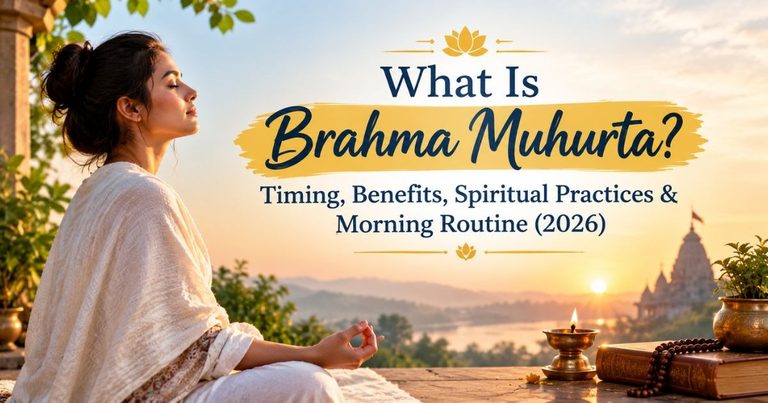
What Is Brahma Muhurta is a common question among people interested in Hindu spirituality, meditation, yoga, and traditional morning routines. Brahma Muhurta is a sacred period that occurs before sunrise and is traditionally considered an ideal time for prayer, self-reflection, and spiritual growth. Many people use these peaceful early morning hours to connect with their inner selves and prepare their minds for the day ahead. Understanding this ancient practice can help you explore its importance in Hindu traditions.
When learning What Is Brahma Muhurta, it is important to understand its timing and calculation. Traditionally, Brahma Muhurta begins approximately 1 hour and 36 minutes before local sunrise and lasts for about 48 minutes. For example, if the sun rises at 6:00 AM, Brahma Muhurta generally begins at 4:24 AM and ends at 5:12 AM. The exact clock time changes according to your location and the season.
Many people explore What Is Brahma Muhurta because of its traditional connection with meditation, yoga, mantra chanting, and studying sacred texts. The quiet atmosphere before sunrise can provide a peaceful setting for these activities without the usual distractions of daily life. Starting the morning with mindful practices may also help some people feel more focused and organized. However, the benefits depend on individual habits, and adequate sleep remains essential for overall well-being.
Another important aspect of What Is Brahma Muhurta is its role in Hindu scriptures and Ayurvedic traditions. It is often associated with knowledge, mindfulness, discipline, and spiritual awareness. Devotees may use this period for prayer, reading religious texts, or practicing breathing exercises. Although traditions emphasize its spiritual significance, you can adapt your morning routine to match your personal beliefs, responsibilities, and health needs.
In this guide, you will discover What Is Brahma Muhurta, when it occurs, how to calculate its timing, and why it holds a special place in traditional Indian culture. You will also learn about its commonly discussed benefits and the activities people practice during this sacred period. Whether you are new to meditation or looking to build a consistent spiritual routine, this information will help you understand Brahma Muhurta and explore practical ways to include peaceful morning practices in your daily life.
Quick Overview of Brahma Muhurta
| Information | Details |
| Topic | Brahma Muhurta, a traditional pre-dawn period |
| Cultural background | Indian spiritual, Hindu, yogic, and Ayurvedic traditions |
| Traditional timing | Begins about 96 minutes before sunrise and ends 48 minutes before sunrise |
| Duration | Approximately 48 minutes |
| Best activities | Meditation, prayer, spiritual reading, quiet reflection, and gentle breathing |
| Main purpose | Spiritual awareness, self-discipline, and mindful living |
| Recommended duration | Start with 10–15 minutes of practice and increase gradually if comfortable |
| Main reference | The Art of Living’s guide to Brahma Muhurta |
| Cost | Free for basic home practices |
| Location | Any suitable, quiet place; an ashram or meditation centre is optional |
| Best preparation | Maintain a consistent bedtime and get sufficient sleep |
What Is Brahma Muhurta and Why Is It Important?
Brahma Muhurta is a traditional period shortly before sunrise that is considered especially suitable for spiritual activities. The word muhurta refers to a traditional unit of time lasting approximately 48 minutes. In this context, Brahma is associated with creation or the spiritual concept of Brahman.
In Hindu and Ayurvedic traditions, this period is often recommended for activities that encourage mental clarity, contemplation, learning, and spiritual discipline. Instead of beginning the day with messages, household responsibilities, or work demands, practitioners use the quiet hours to turn their attention inward.
The importance of Brahma Muhurta is both cultural and practical. Many people appreciate the peaceful surroundings before sunrise, when there may be fewer interruptions and less activity around them. A consistent meditation routine during these hours can create a useful daily pause for reflection.
It is important to distinguish traditional beliefs from scientifically established findings. Spiritual traditions describe this time as particularly auspicious, but that does not mean every claimed health or spiritual benefit has been conclusively demonstrated by modern research.
Why Is It Called the Creator’s Time?
The expression is commonly translated as the Creator’s Time. In Hindu spiritual interpretations, the name connects the period with creation, wisdom, consciousness, and the search for deeper understanding.
For practitioners, the name represents an opportunity to approach the day with a fresh mind. It is not necessary to follow a particular religious practice to appreciate the value of quiet reflection, although the traditional meaning is rooted in Indian spiritual culture.
The Role of Brahma Muhurta in Ayurveda and Yoga
Ayurveda describes daily routines, often called dinacharya, that aim to organise everyday activities around a regular rhythm. Traditional guidance includes waking early, maintaining personal hygiene, practising suitable physical activity, and making time for mental or spiritual well-being.
Yoga traditions also value regular meditation, breath awareness, and self-discipline. Brahma Muhurta provides a traditional time for these activities, but the best routine is one that respects individual health, sleep needs, and daily responsibilities.
Image Caption: A peaceful pre-dawn meditation setting inspired by traditional Indian spiritual practices.
When Is Brahma Muhurta in 2026?

Brahma Muhurta does not occur at one fixed clock time throughout the year. Its timing depends on local sunrise, which changes with the date and geographical location.
According to a commonly used traditional calculation, Brahma Muhurta starts 96 minutes before sunrise and lasts for 48 minutes. This means it ends 48 minutes before sunrise.
For example, if sunrise is at 6:00 a.m., the calculation is:
- Sunrise: 6:00 a.m.
- Brahma Muhurta begins: 4:24 a.m.
- Brahma Muhurta ends: 5:12 a.m.
- Total duration: 48 minutes.
This is an illustrative calculation, not a confirmed sunrise time for any particular city or date in 2026.
How to Calculate Brahma Muhurta for Your City
Follow these simple steps:
- Find the local sunrise time for your city and the date you are interested in.
- Subtract 96 minutes from the sunrise time to calculate the beginning.
- Add 48 minutes to the beginning to calculate the end.
- Confirm that the sunrise source uses the correct date and location.
For example, if your local sunrise is 6:30 a.m., Brahma Muhurta begins at 4:54 a.m. and ends at 5:42 a.m.
| Local Sunrise | Brahma Muhurta Begins | Brahma Muhurta Ends |
| 5:30 a.m. | 3:54 a.m. | 4:42 a.m. |
| 6:00 a.m. | 4:24 a.m. | 5:12 a.m. |
| 6:30 a.m. | 4:54 a.m. | 5:42 a.m. |
| 7:00 a.m. | 5:24 a.m. | 6:12 a.m. |
These examples use the same 96-minutes-before-sunrise calculation. They are not a city-specific 2026 calendar.
Why Does Brahma Muhurta Timing Change?
Sunrise changes throughout the year because of Earth’s movement and the position of a location relative to the Sun. As a result, the traditional period also shifts.
A time suitable for one city may not be suitable for another. Even two cities in the same country can have different sunrise times on the same date.
For an accurate daily calculation, use a reliable local sunrise calendar or astronomical source rather than assuming that 4:00 a.m. or 4:30 a.m. is always the correct time.
Image Caption: An early-morning clock beside a window, illustrating the changing timing of Brahma Muhurta before sunrise.
Traditional Spiritual Benefits of Brahma Muhurta
Brahma Muhurta is valued for the opportunity it provides to practise spiritual disciplines without the usual interruptions of daily life. The benefits commonly described in Hindu, yogic, and Ayurvedic traditions include the following.
Greater Opportunity for Meditation
The quiet environment before sunrise may make it easier for some people to sit comfortably and focus on their breathing. A regular meditation practice can help people develop awareness of their thoughts and reactions.
The benefit comes from practising consistently rather than simply waking up at a particular time.
Time for Self-Reflection
A few minutes of reflection can help you consider your priorities, recognise unhelpful habits, and decide how you want to respond to challenges. This is one reason introspection is recommended in traditional guidance about Brahma Muhurta.
Spiritual Learning
Some practitioners read sacred texts, listen to spiritual talks, chant, or study philosophical ideas during this period. The uninterrupted time can make it easier to approach learning thoughtfully.
A More Intentional Morning
Starting the day with a planned activity may reduce the feeling of immediately rushing into responsibilities. Writing down three priorities, for example, can help establish a clear direction for the day.
A Consistent Daily Routine
Maintaining a regular morning practice can encourage discipline. However, waking early is only useful when it fits a healthy schedule. If the routine repeatedly reduces your sleep, the timing should be adjusted.
Are the Benefits Scientifically Proven?
Meditation and mindfulness have been studied for their potential effects on stress, attention, and emotional well-being. However, evidence for meditation in general does not prove that Brahma Muhurta itself has unique biological powers.
Claims that the air at this time contains a special form of oxygen that automatically boosts immunity, balances blood pH, or guarantees longer life should not be treated as established scientific facts. Nor is there strong evidence that waking during this exact period automatically multiplies productivity.
A balanced approach is to appreciate the spiritual tradition while evaluating specific health claims carefully.
Best Things to Do During Brahma Muhurta
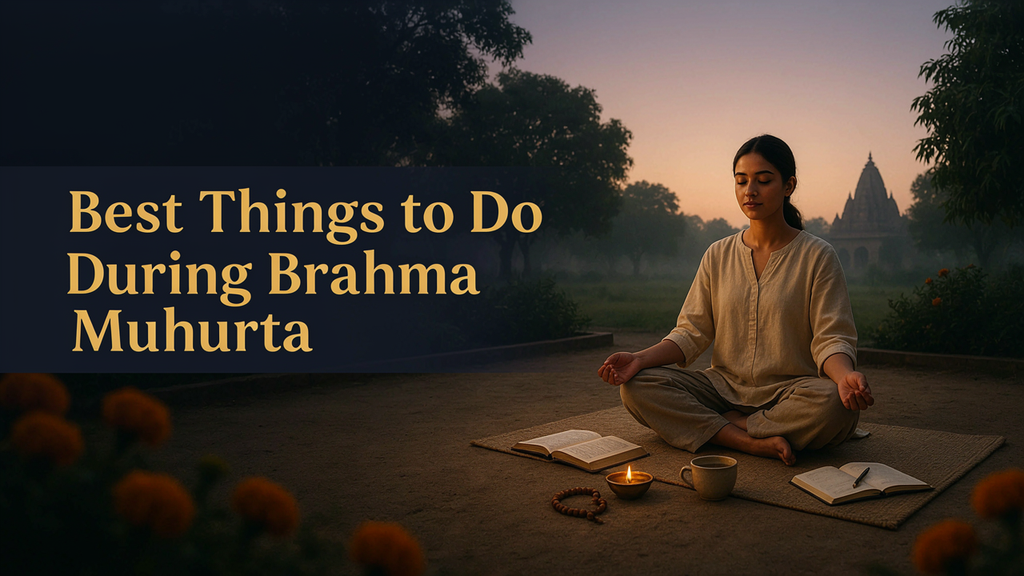
The best activity depends on your personal beliefs, experience, and goals. You do not need to perform every traditional practice. Start with one or two simple activities and build a routine that feels manageable.
| Activity | Suggested Duration | Main Purpose |
| Meditation | 10–20 minutes | Attention and self-awareness |
| Prayer or mantra chanting | 5–15 minutes | Spiritual connection and devotion |
| Spiritual reading | 10–15 minutes | Learning and reflection |
| Journaling | 5–10 minutes | Organising thoughts and priorities |
| Gentle breathing | 3–10 minutes | Relaxation and awareness of breathing |
| Quiet reflection | 5–10 minutes | Reviewing habits and intentions |
| Gentle stretching | 5–10 minutes | Comfortable movement after waking |
These are flexible suggestions rather than traditional requirements or medical prescriptions.
Meditation
Choose a quiet place and sit in a comfortable position. Keep your back naturally upright without forcing it. Close your eyes if comfortable, or maintain a soft gaze.
Notice the natural movement of your breathing. When your attention wanders, gently return it to the breath. There is no need to fight your thoughts or expect the mind to become completely empty.
Prayer and Mantra Chanting
If prayer is part of your faith, use the time for a familiar prayer or mantra. Chanting can provide a steady focus for attention and devotion.
People who do not follow a religious practice can use silent reflection or a simple intention for the day instead.
Reading Spiritual Knowledge
Read a short passage from a text you value, then pause to consider its meaning. Rather than trying to finish a large section, focus on one idea and how it might influence your actions.
Planning Your Day
Write down the three most important tasks for the day. Consider which responsibility deserves your attention first and whether you can simplify any unnecessary commitments.
This practical habit connects the traditional emphasis on reflection with everyday planning.
Image Caption: A meditation cushion, an open spiritual book, and a notebook arranged in a quiet room before sunrise.
How to Start a Brahma Muhurta Morning Routine
If you are accustomed to waking later, suddenly setting an alarm several hours earlier can be difficult. A gradual approach is usually more sustainable.
Adjust Your Bedtime First
Decide how much sleep you need and work backwards from your intended wake-up time. Adults generally need at least seven hours of sleep regularly, although individual needs vary.
If you need to wake at 4:30 a.m. and require eight hours of sleep, you would need to be asleep around 8:30 p.m. This is only an example; account for the time you need to fall asleep.
Move Your Wake-Up Time Gradually
Try moving your wake-up time earlier in small increments rather than making a dramatic change overnight. Keep the adjustment manageable and give your body time to adapt.
Prepare Before Going to Bed
Place your meditation cushion, notebook, or reading material where you can find it easily. Reduce unnecessary late-night screen use if it interferes with your sleep.
Begin With a Short Practice
Start with 10 minutes of meditation, prayer, or reflection. Once the routine becomes comfortable, you can extend it if you wish.
Review How You Feel
Notice your energy, concentration, mood, and sleep quality over the following days. If you become persistently tired, irritable, or unable to concentrate, reconsider the schedule.
Sample 30-Minute Brahma Muhurta Routine
| Time From Wake-Up | Activity |
| First 5 minutes | Wake gently, use the bathroom, and drink water if thirsty |
| Next 10 minutes | Sit quietly for meditation or prayer |
| Next 5 minutes | Read a short spiritual passage |
| Next 5 minutes | Journal or reflect on personal intentions |
| Final 5 minutes | Review priorities and prepare for the day |
This routine is a flexible example, not a requirement to fill every minute of the traditional period. You can shorten or rearrange it according to your needs.
Brahma Muhurta Meditation: A Simple Beginner’s Guide
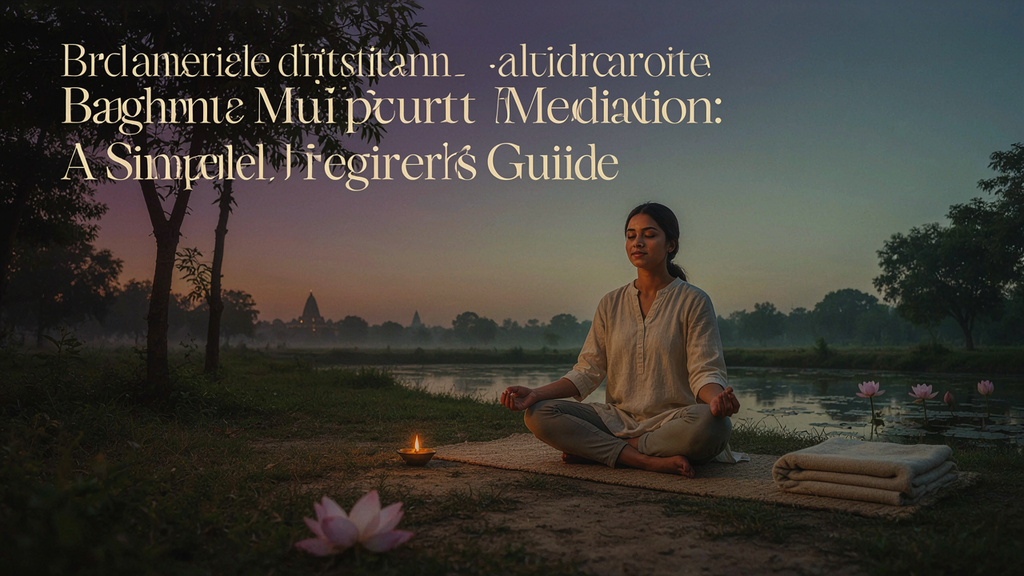
Meditation is one of the most commonly recommended practices during Brahma Muhurta. Beginners can start without special equipment, advanced yoga skills, or expensive classes.
A simple 10-minute meditation:
- Find a quiet, comfortable place where you can sit safely.
- Keep your spine comfortably upright and relax your shoulders.
- Breathe naturally without forcing deep or rapid breaths.
- Pay attention to the sensation of breathing in and out.
- When thoughts arise, acknowledge them without judging yourself.
- Gently return your attention to the breath.
- Finish by noticing how you feel before moving on to your next activity.
Do not worry if your mind feels busy. Wandering thoughts are a normal part of meditation, and noticing them is part of the practice.
Should Beginners Meditate Every Day?
A short, regular practice may be easier to maintain than an ambitious routine that quickly becomes exhausting. You can begin with a few minutes and increase the duration when it feels comfortable.
If meditation causes significant distress, dizziness, or discomfort, stop and seek suitable guidance. Meditation is not a substitute for professional care when you need it.
Can You Practise Brahma Muhurta Meditation at Home?
Yes. A bedroom corner, a clean floor space, or another quiet area can work well. You do not need to travel to a temple, yoga studio, or ashram to follow a basic routine.
Image Caption: A beginner practising seated meditation at home in the soft light before sunrise.
Brahma Muhurta, Ayurveda, and Daily Lifestyle
Ayurveda is a traditional Indian system of health and lifestyle that places importance on daily routines, personal habits, and balance. Brahma Muhurta is associated with the early part of the Ayurvedic daily regimen.
In traditional descriptions, waking early can be followed by personal hygiene, suitable movement, spiritual practice, and preparation for the day’s responsibilities. The routine should be adapted to a person’s age, health, work, and sleep needs.
Morning Hygiene
Begin with ordinary personal hygiene, including brushing your teeth and washing your face. Some traditional routines include bathing before prayer or meditation, but a full bath is not universally necessary before every practice.
Gentle Movement
After waking, some people prefer gentle stretching or easy yoga movements. Avoid forcing the body into strenuous exercise immediately after getting out of bed, especially if you feel stiff, dizzy, or unwell.
Food and Hydration
There is no universal requirement to eat or avoid food solely because it is Brahma Muhurta. Your nutritional needs, medical circumstances, and daily routine matter.
Drink water according to your needs. People with conditions that require a specific fluid or food schedule should follow their clinician’s advice.
Maintaining Balance
The central practical lesson is consistency without rigidity. A healthy routine should support everyday functioning, not create guilt or pressure when circumstances change.
Brahma Muhurta vs. Sunrise: What Is the Difference?
Brahma Muhurta and sunrise are connected, but they refer to different periods.
Sunrise is the point at which the Sun’s upper edge appears above the horizon under the usual definition. Brahma Muhurta is a traditional time window that occurs before sunrise.
| Feature | Brahma Muhurta | Sunrise |
| Meaning | Traditional pre-dawn period | Appearance of the Sun above the horizon |
| Typical calculation | Starts 96 minutes before sunrise and lasts 48 minutes | Determined by local astronomical conditions |
| Main traditional use | Meditation, prayer, study, reflection | Beginning of daylight and daytime activities |
| Fixed clock time? | No | No |
| Suitable activities | Quiet spiritual or mindful practices | Walking, outdoor activity, and normal daytime routines when conditions are suitable |
Some people prefer meditating during Brahma Muhurta and walking outdoors after sunrise. Others choose a routine that better suits their health and schedule.
Neither option needs to be treated as a competition. The useful choice is the one that helps you maintain a healthy and consistent daily rhythm.
What Should You Avoid During Brahma Muhurta?
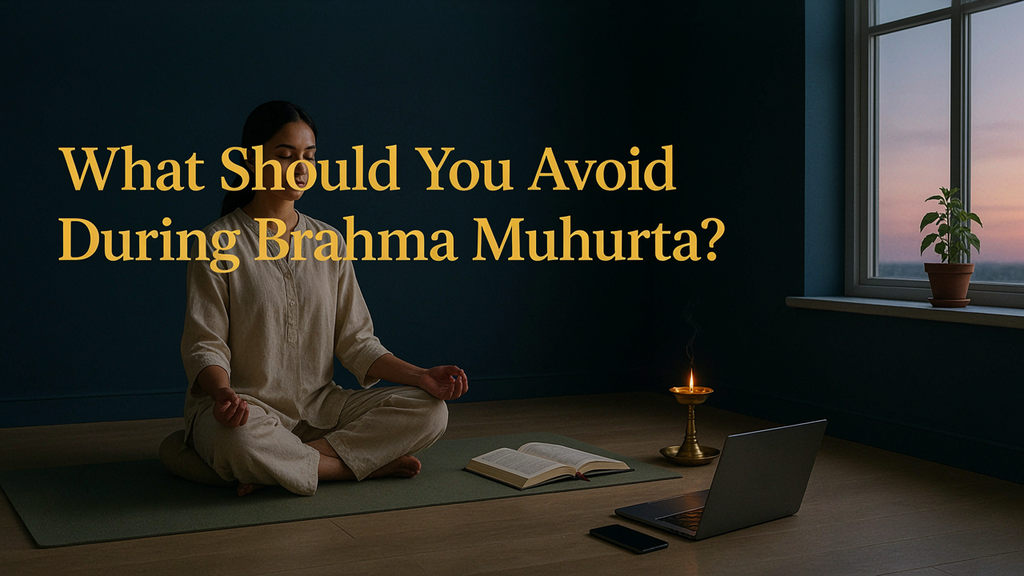
Traditional guidance often emphasises keeping this period calm and purposeful. The following suggestions can help preserve its quiet character without treating every cultural recommendation as a strict rule.
- Avoid unnecessary distractions: Keep social media, messages, and unrelated notifications out of your meditation time.
- Avoid rushing: Allow yourself a few minutes to wake up before beginning an activity that requires concentration.
- Avoid strenuous breathing techniques without guidance: Forceful breathing may be unsuitable for some people.
- Avoid sacrificing sleep: Do not stay up late and then wake extremely early just to follow a clock-based routine.
- Avoid unrealistic expectations: A single meditation session is not guaranteed to transform your mood, health, or productivity.
- Avoid treating traditional restrictions as universal medical advice: Decisions about meals, medication, hydration, and exercise should account for personal needs.
Who Should Be Careful About Waking Very Early?
People who are already sleep-deprived, work night shifts, have significant sleep difficulties, or experience persistent daytime fatigue should be particularly careful about changing their wake-up time.
Children and teenagers generally need more sleep than adults. Pregnancy, chronic illness, medication schedules, and other health circumstances can also affect what routine is appropriate.
The key point is not that everyone must avoid Brahma Muhurta, but that the practice should be adapted to individual circumstances. If waking early worsens your health or functioning, prioritise adequate rest and seek professional advice when needed.
Can Brahma Muhurta Improve Focus, Stress, and Productivity?
Many people use Brahma Muhurta as an opportunity to organise their thoughts before the day’s demands begin. Meditation, reflective writing, and planning may help some individuals approach tasks more deliberately.
However, the effect depends on the activity and the person. The traditional timing alone does not guarantee better concentration, lower stress, or improved work performance.
Focus and Concentration
A short period of quiet practice may help you pause before turning to work or study. Writing down your priorities can also reduce uncertainty about what to do next.
Stress Management
Mindfulness and meditation are used by many people as part of a broader approach to managing stress. Benefits vary, and meditation should not be presented as a guaranteed treatment for anxiety or other medical conditions.
Productivity and Learning
Early hours can be useful for reading, studying, or planning if you are alert and have slept sufficiently. They are not automatically the best working hours for every person.
Someone who naturally functions better later in the day may benefit more from a consistent, adequately rested schedule than from forcing an early wake-up time.
A Practical Way to Evaluate Your Routine
Try a simple review over one or two weeks. Record your bedtime, wake-up time, approximate sleep duration, energy, and ability to concentrate.
If the routine improves your day without reducing sleep, you may decide to continue. If you feel exhausted, adjust the timing or shorten the practice.
Can You Follow Brahma Muhurta Without Visiting an Ashram?
Absolutely. Brahma Muhurta is a time-based spiritual practice, not a physical destination. You can follow it at home, in a quiet garden, or in another safe and peaceful setting.
A visit to an ashram or meditation centre may be useful if you want structured instruction, guided meditation, or an opportunity to learn about a particular spiritual tradition. However, such a visit is optional.
Practising at Home
Choose a space with comfortable seating, minimal interruptions, and suitable lighting. Keep any materials you need nearby so you do not spend the entire period preparing.
If you live with family, let them know when you would prefer a few minutes of quiet. Earplugs or a gentle meditation recording may help if the surroundings are noisy, provided you can still respond to anything requiring your attention.
Attending a Meditation Centre
If you prefer learning in a group, look for an established centre that explains its programmes, teachers, costs, and expectations clearly. Verify the current schedule and any registration requirements before travelling.
The Art of Living maintains information about its centres and programmes on its official website. Availability and offerings can differ by location.
Image Caption: A simple home meditation corner prepared for a peaceful early-morning practice.
Brahma Muhurta and the Art of Living Approach
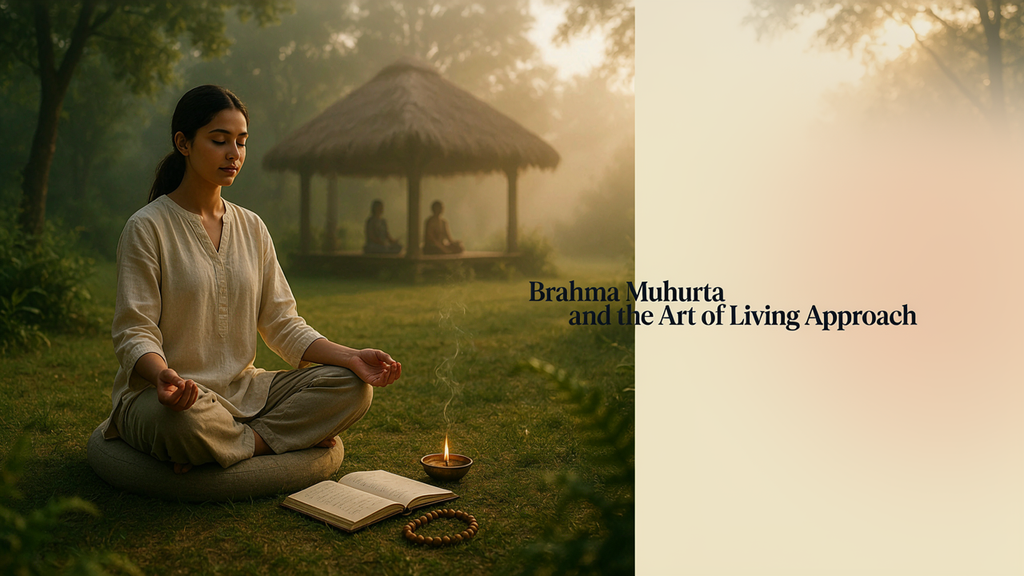
The Art of Living is a spiritual and educational organisation founded by Gurudev Sri Sri Ravi Shankar. Its published guidance on Brahma Muhurta discusses the importance of using the early morning for meditation, spiritual knowledge, introspection, and planning.
The organisation’s approach presents this time as an opportunity to connect with oneself before the day’s activities begin. Its suggestions include meditating, reading or listening to knowledge, reviewing one’s behaviour, and remembering people or spiritual principles that are important to the practitioner.
These practices can be adapted to different levels of experience. A beginner might sit quietly for five minutes, while a more experienced practitioner may prefer a longer meditation or a structured spiritual routine.
People interested in learning directly from the organisation can consult its official resources for current programmes and centre information.
Useful resource: The Art of Living’s published guide, Brahma Muhurta: Everything You Need to Know, explains the traditional timing and suggested practices.
It is worth remembering that a spiritual organisation’s interpretation is not the same as independent scientific evidence. Readers can respect the tradition while checking medical or physiological claims against reliable research.
Brahma Muhurta Travel, Retreats, and Spiritual Experiences
Although Brahma Muhurta is not a geographical destination, travellers interested in Indian spiritual traditions may wish to experience a guided early-morning meditation at an ashram, yoga centre, or retreat.
Such visits can provide a structured setting for learning about meditation, traditional philosophy, and mindful living. They may also help visitors understand how early-morning practices fit into a wider spiritual routine.
What to Look for in a Retreat
Before booking, consider:
- Whether the programme is suitable for beginners.
- Whether meditation and yoga sessions are optional or compulsory.
- The teacher’s experience and the centre’s published background.
- The accommodation arrangements and accessibility.
- The cost, cancellation policy, and what the fee includes.
- Whether the schedule allows adequate sleep and rest.
- Whether health or dietary requirements can be accommodated.
How to Prepare for an Early-Morning Session
If your retreat begins before sunrise, ask for the exact local schedule in advance. Bring comfortable clothing, a light layer if the weather is cool, any required personal medication, and a water bottle if permitted.
Do not assume that all centres follow the same timetable or offer the same activities. Check the current details directly with the organiser.
A retreat can be an enriching way to explore a spiritual tradition, but it is not necessary for developing a simple daily meditation practice.
Best Time, Environment, and Setting for Brahma Muhurta
The traditional period is calculated from local sunrise, so the calendar date and location determine its clock time. There is no single year-round time that applies to everyone in 2026.
For practical purposes, a quiet and comfortable setting may matter more than finding a perfect location. Your bedroom, a clean corner of your home, or a suitable outdoor area can all work.
| Setting | Potential Advantage | Practical Consideration |
| Quiet room | Privacy and fewer distractions | Ensure comfortable temperature and lighting |
| Home meditation corner | Easy to maintain consistently | Prepare the space before bedtime |
| Garden or courtyard | Fresh air and a connection with nature | Consider weather, insects, and personal safety |
| Yoga or meditation centre | Structured instruction | Confirm schedule, cost, and accessibility |
| Spiritual retreat | Dedicated time for learning and reflection | Check accommodation and programme details |
Is Outdoor Meditation Better?
Not necessarily. Some people enjoy sitting outdoors before sunrise, while others find an indoor space more comfortable and secure. Weather, air quality, insects, local safety, and individual health all influence the choice.
Do not assume that outdoor air is always cleaner before sunrise. Air quality varies with local conditions, traffic, weather, and other environmental factors.
What About Photography and Scenic Sunrise Experiences?
If you enjoy photography, you can document the gradual change from darkness to daylight, the colours of the sky, or the peaceful atmosphere of a garden. You do not need a famous landmark to create a meaningful image.
If you are photographing in a public place or spiritual centre, respect privacy, follow posted rules, and ask permission before taking identifiable photographs of other people.
Image Caption: The first light of dawn spreading across a quiet landscape, symbolising reflection and a fresh start.
Brahma Muhurta Routine: Practical Checklist for 2026
Use this checklist to decide whether your routine is realistic and sustainable.
Before Bed
- Choose a wake-up time that allows sufficient sleep.
- Prepare your meditation space or reading materials.
- Reduce activities that regularly delay your bedtime.
- Check the next day’s responsibilities.
During Brahma Muhurta
- Wake gently and allow yourself time to become alert.
- Practise meditation, prayer, or quiet reflection.
- Read a short passage or write down your intentions.
- Avoid checking unnecessary messages.
- Finish the practice without rushing into strenuous activity.
After Your Practice
- Continue with your normal hygiene and morning routine.
- Eat and hydrate according to your personal needs.
- Review your priorities for the day.
- Notice your energy and concentration.
- Adjust the routine if it reduces your sleep or affects your well-being.
How to Keep the Habit Sustainable
Do not measure success only by how early you wake up. A routine that you can maintain comfortably is generally more useful than a strict schedule that leaves you exhausted.
If your work, family commitments, or health circumstances make pre-dawn practice impractical, meditation at another consistent time can still be worthwhile. The purpose is to cultivate awareness and a balanced routine, not to create unnecessary pressure.
FAQs
What Is Brahma Muhurta and why is it important?
Brahma Muhurta is a sacred period in Hindu tradition that occurs before sunrise. It is considered a peaceful time for meditation, prayer, yoga, and spiritual reflection.
What Is Brahma Muhurta time in the morning?
Brahma Muhurta generally begins about 1 hour and 36 minutes before sunrise and lasts for approximately 48 minutes. The exact clock time changes according to your location and the sunrise time.
What Is Brahma Muhurta according to Hindu scriptures?
Hindu traditions describe Brahma Muhurta as a favorable period for spiritual practices and gaining knowledge. It is associated with mental clarity, discipline, and preparation for the day.
What Is Brahma Muhurta and what are its benefits?
Brahma Muhurta provides a quiet opportunity to meditate, pray, practice yoga, or study. These activities may support relaxation, focus, and a positive morning routine.
What Is Brahma Muhurta time today?
Today’s Brahma Muhurta depends on the local sunrise time in your city. To calculate it, count backward 1 hour and 36 minutes from sunrise; the period lasts around 48 minutes.
What Is Brahma Muhurta and how is it calculated?
Brahma Muhurta is traditionally calculated using the local sunrise time. It starts 96 minutes before sunrise and ends 48 minutes before sunrise.
What Is Brahma Muhurta and is it good for meditation?
Yes, traditional teachings recommend this period for meditation because the surroundings are often quiet and peaceful. A calm environment can help you build a regular meditation habit.
What Is Brahma Muhurta and can beginners practice yoga then?
Beginners can practice gentle yoga, stretching, or breathing exercises during this period if they feel comfortable. Warm up properly and choose movements that suit your fitness level.
What Is Brahma Muhurta and why do people wake up early?
Many people wake up during Brahma Muhurta to pray, meditate, read spiritual texts, or enjoy quiet time. This routine can create a peaceful start to the day when supported by enough sleep.
What Is Brahma Muhurta and is it mentioned in Ayurveda?
Ayurvedic traditions encourage waking early as part of a balanced daily routine. Brahma Muhurta is often discussed in connection with healthy habits, mental calmness, and spiritual well-being.
What Is Brahma Muhurta and can students study during this time?
Students may use the quiet morning hours for reading, revision, and focused study. However, getting enough sleep is essential for memory, concentration, and learning.
What Is Brahma Muhurta and is it the same every day?
No, the exact clock time changes with the local sunrise. The traditional calculation remains the same, but seasonal daylight changes affect when the period occurs.
What Is Brahma Muhurta and can I chant mantras during it?
Yes, chanting mantras is a common spiritual practice during Brahma Muhurta. You can choose a mantra that aligns with your beliefs and repeat it in a quiet, comfortable place.
What Is Brahma Muhurta and is it good for prayer?
Many Hindu devotees consider Brahma Muhurta an auspicious time for prayer and spiritual reflection. You can use this period for personal worship, gratitude, or reading sacred texts.
What Is Brahma Muhurta and how long does it last?
Brahma Muhurta lasts approximately 48 minutes. Traditionally, it begins 96 minutes before sunrise and ends 48 minutes before sunrise.
What Is Brahma Muhurta and can I drink water before meditation?
Yes, drinking a little water before meditation is generally fine. Stay hydrated and avoid following restrictive routines unless they are appropriate for your health and circumstances.
What Is Brahma Muhurta and is it suitable for everyone?
People may adapt this morning routine according to their lifestyle, sleep needs, and health. Early waking is not suitable for everyone if it causes insufficient sleep or daytime tiredness.
What Is Brahma Muhurta and how can I make it part of my routine?
Start by waking up 10–15 minutes earlier than usual and gradually adjust your bedtime. Use the extra time for meditation, prayer, breathing exercises, or quiet reading.
What Is Brahma Muhurta and what should I avoid during this time?
Traditionally, people prefer peaceful and meaningful activities rather than distractions during Brahma Muhurta. Consider limiting unnecessary phone use and choosing practices that support calmness and focus.
What Is Brahma Muhurta and how does it support spiritual growth?
Brahma Muhurta offers a regular opportunity to reflect, meditate, pray, and develop self-discipline. These practices may deepen your personal spiritual routine over time.
Conclusion
Understanding What Is Brahma Muhurta can help you explore an important tradition in Hindu spirituality and daily life. This peaceful period before sunrise is traditionally associated with meditation, prayer, yoga, and the pursuit of knowledge. Many people value it as an opportunity to begin the day with a calm mind and clear intentions. You can use this time to develop positive habits and strengthen your spiritual routine. Start with simple practices that fit comfortably into your lifestyle.
Learning What Is Brahma Muhurta also helps you understand why timing, consistency, and personal discipline matter in traditional morning routines. Calculate the period according to your local sunrise and choose an activity that supports your goals. Remember that waking early should never come at the cost of adequate sleep or overall well-being. Even a few quiet minutes can make your morning feel more intentional. Build your routine gradually and discover which practices work best for you.
Read More: Abhijit Muhurat Today 2026 New Delhi: Sunday Timings, Auspicious Period & Daily Panchang Guide
