


Ekadashi 2026 is an important Hindu religious observance dedicated to Lord Vishnu, the preserver of the universe. Devotees observe Ekadashi twice during most lunar months, on the eleventh day of the waxing and waning moon phases. This sacred day is associated with fasting, prayer, meditation, and spiritual discipline. Whether you observe Ekadashi every month or only on special occasions, understanding its dates and traditions can help you prepare for the year ahead.
The Ekadashi 2026 calendar helps devotees find important fasting dates, religious observances, and Parana timings for breaking the fast. Each Ekadashi has its own name, traditional significance, and associated stories. Some observances, such as Nirjala Ekadashi, are especially well known among devotees. Checking a reliable Hindu Panchang can help you identify the correct date according to your location and traditional calendar.
Fasting is one of the most common practices associated with Ekadashi 2026. Some devotees avoid grains and pulses, while others eat fruits, nuts, and permitted fasting foods. Many people also worship Lord Vishnu, chant sacred mantras, read religious texts, and perform acts of charity. Fasting customs vary between families and communities, so it is important to follow a practice that suits your religious beliefs and health needs.
Another important part of Ekadashi 2026 is understanding the Parana period, which is the traditional time for breaking the fast on Dwadashi. Observing the correct Parana timing is important for devotees who follow prescribed fasting rules. Since Ekadashi dates and timings can differ by location, checking a city-specific Panchang is helpful, especially for people living outside India. This ensures that you have the relevant information before beginning your observance.
In this complete guide to Ekadashi 2026, you will discover the annual fasting calendar, the spiritual significance of important Ekadashi days, traditional fasting rules, and guidance for Lord Vishnu worship. You will also learn about popular observances, suitable fasting foods, and the importance of checking local Parana timings. Whether you are a regular devotee or learning about Ekadashi for the first time, this guide will help you understand the traditions and plan your religious observances throughout the year.
Ekadashi 2026 Dates: Complete Fasting Calendar
Ekadashi occurs twice during most lunar months: once during Shukla Paksha, the waxing phase of the Moon, and once during Krishna Paksha, the waning phase. The dates are determined by the Hindu lunar calendar rather than by fixed Gregorian dates.
The following calendar uses New Delhi, India, as the reference location and follows commonly published Smarta fasting dates. Because 2026 includes an additional lunar month, the calendar includes 24 Ekadashi observances. Some Vaishnava traditions observe on a different day, so confirm the date with your family tradition or local Panchang.
| No. | Ekadashi name | Date in 2026 |
| 1 | Shattila Ekadashi | Wednesday, January 14 |
| 2 | Jaya Ekadashi | Thursday, January 29 |
| 3 | Vijaya Ekadashi | Friday, February 13 |
| 4 | Amalaki Ekadashi | Friday, February 27 |
| 5 | Papamochani Ekadashi | Sunday, March 15 |
| 6 | Kamada Ekadashi | Sunday, March 29 |
| 7 | Varuthini Ekadashi | Monday, April 13 |
| 8 | Mohini Ekadashi | Monday, April 27 |
| 9 | Apara Ekadashi | Wednesday, May 13 |
| 10 | Padmini Ekadashi | Wednesday, May 27 |
| 11 | Parama Ekadashi | Thursday, June 11 |
| 12 | Nirjala Ekadashi | Thursday, June 25 |
| 13 | Yogini Ekadashi | Friday, July 10 |
| 14 | Devshayani Ekadashi | Saturday, July 25 |
| 15 | Kamika Ekadashi | Sunday, August 9 |
| 16 | Shravana Putrada Ekadashi | Sunday, August 23 |
| 17 | Aja Ekadashi | Monday, September 7 |
| 18 | Parsva Ekadashi | Tuesday, September 22 |
| 19 | Indira Ekadashi | Tuesday, October 6 |
| 20 | Papankusha Ekadashi | Thursday, October 22 |
| 21 | Rama Ekadashi | Thursday, November 5 |
| 22 | Devutthana Ekadashi | Friday, November 20 |
| 23 | Utpanna Ekadashi | Friday, December 4 |
| 24 | Mokshada Ekadashi | Sunday, December 20 |
Source: New Delhi Ekadashi calendars published by Drik Panchang and other Panchang references. Dates reflect the listed Smarta observances; regional and Vaishnava dates can differ.
Upcoming observance: As of October 21, 2026, Papankusha Ekadashi is listed for Thursday, October 22, in New Delhi. The lunar tithi begins on October 21 and ends on October 22, which is why the fasting date is not necessarily the same as the tithi’s starting date.
How to confirm your local Ekadashi date
Before observing a fast or planning a pilgrimage, check:
- Your city-specific Hindu Panchang.
- The sunrise-based fasting date, not just the lunar tithi’s starting time.
- Whether your family follows Smarta or Vaishnava observance.
- The prescribed parana time, which is the time to break the fast on the following day.
Image Caption: A traditional Hindu Panchang beside a devotional image of Lord Vishnu, representing the Ekadashi fasting calendar.
What Is Ekadashi and Why Is It Important?

Ekadashi is the eleventh tithi of a lunar fortnight. The word comes from Sanskrit and means “eleven.” Devotees traditionally dedicate this day to Lord Vishnu, who is associated with preservation, protection, and the maintenance of cosmic order in Hindu belief.
The observance combines fasting with spiritual discipline. Many devotees use the day to reduce distractions, pray, read sacred texts, chant Vishnu’s names, and reflect on their conduct. For some, it is a strict religious vow; for others, it is a simpler day of vegetarian food, prayer, and charitable service.
Ekadashi is also important because each observance has its own traditional name and religious story. These stories often highlight devotion, forgiveness, self-control, generosity, and the importance of turning toward spiritual life.
The festival is not tied to a single city or temple. Families and communities observe it throughout India and in Hindu communities overseas, making it an important part of the wider Hindu religious calendar.
Spiritual Significance and Traditional Beliefs
According to Hindu religious traditions, observing Ekadashi with sincere devotion is associated with spiritual purification, self-discipline, and devotion to Lord Vishnu. Some scriptures and devotional traditions describe the observance as a way to seek divine grace and spiritual merit.
Common practices include:
- Prayer and worship: Offering flowers, water, lamps, and other customary items to Lord Vishnu.
- Mantra chanting: Reciting “Om Namo Bhagavate Vasudevaya” or other Vishnu mantras.
- Scripture reading: Reading the Bhagavad Gita, Vishnu Sahasranama, or the Ekadashi Vrat Katha.
- Charity: Giving food, clothing, or financial assistance according to one’s means.
- Self-restraint: Avoiding harmful speech, anger, dishonesty, and unnecessary distractions.
These are religious beliefs and practices, not scientifically established health or material benefits. The central purpose for devotees is to strengthen faith and develop a more mindful approach to daily life.
The Most Important Ekadashi Festivals in 2026
Although all Ekadashis are meaningful to devotees, certain observances are especially well known because of their stories, seasonal significance, or temple traditions.
Nirjala Ekadashi is traditionally associated with an especially strict fast that may involve abstaining from both food and water. It is linked in popular tradition with Bhima and the Pandavas. Anyone considering a waterless fast should understand that it can be medically dangerous, particularly in hot weather.
Also called Ashadhi Ekadashi in some regional traditions, this observance marks the beginning of the Chaturmas period in many Hindu traditions. It is particularly important for devotees of Lord Vishnu and pilgrims attending celebrations in Maharashtra and other parts of India.
Mokshada Ekadashi is associated with spiritual liberation and is observed during the Shukla Paksha of the Hindu month of Margashirsha. It coincides with Gita Jayanti in many calendars. Some temples celebrate a special Vaikuntha Ekadashi around this season, but the date and festival name may differ by regional tradition.
This observance emphasizes devotion, repentance, and the pursuit of spiritual merit. Devotees may worship Lord Vishnu, read the associated religious story, and offer charity. Check the local Panchang for the correct fasting and parana dates.
The names and dates above follow the 2026 New Delhi fasting calendar. The observance of Vaikuntha Ekadashi in particular can follow different regional and temple calendars.
Ekadashi Fasting Rules: What Can You Eat?
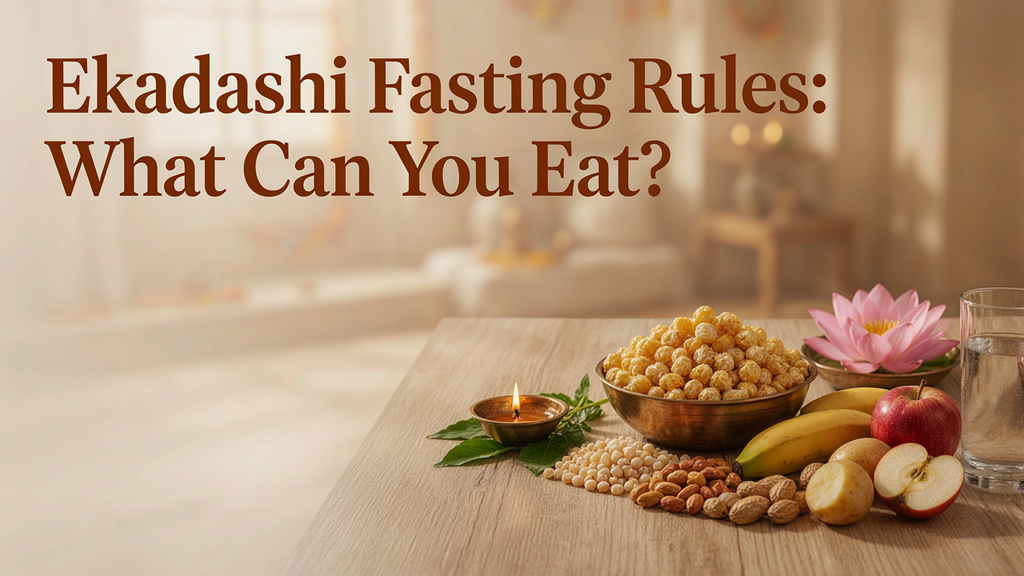
Fasting practices depend on personal health, family customs, and religious tradition. There is no single menu that every Hindu follows on Ekadashi.
Some devotees observe a complete fast, while others eat fruit, drink milk, or prepare a simple fasting meal. Many traditions avoid ordinary grains and beans, including wheat, rice, lentils, and chickpeas, during the fast.
| Food or drink | Common practice |
| Fresh fruit | Commonly permitted in fruit-based fasts |
| Milk and yogurt | Permitted in many traditions |
| Water | Allowed in most fasts, except strict waterless vows |
| Potatoes and sweet potatoes | Commonly used in fasting meals |
| Sabudana (tapioca pearls) | Popular in many regional fasting recipes |
| Kuttu or singhara flour | Used in some fasting dishes |
| Rice, wheat, and ordinary grains | Commonly avoided |
| Lentils and beans | Commonly avoided |
| Meat, fish, and eggs | Avoided by devotees observing a vegetarian fast |
| Onion and garlic | Avoided in many devotional households, although customs vary |
Practical fasting advice
- Decide on a fasting method that fits your health and religious practice.
- Prepare simple meals in advance if you will be working or travelling.
- Drink adequate water unless you are following a specific religious restriction under appropriate guidance.
- Avoid overeating when the fast ends.
- If you take prescribed medicines, do not stop or change them to accommodate fasting without medical advice.
Children, older adults, pregnant or breastfeeding people, and those with diabetes, kidney disease, a history of eating disorders, or other relevant medical conditions should seek appropriate medical guidance before fasting. A strict fast without water is not necessary for everyone and may be unsafe.
How to Perform Ekadashi Puja at Home
A simple home observance can be meaningful without elaborate arrangements. Devotees generally focus on cleanliness, prayer, and sincere devotion rather than the cost of offerings.
- Prepare the worship space. Clean the area and place an image or idol of Lord Vishnu on a suitable surface.
- Begin with a prayer. Light a lamp if it is safe to do so, and offer a short prayer according to your family tradition.
- Make customary offerings. Flowers, water, fruit, and Tulsi leaves may be offered where appropriate. Follow your tradition’s guidance about specific offerings.
- Chant or read. Recite a Vishnu mantra, read a sacred text, or listen to an Ekadashi Vrat Katha.
- Observe your chosen fast. Follow your planned food restrictions without compromising your health.
- Practice charity and kindness. Help someone in need or donate food according to your ability.
- Complete the observance. Break the fast on Dwadashi at the appropriate local parana time, following your tradition.
Image Caption: A peaceful home altar with Lord Vishnu, fresh flowers, a diya, fruit, and Tulsi leaves prepared for Ekadashi puja.
Parana: When and How to Break the Ekadashi Fast
Parana is the ritual breaking of the fast, generally performed on Dwadashi, the twelfth lunar day following Ekadashi. In traditions that prescribe a specific time window, devotees aim to break the fast within that period.
The correct time is not identical everywhere. It depends on the local lunar tithi, sunrise, and the calendar tradition being followed. A parana time listed for New Delhi may not apply to Karachi, Mumbai, London, or another city.
To plan your parana:
- Check a reliable Panchang for your location.
- Confirm the Dwadashi date and the permitted time window.
- Follow your family or temple’s instructions if they differ from a general calendar.
- Break the fast gently, beginning with an appropriate drink or light food based on your fasting practice and health.
Do not rely on a generic internet time without checking the location and date. Some observances have special rules when Dwadashi is short or when lunar timings overlap.
Best Places to Visit for an Ekadashi Pilgrimage

Ekadashi is observed in many places, so there is no single destination that every devotee must visit. If you want to combine fasting with a spiritual journey, you can choose a Vishnu temple, a major pilgrimage centre, or a nearby place of worship.
This famous pilgrimage centre is dedicated to Lord Venkateswara, a form of Vishnu. Devotees visit for darshan, prayer, and the temple’s rich religious traditions. Allow several hours or longer depending on your booking and queue. Check the official temple website for current darshan arrangements before travelling.
Located in the Himalayan region, Badrinath is one of the major Hindu pilgrimage sites associated with Lord Vishnu. The mountain setting adds to the experience, but the high altitude, weather, and seasonal access require careful planning. Confirm opening dates and road conditions before departure.
This important Kerala temple is dedicated to Lord Krishna, a form of Vishnu. It is suitable for devotees interested in South Indian temple customs and devotional worship. Visitors should check dress requirements, darshan arrangements, and photography restrictions before arrival.
Puri is a major pilgrimage destination associated with Lord Jagannath, a form of Vishnu. It is especially known for its temple traditions and Rath Yatra festival. Non-Hindu entry restrictions apply at the main temple, so international visitors should verify current access rules before planning a visit.
ISKCON temples offer Krishna-centred worship, devotional singing, and religious programmes. They can be a convenient option for visitors seeking a devotional experience within a large city. Confirm the programme schedule and visitor arrangements with the specific temple.
How much time should you allow?
| Visit type | Suggested time |
| Local temple visit | Around 1–3 hours, depending on queues and ceremonies |
| Temple visit with nearby sightseeing | Half a day |
| Short pilgrimage to a major city | 1–2 days, depending on travel distance |
| Himalayan or multi-temple pilgrimage | Several days, depending on access and route |
These are planning suggestions, not official visit durations. Festival crowds, temple rules, weather, and transport delays can change the amount of time needed.
Image Caption: Pilgrims visiting a Hindu temple dedicated to Lord Vishnu during a devotional observance.
Best Time to Visit Temples During Ekadashi
The best time for a temple visit depends on the particular temple, local weather, and the ceremonies scheduled for that day. Early morning is a popular choice for prayer, while some temples also hold evening aarti or devotional singing.
| Period | What to consider |
| Early morning | Often suitable for a quieter start, though queues may already be long |
| Late morning | Check the temple’s darshan hours and any break in public access |
| Afternoon | Some temples may limit access during ritual or rest periods |
| Evening | Aarti and devotional programmes may attract larger crowds |
| Major Ekadashi festivals | Expect special ceremonies, possible queues, and changed arrangements |
Seasonal planning for 2026
Ekadashi dates occur throughout the year, so weather depends on your chosen destination.
- January–March: Some northern Indian destinations can be cold in the morning, while southern areas are generally milder.
- April–June: Heat can be intense in many parts of India. Carry water and avoid strenuous travel while fasting.
- July–September: Monsoon conditions can affect road journeys, hill routes, and outdoor activities.
- October–December: Many destinations have comfortable travel conditions, although winter fog and cold weather can affect some northern routes.
These are broad seasonal patterns, not a forecast for a particular destination. Check local weather and travel advisories before leaving.
How to Reach an Ekadashi Temple by Air, Train, or Road
Because Ekadashi is observed across India and elsewhere, your transport plan depends on the temple you choose. There is no single airport, railway station, or road route for the festival as a whole.
By air
For a distant pilgrimage, fly to the airport serving your destination and arrange onward transport to the temple. Major pilgrimage cities and regional centres have different airport options.
Before booking, confirm the distance from the airport to the temple, road conditions, available transfers, and whether your flight arrives early enough for the planned ceremony.
By train
Rail travel can be practical for many Indian pilgrimage destinations. Search for the railway station serving the temple town, then check the current train schedule and onward local transport.
Book early when travelling on major festival dates. Train availability, journey times, and station transfer arrangements should be verified through official railway services.
By road
Buses, taxis, private cars, and organised pilgrimage tours can provide access to temples. Road travel may be especially useful for visiting several religious sites in one trip.
For Himalayan destinations, check seasonal access, weather warnings, and road conditions. Avoid scheduling a long drive immediately before a strict fast if you expect to become tired or dehydrated.
By local transport
Depending on the city, you may be able to use:
- Local buses or metro services.
- Authorised taxis and ride-hailing services where available.
- Auto-rickshaws for short journeys.
- Walking for nearby temples and markets.
- Temple-operated or officially organised transport where offered.
Check local restrictions around temple entrances. Some religious sites have designated drop-off points, security screening, or pedestrian-only areas.
Where to Stay During an Ekadashi Pilgrimage

Accommodation is best selected according to the temple you plan to visit, your travel dates, your budget, and your need for a peaceful place to rest.
| Accommodation type | Best suited for | What to check |
| Dharamshala or pilgrim guesthouse | Budget-conscious pilgrims | Eligibility, shared facilities, curfew, and booking requirements |
| Budget hotel | Short visits and independent travellers | Cleanliness, location, and transport access |
| Mid-range hotel | Families and longer stays | Room facilities, cancellation policy, and meal options |
| Premium hotel | Travellers wanting extra comfort | Distance from the temple, service details, and total cost |
| Family accommodation | Groups and families | Room capacity, accessibility, and nearby food options |
Choosing the right location
Staying near the temple can reduce transport time, but rooms closest to major pilgrimage centres may fill up quickly during festivals. Accommodation farther away may be less expensive, although you should account for travel time and transport costs.
If you need a quiet room for prayer or rest during fasting, check noise levels, meal arrangements, and the availability of drinking water. Do not assume that a hotel or guesthouse provides special Ekadashi meals unless this is confirmed directly.
Booking tip: Check the cancellation policy and verify any special temple-entry or pilgrimage registration requirements before paying for non-refundable accommodation.
Ekadashi Food Guide: Traditional Fasting Meals
Food customs differ across regions, but many devotees prepare simple vegetarian meals that exclude grains and legumes. The goal is generally to keep the observance uncomplicated while following one’s religious tradition.
| Food or dish | Common ingredients or style |
| Sabudana khichdi | Tapioca pearls, potatoes, peanuts, and permitted seasonings |
| Kuttu roti | Buckwheat flour and water, sometimes with potatoes |
| Singhara puri | Water-chestnut flour prepared according to fasting customs |
| Fruit chaat | Fresh fruit and permitted seasonings |
| Makhana | Roasted fox nuts or a simple milk-based preparation |
| Aloo vrat recipe | Potatoes cooked with ingredients allowed by the household’s tradition |
| Milk and yogurt | Often consumed by people following a fruit-and-dairy fast |
Recipes and ingredient rules vary. Buckwheat and water-chestnut flour are not ordinary cereal grains, but devotees should still check how each ingredient is classified within their tradition.
Eating while travelling
- Carry fruit or other permitted snacks if you expect a long journey.
- Ask restaurants about ingredients, cooking oil, and cross-contamination.
- Do not assume every dish labelled “vegetarian” is suitable for Ekadashi.
- Drink sufficient water if your fasting practice allows it.
- Avoid unfamiliar food choices if you are already feeling weak or unwell.
A simple home-prepared meal may be easier to manage than searching for specialised fasting food in an unfamiliar town.
Image Caption: A traditional Ekadashi fasting meal featuring fruit, sabudana, potatoes, and other commonly used vrat ingredients.
Ekadashi Travel Budget and Expenses
There is no single festival ticket or standard Ekadashi travel package. Your total cost depends on your destination, transport, accommodation, length of stay, and whether you join organised pilgrimage activities.
The following table describes relative spending levels rather than unverified prices.
| Expense | Budget traveller | Mid-range traveller | Luxury traveller |
| Accommodation | Shared pilgrim lodging or basic guesthouse | Private hotel room | Premium hotel or resort |
| Food | Simple fasting meals and fruit | Restaurant meals with suitable options | Higher-end dining, where suitable options are available |
| Transport | Public transport and shared rides | Train or flight plus taxis | Flights, private transfers, or chauffeur-driven transport |
| Temple visits | Regular public darshan where available | Paid services only where officially offered | Premium services only where officially offered |
| Activities | Prayer and nearby walking visits | Additional local sightseeing | Private guided experiences where available |
How to keep costs manageable
- Book transport and accommodation early for popular pilgrimage dates.
- Choose lodging with convenient access to the temple or public transport.
- Verify whether darshan or special ceremonies require advance booking.
- Set aside extra funds for local transfers, meals, and unexpected delays.
- Avoid paying unofficial agents who promise guaranteed entry or special access.
Temple entry and special darshan arrangements vary. Never assume that a paid package guarantees entry or that every temple charges the same fees.
A Simple One-Day Ekadashi Itinerary

A one-day plan works well if you live near the temple or have already arrived in the pilgrimage town. For a distant destination, add enough time for transport and rest.
| Time of day | Suggested activity |
| Early morning | Wake up, bathe, and perform your customary prayer |
| Morning | Visit the selected temple, subject to its published darshan hours |
| Late morning | Read a sacred text, chant a Vishnu mantra, or attend a devotional programme |
| Afternoon | Rest, follow your chosen fasting practice, and avoid unnecessary exertion |
| Evening | Attend aarti or devotional singing if available |
| Night | Return to your accommodation, prepare for the next day, and confirm the parana time |
Treat this as a flexible example rather than a fixed religious schedule. Some people prefer to spend the day at home, while others follow a stricter temple-based observance.
Two-day pilgrimage option
If you are travelling from another city, consider a two-day plan:
- Day 1: Arrive, check in, visit the temple if time allows, and confirm the next day’s ceremony and entry arrangements.
- Day 2: Observe Ekadashi according to your tradition, visit the temple, rest as needed, and plan your return only when it is safe and practical.
For a multi-temple journey, build in additional days rather than rushing between sites while fasting.
Family-Friendly Activities, Photography, and Local Etiquette
Ekadashi can be a meaningful cultural experience for families and travellers who want to understand Hindu devotional life. You do not need to undertake a strict fast to learn about the festival or respectfully visit a temple.
Family-friendly experiences
- Visit a local temple during its public visiting hours.
- Attend a permitted devotional music or prayer programme.
- Read an age-appropriate story about Lord Vishnu with children.
- Learn about the Hindu lunar calendar and why Ekadashi dates change.
- Participate in charitable activities or food donations organised by a reputable community group.
Families with children, older adults, or anyone who needs regular meals should choose an observance suited to their needs rather than attempting an intense fast.
Best photography and scenic opportunities
Photograph the exterior of a temple in soft morning light, provided photography is permitted. Arrive early enough to avoid blocking worshippers or entrances.
Close-up images of flowers, lamps, and permitted offerings can communicate the atmosphere of the observance without photographing worshippers without consent.
Where public access is allowed, courtyards and architectural details can offer a respectful record of the location’s cultural heritage.
Important etiquette for temple visits
- Dress modestly and follow posted clothing requirements.
- Remove footwear wherever instructed.
- Ask permission before photographing people or religious ceremonies.
- Follow signs regarding photography, mobile phones, and restricted areas.
- Avoid obstructing queues or interrupting worship.
- Respect local customs even if they differ from your own practice.
Image Caption: Traditional temple architecture and devotional decorations reflecting the peaceful atmosphere of an Ekadashi observance.
Local Culture, Traditions, and Religious Etiquette
Ekadashi reflects the diversity of Hindu religious life. Although devotion to Lord Vishnu is central to many observances, the details can differ between regions, temples, and families.
Some communities place special emphasis on devotional singing and group prayer. Others focus on household worship, fasting, reading religious stories, or giving food to people in need. In Maharashtra, certain Ekadashi observances are associated with the Varkari tradition and pilgrimages connected with Pandharpur.
A few customs to understand before participating:
- Tulsi worship: Tulsi leaves are important in many Vaishnava devotional traditions.
- Bhajans and kirtans: Devotional songs may be performed in temples or community gatherings.
- Vrat Katha: Some devotees read the traditional story associated with that particular Ekadashi.
- Dana: Giving food, clothing, or other assistance is a customary expression of generosity.
- Chaturmas: Devshayani Ekadashi marks the beginning of a religious period observed by many Hindu communities.
Visitors should remember that participation is voluntary. You can respectfully observe a ceremony without fasting or performing rituals that are unfamiliar to you.
Safety Tips for Fasting and Religious Travel
Religious travel requires the same practical preparation as any other journey, with extra attention to food, hydration, crowds, and physical activity.
Before leaving home
- Check the local Ekadashi date and temple schedule.
- Book accommodation and transport through reputable providers.
- Keep identification, booking confirmations, and essential medicines accessible.
- Check weather forecasts and any travel advisories.
- Share your itinerary with someone you trust.
While observing the fast
- Choose a fasting method that suits your physical condition.
- Avoid strenuous activity and prolonged exposure to heat.
- Do not drive if you feel dizzy, weak, confused, or unusually tired.
- If you become unwell, prioritise your health and seek medical assistance.
- Do not stop prescribed medicines without medical advice.
Strict waterless fasting can cause dehydration and may be particularly risky in hot conditions. Religious observance should not require putting your health in danger.
At crowded temples
- Keep valuables secure and carry only what you need.
- Follow official queue systems and security instructions.
- Avoid unofficial offers of guaranteed darshan or priority access.
- Identify your transport pickup point before entering a crowded area.
- Follow the temple’s rules about bags, footwear, food, and photography.
For international travel, check visa requirements, travel insurance, and any relevant health guidance through official sources.
Ekadashi Packing Checklist
Your packing list will depend on the weather, the length of your journey, and whether you plan to attend temple ceremonies.
Your packing checklist
0 of 10
Comfortable, modest clothing
Choose clothing appropriate for the temple and weather.
Easy-to-remove footwear
Useful where shoes must be left outside.
Identification and bookings
Keep travel documents and confirmations accessible.
Water bottle
Carry water and drink regularly unless a clinician has advised otherwise.
Permitted fasting snacks
Fruit or suitable snacks for a long journey.
Essential medicines
Keep prescribed medicines in their original packaging where practical.
Phone, charger, and power bank
Useful for navigation and travel updates.
Small bag for personal items
Check whether the temple permits bags inside.
Weather protection
An umbrella, sun protection, or warm layers as appropriate.
A small prayer book or mala
Optional items for your personal devotional practice.
Reset checklist
SEO Image ALT Text Suggestions
Use these descriptive ALT texts for relevant article images. Adjust each description to match the actual image used.
- Ekadashi 2026 Hindu fasting calendar with dates and festival names.
- Lord Vishnu worship during the Ekadashi fasting festival.
- Traditional Ekadashi puja setup with flowers, a diya, and Tulsi leaves.
- Hindu devotees observing Ekadashi vrat and chanting Vishnu mantras.
- Sabudana khichdi and fruit served as traditional Ekadashi fasting food.
- Nirjala Ekadashi devotional worship dedicated to Lord Vishnu.
- Devshayani Ekadashi celebrations and traditional Vishnu worship.
- Badrinath Temple in the Himalayas, a major Hindu pilgrimage destination.
- Tirumala Venkateswara Temple, a popular pilgrimage site associated with Vishnu.
- A Hindu Panchang showing lunar dates for Ekadashi vrat in 2026.
FAQs
What is Ekadashi 2026, and why is it important?
Ekadashi 2026 refers to the Hindu fasting days observed on the eleventh lunar day of each fortnight. Devotees often dedicate these days to Lord Vishnu through fasting, prayer, and spiritual practices.
How many Ekadashi dates are there in Ekadashi 2026?
There are generally 24 regular Ekadashi observances in a lunar year, with additional observances possible during an intercalary month. The exact calendar dates depend on the Hindu lunar calendar and local observance rules.
How can I check the complete Ekadashi 2026 calendar?
You can consult a reliable Hindu Panchang or festival calendar for month-by-month Ekadashi dates. Check your location because local time zones and traditional observance rules can affect the dates.
What is the religious significance of Ekadashi 2026?
Ekadashi is traditionally associated with devotion to Lord Vishnu, self-discipline, and spiritual reflection. Many devotees observe a fast and spend extra time praying, chanting, or reading sacred texts.
What are the fasting rules for Ekadashi 2026?
Fasting practices vary according to health, family customs, and religious traditions. Some devotees avoid grains and beans, while others observe a water-only fast or choose a lighter fruit-based diet.
Can I drink water during the Ekadashi 2026 fast?
Yes, many devotees follow a fast that allows water, while others observe stricter forms of fasting. Choose a practice suitable for your health and follow the guidance of your family tradition.
Which foods should be avoided during Ekadashi 2026?
Many traditional fasting practices avoid rice, wheat, regular grains, and pulses. Some devotees eat fruits, milk, nuts, and foods prepared with permitted fasting ingredients.
What is the best time to break the Ekadashi 2026 fast?
The fast is traditionally broken during the prescribed Parana period on the following Dwadashi day. Check a location-specific Panchang for the correct time rather than relying on a general schedule.
What is Parana in Ekadashi 2026?
Parana is the ritual of breaking the Ekadashi fast, usually on Dwadashi. Its timing is important in many Hindu traditions, so devotees check the local Parana window before ending their fast.
What is Nirjala Ekadashi 2026?
Nirjala Ekadashi is a particularly strict observance traditionally associated with abstaining from both food and water. Because this can pose health risks, people should not attempt it if fasting or dehydration may be unsafe for them.
When is Devshayani Ekadashi in 2026?
Devshayani Ekadashi falls during the Hindu month of Ashadha and is associated with the beginning of Chaturmas in many traditions. Check a reliable 2026 Panchang for the date and local observance timings.
What is the importance of Devuthani Ekadashi 2026?
Devuthani, also called Prabodhini Ekadashi, marks the traditional awakening of Lord Vishnu after his cosmic rest. It is considered an important day for worship and is associated with the resumption of many auspicious activities.
How should I perform Lord Vishnu puja on Ekadashi 2026?
Devotees may bathe, offer prayers, chant Vishnu mantras, light a lamp, and read sacred texts. Follow your family traditions and offer food or flowers according to your religious customs.
Can I eat fruit during Ekadashi 2026 fasting?
Many devotees eat fresh fruit, nuts, milk, and other permitted foods during their fast. Specific rules differ between traditions, so check the fasting practices you follow.
Can children and elderly people observe Ekadashi 2026 fasting?
Fasting should be adapted to individual health, age, and nutritional needs. Children, older adults, pregnant people, and anyone with a medical condition should avoid strict fasting unless advised by a qualified healthcare professional.
What is the difference between Ekadashi and Dwadashi in 2026?
Ekadashi is the eleventh lunar day, while Dwadashi is the twelfth. Devotees generally observe the fast on Ekadashi and break it during the prescribed Parana period on Dwadashi.
Is Ekadashi 2026 observed on the same date throughout the world?
Not always. Time zones, local sunrise, and regional Panchang calculations can lead to different observance dates, especially for devotees living outside India.
Which mantra can I chant during Ekadashi 2026?
Many devotees chant “Om Namo Bhagavate Vasudevaya” or repeat the names of Lord Vishnu. Prayer, meditation, and reading devotional texts are also common ways to observe the day.
Can I perform charity and donate food on Ekadashi 2026?
Yes, charity and helping people in need are encouraged in many Ekadashi traditions. Devotees may donate food, clothing, or other essentials according to their means and local customs.
Where can I find accurate Ekadashi 2026 dates and Parana timings?
Use a trusted Hindu Panchang that provides Ekadashi dates, tithi details, and Parana timings for your city. Verify the information before fasting, especially when traveling or observing the festival in another country.
Conclusion
Ekadashi 2026 offers devotees an opportunity to deepen their spiritual connection through fasting, prayer, and devotion to Lord Vishnu. By understanding the dates, religious significance, and traditional fasting rules, you can prepare for each observance with greater confidence. Whether you follow a strict fast or choose a simpler devotional practice, sincerity and self-discipline remain central to the observance. Always check the correct Ekadashi date and Parana timing for your location. A reliable Hindu calendar can help you plan these sacred days throughout the year.
Following Ekadashi 2026 can also be a meaningful way to learn more about Hindu traditions, sacred stories, and devotional practices. You can observe the day through prayer, mantra chanting, meditation, charity, or reading religious texts according to your beliefs. Remember that fasting customs differ among families and communities, so choose a practice that respects your tradition and personal health. Use a trusted Panchang to confirm important dates and timings before each observance. With thoughtful preparation, every Ekadashi can become an opportunity for reflection, devotion, and spiritual growth.
Read More: What Is Brahma Muhurta? Timing, Benefits, Spiritual Practices & Morning Routine (2026)
