


Holi 2026 is one of the most colorful and joyful Hindu festivals of the year. Known as the Festival of Colors, Holi celebrates the arrival of spring, love, friendship, and the victory of good over evil. In 2026, Rangwali Holi will be celebrated on Wednesday, March 4, while Holika Dahan will take place on Tuesday, March 3. From colorful gulal and traditional sweets to music, dancing, prayers, and family gatherings, Holi brings people together in a spirit of happiness and renewal.
For people in the USA, Holi is becoming a popular cultural and community celebration. Hindu temples, Indian-American organizations, universities, and cultural groups often organize special events around this festival. In this complete Holi 2026 USA Guide, you will learn about the date, timings, history, Prahlada and Holika story, Radha and Krishna traditions, spiritual meaning, food, celebration ideas, and safety tips. Whether you are celebrating Holi for the first time or continuing a family tradition, this guide will help you enjoy the festival with understanding and respect.
Quick Answer:
Holi 2026 will be celebrated on Wednesday, March 4, 2026. The evening before, Holika Dahan will be observed on Tuesday, March 3, 2026.
Holi is one of India’s best-known festivals and is often called the Festival of Colors. It celebrates the arrival of spring, the triumph of good over evil, love, friendship, renewal and the joy of community.
For people in the United States, Holi celebrations may take place on the traditional date or on a nearby weekend, especially at temples, Hindu community centers, universities and cultural organizations.
Holi 2026 at a Glance
| Event | Date | What It Means |
| Holika Dahan | Tuesday, March 3, 2026 | Bonfire ceremony symbolizing the victory of good over evil |
| Rangwali Holi | Wednesday, March 4, 2026 | Main day of colors, music, food and celebration |
| Festival | Holi 2026 | Celebration of spring, love, renewal and spiritual victory |
What Is Holi?
Holi is a major Hindu festival traditionally celebrated in India, Nepal and Hindu communities around the world. Today, it has also become a popular cultural celebration in many countries, including the United States.
The festival is best known for people throwing colorful powders called gulal, playing with water, dancing to music and sharing festive foods. But Holi is more than a colorful outdoor party.
At its heart, Holi represents renewal, forgiveness, devotion and the victory of good over evil.
The celebration also has strong connections with Lord Krishna and Radha. In many parts of India, especially Braj, Mathura and Vrindavan, Holi is closely connected with Krishna’s playful relationship with Radha and the gopis.
Why Is Holi Called the Festival of Colors?
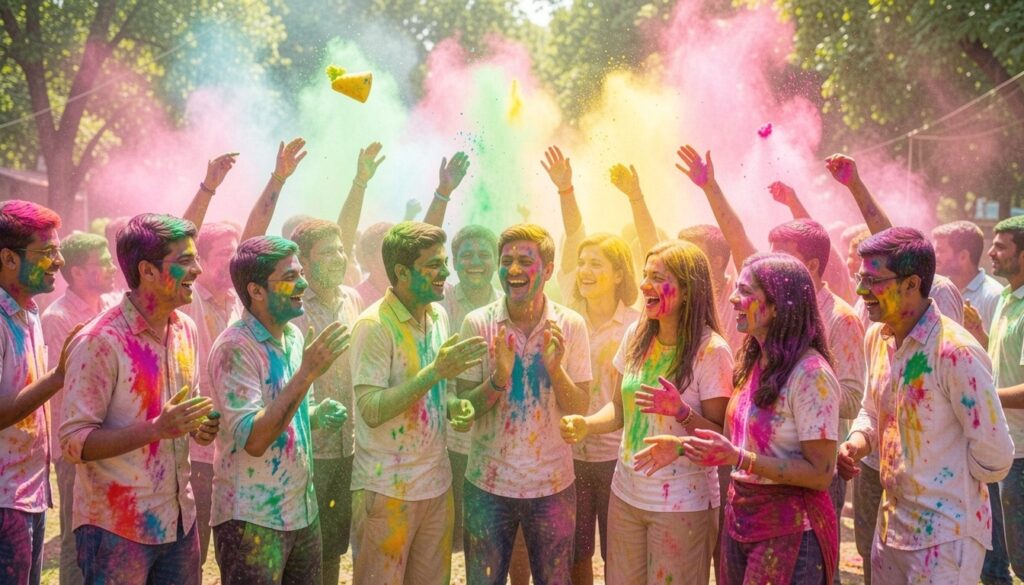
Holi is called the Festival of Colors because people traditionally celebrate Rangwali Holi by applying colored powder to one another.
The colors can symbolize many things, including:
- Joy and happiness
- Love and friendship
- New beginnings
- The arrival of spring
- Equality and togetherness
- The beauty and variety of life
Holi 2026 Date and Timings
The main Holi celebration in 2026 falls on Wednesday, March 4.
The festival traditionally has two major stages: Holika Dahan and Rangwali Holi.
Holika Dahan 2026
Holika Dahan is on Tuesday, March 3, 2026.
On this evening, communities gather around a ceremonial bonfire. Prayers are offered, and the fire represents the destruction of evil and the protection of devotion.
The exact Holika Dahan muhurat depends on the local Hindu calendar and sunset time. Because the USA spans several time zones, the appropriate time in New York may differ from the time in Los Angeles.
For this reason, do not rely on a single India-based timing when planning a U.S. ceremony.
Rangwali Holi 2026
Rangwali Holi is Wednesday, March 4, 2026.
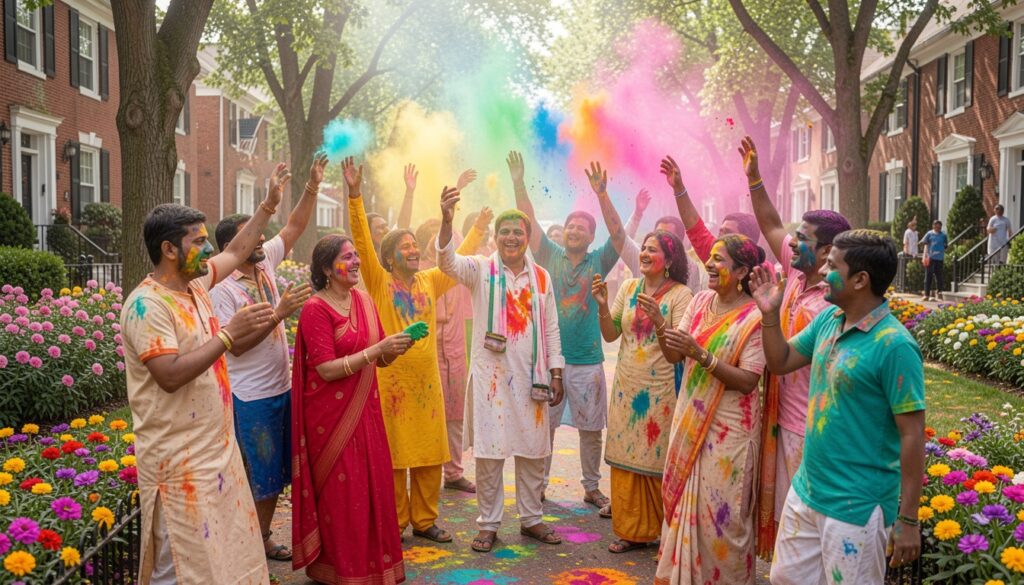
This is the colorful day most people associate with Holi.
Typical activities include:
- Applying gulal to family and friends
- Playing with colored water
- Singing and dancing
- Visiting relatives and friends
- Enjoying traditional sweets
- Attending temple celebrations
- Sharing a festive meal
- Offering prayers and seeking blessings
The Story of Holi: Prahlada and Holika
One of the most important stories associated with Holi comes from Hindu tradition and centers on Prahlada, Holika and King Hiranyakashipu.
According to the story, Hiranyakashipu was a powerful king who became extremely proud. He wanted everyone to worship him rather than God.
His son, Prahlada, remained devoted to Lord Vishnu.
Hiranyakashipu became angry because Prahlada refused to abandon his devotion. The king tried several ways to harm his son, but Prahlada remained protected through his faith.
Eventually, Hiranyakashipu asked his sister Holika to sit in a fire with Prahlada. Holika was believed to have a special protection from fire.
However, the story says that Holika’s protection did not save her because she used it for an evil purpose. Prahlada survived, while Holika was destroyed by the fire.
Later, Lord Vishnu appeared in the form of Narasimha and defeated Hiranyakashipu.
What Does the Holika Dahan Story Teach?
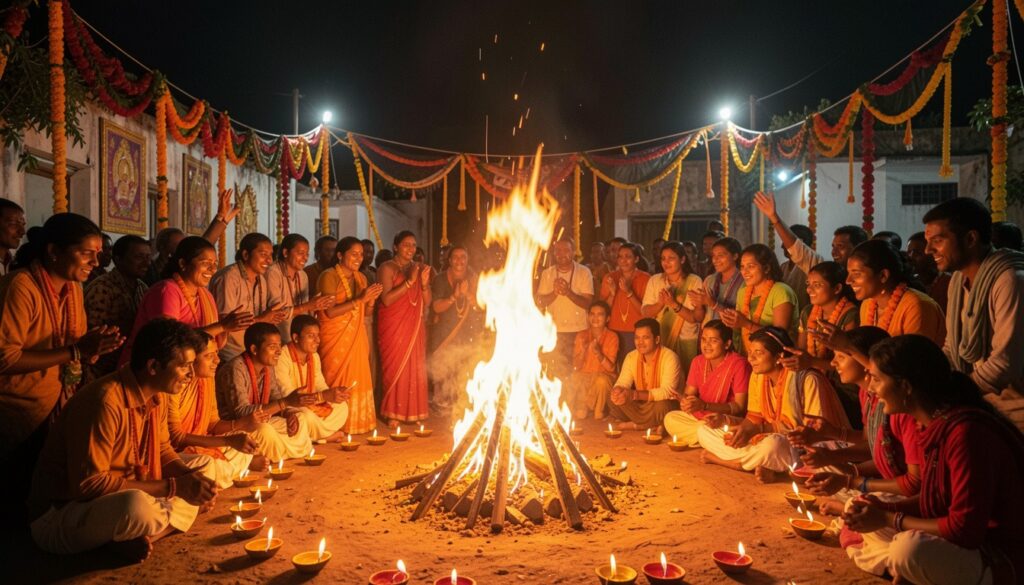
The story carries a powerful spiritual message:
- Pride can lead to destruction.
- True devotion can remain strong during hardship.
- Evil does not ultimately defeat righteousness.
- Divine protection is associated with sincere faith.
- Power without humility can become destructive.
This is why the Holika Dahan fire is often viewed as a symbolic reminder to let go of negativity and move toward goodness.
Radha and Krishna: Another Important Holi Tradition
Holi also has a beautiful connection with Lord Krishna and Radha.
In the Braj region of India, Holi traditions are deeply connected with Krishna’s childhood stories. Krishna is often described as playfully celebrating colors with Radha and the people of Vrindavan.
This tradition gives Holi another dimension: love, affection, playfulness and devotion.
Many temples and Hindu communities recreate this atmosphere through:
- Radha Krishna worship
- Bhajans and kirtans
- Flower Holi
- Colored powder ceremonies
- Devotional music
- Cultural performances
For devotees, Holi can therefore be both a joyful social festival and a deeply spiritual celebration.
Spiritual Meaning of Holi
The spiritual meaning of Holi goes far beyond throwing colors.
Victory of Good Over Evil
Holika Dahan represents the triumph of righteousness over harmful intentions.
Letting Go of Negativity
The fire can be viewed as a symbolic opportunity to release anger, jealousy, pride and resentment.
Forgiveness and Reconciliation
Holi has traditionally been associated with repairing relationships and beginning again.
Equality
During Holi, social barriers can become less important. People celebrate together regardless of age, background or social position.
Renewal
Because Holi arrives around spring, it represents fresh energy, growth and new beginnings.
Divine Love
Through Radha and Krishna traditions, Holi also celebrates devotional love and the joy of spiritual connection.
How Is Holi Celebrated?
Holi celebrations can look different from one region to another.
A traditional celebration may begin with religious observances and continue with a lively community gathering.
Popular Holi Traditions
Playing With Gulal
Colored powder is gently applied to the faces of friends and family.
Colored Water
Some celebrations include water balloons, water guns and colored water. However, responsible celebrations should avoid wasting large amounts of water.
Music and Dancing
Holi often includes Bollywood music, devotional songs, folk music, drums and dancing.
Sharing Sweets
Families prepare or purchase traditional sweets such as gujiya, laddoo and other festive treats.
Temple Celebrations
Many Hindu temples organize Holi programs that combine prayer, devotional music, food and colors.
Community Feasts
Food is an important part of the festival. Guests may share vegetarian dishes, sweets and refreshing drinks.
Holi Food: What Do People Eat?
Food is one of the most enjoyable parts of Holi.
Popular Holi foods and drinks include:
| Food or Drink | Description |
| Gujiya | Sweet pastry filled with a rich mixture, traditionally including khoya and nuts |
| Laddoo | Round Indian sweets made in many varieties |
| Dahi Vada | Lentil dumplings served with yogurt and chutneys |
| Puri | Fried Indian flatbread often served with savory dishes |
| Chaat | Flavorful street-food-style snacks |
| Thandai | Traditional festive milk-based drink often flavored with spices and nuts |
| Kachori | Crispy stuffed savory pastry |
| Namkeen | Savory snacks served during gatherings |
Is Thandai Always Made With Cannabis?
Not necessarily.
Traditional thandai is a milk-based drink flavored with ingredients such as nuts, spices and seeds. Some versions may contain bhang, a cannabis preparation, but many commercial and family versions do not.
In the United States, anyone serving or consuming a cannabis-infused drink should follow applicable local and state laws.
Best Ways to Celebrate Holi in the USA
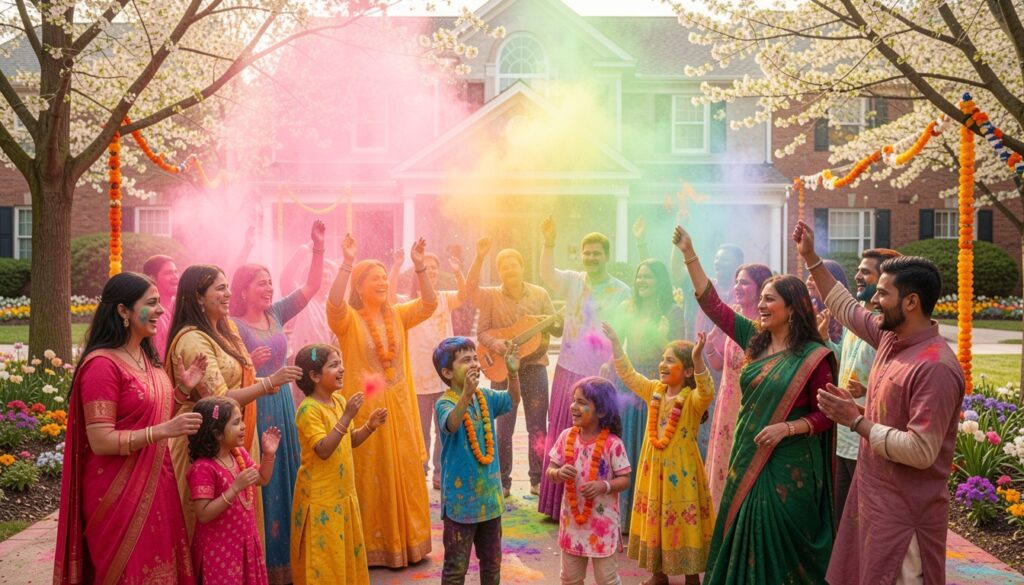
Holi has become increasingly popular among Indian-American communities and people interested in South Asian culture.
If you live in the United States, you may find celebrations at:
- Hindu temples
- Indian cultural centers
- University campuses
- Community organizations
- Indian restaurants
- South Asian cultural festivals
- Local parks and event venues
How to Find a Holi Celebration Near You
Start by checking:
- Local Hindu temples
- Indian-American community organizations
- University Indian student associations
- City event calendars
- Cultural centers
- Local Indian newspapers and community websites
- Official temple social media pages
Because events can change, confirm the date, ticket requirements, age rules, parking information and color policies before attending.
Holi Celebration Ideas for Families
Holi can be a wonderful family event when it is planned safely.
Family-Friendly Holi Activities
- Make homemade paper decorations.
- Prepare gujiya together.
- Learn about the Prahlada story.
- Listen to Krishna bhajans.
- Use washable natural colors.
- Create a small cultural presentation.
- Organize a vegetarian potluck.
- Teach children about the spiritual meaning of Holi.
- Have a photography corner.
- End the celebration with a family meal.
For young children, choose a smaller celebration with gentle, non-toxic colors instead of a crowded event.
Holi Safety Tips
A colorful celebration should also be a safe one.
Protect Your Eyes
Do not throw powder directly into someone’s face. Consider wearing protective glasses during large outdoor events.
Use Skin-Friendly Colors
Choose reputable, non-toxic, skin-safe colors. Avoid unknown powders that may contain harsh chemicals.
Protect Your Phone
Use a waterproof pouch or leave expensive electronics at home.
Wear Old Clothes
Holi colors can stain clothing permanently.
Be Careful With Water
Wet floors can become slippery. Watch children closely around pools, water stations and crowded areas.
Respect Personal Boundaries
Not everyone wants to be covered in color. Ask before applying color, especially with strangers.
Watch Allergies
People with sensitive skin or allergies should check the ingredients in powders and cosmetics before participating.
Holi Pros and Cons
| Pros | Cons |
| Fun and social | Colors can stain clothes |
| Great family activity | Crowds may be overwhelming |
| Celebrates culture and tradition | Some powders may irritate skin |
| Encourages community | Wet areas can become slippery |
| Beautiful photography opportunities | Events may require advance tickets |
| Introduces people to Indian traditions | Outdoor events depend on weather |
Holi 2026 Checklist
- Confirm the Holi 2026 event date.
- Check local Holika Dahan timings.
- Choose skin-safe colors.
- Wear old white or light-colored clothing.
- Bring sunglasses or protective eyewear.
- Protect your phone and wallet.
- Carry drinking water.
- Check parking and transportation.
- Confirm whether outside food is allowed.
- Check whether an event is family-friendly.
- Ask before putting color on someone.
- Keep towels and spare clothes available.
- Learn the cultural meaning behind the celebration.
Common Holi Mistakes to Avoid
Assuming Every Holi Event Is the Same
A temple Holi celebration may be very different from a large commercial color festival.
Ignoring Local Timings
Hindu festival timings are location-specific. Always check your city’s calendar.
Using Unknown Colors
Cheap or unverified powders can cause skin and eye irritation.
Treating Holi Only as a Color Party
Holi has centuries of religious and cultural meaning. Understanding the stories makes the celebration more meaningful.
Forcing Color on People
Consent matters. Celebrate joyfully without making anyone uncomfortable.
Forgetting the Cleanup
Color can travel far beyond the celebration area. Plan ahead for laundry, showers and cleaning.
Bringing Expensive Electronics
Cameras and phones can easily be damaged by powder and water.
Expert Tips for Celebrating Holi in 2026
Check local temple calendars early.
Popular Holi programs may have limited capacity or require registration.
Bring a second outfit.
A clean change of clothes is especially useful for outdoor celebrations.
Use oil before playing Holi.
Some people apply a light layer of coconut or other suitable oil to their hair and skin to make color easier to remove. Test products first if your skin is sensitive.
Keep your celebration inclusive.
Explain the religious and cultural background to guests who are new to Holi.
Separate religious and recreational activities.
If your event includes a puja or temple ceremony, follow the venue’s rules about dress, food and behavior.
Check weather conditions
March weather can vary greatly across the USA, so outdoor celebrations should have a weather plan.
Plan transportation.
Large community events may create parking and traffic problems.
Holi 2026 in Different Parts of the USA
Holi is celebrated by Indian-American and broader South Asian communities across the country.
New York and New Jersey
The large South Asian population in the region means visitors can often find temple events, cultural programs and community celebrations.
California
California has many Hindu temples and Indian cultural organizations, particularly in major metropolitan areas.
Texas
Cities such as Houston, Dallas and Austin have active South Asian communities that may organize Holi events.
Illinois
The Chicago area has a large Indian-American population and numerous cultural and religious organizations.
Washington, D.C. Area
The greater Washington metropolitan region has many South Asian community groups and Hindu temples.
Holi vs. Holika Dahan: What’s the Difference?
| Holika Dahan | Rangwali Holi |
| Evening before Holi | Main festival day |
| March 3, 2026 | March 4, 2026 |
| Sacred fire and prayers | Colors, music and celebration |
| Associated with Prahlada and Holika | Strongly associated with spring and Krishna traditions |
| More ritual-focused | More social and festive |
Holi and Other Indian Festivals
| Festival | Main Theme |
| Holi | Colors, spring, renewal and victory of good |
| Diwali | Light over darkness and spiritual renewal |
| Janmashtami | Birth of Lord Krishna |
| Navratri | Devotion and celebration of the Divine Feminine |
| Maha Shivaratri | Devotion to Lord Shiva |
| Raksha Bandhan | Sibling bond |
| Ganesh Chaturthi | Celebration of Lord Ganesha |
This makes Holi a useful starting point for readers who want to learn more about Hindu traditions and Indian culture.
FAQs
When is Holi in 2026?
Holi 2026 is on Wednesday, March 4, 2026. Holika Dahan takes place the previous evening, Tuesday, March 3.
When is Holika Dahan in 2026?
Holika Dahan is on March 3, 2026. The exact auspicious timing varies according to location and local sunset.
What is the story behind Holi?
The most famous story involves Prahlada, a devoted follower of Lord Vishnu, and Holika, who attempted to destroy him in a fire. Prahlada survived while Holika was destroyed, symbolizing the victory of good over evil.
Why do people throw colors during Holi?
Colors are associated with joy, spring, love, friendship and renewal. Krishna traditions also connect Holi with playful color celebrations involving Radha and Krishna.
What does Holi mean spiritually?
Holi can symbolize the victory of righteousness over evil, forgiveness, renewal, equality, love and the release of negative emotions.
Is Holi celebrated in the USA?
Yes. Hindu temples, Indian-American organizations, universities and cultural groups across the USA organize Holi celebrations.
What should I wear to a Holi celebration?
Wear old, comfortable clothing that you do not mind staining. White or light-colored clothes are popular because the colors show clearly.
Are Holi colors safe?
Some are, but not all. Choose reputable, non-toxic, skin-safe colors and avoid putting powder near the eyes or mouth.
What food is eaten during Holi?
Popular foods include gujiya, laddoo, dahi vada, kachori, puri, chaat and other Indian snacks. Thandai is also traditionally associated with Holi.
How can I find Holi events near me in the USA?
Check local Hindu temples, Indian cultural organizations, university associations, community calendars and official event pages. Always confirm the event details before traveling
Final Thoughts:
Holi 2026 is more than a festival of bright colors. It brings together ancient stories, devotion, family traditions, music, food, friendship and the excitement of spring.
For Hindus, Holi can be a time to remember the victory of righteousness, deepen devotion and let go of negativity. For newcomers, it can offer a meaningful introduction to Indian culture when experienced with respect and an understanding of its religious roots.
If you are celebrating in the USA, check your local temple or community organization for the latest schedule, follow venue rules, choose safe colors and make space for everyone to participate comfortably.
Whether you celebrate with family at home, attend a temple program or join a large community event, the best Holi celebration combines joy with respect, color with culture, and tradition with togetherness.
