


Sawan Month 2026 is one of the most sacred months in the Hindu calendar, especially for devotees of Lord Shiva. Also known as Shravan, this holy month is associated with devotion, fasting, prayers, temple visits, and spiritual practices. Devotees across India and Hindu communities in the USA observe Sawan by offering water, milk, Bilva leaves, flowers, and prayers to Lord Shiva.
For many families, Sawan is more than a religious tradition—it is a time for self-discipline, inner peace, and spiritual reflection. Mondays during Sawan, known as Sawan Somwar, are considered especially auspicious for Shiva worship. Devotees may also follow fasting traditions, visit Shiva temples, chant mantras, and participate in special puja ceremonies.
In this guide to Sawan Month 2026, you will learn about the important dates, Sawan Somwar calendar, rituals, fasting rules, spiritual significance, and ways to observe this sacred month. Whether you celebrate Sawan in India or in the USA, this guide will help you understand its traditions and follow them with devotion and care.
Quick Answer:
Sawan, also called Shravan, is one of the most important months for devotees of Lord Shiva. However, its dates differ between Hindu calendar traditions and regions.
For the North Indian Purnimanta calendar, Sawan 2026 is generally observed from July 30 through August 28, 2026. The four main Sawan Somwar dates in this tradition are:
| Sawan Somwar | Date in 2026 |
| First Sawan Monday | August 3, 2026 |
| Second Sawan Monday | August 10, 2026 |
| Third Sawan Monday | August 17, 2026 |
| Fourth Sawan Monday | August 24, 2026 |
Devotees traditionally use this month for Shiva Puja, fasting, temple visits, meditation, chanting, charity, and spiritual reflection.
What Is Sawan Month?
Sawan, known as Shravan, is a sacred Hindu lunar month associated strongly with Lord Shiva. It usually falls during the summer monsoon period in India. For many Hindu families, it is a time to slow down, pray, observe simple habits, and focus on spiritual growth.
The month is especially famous for Sawan Somwar, or Mondays dedicated to Lord Shiva. Devotees may visit temples, offer water to a Shiva Lingam, chant mantras, observe a fast, and participate in community prayers.
Sawan is not only about rituals. Its deeper meaning is connected with devotion, self-control, purification, gratitude, and inner peace.
For Hindu communities in the United States, Sawan can be observed at home or at a local temple. Many temples organize special Monday Abhishekam, Shiva Puja, bhajans, and cultural programs.
Sawan Month 2026 Dates and Calendar
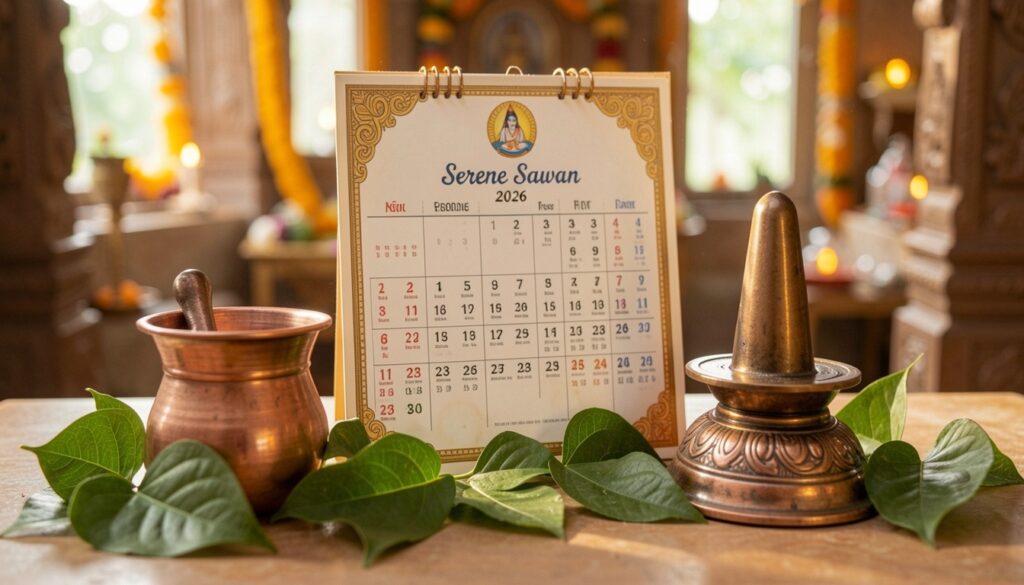
The first thing to understand about Sawan Month 2026 is that there is no single calendar used by every Hindu community.
Two major lunar calendar systems are commonly discussed:
- Purnimanta calendar: The lunar month ends on the full moon.
- Amanta calendar: The lunar month ends on the new moon.
This difference can shift the dates of religious months and festivals.
North Indian Sawan 2026
For many North Indian communities following the Purnimanta system, the month is generally observed from:
July 30 to August 28, 2026
The four Mondays are:
- August 3, 2026
- August 10, 2026
- August 17, 2026
- August 24, 2026
Why Can Sawan Dates Be Different?
A common mistake is assuming that every Hindu calendar follows the same month dates.
Communities in different parts of India may follow different lunar traditions. The same applies to Hindu temples and families in the USA.
For this reason, your local temple’s calendar should be treated as the best practical reference for Puja schedules.
Sawan 2026 Calendar at a Glance
| Item | 2026 Date |
| Sawan begins — North Indian Purnimanta tradition | July 30 |
| First Sawan Somwar | August 3 |
| Second Sawan Somwar | August 10 |
| Third Sawan Somwar | August 17 |
| Fourth Sawan Somwar | August 24 |
| Sawan ends — North Indian Purnimanta tradition | August 28 |
Sawan Somwar 2026: Four Sacred Mondays

Sawan Somwar means Monday during the month of Sawan. Monday is traditionally associated with Lord Shiva, making these days especially important to Shiva devotees.
The four Sawan Mondays in the North Indian 2026 observance are:
First Sawan Somwar August 3, 2026
The first Monday can be used to begin the month with a clear spiritual intention.
Devotees may:
- Take an early bath.
- Wear clean clothes.
- Visit a Shiva temple.
- Offer water to the Shiva Lingam.
- Offer bilva leaves and flowers.
- Chant “Om Namah Shivaya.”
- Observe a fast according to personal tradition.
- Donate food or other useful items.
Second Sawan Somwar August 10, 2026
The second Monday is another opportunity to continue prayer and self-discipline.
Instead of treating fasting as only a food restriction, devotees can focus on controlling anger, unnecessary speech, negative thoughts, and unhealthy habits.
Third Sawan Somwar August 17, 2026
The third Monday can be a time for deeper meditation and reflection.
Families may perform a simple Shiva Puja at home or join a temple service.
Fourth Sawan Somwar August 24, 2026
The fourth Monday is often observed with special devotion. Some devotees complete their monthly observance on this day, while others continue additional prayers according to their tradition.
Note: Some regional traditions observe different numbers or dates of Sawan Mondays. Always follow the calendar used by your family or temple.
Spiritual Significance of Sawan
Why is Sawan so important to Lord Shiva devotees?
The month is traditionally connected with several important Hindu stories and beliefs. One famous association is the Samudra Manthan, or churning of the cosmic ocean.
According to Hindu tradition, the churning produced many extraordinary substances, including the deadly poison Halahala. Lord Shiva drank the poison to protect the universe. This story is one reason Shiva is remembered as a compassionate protector.
Devotees also connect Sawan with qualities such as:
- Sacrifice
- Compassion
- Self-control
- Devotion
- Purification
- Patience
- Gratitude
- Spiritual discipline
The monsoon season also creates a natural setting for reflection. Rain, fresh greenery, and cooler weather in many regions can encourage people to spend more time in prayer and contemplation.
What Does Sawan Teach?
At its heart, Sawan encourages devotees to focus less on material distractions and more on inner well-being.
A simple daily practice such as chanting “Om Namah Shivaya” can become a reminder to remain calm, disciplined, and compassionate.
Sawan Rituals and Shiva Puja

Sawan rituals can be simple or elaborate. There is no need to create a complicated ceremony if your family tradition calls for a simple home Puja.
Common Sawan Puja Items
A traditional Shiva Puja may include:
- Clean water
- Milk, where appropriate to family tradition
- Bilva leaves
- Fresh flowers
- Sandalwood
- Fruits
- Incense
- Diyas
- Rudraksha beads
- A Shiva Lingam or image of Lord Shiva
Different traditions have different rules about what should be offered. Follow your family or temple’s established practice.
Simple Sawan Puja at Home
Clean the Puja Area
Choose a quiet and clean place for worship.
Prepare the Offerings
Keep water, flowers, bilva leaves, and other offerings ready.
Begin With Prayer
Take a moment to settle your mind and offer a simple prayer.
Perform Abhishekam
Devotees may gently offer water to the Shiva Lingam according to their tradition.
Offer Bilva Leaves
Bilva leaves are traditionally associated with Shiva worship.
Step 6: Chant a Shiva Mantra
A widely known mantra is:
Om Namah Shivaya
Light a Diya
Conclude with a diya and prayer.
Share Prasad
If appropriate, offer and share fruits or other permitted prasad with family members.
Sawan Fasting Rules and Food Ideas

Sawan fasting, or Shravan fasting, is practiced differently by different families.
Some devotees observe a strict fast. Others eat one simple meal. Some follow a fruit-based or sattvic diet.
There is no single fasting rule that applies to every Hindu.
Common Sawan Fasting Foods
Depending on personal and regional tradition, fasting meals may include:
- Fruits
- Milk
- Yogurt
- Potatoes
- Sweet potatoes
- Sabudana
- Buckwheat flour
- Water chestnut flour
- Nuts
- Coconut
- Rock salt
Avoid assuming that a food is permitted simply because it is vegetarian. Fasting rules can be stricter than regular vegetarian diets.
Sawan Fasting for Beginners
If you have never fasted before, consider learning your family’s tradition first.
People with medical conditions, those taking medication, pregnant people, older adults, and children should not start restrictive fasting without appropriate medical guidance.
Spiritual practice should not put your health at risk.
Fasting Comparison
| Approach | Typical Practice | Best For |
| Water-only fast | No food, sometimes only water | Experienced devotees following a specific tradition |
| Fruit-based fast | Fruits and permitted drinks | Those following a lighter observance |
| One-meal fast | One permitted meal | Devotees seeking a moderate practice |
| Phalahar/Sattvic fast | Fruits, dairy, nuts, permitted grains/flours | Common household observance |
| No food restriction | Focus on prayer and self-discipline | People unable to fast safely |
Sawan Celebrations in the USA
For Hindu families in the United States, celebrating Sawan can look different from celebrating it in India.
Many devotees combine traditional practices with modern schedules.
You may find Sawan activities at:
- Hindu temples
- Shiva temples
- Community centers
- Hindu cultural organizations
- Family homes
- Indian-American community events
Some temples may organize special Monday Abhishekam, Rudrabhishekam, bhajans, Mahamrityunjaya Mantra chanting, or other devotional programs.
How to Celebrate Sawan in the USA
If your local temple is far away, you can observe Sawan at home.
A simple routine could include:
Morning: Prayer and mantra chanting.
Daytime: Follow your chosen fasting or dietary practice.
Evening: Light a diya, read a Shiva-related prayer, meditate, or join an online temple program.
Monday: Visit a nearby Hindu temple if its schedule allows.
Finding a Shiva Temple Near You
Search for established Hindu temples in your area and check their official websites for Sawan schedules.
Do not assume every temple follows the same calendar. Confirm:
- Puja date
- Start time
- Registration requirements
- Parking
- Prasad arrangements
- Dress expectations
- Abhishekam rules
Sawan Month: India vs USA Observance
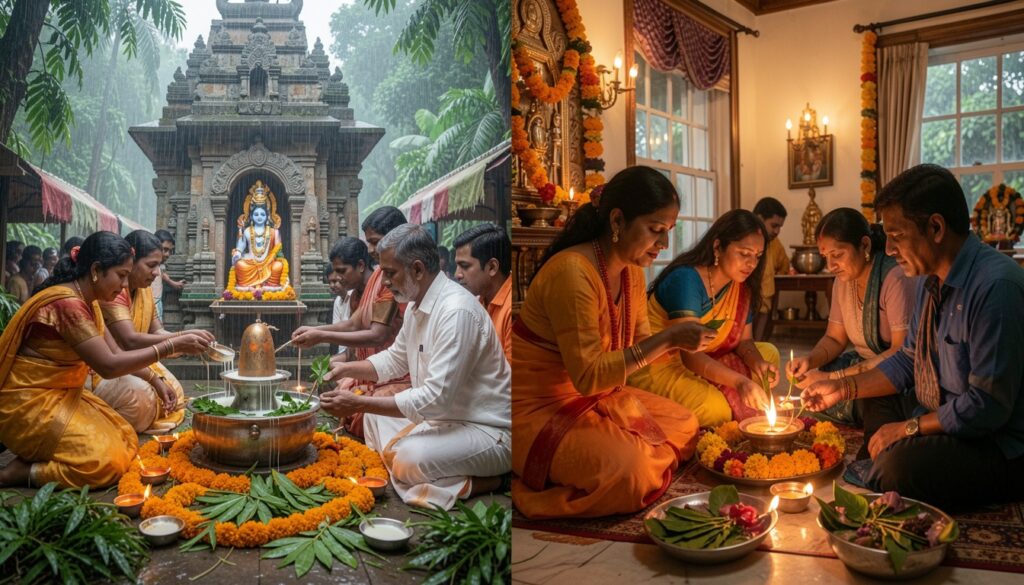
The spiritual meaning of Sawan remains important regardless of location, but practical observance can differ.
| Feature | India | USA |
| Temple access | Often widely available | Depends on local Hindu community |
| Puja schedule | Usually follows local Panchang | May be adjusted for local time and community schedules |
| Monday celebrations | Common in Shiva temples | Common where Shiva temples or Hindu centers are nearby |
| Home Puja | Very common | Very common |
| Community events | Often large | Varies by city and temple |
| Fasting | Family tradition | Family tradition |
| Travel to temple | Often easier in Hindu-majority areas | May require longer driving |
For USA readers, the key is consistency with your family or temple tradition, rather than trying to copy every practice from another region.
Sawan Rituals: Traditional vs Simple Home Practice
You do not need an elaborate ceremony to make Sawan meaningful.
| Traditional Practice | Simple Home Alternative |
| Temple Abhishekam | Offer water during home Puja |
| Long Puja ceremony | Short daily prayer |
| Group bhajan | Listen to or chant Shiva bhajans |
| Temple fasting | Follow a safe personal fast |
| Community donation | Donate food or useful items |
| Temple visit | Meditation and mantra at home |
| Large celebration | Family prayer and reflection |
The goal is not to compete with someone else’s observance.
Sawan can be meaningful when your practice is sincere, safe, respectful, and consistent.
Sawan Month Pros and Cons
Sawan is a spiritual observance rather than a lifestyle challenge, so the “pros and cons” depend largely on how a person approaches fasting and religious practice.
| Pros | Possible Challenges |
| Encourages spiritual discipline | Strict fasting may be difficult |
| Creates time for prayer | Busy work schedules can interfere |
| Strengthens family traditions | Calendar differences can cause confusion |
| Encourages charity and reflection | Temple events may be far away |
| Builds community connections | Local schedules vary |
| Promotes mindful eating for some people | Restrictive diets may not suit everyone |
The best approach is to keep your observance practical and safe.
Sawan Month Checklist
Use this simple checklist to prepare for Sawan.
- Confirm the Sawan dates followed by your family or temple.
- Mark all Sawan Somwar dates on your calendar.
- Decide how you will observe the month.
- Prepare a clean home Puja space.
- Keep basic Puja items ready.
- Learn your family’s fasting rules.
- Check your local temple’s Monday schedule.
- Plan safe fasting meals if you are fasting.
- Set aside time for mantra or meditation.
- Consider a charity or service activity.
- Avoid comparing your practice with other families.
- Check local Panchang details for specific Puja timings.
Common Mistakes to Avoid During Sawan 2026
Assuming Every Region Uses the Same Dates
Sawan dates can vary by calendar tradition.
Treating Fasting as a Competition
A stricter fast does not automatically mean deeper devotion.
Ignoring Health Needs
Do not follow a restrictive fast if it is unsafe for you.
Using Unverified Ritual Rules
Online posts may mix regional traditions. Check reliable Panchang or temple guidance.
Forgetting Local Time Zones
USA devotees should use local timings when a ritual depends on a specific time.
Wasting Food During Puja
Offerings should be handled respectfully and thoughtfully.
Turning Devotion Into a Social Media Contest
Photography can document a celebration, but it should not replace the spiritual purpose.
Visiting a Temple Without Checking Its Schedule
Sawan Monday programs can have special hours or registration requirements.
Expert Tips for Observing Sawan 2026
Follow One Reliable Calendar
Pick the Panchang used by your family or temple instead of combining dates from multiple websites.
Keep the Routine Simple
A consistent 10-minute prayer routine can be more practical than planning an elaborate Puja that you cannot maintain.
Plan Around Your USA Schedule
If Monday is a workday, schedule your prayer before work or in the evening if that fits your tradition.
Check Your Temple Early
Sawan Mondays can attract large crowds. Check temple instructions before traveling.
Respect Regional Differences
A practice that is common in one part of India may not be standard in another.
Make Charity Part of Your Practice
Consider donating food, supporting a temple, helping a community organization, or serving someone in need.
Teach Children the Meaning
Instead of asking children only to follow rules, explain why families worship Shiva during Sawan.
Focus on Inner Discipline
Use Sawan as an opportunity to practice patience, kindness, gratitude, and self-control.
Sawan Travel and Temple Visit Tips for USA Readers
For a travel-focused website such as Archyam, Sawan is also an opportunity to explore the Hindu temple communities across the United States.
A temple visit can become a meaningful cultural experience when planned respectfully.
Before You Go
Check the temple’s:
- Official website
- Sawan event calendar
- Puja times
- Dress guidance
- Photography rules
- Parking information
- Donation policy
- Food or prasad arrangements
During Your Visit
Dress modestly and follow temple instructions.
Avoid photographing people during prayer without permission. If you are unsure about a ritual, watch quietly or ask a temple volunteer.
After the Visit
You can explore nearby Indian-American neighborhoods, vegetarian restaurants, cultural centers, museums, or other attractions. This can turn a religious visit into a broader cultural travel experience.
Sawan Month 2026: Best Daily Routine
A simple daily routine can help you stay consistent throughout the month.
Morning
- Wake up and freshen up.
- Clean your Puja space.
- Offer water according to your tradition.
- Chant “Om Namah Shivaya.”
- Spend a few minutes in quiet prayer.
During the Day
- Follow your chosen dietary practice.
- Practice patience.
- Avoid unnecessary conflict.
- Do an act of kindness.
- Stay mindful of your intentions.
Evening
- Light a diya.
- Read or listen to a Shiva prayer.
- Meditate for a few minutes.
- Spend time with family.
- Reflect on the day’s actions.
You can adjust this routine around work, school, travel, and family responsibilities.
Internal Linking Opportunities for a Travel Website
Archyam can strengthen topical authority by connecting the Sawan guide with related Hindu festivals, temple travel, and USA cultural travel content.
Suggested internal links include:
| Suggested Anchor Text | Recommended Content |
| Hindu temples in the USA | USA Hindu temple travel guide |
| Best Shiva temples to visit | Shiva temple destination guide |
| Hindu festivals in 2026 | Complete Hindu festival calendar |
| Diwali 2026 guide | Diwali dates and celebrations |
| Ganesh Chaturthi 2026 | Festival dates and rituals |
| Janmashtami 2026 | Krishna festival guide |
| Navratri 2026 | Navratri celebrations in the USA |
| Rama Navami 2026 | Rama Navami rituals and timings |
| Temple etiquette guide | What to know before visiting a Hindu temple |
| Indian cultural experiences in the USA | Cultural travel guide |
Use descriptive anchor text naturally. Avoid repeatedly using the exact same anchor text across multiple pages.
Suggested External Authority Sources
For fact-checking and additional information, consider citing or consulting established sources such as:
- Drik Panchang — Hindu calendar and regional Panchang information
- Hindu American Foundation — Hindu traditions and educational resources
- Britannica — Background information on Hinduism and religious traditions
- Major Hindu temple websites — Local Puja schedules and Sawan event details
- Official temple organizations — Local observance rules and community programs
For exact Sawan dates and Puja timings, prioritize the local temple or regional Panchang relevant to the reader.
FAQs
When does Sawan start in 2026?
For many North Indian communities following the Purnimanta tradition, Sawan begins on July 30, 2026. Other regional calendars may use different dates.
How many Sawan Mondays are there in 2026?
Under the North Indian 2026 observance described in this guide, there are four Sawan Somwars: August 3, August 10, August 17, and August 24.
Why is Sawan important for Lord Shiva?
Sawan is traditionally considered a highly sacred month for Shiva devotees. It is associated with devotion, prayer, fasting, Abhishekam, meditation, and stories connected with Lord Shiva.
What should I offer Lord Shiva during Sawan?
Common offerings include water, bilva leaves, flowers, sandalwood, fruits, and other items accepted by your family or temple tradition.
Can I observe Sawan in the USA?
Yes. Hindu families in the USA can observe Sawan at home or participate in programs at local Hindu temples and community centers.
What can I eat during Sawan fasting?
Fasting foods vary by tradition. Common choices can include fruits, dairy, nuts, potatoes, sabudana, and certain fasting flours. Follow your family tradition and prioritize health.
Is every Monday in Sawan special?
Yes, Sawan Somwar Mondays are traditionally considered especially important for Shiva devotees. The exact number and dates can vary by calendar tradition.
Can children observe Sawan fasting?
Children should not be placed on restrictive fasts simply because adults are fasting. Families can involve children through age-appropriate prayer, stories, temple visits, or simple vegetarian meals.
What is the main mantra for Sawan?
“Om Namah Shivaya” is one of the most widely recognized Shiva mantras and is commonly chanted during Sawan.
Are Sawan dates the same across India and the USA?
Not necessarily. Lunar calendar systems and regional traditions can produce different dates. USA devotees should check the calendar followed by their temple or family.
Conclusion:
Sawan Month 2026 offers a meaningful opportunity to connect with Lord Shiva through prayer, fasting, temple visits, meditation, charity, and family traditions. Whether you observe every Sawan Somwar or simply spend a few quiet minutes in prayer, the month can become a valuable time for reflection and spiritual growth.
For Hindu families in the USA, Sawan does not need to look exactly like it does in India. You can create a meaningful practice around your schedule, visit a local temple, join a community event, or observe a simple Shiva Puja at home.
Most importantly, remember that regional traditions matter. Confirm dates and Puja timings with the Panchang or temple followed by your family, especially when observing Sawan outside India.
For more Hindu festival guides, temple travel ideas, and cultural experiences, explore Archyam and discover ways to connect spirituality with meaningful travel.
SEO CTA: Planning your Sawan 2026 observance? Bookmark this guide, share it with family, and check your local temple’s official calendar before the first Sawan Somwar.
Read More:Mauritius Visa for Indians 2026: Requirements and Process Complete Travel Guide
