

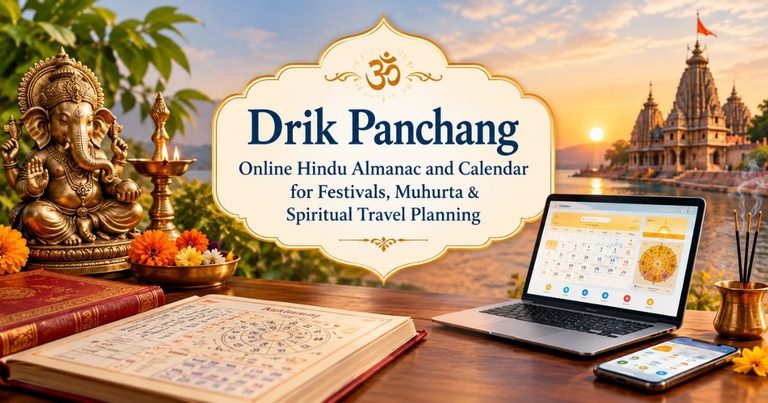
Planning a spiritual journey or visiting a Hindu temple during a special festival becomes easier when you understand the Hindu calendar. Drik Panchang is an online Hindu almanac that provides useful information about Tithi, Nakshatra, festivals, Vrat, Muhurta, and other traditional calendar details. It helps travelers explore important religious dates and understand the significance of Hindu festivals before planning their trips.
Whether you are planning a temple visit, a family pilgrimage, or a journey during Diwali, Navratri, or Maha Shivaratri, understanding the Hindu calendar can make your experience more meaningful. Drik Panchang offers helpful calendar information for exploring religious observances and traditional timings. By checking the relevant dates and verifying temple schedules in advance, you can organize your spiritual journey with greater confidence and ease.
What Is Drik Panchang?
Drik Panchang is an online resource centered on the Hindu calendar, Panchang calculations, religious observances, festivals, and Vedic astrology-related astronomical information.
A traditional Panchang brings together several important components used to understand a particular day. These include:
- Tithi
- Nakshatra
- Yoga
- Karana
- Sunrise and sunset
- Moonrise and moonset
- Rahu Kalam
- Auspicious timings or Muhurta
- Hindu festivals and observances
- Vrat and fasting information
The exact information displayed can depend on the selected location because sunrise, sunset, lunar events, and certain observance timings are location-sensitive.
For travelers, this makes a Panchang different from an ordinary Gregorian calendar.
Image Caption: A traditional Hindu calendar concept showing lunar dates, festival observances, and astronomical timings.
Why a Hindu Panchang Matters for Spiritual Travel
Religious travel in India and other countries with Hindu communities often follows dates and timings that are different from the standard international calendar.
For example, a traveler visiting a temple for a festival may need to know:
- The correct festival date
- Tithi at the relevant location
- Sunrise and sunset
- Moonrise or moonset
- Fasting periods
- Puja or worship timings
- Auspicious periods
- Local festival schedules
Using a Panchang can therefore help travelers understand the religious calendar behind a pilgrimage or festival trip.
However, Panchang information should complement rather than replace official travel information. Temple opening hours, entry arrangements, special queues, accommodation, transportation, and festival programs should be checked separately.
Understanding the Five Elements of Panchang
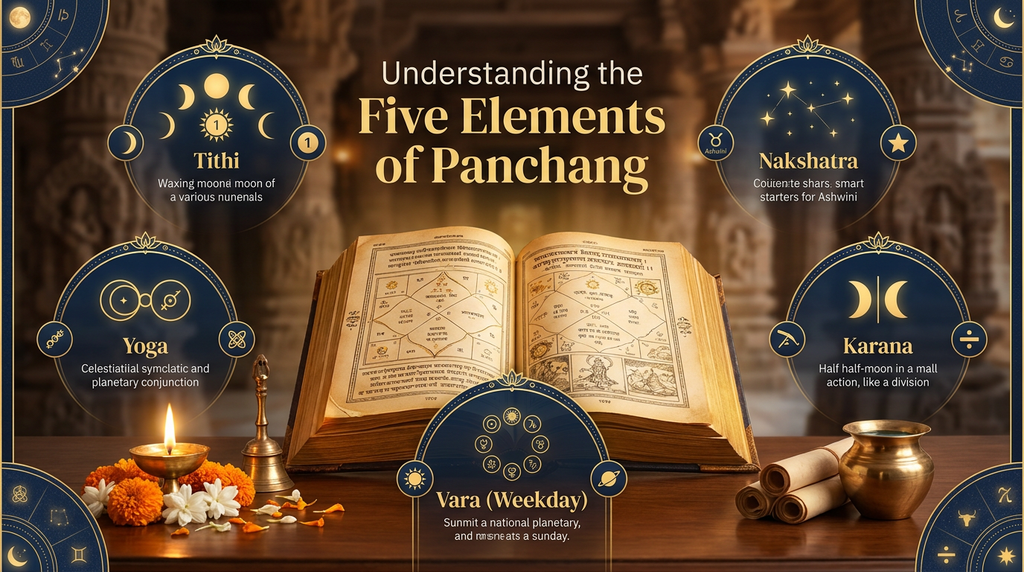
The word Panchang traditionally refers to five key parts of the Hindu calendar.
| Panchang Element | What It Represents | Why Travelers May Care |
| Tithi | Lunar day | Important for festivals, fasting and religious observances |
| Nakshatra | Lunar constellation | Used in traditional calendar and astrological calculations |
| Yoga | A specific Sun-Moon relationship | Part of daily Panchang calculations |
| Karana | Half of a Tithi | Used in traditional timing calculations |
| Vara | Day of the week | Connects the date with the seven weekdays |
These elements are calculated using astronomical positions and traditional Hindu calendrical systems.
Not every traveler needs to study all five elements. For most pilgrimage planning, the most immediately useful information is often the relevant festival, Tithi, sunrise/sunset, fasting period, and location-specific timing.
How Drik Panchang Can Help Plan a Temple Visit
A temple trip can become more meaningful when travelers understand the religious occasion associated with their visit.
Suppose someone plans to visit a major Shiva temple during Maha Shivaratri. A Panchang can help the traveler understand the date and traditional timing associated with the observance.
Similarly, people planning trips around:
- Diwali
- Holi
- Navratri
- Janmashtami
- Ram Navami
- Ganesh Chaturthi
- Dussehra
- Ekadashi
- Maha Shivaratri
- Karva Chauth
- Purnima
- Amavasya
may consult a Hindu calendar before finalizing their plans.
Keep in mind that a festival’s local celebration schedule can differ from the general calendar date, so travelers should verify details directly with the temple or local organizing authority.
Using Panchang Information for Festival Travel
Festival travel can be very different from ordinary tourism.
During major Hindu festivals, popular temples and pilgrimage destinations may experience:
- Larger crowds
- Special religious ceremonies
- Temporary traffic arrangements
- Longer waiting times
- Special entry procedures
- Increased demand for accommodation
- Changes to local transportation
Checking the religious calendar early can help travelers decide whether they want to visit during the main celebration or choose a quieter period.
Festival Travel Planning Table
| Planning Stage | What to Check |
| Choose the festival | Confirm the official date for your location |
| Select the destination | Check the temple’s official information |
| Plan transportation | Verify current train, bus and flight schedules |
| Reserve accommodation | Book early during major festivals |
| Check temple arrangements | Look for special entry or darshan rules |
| Review local timings | Confirm schedules shortly before travel |
Best Time to Use a Hindu Calendar for Travel Planning
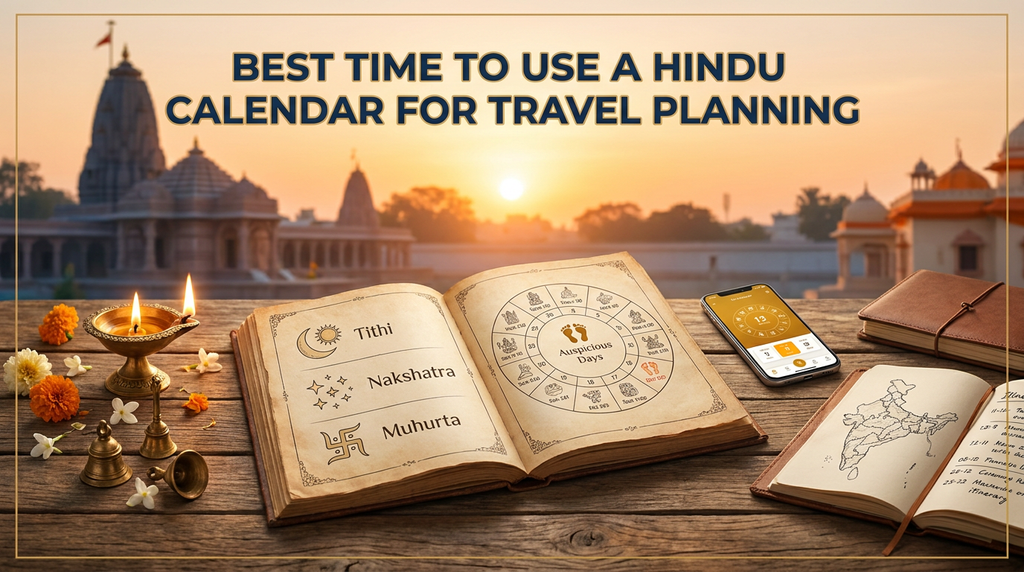
There is no single “best time” to use an online Panchang. It can be useful at several stages of a trip.
Several Weeks or Months Before Travel
Use the calendar to identify possible festival dates, religious observances, or auspicious periods that match your travel plans.
Before Booking Transportation
Once you identify a suitable date, check transportation availability separately. Festival periods can be busy, so early planning may be useful.
Shortly Before the Journey
Recheck the relevant date, local timing, temple schedule, and event information.
On the Day of the Visit
Location-specific Panchang details can help travelers understand the day’s traditional timings. They should still follow the temple’s own instructions and schedule.
How Location Changes Panchang Timings
One of the most important points for travelers is that many Panchang timings are location-dependent.
Sunrise in Delhi, for example, does not occur at exactly the same time as sunrise in Mumbai, Chennai, Kathmandu, London, or New York.
The same principle applies to:
- Sunset
- Moonrise
- Moonset
- Tithi transitions
- Nakshatra timings
- Certain religious observance periods
This is particularly important for international Hindu travelers.
Someone living in the United States may see different local timings from someone planning to visit India. Travelers should therefore select the location relevant to their actual plans rather than relying on a generic time.
Drik Panchang and Vedic Astrology Information
The resource also provides information connected with Vedic astrology and planetary calculations.
Planetary ephemeris refers broadly to calculated information about the positions and movements of celestial bodies at particular times.
For travelers, this can be useful mainly as cultural and religious reference material rather than as a replacement for practical travel planning.
A traveler researching an auspicious ceremony, traditional Muhurta, or religious event may encounter information involving:
- Planets
- Zodiac signs
- Nakshatras
- Lunar phases
- Tithis
- Muhurta
- Astrological calculations
Readers should distinguish traditional astrological interpretations from scientifically established astronomical information.
How to Use Drik Panchang for Pilgrimage Planning
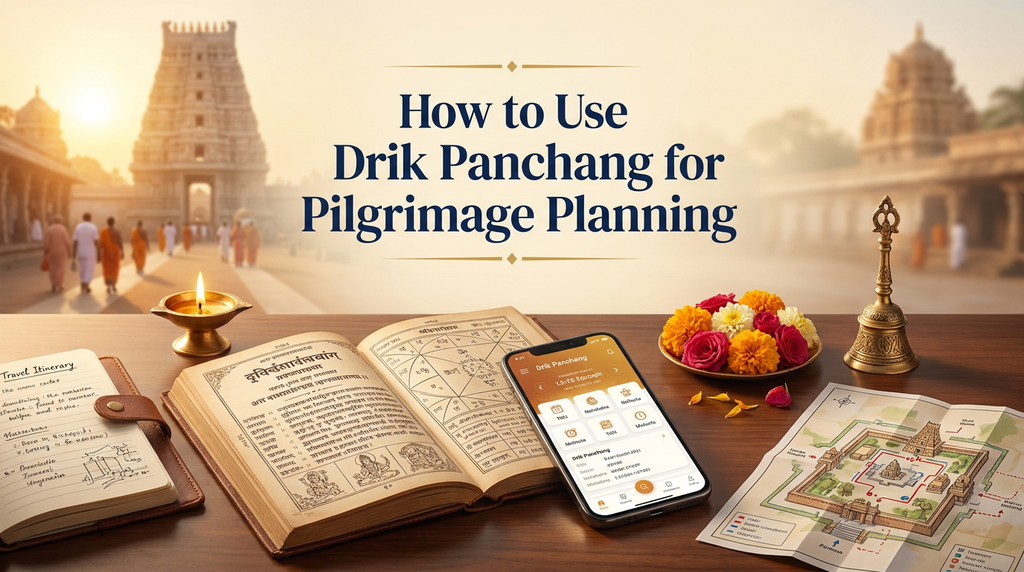
A pilgrimage can involve several layers of planning.
Choose the Religious Occasion
Decide whether the journey is connected to a festival, fasting day, temple celebration, personal worship, or general pilgrimage.
Check the Hindu Calendar
Review the relevant Tithi, festival, and other traditional timings for the intended location.
Verify the Temple Schedule
Visit the temple’s official website or contact its administration for current information.
Arrange Transportation
Check flights, trains, buses, taxis, or private transportation independently.
Reserve Accommodation
Festival periods can create higher demand around major pilgrimage centers.
Prepare for Local Conditions
Consider weather, clothing requirements, walking distances, crowds, footwear rules, and temple etiquette.
Important Hindu Calendar Terms Travelers Should Know
Understanding a few common terms makes Panchang information easier to read.
| Term | Simple Meaning |
| Tithi | Lunar day |
| Nakshatra | One of the 27 traditional lunar constellations/asterisms |
| Amavasya | New Moon day |
| Purnima | Full Moon day |
| Ekadashi | The 11th lunar day in each lunar fortnight |
| Muhurta | A traditionally defined period used for timing activities |
| Rahu Kalam | A traditionally observed period considered unsuitable for certain activities |
| Sankranti | Solar transition from one zodiac sign to another |
| Vrat | Religious fast or observance |
| Panchang | Traditional Hindu almanac containing multiple calendrical elements |
Accommodation for Festival and Pilgrimage Trips
Drik Panchang itself is not a hotel-booking service, so accommodation should be arranged through reliable travel or hotel platforms and verified directly with properties when necessary.
For pilgrimage travel, consider staying in areas that provide convenient access to:
- The main temple
- Railway stations
- Bus terminals
- Airports
- Local markets
- Major transportation points
Accommodation Planning by Traveler Type
| Traveler Type | What to Look For |
| Budget traveler | Simple accommodation with convenient transport |
| Families | Larger rooms, accessibility and nearby food options |
| Older travelers | Shorter walking distances and easy transportation |
| Couples | Quiet location and convenient local access |
| Luxury travelers | Full-service properties in established hotel areas |
Hotel rates can change significantly according to season, festivals, location, room type, and booking date.
Food and Dining During Spiritual Travel
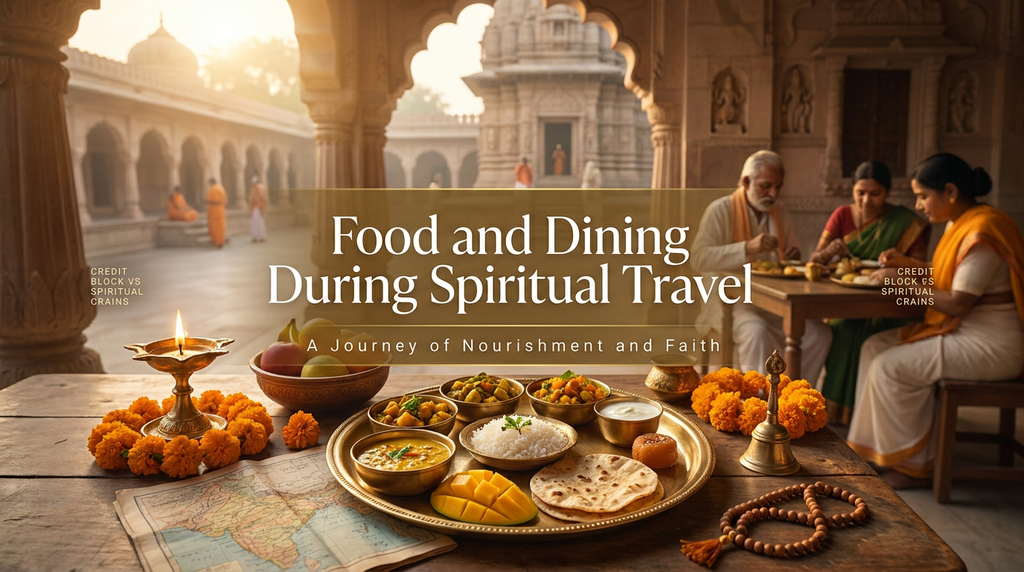
Food is an important part of many pilgrimage experiences.
Depending on the destination, travelers may find:
- Vegetarian restaurants
- Temple meals or prasada
- Regional Indian cuisine
- South Indian meals
- North Indian dishes
- Street food
- Sweets and traditional snacks
During fasting periods, some travelers may follow specific dietary practices. These can vary according to family tradition, religious practice, and regional customs.
Travelers with allergies or dietary restrictions should ask restaurants about ingredients before ordering.
Travel Budget for a Panchang-Based Pilgrimage
There is no single budget associated with using an online Panchang because the travel cost depends on the destination and length of the journey.
A useful planning structure is:
| Expense | Budget Traveler | Mid-Range Traveler | Luxury Traveler |
| Accommodation | Basic room or guesthouse | Comfortable hotel | Premium hotel |
| Food | Local restaurants | Mix of local and standard restaurants | Higher-end dining |
| Transportation | Public transport | Taxi + public transport | Private car/taxi |
| Attractions | Mostly religious/public sites | Mix of paid and free attractions | Premium experiences where available |
| Shopping | Local markets | Moderate shopping | Specialty shopping |
| Daily Total | Destination-dependent | Destination-dependent | Destination-dependent |
Prices should be checked close to the travel date because accommodation, transportation, food, and exchange rates can change.
A Simple 1-Day Spiritual Travel Itinerary
If you are visiting a temple or pilgrimage destination specifically around a religious date, a flexible schedule can work better than packing too many attractions into one day.
| Time | Suggested Plan |
| Morning | Check local Panchang timings and have breakfast |
| Morning | Visit the main temple or religious site |
| Afternoon | Have lunch and explore nearby cultural attractions |
| Late Afternoon | Visit a market, heritage area, or secondary temple |
| Evening | Attend an evening religious ceremony if available |
| Night | Return to accommodation and prepare for the next day |
Temple ceremony times should be confirmed directly with the temple because schedules can change.
Family-Friendly Spiritual Travel

A pilgrimage can also be a meaningful family experience, especially when children are introduced to calendars, festivals, architecture, mythology, food, and local traditions.
Families should consider:
- Walking distances
- Weather conditions
- Crowd levels
- Restroom availability
- Food options
- Child-friendly accommodation
- Elderly family members’ mobility
- Temple rules regarding children and belongings
For major festivals, families may prefer arriving early and allowing extra time for queues and transportation.
Photography and Scenic Experiences During Pilgrimage
Religious destinations can offer memorable photography opportunities through:
- Temple architecture
- Historic streets
- Riverfronts
- Festival decorations
- Traditional markets
- Sunrise and sunset landscapes
- Cultural performances
However, photography rules differ between temples and religious sites.
Always check whether photography is permitted inside a shrine or during a particular ceremony. Avoid photographing worshippers or religious rituals in a way that could be intrusive.
Image Caption: Traditional temple architecture and a peaceful pilgrimage setting photographed during the early morning.
Cultural Etiquette for Hindu Religious Travel
Visitors should approach temples and religious spaces respectfully.
Useful etiquette includes:
- Dress modestly where required.
- Follow footwear rules.
- Follow photography restrictions.
- Respect queues and designated entrances.
- Avoid disturbing ceremonies.
- Follow instructions from temple staff.
- Ask before photographing people.
- Respect local customs even when they differ from your own.
- Keep religious spaces clean.
Specific requirements vary by temple, so travelers should check local rules before visiting.
Safety and Practical Travel Tips
Using a Hindu calendar does not replace normal travel preparation.
Before leaving, check:
- Government-issued identification
- Tickets and reservations
- Weather forecasts
- Transportation schedules
- Temple entry requirements
- Accommodation confirmation
- Local emergency contacts
- Mobile connectivity
- Payment options
During large festivals, keep personal belongings secure and allow additional time for transportation.
Travelers visiting another country should also verify passport, visa, insurance, and entry requirements through official government sources.
What to Pack for a Spiritual Journey
A practical packing list can include:
- Comfortable walking shoes
- Modest clothing
- Light layers appropriate for the weather
- Personal medicines
- Identification and travel documents
- Phone and charging equipment
- Portable power bank
- Reusable water bottle where permitted
- Small day bag
- Sun protection
- Umbrella or rain protection when appropriate
- Any items required for personal religious practice
For temples with specific dress requirements, check the rules before packing.
How to Verify Panchang Information Before Travel
Calendar information is only one part of planning a religious journey. Before making final arrangements, cross-check important details.
Verify These Details
Festival date: Confirm the date for your specific location.
Temple schedule: Use the official temple source where available.
Darshan arrangements: Check whether special arrangements apply.
Transportation: Verify current train, bus and flight schedules.
Accommodation: Reconfirm booking details.
Weather: Check a current forecast.
Local restrictions: Look for temporary traffic or access arrangements during major festivals.
This is particularly important for popular pilgrimage centers during major religious events.
Useful Travel Planning Checklist
| Before Travel | What to Do |
| 1–3 months ahead | Research festival dates and destination |
| Several weeks ahead | Check transportation and accommodation |
| Before departure | Recheck temple information |
| 1–2 days before | Check weather and transport updates |
| Travel day | Confirm local timings and follow official instructions |
FAQs
What is Drik Panchang used for?
Drik Panchang provides Hindu calendar information, including Tithi, Nakshatra, festivals, fasting days, and auspicious timings.
It can also help with religious and spiritual travel planning.
How does Drik Panchang help with festival planning?
It helps travelers identify Hindu festival dates and related religious observances.
You can use this information when planning temple visits or festival trips.
Can Drik Panchang show location-based timings?
Yes, many Panchang timings depend on the selected location.
This is useful because sunrise, sunset, lunar events, and observance timings vary by place.
What information can you find on Drik Panchang?
You can find information about Tithi, Nakshatra, Yoga, Karana, festivals, Vrat, Muhurta, and planetary calculations.
The available information varies according to the calendar and selected location.
Is Drik Panchang useful for temple visits?
Yes, it can help you understand important religious dates and traditional timings before visiting a temple.
Always confirm temple opening hours and special darshan arrangements separately.
Can Drik Panchang help plan a Hindu pilgrimage?
It can help identify festivals, fasting days, and other important religious dates for your journey.
Combine this information with official temple, transport, and accommodation details.
Why do Drik Panchang timings change by location?
Many Hindu calendar calculations are based on local astronomical events such as sunrise, sunset, and lunar movements.
Therefore, timings can differ between cities and countries.
What are the five parts of Panchang?
The five traditional Panchang elements are Tithi, Nakshatra, Yoga, Karana, and Vara.
Together, they provide important information about a particular day.
Can Drik Panchang be used outside India?
Yes, location-specific Hindu calendar information can be useful for Hindu communities and travelers outside India.
Local timings may differ from those calculated for Indian cities.
Is Drik Panchang a regular calendar or a Hindu almanac?
Drik Panchang is more than a standard date calendar because it includes traditional Hindu calendrical and astronomical information.
It is commonly used to explore festivals, Tithis, Vrat, and auspicious timings.
Conclusion
Drik Panchang is a useful online resource for understanding Hindu calendars, festivals, Tithis, and traditional timings.
It can add helpful cultural context to temple visits and spiritual journeys.
Travelers can use it to research important religious dates before planning a trip.
Location-specific information is especially valuable for international travelers.
However, practical travel details should always be checked separately before departure.
For anyone planning a festival or pilgrimage journey, Drik Panchang can be one useful part of the preparation process.
It helps connect travel plans with traditional Hindu observances and calendar dates.
Before traveling, verify temple schedules, transportation, accommodation, and local event arrangements.
This approach makes religious travel more organized and easier to manage.
With thoughtful planning, the journey can be both practical and culturally meaningful.
Read More: September 25, 2026 Panchang for Gujranwala, Punjab, Pakistan: Daily Panchanga & Travel Guide
