

Muhurat Timings are an important part of Hindu traditions and are used to choose an auspicious time for starting important activities. From weddings and housewarming ceremonies to business openings and religious rituals, many people prefer to begin special occasions during a favorable period. These timings are traditionally connected with Hindu astrology and the Panchang.
Understanding Muhurat Timings can help you learn why certain dates and times are considered more suitable than others. Factors such as tithi, nakshatra, weekday, yoga, karana, and planetary positions may be considered when selecting an auspicious time. The exact timing can also change according to your location.
For many Hindu families, Muhurat Timings are more than just a date or clock time. They are part of a long-standing tradition of beginning important events with positive thoughts and spiritual intentions. Following an auspicious time can also make ceremonies feel more meaningful and organized.
Today, Muhurat Timings are used not only in India but also by Hindu communities living in countries around the world. People may look for suitable timings for weddings, Griha Pravesh, starting a business, purchasing property, beginning a journey, or performing religious ceremonies.
In this complete guide, you will learn how Muhurat Timings are selected, what factors influence them, and how they differ for various events. You will also discover the meaning of Muhurta timings and Hindu electional timings, along with simple tips for finding a suitable auspicious time.
Quick Overview of Muhurat Timings
| Information | Details |
| Topic | Muhurat Timings |
| Also Known As | Muhurta Timings, Hindu Electional Timings, Shubh Muhurat |
| Tradition | Hindu astrology and Panchang |
| Main Purpose | Selecting an auspicious time to begin important activities |
| Common Uses | Marriage, housewarming, business, travel, ceremonies, property purchase |
| Key Factors | Tithi, Vara, Nakshatra, Yoga, Karana and other astrological considerations |
| Location Importance | Very important because sunrise and planetary calculations vary by location |
| Best Source | A reliable Panchang or qualified astrologer |
| Accuracy | Exact timings should be checked for the specific date and location |
| Suitable For | Families, pilgrims, travelers, couples, businesses and devotees |
What Are Muhurat Timings?
Muhurat, or Muhurta, refers to an auspicious period selected for beginning a particular activity. In Hindu astrology, different periods are considered more suitable for different purposes.
A Muhurta is not simply a convenient time on the clock. Traditional calculations can consider the Panchang, planetary positions, lunar day, constellation, weekday, and the nature of the activity being planned.
For example, the Muhurta selected for a wedding may be different from the one considered suitable for opening a business or beginning a journey.
The purpose is to choose a period that traditional Hindu astrology considers favorable for the specific activity.
Muhurta vs. Ordinary Time
Ordinary time tells you when something happens. Muhurta selection asks whether a particular period is traditionally considered suitable for starting something important.
This distinction is important because an auspicious period is usually selected specifically for the activity rather than being treated as universally favorable for everything.
How Are Hindu Electional Timings Calculated?

Hindu electional astrology is commonly associated with Muhurta Shastra, the traditional practice of selecting favorable times.
Several Panchang components can be examined when determining an auspicious period.
Tithi
Tithi refers to the lunar day. There are 30 Tithis in a traditional lunar month, divided between Shukla Paksha and Krishna Paksha.
Different Tithis have different traditional associations, and their suitability can depend on the activity being performed.
Vara
Vara means weekday. Sunday, Monday, Tuesday, Wednesday, Thursday, Friday, and Saturday each have traditional planetary associations.
The weekday may be considered along with the other Panchang elements when selecting a Muhurta.
Nakshatra
Nakshatras are lunar constellations used extensively in Hindu astrology. The Nakshatra operating at a particular time can influence traditional Muhurta calculations.
Some Nakshatras are considered more favorable for particular activities than others.
Yoga
Yoga is another Panchang element calculated from the positions of the Sun and Moon. Traditional Panchang systems identify several Yogas, each with its own interpretation.
Karana
Karana represents half of a Tithi. It is also considered when assessing the suitability of a particular period.
Sunrise and Sunset
Local sunrise and sunset are particularly important. This is one reason why the same Muhurat may not apply identically in every city.
A timing calculated for one location should not automatically be copied for another location without checking the local Panchang.
Why Location Matters for Muhurat Timings
Location is one of the most important practical considerations when using Muhurat Timings.
Sunrise, sunset, local longitude and latitude, and other astronomical calculations can affect Panchang results. As a result, a Muhurta published for Delhi, Mumbai, London, New York, Karachi, or another city may not have exactly the same clock time.
This becomes particularly important for travelers.
If you are traveling to another city or country for a wedding, puja, temple ceremony, housewarming, or business event, use a Panchang calculated for the actual location where the activity will begin.
Example
Suppose a family travels from India to the United States for a religious ceremony. The family should not automatically use the Indian Muhurta simply because the ceremony follows an Indian tradition.
The local date, sunrise, sunset, and astronomical calculations should be considered for the place where the ceremony actually takes place.
Image Caption: A traditional Hindu Panchang showing Tithi, Nakshatra and other elements used for selecting auspicious times.
Common Activities That Use Shubh Muhurat
Muhurat selection is traditionally used for many major life events and beginnings.
Marriage Muhurat
Wedding Muhurats are among the most widely recognized forms of Hindu electional timing.
Families may consider the wedding date and ceremony timing based on Panchang factors and, in some traditions, the horoscopes of the couple.
Because wedding Muhurats can be highly specific, couples should consult a qualified astrologer or trusted Panchang rather than selecting a time from a generic list.
Griha Pravesh Muhurat
Griha Pravesh is the traditional ceremony performed when entering a new home.
Families often select an auspicious day and time for entering the house, beginning the ceremony, or performing the associated puja.
The exact procedure varies between families and regional traditions.
Business Opening Muhurat
Auspicious timings may also be selected for:
- Opening a new shop
- Starting a business
- Launching a company
- Opening an office
- Beginning commercial activities
- Performing a business-related puja
The exact practice can differ according to family tradition, region, and business type.
Property Purchase Muhurat
Some people select an auspicious period for purchasing property, signing documents, registering property, or performing a related ceremony.
The important point is to distinguish the legal transaction time from the traditional Muhurta. Legal deadlines and official procedures should always take priority.
Vehicle Purchase Muhurat
Families may choose a Shubh Muhurat for purchasing or taking delivery of a new vehicle.
Some traditions also consider a suitable time for performing a vehicle puja before the vehicle is used.
Naming Ceremony Muhurat
Traditional Hindu families may select an auspicious time for Namkaran, the naming ceremony of a child.
The appropriate date and time may be influenced by the child’s birth details and family tradition.
Muhurat Timings for Travel and Journeys
Travel is another area where traditional auspicious timing can be considered.
A person planning a pilgrimage, long-distance journey, relocation, or major trip may consult a Panchang for a favorable departure time.
However, practical travel considerations should always come first.
When Planning a Journey
If you are selecting a travel Muhurta, consider:
- Actual departure location
- Date of departure
- Destination
- Local sunrise and sunset
- Transportation schedule
- Weather conditions
- Road safety
- Airport or railway requirements
- Check-in times
- Required documentation
An auspicious time should not cause you to miss a flight, train, bus, hotel check-in, or important connection.
Muhurat for Pilgrimage Travel
For a religious journey, some devotees choose an auspicious departure time before visiting a temple or pilgrimage site.
For example, a family may select a suitable time to leave home for a major pilgrimage while separately following the temple’s official darshan or ceremony schedule.
These are two different timings and should not be confused.
Shubh Muhurat for Religious Ceremonies
Hindu religious ceremonies frequently involve auspicious timing.
Depending on the ceremony, families may consider Muhurta for:
- Puja
- Havan
- Yajna
- Vrat-related rituals
- Temple visits
- Religious inaugurations
- Festival ceremonies
- Ganesh Puja
- Lakshmi Puja
- Saraswati Puja
- Satyanarayan Puja
The most appropriate timing depends on the specific ritual and the Panchang used by the family or temple.
When attending a temple, always follow the temple’s official schedule. A personal Muhurta does not override a temple’s published opening, darshan, or ceremony times.
Understanding Abhijit Muhurat
Abhijit Muhurat is one of the commonly discussed auspicious periods in Hindu Panchang traditions.
It generally occurs around midday, but its exact clock time depends on the local day’s sunrise and sunset calculations.
Because the period changes with location and date, it should not be treated as a fixed universal time such as “12:00 PM every day.”
People sometimes use Abhijit Muhurat for important activities when another more specific Muhurta has not been selected.
However, whether it is suitable for a particular activity can depend on traditional rules and the Panchang system being followed.
Understanding Rahu Kalam and Other Inauspicious Periods
When discussing Muhurat timings, travelers often encounter terms such as Rahu Kalam, Yamagandam, and Gulika Kalam.
These are time periods traditionally considered inauspicious for starting certain important activities.
Rahu Kalam, in particular, is commonly checked before beginning a journey, business activity, or other significant task.
However, interpretations and practices can differ. These periods should be calculated according to the local day and location rather than copied from a different city.
Important Point for Travelers
If you are traveling between cities, do not assume that Rahu Kalam or another daily period remains the same throughout your journey.
The calculation is location-sensitive.
Muhurat Timings for Different Types of Travelers
Although Muhurta is a traditional astrological concept, it can intersect with modern travel planning in several ways.
| Traveler Type | Possible Muhurta Use |
| Pilgrims | Departure for pilgrimage or beginning a religious activity |
| Families | Weddings, ceremonies and family functions |
| Couples | Wedding or engagement ceremonies |
| Homeowners | Griha Pravesh after moving |
| Business Travelers | Opening or launching a business activity |
| Religious Travelers | Temple visits and festival ceremonies |
| Long-Distance Travelers | Selecting a traditional departure time |
| NRIs | Planning ceremonies according to the local Panchang |
Best Time to Use Muhurat Timings
There is no single “best month” for all Muhurtas.
The suitable period depends on what you are planning.
| Activity | What Usually Matters |
| Marriage | Wedding-specific Muhurta, Panchang and sometimes birth charts |
| Housewarming | Griha Pravesh rules and Panchang |
| Business | Business-opening Muhurta and traditional considerations |
| Travel | Departure time, Panchang and practical travel conditions |
| Religious Ceremony | Ritual-specific Panchang timing |
| Property Purchase | Muhurta plus legal and financial requirements |
| Vehicle Purchase | Traditional vehicle-purchase Muhurta |
| Naming Ceremony | Child’s birth details and family tradition |
There is therefore no universal calendar that can identify one best Muhurta for every person and every activity.
How to Find Accurate Muhurat Timings
Reliable Muhurta information should be calculated for the correct date, place, and purpose.
Before using a published timing, check the following:
- Confirm the exact date.
- Enter the correct city or location.
- Check the local sunrise and sunset.
- Identify the relevant Tithi.
- Check the Nakshatra.
- Review the day’s Panchang.
- Check Rahu Kalam and other traditionally avoided periods when relevant.
- Consider the specific activity.
- Follow your family’s traditional practices.
- Consult a qualified astrologer for major ceremonies when necessary.
Why Generic Online Timings Can Be Misleading
A search result may display a Muhurta calculated for a major city while you are located somewhere else.
Even a difference in location can change the displayed clock time.
For this reason, online Panchang calculators are most useful when they allow you to select the correct city and date.
Muhurat Timings for Travelers Visiting Temples
Travelers visiting Hindu temples should distinguish between personal auspicious timings and temple operating schedules.
A temple may have fixed:
- Opening hours
- Darshan periods
- Puja schedules
- Aarti timings
- Special festival schedules
- Entry procedures
- Booking requirements
A personal Muhurta does not guarantee that the temple will be open at that time.
Smart Planning for Temple Travel
Before visiting a temple:
- Check the temple’s official website or current notice.
- Confirm darshan timings.
- Check whether advance booking is required.
- Verify festival-day arrangements.
- Allow time for security and queues.
- Follow the temple’s dress and photography rules.
- If your ritual has a specific Muhurta, coordinate it with the temple’s schedule.
This approach allows traditional planning and practical travel arrangements to work together.
Accommodation and Travel Planning Around a Muhurta
When a ceremony has a fixed auspicious time, accommodation should be planned around the event rather than the other way around.
For example, if a family wedding ceremony is scheduled early in the morning, staying close to the venue may be more practical than choosing a cheaper hotel far away.
When booking accommodation, consider:
- Distance from the ceremony venue
- Airport or railway access
- Check-in and check-out times
- Family requirements
- Availability during festivals
- Transportation after the ceremony
- Accessibility for older travelers
Hotel prices vary considerably according to city, season, demand, events, and booking date, so current rates should always be checked before booking.
Food and Hospitality During Religious Travel
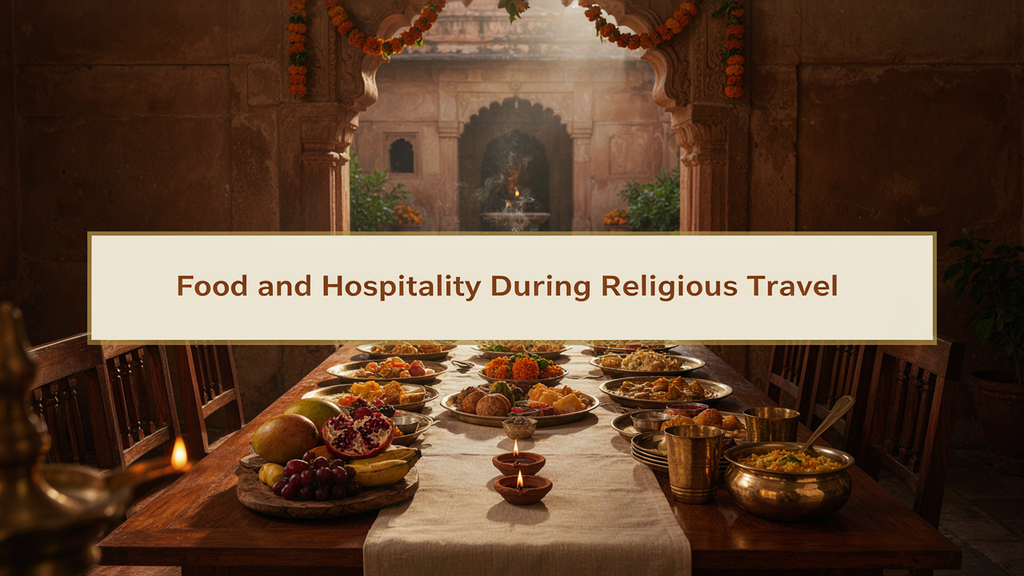
Food choices during a religious trip often depend on personal and family traditions.
Some travelers may follow vegetarian diets or avoid particular foods during a vrat or religious ceremony.
When planning a trip around a Muhurta, consider whether meals will be available before or after the event.
Useful options may include:
- Vegetarian restaurants
- Temple-associated food services where available
- Local vegetarian meals
- Simple travel-friendly foods
- Hydration during long journeys
Travelers following a strict religious fast should confirm ingredients and preparation methods when eating outside the home.
Budgeting for a Muhurta-Based Trip
Muhurta itself does not necessarily create a travel expense, but planning around a specific date or time can affect travel costs.
| Expense | Budget Traveler | Mid-Range Traveler | Luxury Traveler |
| Accommodation | Basic or shared stay | Comfortable hotel | Premium hotel |
| Food | Local/simple meals | Restaurants and cafes | Premium dining |
| Local Transport | Public transport | Taxi/ride-hailing | Private vehicle |
| Religious Activities | Depends on temple/ritual | Depends on ceremony | Depends on ceremony |
| Travel | Economy options | Flexible bookings | Premium/flexible options |
Actual costs depend entirely on the destination, travel dates, accommodation type, transportation, and event requirements.
If a specific Muhurta is extremely important, booking transportation early can sometimes be practical because travelers may have less flexibility about changing the departure date or time.
One-Day Muhurta Travel Plan
A short trip can be organized around an auspicious departure or religious activity.
| Time/Period | Plan |
| Morning | Begin the day according to the planned traditional schedule |
| Morning | Travel toward the religious or event destination |
| Afternoon | Visit local attractions or rest |
| Evening | Attend a temple visit, ceremony or cultural activity if scheduled |
| Night | Return to accommodation or begin the journey home |
The actual timing should be adjusted to transportation schedules and the specific Muhurta selected.
Two-Day Religious Travel Itinerary
For travelers combining Muhurta planning with a temple or pilgrimage trip:
| Day | Morning | Afternoon | Evening |
| Day 1 | Travel to destination | Hotel check-in and local exploration | Temple or cultural visit |
| Day 2 | Planned auspicious activity | Local sightseeing | Return journey |
For major pilgrimage destinations, additional days may be needed because of distance, queues, festivals, or multiple temples.
Family-Friendly Planning Around Muhurat
Families can make Muhurta-based travel easier by allowing extra time.
This is particularly important when traveling with:
- Young children
- Older adults
- People with mobility limitations
- Large family groups
- Travelers carrying ceremonial items
Avoid scheduling a critical ceremony immediately after a long journey if practical alternatives are available.
A delay caused by traffic, weather, flight disruption, or a train cancellation cannot always be avoided. Building a buffer into the itinerary can reduce stress.
Photography During Religious Trips
Religious destinations often provide memorable photography opportunities, but visitors should respect local rules.
Good photography subjects may include:
- Temple architecture
- Exterior courtyards
- Traditional decorations
- Festival displays
- Scenic surroundings
- Cultural streets
- Sunrise and sunset landscapes
Before photographing people, ceremonies, priests, or worshippers, ask for permission when appropriate.
Some temples prohibit photography inside sanctums or during specific rituals. Follow posted rules and instructions from temple staff.
Image Caption: Traditional temple architecture and devotional decorations photographed respectfully during a religious journey.
Hindu Culture, Traditions and Muhurta Etiquette
Muhurta is part of a wider cultural and religious tradition, and practices differ between communities.
Regional customs can vary across India, Nepal, and Hindu communities around the world. Different families may also follow different Panchang systems, traditions, or schools of astrology.
Respectful travel etiquette includes:
- Dress appropriately at religious sites.
- Remove footwear where required.
- Follow temple instructions.
- Avoid disrupting prayers or ceremonies.
- Ask before photographing rituals.
- Respect fasting and dietary practices.
- Do not assume that every Hindu family follows the same Muhurta rules.
Understanding these differences makes religious travel more respectful and meaningful.
Safety Tips When Traveling for a Muhurta
Traditional timing should always be balanced with practical safety.
Keep These Points in Mind
- Never drive dangerously to reach an exact Muhurta.
- Follow road and traffic regulations.
- Allow extra time for airport security and boarding.
- Check weather conditions before long journeys.
- Keep passports and identification secure.
- Carry required medications.
- Save important booking confirmations offline.
- Keep emergency contacts available.
- Stay hydrated during long religious journeys.
- Use official transportation where appropriate.
If a journey becomes unsafe because of weather, road conditions, or another emergency, safety should take priority over reaching a traditional time exactly.
Packing Checklist for a Muhurta-Based Journey
Your packing list will depend on the destination and activity, but a religious or ceremony-focused trip may benefit from:
- Comfortable clothing
- Appropriate temple attire
- Walking shoes
- Light jacket or rain protection depending on weather
- Personal medicines
- Identification documents
- Travel confirmations
- Phone and charger
- Power bank
- Drinking water
- Basic toiletries
- Small bag for temple visits
- Any required ceremonial items
- Cash and payment cards
- Copies of important documents
For international travel, also check passport validity, visa requirements, travel insurance, and entry regulations before departure.
Common Mistakes to Avoid When Using Muhurat Timings
Even when following traditional practices, several common mistakes can create unnecessary problems.
Using the Wrong Location
A Muhurta calculated for one city may not be appropriate for another.
Treating Every Muhurta as Universal
A period considered favorable for one activity may not automatically be the best choice for another.
Ignoring Practical Travel Requirements
A traditional departure time should never encourage unsafe driving or missed transportation.
Relying on Old Calendars
Panchang calculations are date-specific. Old screenshots, social media posts, or copied schedules may not reflect the correct local time.
Forgetting Time Zones
International travelers must pay attention to the local time zone and date at the destination.
Confusing Muhurta With Temple Timings
A personal auspicious time does not determine when a temple opens or when its official ceremonies occur.
Useful Muhurat Planning Checklist
Before finalizing an important event, use this checklist:
- Confirm the activity.
- Confirm the exact date.
- Confirm the city and country.
- Check the local Panchang.
- Verify sunrise and sunset.
- Check Tithi and Nakshatra.
- Review applicable auspicious periods.
- Check traditionally avoided periods when relevant.
- Confirm the event venue’s schedule.
- Check transportation.
- Allow a practical time buffer.
- Recheck the timing shortly before the event.
Where to Verify Current Muhurat Timings
Because exact Panchang calculations can vary according to location and tradition, travelers should use a reliable current Panchang or consult a qualified practitioner for important ceremonies.
When checking an online source, look for:
- Selected city
- Correct date
- Local time zone
- Sunrise and sunset
- Tithi
- Nakshatra
- Rahu Kalam
- Other relevant Panchang elements
- Activity-specific Muhurta information
For weddings and major religious ceremonies, families may prefer to consult a knowledgeable Hindu priest or astrologer who understands their particular tradition.
FAQs
What Are Muhurat Timings in Hindu Tradition?
Muhurat Timings are specific periods considered favorable for starting important activities. They are traditionally selected based on Hindu astrology and planetary positions.
Why Are Muhurat Timings Important in Hindu Culture?
Muhurat Timings help people choose an auspicious time for important events and ceremonies. Many families follow them to begin activities with positive intentions.
How Are Muhurat Timings Calculated?
Muhurat Timings are calculated using factors such as tithi, nakshatra, yoga, karana, and planetary positions. The calculation may vary according to the event and location.
What Is the Best Way to Find Accurate Muhurat Timings?
You can find Muhurat Timings through a trusted Hindu calendar, Panchang, or qualified astrologer. Local sunrise and sunset times should also be considered.
Do Muhurat Timings Change by Location?
Yes, Muhurat Timings can change depending on your location. Sunrise, sunset, time zone, and local planetary calculations may affect the exact timing.
Can Muhurat Timings Be Used for Weddings?
Yes, Muhurat Timings are commonly used to select an auspicious time for Hindu weddings. Families may consult a Panchang or astrologer before choosing the final time.
Are Muhurat Timings Used for Starting a New Business?
Yes, many people use Muhurat Timings when opening a business or starting a new venture. The selected time is traditionally believed to support a positive beginning.
What Are Muhurat Timings for Buying a New Home?
Muhurat Timings can help determine an auspicious period for purchasing or entering a new home. The suitable timing may depend on the date, location, and purpose of the event.
Can Muhurat Timings Be Used for Housewarming Ceremonies?
Yes, Muhurat Timings are often used for Griha Pravesh, or a traditional Hindu housewarming ceremony. The chosen period is usually based on the Hindu Panchang.
Are Muhurat Timings Different for Each Hindu Ceremony?
Yes, different ceremonies can have different Muhurat Timings. Wedding, housewarming, business openings, and religious rituals may require separate calculations.
What Is the Difference Between Muhurat Timings and Muhurta Timings?
Muhurat Timings and Muhurta Timings generally refer to the same concept of choosing an auspicious period. “Muhurta” is the traditional Sanskrit-based term.
What Are Hindu Electional Timings?
Hindu Electional Timings refer to the traditional practice of selecting a favorable time for an important activity. This practice is closely connected with Muhurat Timings and Hindu astrology.
Can Muhurat Timings Be Used for Travel?
Yes, some people consult Muhurat Timings before beginning an important journey. The selected time may be based on traditional astrological considerations.
What Factors Affect Hindu Muhurat Timings?
Several factors can affect Muhurat Timings, including tithi, nakshatra, weekday, yoga, karana, and planetary positions. The person’s location can also influence the final timing.
Are Muhurat Timings the Same Every Year?
No, Muhurat Timings can change from year to year because Hindu calendars and planetary positions change. Exact dates and times should be checked for the specific year.
Can Muhurat Timings Be Followed Outside India?
Yes, Muhurat Timings can be calculated for locations outside India as well. Local time, sunrise, sunset, and geographical location should be considered.
Do Muhurat Timings Apply to Everyday Activities?
Some traditional practices include auspicious timings for everyday activities, but not every daily task requires a specific Muhurat. They are more commonly followed for important beginnings.
Who Can Help Choose the Right Muhurat Timings?
A knowledgeable Hindu astrologer or Panchang expert can help select suitable Muhurat Timings. They may consider the event, date, location, and individual birth details.
Can Muhurat Timings Be Changed After They Are Selected?
Sometimes an alternative auspicious period can be chosen if the original timing is not practical. The best option depends on the event and traditional rules being followed.
Where Can I Check Reliable Muhurat Timings?
You can check a reputable Hindu Panchang, traditional calendar, or consult a qualified astrologer. Always confirm the timing for your specific location.
Conclusion
Muhurat Timings provide a traditional way to choose an auspicious period for important Hindu events and new beginnings.
They are based on factors such as tithi, nakshatra, planetary positions, and local time.
Understanding these timings can make planning religious ceremonies and special occasions easier.
Different events may require different calculations, so one timing may not suit every purpose.
For important occasions, checking a reliable Panchang can help you make a more informed choice.
Whether you are planning a wedding, housewarming, business opening, or religious ceremony, Muhurat Timings can guide your traditional planning.
Muhurta timings are especially useful when you want to begin something meaningful at an auspicious time.
Remember that exact timings can vary by location and date.
For greater accuracy, verify the timing using a trusted Hindu calendar or knowledgeable astrologer.
With the right information, you can follow this tradition with confidence and clarity.
Read More: Today Choghadiya October 6 2026: Aaj Ka Choghadiya, Shubh Kaal & Spiritual Travel Guide
