

Panchangam 2026 is a helpful guide for understanding Hindu festivals, auspicious dates, lunar days, and important religious observances throughout the year. It provides valuable information about Tithi, Nakshatra, Yoga, Karana, and Muhurat, helping devotees plan daily prayers, fasting rituals, weddings, and special celebrations. Whether you follow traditional Hindu customs or want to learn more about India’s spiritual heritage, the Hindu calendar can help you stay connected with important cultural and religious events.
For travelers, Panchangam 2026 can also make spiritual journeys more meaningful by helping them plan temple visits, pilgrimage trips, and festival experiences. From celebrating Diwali and Holi to visiting sacred destinations such as Varanasi, Tirupati, and Rameswaram, understanding the Hindu calendar can help you prepare for important occasions. Since festival dates and auspicious timings may vary by region and location, checking a local Panchangam before making travel plans is essential.
Quick Overview of Panchangam 2026
| Information | Details |
| Calendar | Hindu lunisolar calendar |
| Year | 2026 |
| Main purpose | Religious observances, festivals, fasting, and Muhurat |
| Traditional elements | Tithi, Vara, Nakshatra, Yoga, and Karana |
| Calendar variations | Regional and traditional differences |
| Common uses | Puja, weddings, festivals, and pilgrimage planning |
| Relevant destinations | Hindu temples and pilgrimage sites across India |
| Languages | Sanskrit, Hindi, Tamil, Telugu, Kannada, Malayalam, and others |
| Best resource | A reliable regional Panchangam |
| Important consideration | Confirm local dates and timings before planning |
What Is Panchangam?
Panchangam is a traditional Hindu almanac used to determine important dates, celestial positions, and auspicious or inauspicious periods according to Hindu calendrical traditions. The word comes from Sanskrit, where pancha means five and anga means limbs or parts.
A traditional Panchangam records five fundamental elements used in Hindu timekeeping. These elements help determine the timing of religious ceremonies, fasting observances, festivals, and other activities.
Unlike a standard Gregorian calendar, which primarily organizes dates into months and days, a Hindu Panchangam incorporates the movements of the Sun and Moon. This is why Hindu festival dates often change from one Gregorian year to another.
For example, Diwali does not fall on the same Gregorian date every year. Its observance is associated with the lunar calendar and the Amavasya Tithi of the Hindu month of Kartika, although regional traditions can affect the precise observance.
Panchangam is used by households, priests, astrologers, temple administrators, and people planning important religious events.
Understanding the Five Elements of Panchangam
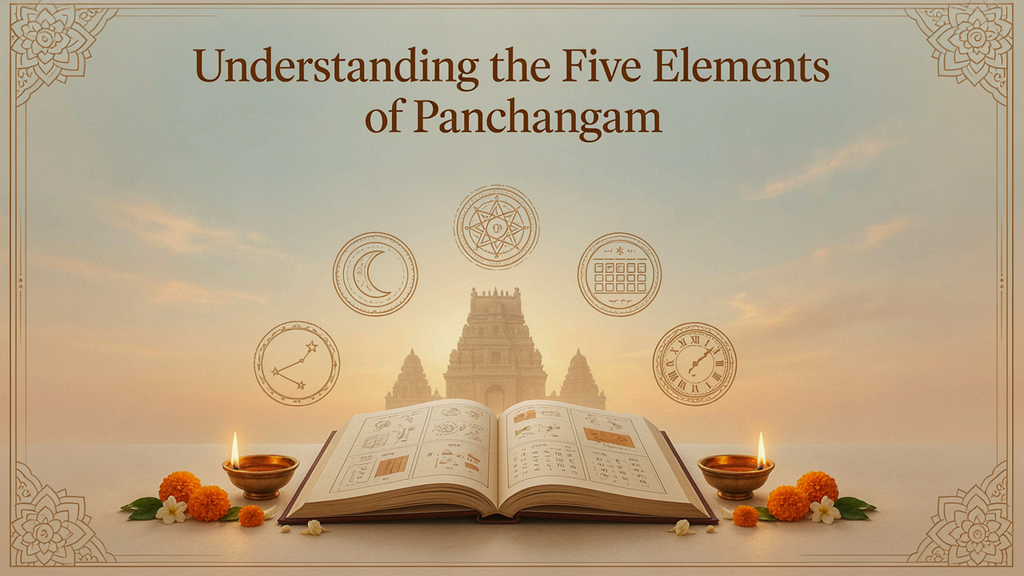
The five elements, traditionally called the Panchanga, form the foundation of the Hindu almanac.
Tithi Lunar Day
Tithi represents a lunar day calculated from the angular relationship between the Sun and Moon. Each lunar month contains 30 Tithis, divided between Shukla Paksha and Krishna Paksha. Tithis are important for determining festival dates, fasting days, and religious ceremonies.
Vara Weekday
Vara refers to the seven days of the week. Each day has traditional religious associations. For example, Monday is commonly associated with Lord Shiva, while Thursday is associated with Guru or Brihaspati in many Hindu traditions.
Nakshatra Lunar Mansion
Nakshatra refers to one of the 27 principal divisions of the ecliptic used in Hindu astronomy and astrology. The Moon’s position determines the Nakshatra at a particular time. Nakshatras are commonly consulted when selecting dates for ceremonies and other traditional activities.
Yoga Solar-Lunar Combination
Yoga is calculated using the combined celestial longitudes of the Sun and Moon. The traditional system recognizes 27 Yogas. Their names and timings are recorded in Panchangam calculations and may be considered when selecting a Muhurat.
Karana Half of a Tithi
A Karana represents half of a Tithi. There are 11 traditional Karanas, including recurring and fixed types. Panchangam users consult Karana information when checking the suitability of particular times for religious and ceremonial activities.
These five elements work together to provide a detailed picture of a particular day. Their timings can change during the day, so checking only the name of the Tithi may not be sufficient when planning a ceremony.
How to Read the Hindu Calendar for 2026
Reading a Hindu calendar becomes easier when you understand its terminology and how its dates are organized.
Hindu lunar months
Many Hindu calendars use 12 lunar months, although the month names, new-moon or full-moon conventions, and intercalary-month rules vary across traditions.
Common month names include:
- Chaitra
- Vaishakha
- Jyeshtha
- Ashadha
- Shravana
- Bhadrapada
- Ashwin
- Kartika
- Margashirsha
- Pausha
- Magha
- Phalguna
An additional lunar month, known as Adhika Masa, may be inserted periodically to keep the lunar calendar aligned with the solar year.
Shukla Paksha and Krishna Paksha
Each lunar month is divided into two phases.
| Term | Meaning |
| Shukla Paksha | The waxing Moon, from the period after Amavasya toward Purnima |
| Purnima | Full-moon Tithi |
| Krishna Paksha | The waning Moon, from the period after Purnima toward Amavasya |
| Amavasya | New-moon Tithi |
The exact beginning and ending of each Tithi depend on astronomical calculations. A Tithi may begin or end at any time of the civil day.
Sunrise and the Hindu calendar date
Many daily Panchangam conventions use sunrise to determine the prevailing weekday and other calendar details. Festival observances, however, can follow specific rules involving Tithi, sunrise, moonrise, or other periods.
This is one reason why a festival’s date cannot always be determined simply by checking the lunar date at midnight.
Panchangam 2026: Important Hindu Festivals
Hindu festivals follow different combinations of lunar dates, solar transitions, and regional customs. The table below lists major festivals to look for in a 2026 calendar.
| Festival | Usual calendar association | Significance |
| Makar Sankranti | Solar transition into Makara | Harvest traditions and religious observances |
| Maha Shivaratri | Krishna Paksha Chaturdashi of Phalguna or the corresponding regional month | Worship of Lord Shiva |
| Holi | Around Phalguna Purnima | Festival of colors and spring celebrations |
| Ugadi | Chaitra Shukla Pratipada in relevant regional traditions | New Year celebrations |
| Gudi Padwa | Chaitra Shukla Pratipada | Marathi New Year |
| Ram Navami | Chaitra Shukla Navami | Birth anniversary of Lord Rama |
| Hanuman Jayanti | Varies by regional tradition | Worship of Lord Hanuman |
| Akshaya Tritiya | Vaishakha Shukla Tritiya | Auspicious day in several Hindu traditions |
| Guru Purnima | Ashadha Purnima | Honoring teachers and spiritual guides |
| Krishna Janmashtami | Krishna Paksha Ashtami associated with Lord Krishna’s birth observance | Worship of Lord Krishna |
| Ganesh Chaturthi | Bhadrapada Shukla Chaturthi | Celebration of Lord Ganesha |
| Navratri | Dates vary by the lunar calendar and regional observance | Worship of the Divine Mother |
| Dussehra | Ashwin Dashami in many traditions | Celebration of the victory of good over evil |
| Karwa Chauth | Regional Kartika-calendar observance | Fasting tradition observed by many married women |
| Dhanteras | Krishna Paksha Trayodashi of the Diwali period | Traditional purchases and worship |
| Diwali | Amavasya of the Diwali period | Festival of lights |
Festival names and observance rules can differ across India. Some festivals also have separate dates for different regional communities.
Best Time for Spiritual Travel in 2026
There is no single best time for every pilgrimage or temple visit. The most suitable period depends on the destination, climate, festival calendar, and your travel preferences.
| Period | Travel considerations |
| January–February | Some regions have pleasant winter conditions; check local festival schedules |
| March–April | Spring festivals and major religious observances may attract crowds |
| May–June | Summer heat can affect outdoor sightseeing and temple queues |
| July–September | Monsoon conditions may affect road journeys and outdoor activities |
| October–November | Many regions hold major festive celebrations |
| December | Winter travel can be comfortable in some regions, while northern destinations may be cold |
Traveling during major festivals
Festival periods can offer opportunities to experience religious ceremonies, processions, decorations, and local traditions. They can also bring heavy crowds and higher demand for accommodation.
Before traveling, check:
- The festival’s confirmed local observance date.
- Temple entry rules and special darshan arrangements.
- Accommodation availability.
- Road closures and crowd-management arrangements.
- Weather conditions at your destination.
If you prefer a quieter visit, consider traveling outside major festival periods.
How to Plan Temple Visits Using Panchangam 2026
Panchangam can help organize a temple visit around a festival, fasting day, or personally meaningful religious observance. However, it does not replace the temple’s own visitor information.
Choose the right date
Start by identifying the festival or observance you want to experience. Confirm its date according to the tradition followed by the temple you plan to visit.
Check the temple’s schedule
Temple opening hours, special pujas, and darshan arrangements can change during festivals. Consult the temple’s official website or administration before traveling.
Allow time for crowds
Major temples may experience long queues on festival days. Allow additional time for security checks, parking, walking, and waiting.
Consider the local calendar
A Panchangam calculated for one city may not provide the exact local timings needed in another. Sunrise, sunset, and other time-dependent details vary by location.
Image Caption: Devotees visiting a traditional Hindu temple during a religious festival.
Famous Pilgrimage Destinations to Explore in India
India has many pilgrimage destinations associated with Hindu traditions. Your choice should depend on the deity, temple tradition, location, and travel time available.
Varanasi, Uttar Pradesh
Varanasi is one of Hinduism’s important sacred cities. Visitors explore its temples, the Ganges riverfront, and traditional religious ceremonies. Festival periods can be particularly busy, so advance planning is useful.
Tirumala, Andhra Pradesh
The Sri Venkateswara Temple attracts pilgrims throughout the year. Visitors should check official darshan booking arrangements, travel regulations, and accommodation information before arriving.
Ujjain, Madhya Pradesh
Ujjain is known for the Mahakaleshwar Jyotirlinga Temple and its association with Lord Shiva. Special religious periods can affect access and visitor arrangements.
Rameswaram, Tamil Nadu
Rameswaram is an important pilgrimage destination associated with Lord Rama and the Ramanathaswamy Temple. Visitors can combine temple visits with the island’s coastal scenery.
Puri, Odisha
Puri is known for the Jagannath Temple and the annual Rath Yatra. Access to the temple is subject to its rules, and visitors should verify current arrangements before planning their trip.
These destinations are spread across different parts of India. They should not be treated as a single short itinerary; travel time and transport connections need to be planned separately.
How to Reach Major Pilgrimage Destinations
Because Panchangam 2026 is a calendar rather than a single geographical destination, there is no one airport, railway station, road route, or local transport system for the topic as a whole.
For each pilgrimage, identify the nearest practical transport hub and check current schedules.
| Destination | Common transport planning approach |
| Varanasi | Compare flights and trains serving Varanasi, then arrange local transport |
| Tirumala | Plan travel through Tirupati and check official onward transport and access arrangements |
| Ujjain | Check rail and road connections to Ujjain; compare nearby airport options |
| Rameswaram | Check rail and road connections to the island and local transport |
| Puri | Check train and road connections, as well as flight options through a suitable nearby airport |
Actual journey times depend on the starting point, service, traffic, and season. Use current transport operators’ schedules rather than relying on a general calendar article.
By air
Flights can reduce journey time for long-distance pilgrimages. Check the airport serving your destination, then confirm the onward road transfer.
By train
Rail can be practical for many major pilgrimage cities. Book early when traveling during popular festivals, and verify the station serving your destination.
By road
Buses, taxis, and private cars may be suitable for regional journeys. Check road conditions, expected traffic, and any festival-related restrictions.
Local transportation
Depending on the city, options may include public buses, taxis, auto-rickshaws, app-based rides, and walking. Near major temples, some roads may be restricted to pedestrians or authorized vehicles.
Where to Stay During Religious Festivals
Accommodation needs depend on the pilgrimage destination and the time of year. During major religious celebrations, rooms near prominent temples may be booked well in advance.
| Accommodation type | Suitable for | Planning advice |
| Budget guesthouses | Solo travelers and pilgrims | Check cleanliness, location, and cancellation terms |
| Mid-range hotels | Couples and families | Compare transport access and included services |
| Premium hotels | Travelers seeking additional services | Check the distance from the temple and festival traffic |
| Dharamshalas | Pilgrims seeking traditional lodging | Confirm eligibility, facilities, rules, and booking arrangements |
| Family accommodation | Groups and families | Check room capacity, accessibility, and meal options |
Hotel prices vary by city, season, room type, and booking date. Festival dates can significantly affect availability. Verify current prices and policies before making a reservation.
Food and Local Cuisine During Pilgrimage Travel
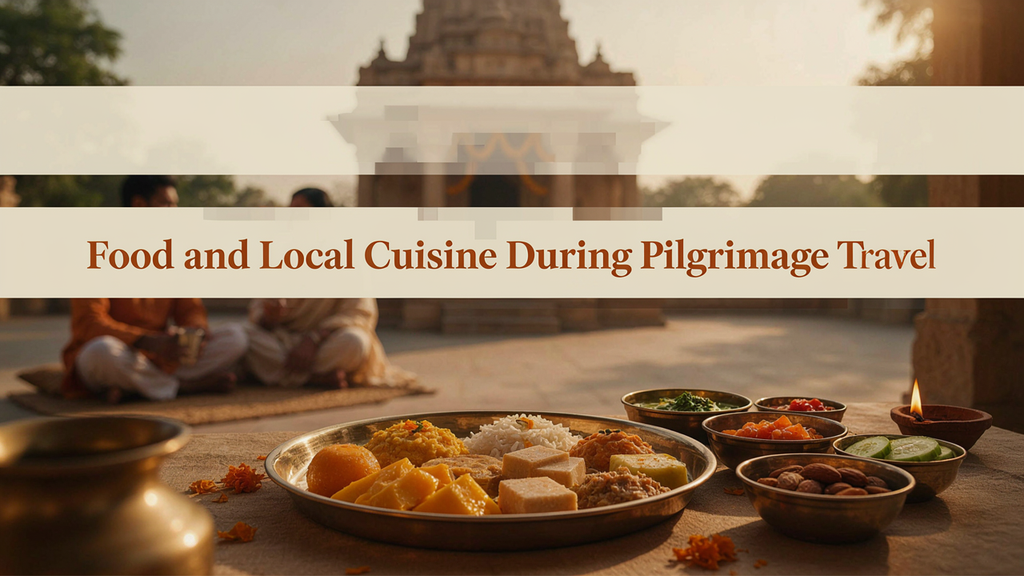
Religious travel offers opportunities to explore regional Indian food traditions. Many pilgrimage destinations have vegetarian restaurants, local snacks, traditional sweets, and temple-associated food offerings.
| Destination | Food experiences to explore |
| Varanasi | Kachori-sabzi, regional sweets, and vegetarian meals |
| Tirupati | Local Andhra cuisine and the temple’s prasadam, subject to official arrangements |
| Ujjain | Madhya Pradesh specialties and vegetarian food |
| Rameswaram | South Indian meals, rice dishes, and regional seafood options |
| Puri | Odia cuisine and the traditional Mahaprasad associated with Jagannath Temple |
Food availability and temple food arrangements may change during special events. Follow local rules, check ingredient information if you have dietary restrictions, and choose food outlets with good hygiene practices.
Travel Budget for a 2026 Pilgrimage
There is no single reliable budget for travel based on Panchangam 2026 because expenses depend on the destination, departure city, trip length, transport, and accommodation.
Use the following framework to estimate your expenses.
| Expense | Budget traveler | Mid-range traveler | Luxury traveler |
| Transport | Public transport or economical rail options | Convenient rail or air travel | Premium flights or private transfers |
| Accommodation | Basic guesthouse or dormitory | Standard hotel | Premium hotel |
| Food | Local eateries and simple meals | Restaurants and varied meals | Upscale dining |
| Local travel | Public transport and walking | Taxis when needed | Private vehicle |
| Activities | General temple visits and public sites | Selected guided experiences | Private guides and customized experiences |
To calculate a realistic budget, add the cost of return transport, accommodation for every night, meals, local transfers, entry fees where applicable, and a contingency amount.
For festival travel, compare prices before booking and review cancellation policies carefully.
A Practical Three-Day Spiritual Travel Itinerary
This sample itinerary can be adapted to a pilgrimage city. It is not a fixed route between the destinations listed above.
| Day | Morning | Afternoon | Evening |
| Day 1 | Arrive and check in | Explore the local area | Visit a nearby temple, if open |
| Day 2 | Main temple visit | Explore nearby cultural sites | Attend a public religious ceremony, if available |
| Day 3 | Optional morning worship | Visit a market or heritage area | Depart |
Check the Panchangam and temple schedule before assigning specific ceremonies to each day. If your trip coincides with a major festival, you may need additional time for queues and traffic.
Family-Friendly and Peaceful Places During a Pilgrimage

Not every part of a religious trip needs to involve crowded temple visits. Depending on the destination, families can include public gardens, riverfront areas, heritage districts, and scenic locations.
- Varanasi: Explore suitable public riverfront areas while following local safety guidance.
- Puri: Spend time at designated public areas along the coast, paying attention to sea conditions.
- Rameswaram: Explore accessible coastal viewpoints and local heritage sites.
- Ujjain: Include suitable public spaces and cultural attractions in the city.
Check local access rules, weather, accessibility, and opening arrangements. Avoid assuming that every religious site is suitable for picnics or unrestricted photography.
Best Photography Spots for Spiritual Travel
Photographic opportunities vary by destination and by the rules of individual religious sites.
Some options include:
- Historic temple architecture and exterior courtyards where photography is permitted.
- Public riverfronts and ghats in Varanasi.
- Coastal scenery around Rameswaram.
- Public streets decorated for regional festivals.
- City and heritage views from permitted public areas.
Always follow signs and instructions regarding cameras and mobile phones. Photography may be restricted inside temples, during ceremonies, or in designated areas.
Image Caption: Traditional temple architecture and religious decorations during a Hindu festival.
Hindu Calendar Traditions and Regional Differences
Hindu calendars are not identical throughout India. Different communities use distinct conventions for determining lunar months, festival observances, and the beginning of a new year.
Amanta and Purnimanta calendars
In the Amanta system, the lunar month generally ends with Amavasya. In the Purnimanta system, it generally ends with Purnima.
These conventions can cause the same lunar date to be associated with different month names in different regions.
Regional New Year celebrations
Several communities celebrate the Hindu New Year at different times.
- Ugadi is observed in several Telugu- and Kannada-speaking communities.
- Gudi Padwa is associated with the Marathi New Year.
- Other regional traditions follow their own calendars and observances.
Tamil, Telugu, Kannada, and North Indian Panchangams
A Tamil Panchangam, Telugu Panchangam, Kannada Panchanga, and North Indian Panchang may present information using different languages, month conventions, and local calculations.
For accurate festival planning, use the calendar relevant to your family or the temple you intend to visit.
Daily Muhurat, Rahu Kalam, and Auspicious Timings
Many Panchangams include daily timing information that people consult for religious and traditional purposes.
| Term | General meaning |
| Muhurat | A traditionally selected period for an activity |
| Rahu Kalam | A daily period traditionally avoided for certain auspicious activities |
| Yamagandam | Another period considered in some traditional timing systems |
| Gulika Kalam | A period included in many regional Panchangams |
| Abhijit Muhurat | A traditionally recognized midday period, subject to calculation rules |
These timings depend on the location and local sunrise or sunset. They should not be copied from a calendar calculated for a different city without checking the underlying details.
Traditional interpretations also differ. If you are arranging a wedding, housewarming, or other important ceremony, consult the relevant Panchangam and the officiating priest.
Safety and Practical Tips for Pilgrims in 2026
A little preparation can make religious travel easier, especially during large festivals.
- Confirm dates: Verify the local festival date before booking travel.
- Check temple rules: Review entry restrictions, dress requirements, and permitted items.
- Book in advance: Reserve accommodation and transport early for major festivals.
- Carry identification: Keep the documents required for your transport and accommodation.
- Protect valuables: Use a secure bag and keep essential documents safe.
- Prepare for crowds: Agree on a meeting point if traveling with family.
- Check the weather: Carry suitable clothing for heat, rain, or cold.
- Use official information: Verify darshan bookings, special entry arrangements, and temple notices.
- Keep emergency contacts: Save local emergency numbers and your accommodation’s contact details.
- Respect local customs: Follow instructions at temples and religious ceremonies.
For travel in India, the national emergency response number is 112. Confirm any destination-specific assistance information before departure.
What to Pack for a Panchangam-Based Pilgrimage
Your packing list should reflect the destination, season, duration, and religious activities planned.
- Comfortable walking shoes or sandals, subject to temple footwear rules.
- Modest clothing appropriate for the temples you plan to visit.
- A light scarf or extra layer for religious sites that request covered shoulders or heads.
- Weather-appropriate clothing, including rain protection during the monsoon.
- Reusable water bottle, where permitted.
- Personal medicines and basic first-aid supplies.
- Phone charger and power bank.
- Identification, booking confirmations, and emergency contacts.
- Cash for small purchases, alongside digital payment options.
- A copy or digital version of the relevant regional Panchangam.
- A notebook or calendar app for recording festival dates and planned observances.
If you are visiting several temples, check their individual rules. Requirements can vary even within the same city.
How to Choose a Reliable Panchangam for 2026
A reliable Panchangam should clearly identify the calendar tradition, calculation method, location, and time zone used.
Before relying on a calendar, check the following:
- Regional tradition: Does it follow the calendar system used by your family or temple?
- Location: Are the timings calculated for your city?
- Time zone: Are the displayed times local?
- Festival rules: Does it explain how observance dates are determined?
- Source: Is it published by a recognized calendar authority, experienced Panchangam compiler, or trusted religious institution?
- Corrections: Does the publisher provide updates if a date or calculation is revised?
For major ceremonies and travel bookings, cross-check important dates with the temple or religious authority involved.
SEO-Friendly Image ALT Text Suggestions
Panchangam 2026 Hindu calendar with Tithi and festival dates
Hindu Panchangam 2026 showing traditional lunar calendar details
Five elements of Panchangam Tithi Vara Nakshatra Yoga and Karana
Hindu festival calendar 2026 for religious celebrations
Traditional Hindu almanac with lunar phases and auspicious timings
Hindu temple pilgrimage planning using Panchangam 2026
Hindu religious festival celebrations in India during 2026
Traditional temple architecture during a Hindu festival
Hindu calendar showing Shukla Paksha and Krishna Paksha
Panchangam calendar for planning temple visits and religious observances
FAQs
What is Panchangam 2026 and what does it include?
Panchangam 2026 provides important Hindu calendar details such as Tithi, Nakshatra, Yoga, Karana, and Vara.
It also helps track festivals, fasting days, Muhurat, and other auspicious occasions.
How can Panchangam 2026 help with Hindu festivals?
It lists important Hindu festivals and religious observances along with their dates and Tithi details.
This makes it easier to plan prayers, fasting, puja, and family celebrations.
How is Panchangam 2026 useful for finding auspicious Muhurat?
You can use it to identify suitable timings for ceremonies, weddings, housewarming, travel, and other important activities.
Muhurat may vary by location, so local timings should be checked.
Can Panchangam 2026 help me plan spiritual travel?
Yes, it can help you choose festival dates, Ekadashi days, temple visits, and other spiritually significant occasions.
Checking local sunrise and sunset times is useful when traveling.
What are the five important parts of Panchangam 2026?
The five main parts are Vara, Tithi, Nakshatra, Yoga, and Karana.
Together, they provide key information used to understand a particular day in the Hindu calendar.
How does Panchangam 2026 show Tithi and lunar dates?
Tithi is based on the changing relationship between the Sun and Moon and is an important part of the Hindu calendar.
The Panchang helps identify when each Tithi begins and ends.
Can I use Panchangam 2026 for Ekadashi fasting dates?
Yes, it provides Ekadashi dates and other fasting observances throughout the year.
Devotees can use these dates to plan fasting and related religious practices.
Is Panchangam 2026 the same in every part of India?
Not always. Festival dates and auspicious timings can differ based on location, sunrise, sunset, and regional calendar traditions.
Local Panchang calculations are therefore helpful for accurate timings.
Can Panchangam 2026 help with wedding and housewarming dates?
Yes, it can be used to identify auspicious dates and Muhurat for weddings, Griha Pravesh, and similar ceremonies.
A local priest or astrologer may be consulted for personalized timings.
Why should travelers check Panchangam 2026 before visiting temples?
It can help travelers plan visits around major festivals, fasting days, special pujas, and auspicious occasions.
Checking local calendar timings can make spiritual travel more organized.
Conclusion
Panchangam 2026 is a useful guide for understanding important Hindu dates, Tithi, festivals, fasting days, and auspicious timings.
It brings traditional calendar information together in one convenient place.
From daily religious practices to major celebrations, it can support better planning throughout the year.
Travelers can also use it to organize temple visits and spiritual journeys around significant occasions.
With the right local timings, planning becomes easier and more meaningful.
Whether you are preparing for a festival, ceremony, fast, or spiritual trip, Panchangam 2026 can help you stay organized.
Its details offer a simple way to follow important Hindu calendar traditions throughout the year.
Remember that timings may vary by location and regional calendar system.
For important ceremonies, always verify the exact local Muhurat and Tithi.
Used thoughtfully, the Panchang can become a valuable part of your yearly planning.
Read More: Aaj Ka Panchang (आज का पंचांग): Today’s Tithi, Nakshatra, Muhurat & Hindu Calendar Guide
