

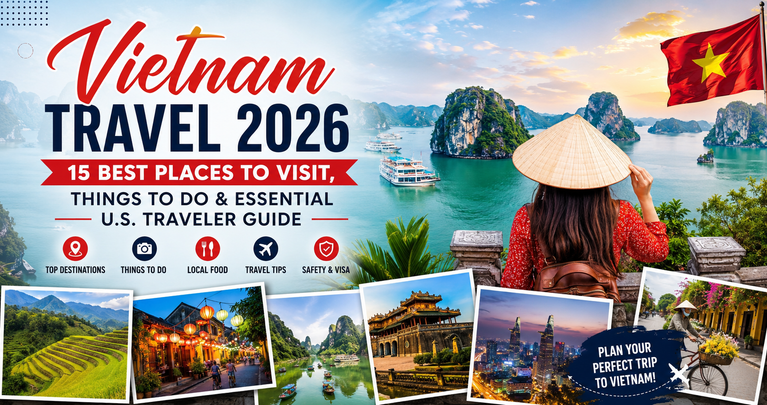
Planning a trip to Vietnam in 2026 is an exciting way to experience Southeast Asia’s rich culture, incredible food, historic cities, tropical beaches, and breathtaking natural landscapes. From the lively streets of Hanoi and the limestone islands of Ha Long Bay to the lantern-filled lanes of Hoi An and the energy of Ho Chi Minh City, Vietnam offers something for almost every type of traveler.
For U.S. travelers, a successful Vietnam trip starts with smart planning. You’ll want to understand where to go, how much the trip may cost, the best time to visit, visa requirements, transportation, safety, and local customs before you leave. Whether you are planning a 7-day getaway or a longer 14-day adventure, this Vietnam Travel 2026 guide will help you build a practical itinerary and make the most of your time in the country.
In this guide, we’ll explore the 15 best places to visit in Vietnam, top things to do, travel costs, visa tips, safety advice, itinerary ideas, common mistakes, and expert travel tips designed especially for American visitors.
Quick Answer:
Yes. Vietnam is an excellent choice for U.S. travelers in 2026. It offers a rare combination of affordable food and accommodation, historic cities, tropical beaches, dramatic mountains, UNESCO-recognized attractions, and one of Asia’s most interesting food cultures.
For a first trip, consider combining Hanoi, Ha Long Bay, Ninh Binh, Hoi An, Da Nang, and Ho Chi Minh City. If you have more time, add Sapa, Ha Giang, Hue, Phong Nha, or Phu Quoc.
For Americans, Vietnam currently has a U.S. State Department Level 1 travel advisory Exercise Normal Precautions, although petty crime can occur in tourist areas. U.S. citizens generally need a visa before traveling to Vietnam, and Vietnam’s official tourism information says e-visas can be issued for stays of up to 90 days with multiple entry. Always verify requirements before booking.
Why Vietnam Travel 2026 Is Worth It

Vietnam has become a strong choice for travelers who want variety without spending as much as they might in some other major Asian destinations.
You can begin your trip among the historic streets of Hanoi, cruise through the limestone scenery of Ha Long Bay, explore rice fields around Ninh Binh, enjoy lantern-lit evenings in Hoi An, and finish among the busy streets and food markets of Ho Chi Minh City.
Vietnam’s official tourism organization divides the country into northern, central, and southern regions, each offering very different landscapes and experiences. Northern Vietnam is known for mountains and rice terraces, central Vietnam for heritage and beaches, and southern Vietnam for city life, islands, and the Mekong Delta.
What makes Vietnam special in 2026?
- Affordable local food and transportation
- Rich Vietnamese history and culture
- Beautiful beaches and islands
- Mountain trekking and scenic landscapes
- Famous street-food culture
- Historic towns and imperial sites
- Excellent photography opportunities
- Large variety of accommodation
- Convenient domestic flights
- Options for luxury, mid-range, and budget travelers
The official tourism website is also highlighting destinations such as Ninh Binh, Phu Quoc, Da Nang, Hoi An, Phong Nha, Ha Giang, and Hue in its current 2026 travel content.
15 Best Places to Visit in Vietnam in 2026
Vietnam is long and geographically diverse, so choosing destinations depends heavily on how many days you have.
Hanoi
Hanoi is one of the best starting points for Vietnam travel. Explore the Old Quarter, Hoan Kiem Lake, traditional markets, temples, museums, and local coffee shops.
It is also a convenient gateway to northern destinations such as Ha Long Bay, Ninh Binh, Sapa, and Ha Giang.
Ha Long Bay
Ha Long Bay is famous for its emerald water and towering limestone karsts.
A cruise is one of the easiest ways to experience the area. Depending on your budget, you can choose a day cruise or an overnight boat.
Ninh Binh
Ninh Binh is sometimes called one of Vietnam’s most scenic regions because of its dramatic limestone mountains, rivers, caves, temples, and rice fields.
Take a boat ride through Trang An or Tam Coc, and consider climbing to viewpoints around Mua Cave.
Sapa
Sapa is a popular northern mountain destination known for terraced rice fields and mountain scenery.
It is a strong choice for travelers interested in hiking, photography, and rural Vietnamese culture.
Ha Giang
For adventure travelers, Ha Giang offers dramatic mountain roads and spectacular landscapes.
A multi-day road trip or guided motorcycle tour can be an unforgettable experience. Travelers should choose experienced guides and use appropriate safety equipment.
Hoi An
Hoi An is one of Vietnam’s most atmospheric destinations. Its historic architecture, colorful lanterns, riverside setting, restaurants, tailor shops, and nearby beaches make it particularly popular with first-time visitors.
Da Nang
Da Nang combines beaches, city attractions, mountains, restaurants, and easy access to Hoi An.
It works particularly well for travelers who want a comfortable base while exploring central Vietnam.
Hue
Hue is ideal for history lovers. The former imperial capital is associated with Vietnam’s royal heritage, historic monuments, temples, and distinctive cuisine.
Phong Nha
Phong Nha is famous for spectacular caves and karst landscapes.
Adventure travelers can explore caves, rivers, national parks, and underground environments.
Nha Trang
Nha Trang is a beach destination with a lively coastal atmosphere. It can be a good option if your itinerary includes relaxation, water activities, and seafood.
Da Lat
Da Lat has a cooler climate and a different feel from Vietnam’s tropical coastal cities. Expect pine forests, gardens, coffee farms, waterfalls, and scenic mountain landscapes.
Ho Chi Minh City
Formerly known internationally as Saigon, Ho Chi Minh City is Vietnam’s largest urban destination and a major base for southern travel.
Explore museums, markets, cafés, restaurants, historic landmarks, and nightlife.
Mekong Delta
The Mekong Delta offers a slower side of Vietnam, with waterways, agricultural communities, markets, and rural landscapes.
It works well as a day trip or multi-day experience from Ho Chi Minh City.
Phu Quoc
Phu Quoc is a popular island destination known for beaches, resorts, seafood, and tropical scenery.
It is especially appealing for travelers who want to add a beach vacation to a cultural Vietnam itinerary.
Con Dao
Con Dao offers a quieter island experience with beaches, forests, marine environments, and historical sites.
The official Vietnam tourism website currently lists both Phu Quoc and Con Dao among southern destinations.
Best destinations by travel style

| Traveler Type | Best Vietnam Destinations |
| First-time visitors | Hanoi, Ha Long Bay, Hoi An, Ho Chi Minh City |
| Beaches | Phu Quoc, Da Nang, Nha Trang |
| Adventure | Ha Giang, Sapa, Phong Nha |
| History | Hue, Hanoi, Hoi An |
| Food | Hanoi, Hue, Hoi An, Ho Chi Minh City |
| Couples | Hoi An, Da Nang, Phu Quoc |
| Families | Hanoi, Hoi An, Da Nang, Phu Quoc |
| Photography | Ninh Binh, Ha Giang, Sapa, Ha Long Bay |
| Luxury | Ha Long Bay cruises, Da Nang, Phu Quoc |
Best Things to Do in Vietnam
Vietnam offers much more than sightseeing. The best itinerary combines food, culture, nature, history, and relaxation.
Eat Vietnamese Street Food
Food should be part of almost every Vietnam itinerary.
Try:
- Pho
- Banh mi
- Bun cha
- Bun bo Hue
- Cao lau
- Goi cuon
- Vietnamese iced coffee
- Fresh seafood
Don’t be afraid to explore local restaurants away from major tourist streets.
Take a Ha Long Bay Cruise
An overnight cruise gives you more time to enjoy the scenery and usually includes meals and activities.
Explore Hoi An at Night
Walk through the old town after sunset when colorful lanterns illuminate the streets.
Trek Through Rice Terraces
Sapa and northern mountain regions are excellent for hiking and landscape photography.
Explore Vietnamese Markets
Markets are ideal places to experience local life. Practice basic bargaining politely when appropriate, but don’t assume every price is negotiable.
Take a Vietnamese Cooking Class
Cooking classes can be a fun way to learn about local ingredients and culinary traditions.
Explore the Mekong Delta
Take a boat trip, visit local communities, and experience the waterways and agricultural landscape.
Relax on a Vietnamese Beach
After several busy city days, a beach stop in Da Nang, Nha Trang, Phu Quoc, or another coastal destination can provide a useful break.
Best Time to Visit Vietnam in 2026
There is no single perfect month for the entire country because Vietnam has different regional weather patterns.
Northern Vietnam
Hanoi, Ha Long Bay, Sapa, and Ha Giang can have cooler conditions during winter, while spring and autumn can offer comfortable travel conditions.
Central Vietnam
Hoi An, Da Nang, and Hue have their own seasonal weather patterns. Check local forecasts carefully before planning beach days or outdoor activities.
Southern Vietnam
Ho Chi Minh City and the Mekong Delta generally have a tropical climate, with wet and dry periods that can affect outdoor plans.
Vietnam weather planning table
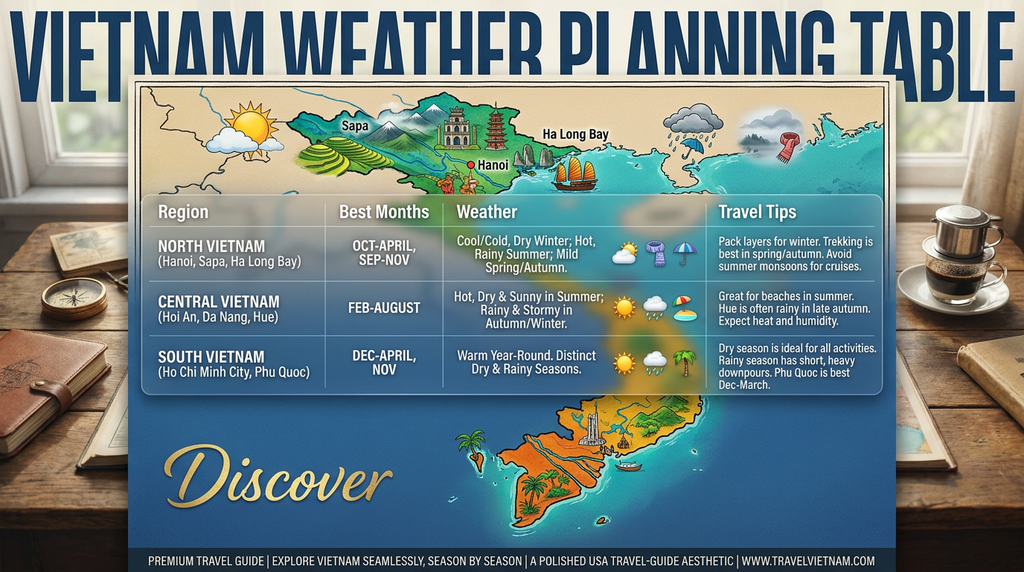
| Region | Popular Destinations | Planning Consideration |
| North | Hanoi, Sapa, Ha Giang, Ha Long Bay | Cooler winters; mountain weather varies |
| Central | Hoi An, Da Nang, Hue, Phong Nha | Seasonal rain can affect plans |
| South | Ho Chi Minh City, Mekong Delta, Phu Quoc | Tropical weather; check rainfall forecasts |
Expert tip: Don’t choose your travel dates based only on a nationwide “best time to visit Vietnam.” Build your itinerary around the regions you most want to see.
Vietnam Travel Costs: How Much Should U.S. Travelers Budget?
Vietnam can work for several budgets. Your biggest costs are usually international airfare, hotels, domestic transportation, tours, and activities.
Sample daily planning budget
| Travel Style | Estimated Daily Budget* | Typical Experience |
| Budget | $25–$50 | Hostels, local food, buses, simple activities |
| Mid-range | $60–$120 | Comfortable hotels, restaurants, tours |
| Luxury | $150+ | Upscale hotels, private tours, premium experiences |
*These are planning estimates, not fixed 2026 prices. Actual costs vary by city, season, hotel type, exchange rates, and booking date.
Where you can save money
- Eat at local restaurants.
- Use domestic buses or trains where practical.
- Book accommodation outside the most expensive tourist zones.
- Travel during less-busy periods.
- Compare domestic flights before booking.
- Combine free attractions with paid tours.
Where you may spend more
- Overnight Ha Long Bay cruises
- Luxury resorts
- Private guides
- Domestic flights
- Popular beach destinations during peak periods
- High-end restaurants
Vietnam Visa and Entry Requirements for U.S. Travelers
Visa requirements are one of the most important parts of planning Vietnam Travel 2026.
The U.S. Department of State currently says that U.S. citizens need a visa to travel to Vietnam, with an exception for certain stays of 30 days or less on Phu Quoc. The State Department also points travelers toward the Vietnamese government’s electronic visa system.
Vietnam’s official tourism information states that citizens of all countries and territories can apply for an e-visa of up to 90 days with multiple entry under the current policy.
Before applying
Check:
- Passport validity requirements.
- Correct name and passport details.
- Intended entry date.
- Entry airport or border.
- Number of entries.
- Visa validity dates.
- Official application instructions.
Is Vietnam Safe for American Tourists?

For general travel, Vietnam is currently considered a relatively safe destination. The U.S. Department of State’s June 24, 2026 advisory is Level 1: Exercise Normal Precautions. It notes that petty crime is common, particularly in popular tourist locations.
Practical safety tips
- Keep your phone secure near busy roads.
- Use reputable transportation services.
- Keep copies of important travel documents.
- Avoid carrying large amounts of cash.
- Watch your belongings in crowded markets.
- Follow local laws and customs.
- Use caution when crossing busy streets.
- Buy travel insurance with suitable medical coverage.
- Follow official weather and local safety alerts.
Vietnam also has areas where landmines and unexploded ordnance remain, although the State Department notes that risk is low in urban and populated tourist destinations. Avoid entering restricted or unfamiliar areas.
Getting Around Vietnam
Vietnam offers several practical transportation options.
Domestic Flights
Flights are useful when you want to cover long distances quickly, such as traveling between Hanoi and Ho Chi Minh City.
Trains
Trains can be a more relaxed way to experience the country and are particularly useful on certain north-south routes.
Buses
Buses can be economical, especially for shorter regional journeys.
Taxis and Ride-Hailing
In larger cities, app-based transportation can be convenient. Always check the vehicle and driver details before entering.
Walking
Walking is excellent for exploring compact historic districts, but traffic can be challenging in major cities.
Vietnam Travel Itinerary Ideas for 7, 10, and 14 Days
7-Day Vietnam Itinerary
Days 1–2: Hanoi
Day 3: Ha Long Bay
Day 4: Ninh Binh
Days 5–6: Hoi An/Da Nang
Day 7: Departure or Ho Chi Minh City if flights allow
This itinerary is busy, so avoid adding too many extra destinations.
10-Day Vietnam Itinerary
Days 1–2: Hanoi
Day 3: Ha Long Bay
Day 4: Ninh Binh
Days 5–6: Hoi An
Day 7: Da Nang/Hue
Days 8–10: Ho Chi Minh City
14-Day Vietnam Itinerary
Days 1–3: Hanoi
Days 4–5: Ha Long Bay/Ninh Binh
Days 6–8: Hoi An and Da Nang
Day 9: Hue
Days 10–12: Ho Chi Minh City
Days 13–14: Mekong Delta
Planning rule: It is usually better to experience four or five destinations properly than to rush through eight or nine.
Pros and Cons of Vietnam Travel in 2026

| Pros | Cons |
| Diverse landscapes | Long travel distances |
| Excellent food | Busy city traffic |
| Wide range of budgets | Weather varies by region |
| Rich history and culture | Language barriers can occur |
| Beautiful beaches | Tourist areas can become crowded |
| Strong adventure options | Some itineraries require domestic flights |
| Good value for many travelers | Visa rules require advance planning |
Vietnam is particularly strong for travelers who enjoy food, culture, photography, beaches, adventure, and affordable experiences.
Vietnam Travel Checklist for U.S. Travelers
Use this checklist before leaving the United States:
- Valid passport
- Vietnam visa/e-visa if required
- Confirm entry point
- Flight reservations
- First-night accommodation
- Travel insurance
- Copies of passport and visa
- Credit/debit cards
- Some local currency
- International phone/data plan
- Comfortable walking shoes
- Lightweight clothing
- Rain protection
- Prescription medications
- Basic first-aid supplies
- Offline maps
- Emergency contact information
Common Mistakes to Avoid in Vietnam
Trying to See the Whole Country Too Quickly
Vietnam is longer than it looks on a map. Transportation time can consume valuable vacation days.
Ignoring Regional Weather
A sunny forecast in one part of Vietnam doesn’t mean the same conditions exist hundreds of miles away.
Booking Every Activity in Advance
Some flexibility can be useful, especially when weather affects cruises or outdoor tours.
Forgetting Visa Details
A small mistake in your application can create unnecessary travel stress. Double-check your details.
Underestimating Traffic
Busy streets can be difficult to cross. Follow local pedestrian patterns carefully.
Spending the Entire Trip in Major Cities
Vietnam’s mountains, villages, beaches, caves, and countryside are major parts of the country’s appeal.
Not Carrying Backup Payment Options
Keep a backup card separately from your primary wallet.
Expert Tips for Vietnam Travel 2026
Build your itinerary by region
.Northern, central, and southern Vietnam each deserve focused exploration.
Mix cities with nature.
A trip combining Hanoi, Hoi An, and Ho Chi Minh City can become even better with Ninh Binh, Ha Long Bay, or a beach destination.
Leave buffer time.
Don’t schedule important international connections too tightly after long domestic journeys.
Book popular experiences early.
Overnight cruises, popular hotels, and special tours can sell out during busy periods.
Use local food as part of the experience.
Vietnamese cuisine changes from region to region.
Respect local culture.
Dress appropriately when visiting religious and historic sites.
Check official sources before departure.
Visa, entry, safety, weather, and transportation information can change.
FAQs
Is Vietnam a good destination for Americans in 2026?
Yes. Vietnam offers diverse attractions, food, beaches, culture, and adventure. The U.S. State Department currently lists Vietnam at Level 1, meaning travelers should exercise normal precautions.
Do U.S. citizens need a visa for Vietnam?
Generally, yes. The U.S. State Department says U.S. citizens must obtain a visa before traveling to Vietnam, subject to specific exceptions such as certain Phu Quoc stays.
How long should I spend in Vietnam?
For a first visit, 10–14 days is a practical range. Seven days can work if you focus on one or two regions.
What are the best places to visit in Vietnam?
Popular choices include Hanoi, Ha Long Bay, Ninh Binh, Hoi An, Da Nang, Hue, Ho Chi Minh City, Phu Quoc, Sapa, and Ha Giang.
Is Vietnam expensive for American tourists?
Vietnam can be relatively affordable, especially for local food, transportation, and mid-range accommodation. Luxury experiences can cost considerably more.
What is Vietnam famous for?
Vietnam is famous for its cuisine, rice terraces, limestone landscapes, beaches, historic cities, coffee culture, traditional architecture, and vibrant street life.
Is Vietnam safe for solo travelers?
Vietnam is generally considered safe for travelers, but normal precautions are important. Petty crime can occur in tourist areas, according to the U.S. State Department.
Should I visit Hanoi or Ho Chi Minh City?
If you prefer history, traditional culture, and northern landscapes, start with Hanoi. If you prefer modern city life, southern food, nightlife, and access to the Mekong Delta, choose Ho Chi Minh City.
Can I use U.S. dollars in Vietnam?
U.S. dollars may be accepted in some tourist-oriented situations, but Vietnamese dong is the local currency and is useful for everyday purchases.
Is Vietnam good for families?
Yes. Families can choose from beaches, cultural attractions, food experiences, nature trips, comfortable hotels, and relatively easy domestic transportation.
Final Thoughts:
Vietnam Travel 2026 is a strong option for U.S. travelers who want more than a typical beach vacation. From Hanoi’s historic streets and Ninh Binh’s limestone landscapes to Hoi An’s lanterns, Hue’s heritage, Ho Chi Minh City’s energy, and Phu Quoc’s beaches, the country offers remarkable variety.
The key is not trying to do everything. Choose a logical route, allow enough time between destinations, check the latest visa and entry requirements, and leave room for spontaneous food and cultural experiences.
If you’re planning your first trip, a 10–14-day Vietnam itinerary covering Hanoi, Ha Long Bay or Ninh Binh, Hoi An/Da Nang, and Ho Chi Minh City is an excellent starting point.
Ready to plan your Vietnam adventure? Start by choosing your regions, checking current entry requirements, setting your daily budget, and building an itinerary around the experiences you most want to remember.
SEO publishing tip: Keep “Vietnam Travel 2026” as the primary keyword. Use the longer phrase “Vietnam Travel 2026 – Lonely Planet | Asia” naturally only where relevant, rather than repeating it unnaturally. This avoids making the article look like it is officially associated with Lonely Planet.
Read More:Charlie Kirk – Wikipedia: Biography, Career, Turning Point USA, Life & Legacy
