
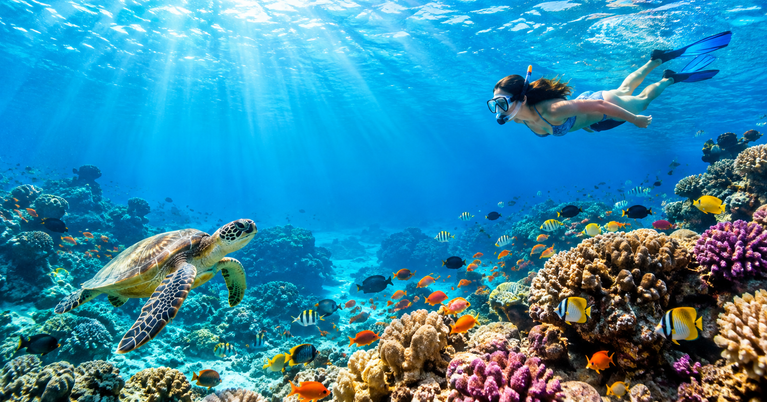
Snorkeling is one of the easiest ways to explore the underwater world. You do not need scuba certification or heavy equipment. With a mask, snorkel, fins, and good swimming skills, you can float above colorful coral reefs, watch sea turtles glide past, or see huge schools of fish moving together.
For U.S. travelers, the 10 best places to snorkel in the world range from easy-to-reach destinations such as Hawaii and the Caribbean to remote marine havens such as Raja Ampat and Fernando de Noronha. Some are perfect for beginners, while others reward experienced swimmers with deeper reefs, stronger currents, or rare wildlife encounters.
This guide breaks down the top destinations, what you can see underwater, the best time to visit, who each destination suits, practical planning tips, snorkeling safety, common mistakes, and responsible reef etiquette. The list follows the current 2026 Lonely Planet selection while adding independent planning advice for American travelers.
Quick Answer:
The current 2026 Lonely Planet selection includes:
- Lady Elliot Island, Australia best for coral and manta rays
- Fernando de Noronha, Brazil best for clear, warm water
- Thumbi, Malawi best for colorful freshwater fish
- Moalboal, Philippines best for massive sardine schools
- Radhanagar, Andaman Islands, India best for clear water and tropical fish
- Hanauma Bay, Hawaii best for accessible reef snorkeling
- Raja Ampat, Indonesia best for marine biodiversity
- Tofo Beach, Mozambique best for whale sharks
- Roatán Island, Honduras best for Caribbean reef snorkeling
- Abu Dabbab Bay, Egypt best for dugongs and turtles
Best overall for many U.S. travelers: Hawaii offers a strong combination of accessibility, marine life, and established visitor infrastructure.
Best for serious marine-life lovers: Raja Ampat.
Best for manta rays: Lady Elliot Island.
Best for whale sharks: Tofo Beach.
Best for beginners: Lady Elliot Island or Hanauma Bay, depending on local conditions and access rules.
Best Snorkeling Destinations at a Glance
| Destination | Best For | Signature Wildlife | Skill Level |
| Lady Elliot Island | Coral & manta rays | Mantas, turtles, reef fish | Beginner–Advanced |
| Fernando de Noronha | Clear water | Turtles, rays, sharks | Intermediate |
| Thumbi, Malawi | Freshwater fish | Cichlids | Beginner |
| Moalboal | Sardine run | Sardines, reef fish | Beginner–Intermediate |
| Radhanagar | Clear tropical water | Fish, turtles, rays | Beginner–Intermediate |
| Hanauma Bay | Easy reef access | Tropical fish, turtles | Beginner |
| Raja Ampat | Biodiversity | Mantas, turtles, reef fish | Intermediate |
| Tofo Beach | Whale sharks | Whale sharks, mantas, turtles | Intermediate |
| Roatán | Caribbean reefs | Parrotfish, turtles, rays | Beginner–Intermediate |
| Abu Dabbab Bay | Dugongs | Dugongs, turtles, rays | Beginner–Intermediate |
Conditions can change with weather, tides, currents, conservation rules, and local closures. Always check local guidance before entering the water.
Lady Elliot Island, Australia

Best for coral reefs and manta rays
Lady Elliot Island sits on the southern Great Barrier Reef and is one of the standout snorkeling destinations for travelers who want colorful coral, large marine animals, and relatively accessible reef experiences.
The island is particularly known for manta rays, sea turtles, barracudas, leopard sharks, and coral gardens. Its eastern lagoon has shallower water that can suit families and beginners, while the western side offers deeper coral areas for more experienced snorkelers.
The island is also located inside a Great Barrier Reef Green Zone, which provides a high level of environmental protection. That makes responsible travel especially important here.
Why visit Lady Elliot Island?
- Excellent coral gardens
- Regular manta ray opportunities
- Sea turtles and reef fish
- Beginner-friendly lagoon areas
- Strong conservation focus
- Beautiful remote-island setting
For travelers who want to combine snorkeling with a memorable Australian island escape, Lady Elliot Island is an excellent choice.
Best for: Families, wildlife lovers, reef photographers, experienced snorkelers.
Fernando de Noronha, Brazil
Best for warm water and exceptional visibility
Fernando de Noronha is a protected volcanic archipelago off Brazil’s northeastern coast. It is famous for dramatic landscapes above water and rich marine ecosystems below it.
The destination is especially attractive to snorkelers because visibility can reach up to 40 meters in favorable conditions. Sea turtles, rays, lemon sharks, reef sharks, and spinner dolphins are among the wildlife highlights reported for the area.
Popular snorkeling locations include Baía do Sancho, Baía dos Porcos, Sueste, Morro de Fora, and Porto.
What makes it special?
Fernando de Noronha combines:
- Protected beaches
- Clear emerald-colored water
- Diverse marine life
- Volcanic scenery
- Reef and wreck snorkeling
- Strong environmental protections
This is a particularly good choice for travelers who want snorkeling to be a major part of the trip rather than a quick beach activity.
Thumbi, Malawi
Best for colorful freshwater fish
Not every great snorkeling destination is in the ocean.
Thumbi Island, near Cape Maclear on Lake Malawi, offers a very different underwater experience. Instead of coral reefs and saltwater species, snorkelers encounter colorful cichlid fish in freshwater.
Lake Malawi supports more than 850 cichlid species, and the fish around Thumbi are famous for bright shades including yellow, pink, orange, blue, and turquoise.
Why choose freshwater snorkeling?
Thumbi is ideal if you want something unusual. The scenery is also very different from a tropical coral destination.
You can combine:
- Freshwater snorkeling
- Boat trips
- Lake beaches
- Local village experiences
- Wildlife and nature travel
Best for: Adventure travelers, photographers, families, and travelers who have already experienced traditional reef snorkeling.
Moalboal, Philippines
Best for the famous sardine run
Moalboal on Cebu Island is one of the most exciting destinations for travelers who want to see enormous schools of fish.
The star attraction is the sardine run, where huge numbers of sardines move together in shimmering formations close to the shore. Unlike some remote snorkeling experiences, Moalboal can offer this spectacle without requiring a long boat trip.
Panagsama Beach is particularly associated with easy access to the underwater action.
What can you expect?
The sardines can form constantly moving underwater shapes. When sunlight reaches the school, their silver bodies create a dramatic visual effect.
This makes Moalboal especially popular with:
- Underwater photographers
- First-time marine-life enthusiasts
- Families with older children
- Adventure travelers
- Travelers combining snorkeling with a broader Philippines trip
Expert tip: Keep your distance from the animals and avoid chasing or diving directly through the school.
Radhanagar, Andaman Islands, India

Best for crystal-clear tropical water
Radhanagar Beach on Havelock Island in India’s Andaman Islands combines soft white sand, tropical forest, turquoise water, and underwater wildlife.
The area is known for clear water and colorful fish, with opportunities to see animals such as turtles, rays, and reef fish.
It is a good option for travelers who want to combine a beach vacation with snorkeling rather than plan an entire vacation around diving.
Important safety note
Water conditions and wildlife risks can change. The current Lonely Planet guide specifically warns travelers about crocodile danger in the Andaman Islands and advises following official local warnings and avoiding the water around dawn and dusk.
Best for: Beach lovers, couples, photographers, and travelers exploring India.
Hanauma Bay, Hawaii
Best for accessible reef snorkeling
For U.S. travelers, Hanauma Bay on Oahu is one of the easiest destinations on this list to consider.
The bay formed inside an ancient volcanic crater and contains a coral reef that is thousands of years old. Its relatively shallow water and proximity to shore make it popular with visitors who want to experience tropical reef snorkeling without traveling internationally.
You may see:
- Colorful reef fish
- Coral
- Eels
- Sea turtles
- Other tropical marine life
Why is Hanauma Bay good for beginners?
The protected bay can provide calmer snorkeling conditions than exposed coastal areas, although ocean conditions can still change.
Importantly, Hanauma Bay is a conservation area with visitor management rules. The current Lonely Planet guide notes scheduled closures, visitor limits, reservations, an admission fee, parking charges, and a required orientation video.
Travel tip: Check the official reservation and operating information before building your day around Hanauma Bay.
Raja Ampat Islands, Indonesia
Best for marine biodiversity
Raja Ampat is one of the world’s most celebrated marine biodiversity destinations.
Located in Indonesia’s eastern region, the islands feature hidden lagoons, white-sand beaches, mangroves, coral reefs, and extraordinary marine diversity. The current Lonely Planet selection highlights more than 1,000 reef fish species, hundreds of coral species, sea turtles, and manta rays.
Why is Raja Ampat special?
Raja Ampat is less about one famous animal and more about the sheer variety of life you can encounter.
It is ideal for:
- Serious snorkelers
- Marine photographers
- Eco-conscious travelers
- Remote-island explorers
- Repeat visitors seeking exceptional reefs
The trade-off is accessibility. Getting to Raja Ampat takes more planning than visiting Hawaii or a Caribbean island.
Expert tip: Consider staying several nights rather than rushing through the region. The remoteness is part of the experience.
Tofo Beach, Mozambique

Best for whale sharks
Tofo Beach on Mozambique’s Indian Ocean coast is especially famous for its marine megafauna.
The destination is known for whale sharks, as well as manta rays, sea turtles, dolphins, and seasonal humpback whales. The current Lonely Planet guide notes that whale sharks can be found in the area year-round and that humpback whales visit between June and October.
Why snorkel in Tofo?
Tofo is a strong choice if your dream snorkeling experience involves large animals rather than only coral gardens.
Imagine entering warm Indian Ocean water and seeing a whale shark moving peacefully through the blue.
Of course, wildlife encounters are never guaranteed. Animals move freely, and responsible operators should never chase or crowd them.
Best for: Wildlife lovers, photographers, adventure travelers, and experienced swimmers.
Roatán Island, Honduras
Best Caribbean snorkeling destination
Roatán is one of the Caribbean’s best-known snorkeling and diving destinations.
The island is surrounded by coral reef and offers relatively easy access to underwater wildlife from popular beach areas.
West Bay is a major choice for shore snorkeling, where travelers can look for parrotfish, butterflyfish, angelfish, and other tropical species. Mary’s Place offers a different experience with underwater formations and opportunities to see turtles, eagle rays, and groupers.
Why choose Roatán?
- Caribbean atmosphere
- Tropical beaches
- Shore snorkeling
- Coral reefs
- Family-friendly vacation options
- Good combination of snorkeling and resort travel
Roatán can be especially attractive to U.S. travelers looking for a Caribbean trip with snorkeling as a major activity.
Abu Dabbab Bay, Egypt
Best for dugongs and turtles
Abu Dabbab Bay near Marsa Alam is one of the most unusual destinations on this list because of its potential for dugong encounters.
Dugongs are marine mammals related to manatees. Abu Dabbab’s shallow waters, reef areas, and seagrass beds create habitat that can attract these animals.
Other marine life includes:
- Sea turtles
- Parrotfish
- Angelfish
- Barracudas
- Seahorses
- Stingrays
Are dugong sightings guaranteed?
No. Wildlife is unpredictable. A responsible snorkeling trip should focus on observing the ecosystem rather than promising a guaranteed animal encounter.
If you do see a dugong, maintain a respectful distance and allow it to move freely.
Best Snorkeling Destination by Travel Style

| If You Want… | Consider… |
| Manta rays | Lady Elliot Island |
| Whale sharks | Tofo Beach |
| Dugongs | Abu Dabbab Bay |
| Sardine run | Moalboal |
| Maximum biodiversity | Raja Ampat |
| Easy U.S. access | Hanauma Bay |
| Caribbean snorkeling | Roatán |
| Clear water | Fernando de Noronha |
| Freshwater snorkeling | Thumbi, Malawi |
| India beach + snorkeling | Radhanagar |
What Is the Best Place to Snorkel for Beginners?
For beginners, Hanauma Bay and Lady Elliot Island are strong choices because both can offer relatively accessible snorkeling environments.
However, no destination is automatically safe in every condition. Wind, waves, currents, tides, visibility, and local wildlife can change from day to day.
Before entering the water:
- Check local conditions.
- Ask lifeguards or guides about currents.
- Stay within your swimming ability.
- Never snorkel alone in unfamiliar water.
- Use a flotation device if appropriate.
- Know how to remove and clear your mask.
- Avoid entering water during dangerous conditions.
Best Time to Go Snorkeling Around the World
There is no single best month for every destination.
Your ideal timing depends on what you want to see.
| Wildlife/Experience | Destination | Timing Consideration |
| Manta rays | Lady Elliot Island | Mantas can be seen around the island; seasonal wildlife varies |
| Sardines | Moalboal | Known for an almost year-round sardine run |
| Whale sharks | Tofo | Reported year-round |
| Humpback whales | Tofo | June–October |
| Dugongs | Abu Dabbab | Sightings depend on animal movement |
| Tropical reef fish | Hanauma Bay | Depends on local weather and operating conditions |
| Clear water | Fernando de Noronha | Varies by season and site |
The key lesson is simple: choose your destination based on your travel dates and target wildlife, not just a generic “best month.”
How Much Does a Snorkeling Vacation Cost?
The total price can vary dramatically.
A short snorkeling day trip may cost much less than a remote island expedition.
Budget categories to consider
- Flights
- Hotels or resorts
- Snorkeling tours
- Equipment rental
- Park or conservation fees
- Local transportation
- Meals
- Travel insurance
- National park or environmental fees
- Tips for guides
- Camera equipment
Budget-friendly strategy
Choose a destination where you can snorkel directly from the beach. This can reduce boat-tour costs.
Mid-range strategy
Book a hotel near a major reef and combine one or two guided excursions with independent shore snorkeling.
Luxury strategy
Consider a dedicated reef resort, private boat, liveaboard, or multi-day marine-life itinerary.
Money-saving tip: If you plan several snorkeling days, bringing your own properly fitted mask and snorkel can be more comfortable and may reduce repeated rental costs.
Essential Snorkeling Gear Checklist
You do not need a huge amount of equipment.
Basic gear
- Mask
- Snorkel
- Fins
- Rash guard or UV shirt
- Swimwear
- Reef-appropriate sun protection
- Waterproof phone case or camera
- Dry bag
- Reusable water bottle
Optional gear
- Anti-fog solution
- Lightweight flotation aid
- Water shoes where locally appropriate
- Prescription mask
- Action camera
- Floating camera strap
Most important item: a well-fitting mask.
A poor mask seal can ruin an otherwise fantastic snorkeling experience.
Responsible Snorkeling: Protect the Reef
Beautiful reefs are living ecosystems, not underwater playgrounds.
NOAA advises snorkelers and divers not to touch, stand on, or kick coral. Physical contact can damage coral colonies, and sediment stirred from the bottom can also harm reef ecosystems.
Follow these rules
- Never stand on coral.
- Never touch marine animals.
- Keep fins away from the reef.
- Do not chase turtles, rays, sharks, or dolphins.
- Keep a respectful distance from wildlife.
- Do not collect shells, coral, or marine life.
- Use mooring buoys where available.
- Avoid littering.
- Choose responsible tour operators.
What about sunscreen?
NOAA notes that some sunscreen chemicals can harm aquatic life and recommends considering mineral-based sunscreen and UPF clothing as alternatives.
Always check the local rules because individual marine parks may have their own requirements.
Pros and Cons of Snorkeling Travel

| Pros | Cons |
| Easy to learn compared with scuba diving | Ocean conditions can change quickly |
| No scuba certification required | Strong currents can be dangerous |
| Usually less expensive than diving | Marine-life sightings aren’t guaranteed |
| Great for families | Sun exposure can be intense |
| Excellent wildlife viewing | Remote reefs can be expensive to reach |
| Works well with beach vacations | Reef ecosystems can be fragile |
| Minimal equipment | Crowded sites can reduce the experience |
Common Mistakes to Avoid
Choosing a destination only for beautiful beaches
A beautiful beach does not always mean excellent snorkeling.
Look for shallow reefs, good visibility, marine biodiversity, and safe water access.
Ignoring the season
If your main goal is whale sharks, manta rays, or humpback whales, check seasonal information before booking.
Touching coral
Even gentle contact can cause damage.
Chasing marine animals
Wildlife should control the encounter.
If an animal swims away, let it go.
Forgetting sun protection
Snorkelers often underestimate how quickly they can burn while floating on the surface.
Using poorly fitted equipment
A leaking mask can make snorkeling frustrating and unsafe.
Swimming beyond your ability
Clear water can create a false sense of security.
Booking the cheapest tour without researching the operator
Price is not the only factor. Look for operators that respect wildlife, limit group sizes where appropriate, and follow local conservation rules.
Expert Tips for the Best Snorkeling Experience
Snorkel early
Morning conditions are often more comfortable, although the best time varies by destination, tide, weather, and local rules.
Spend more time in one location
Instead of visiting five reefs in one day, spending several hours at one quality site can lead to better wildlife encounters.
Learn basic snorkeling skills before your trip
Practice floating, clearing your mask, and breathing through a snorkel in a controlled environment.
Bring your own mask
If snorkeling is a major part of your vacation, a comfortable personal mask can make a major difference.
Ask locals about conditions
Hotel staff, lifeguards, marine guides, and reputable operators often know which sites are best under current conditions.
Don’t depend on wildlife guarantees
No ethical operator should guarantee that you will see a specific wild animal.
Travel with conservation in mind
Healthy reefs are the real attraction. Your behavior helps protect them for future travelers.
Snorkeling Safety Tips for U.S. Travelers
Before leaving the United States, check official travel advisories for your destination.
Once there:
- Never underestimate currents.
- Check weather and ocean conditions.
- Follow beach warning flags.
- Listen to lifeguards.
- Use a buddy system.
- Avoid snorkeling while intoxicated.
- Stay hydrated.
- Protect yourself from the sun.
- Be careful around boats.
- Do not touch unfamiliar marine animals.
- Avoid coral contact.
- Carry travel insurance that covers your planned activities.
NOAA’s marine-life guidance also emphasizes keeping hands and fins off coral and maintaining appropriate distances from wildlife.
How to Choose the Right Snorkeling Destination
Ask yourself five questions:
What marine life do I want to see?
For example:
- Mantas → Lady Elliot Island
- Whale sharks → Tofo
- Dugongs → Abu Dabbab
- Sardines → Moalboal
- Tropical reef fish → Hanauma Bay or Roatán
How far do I want to travel?
Hawaii and the Caribbean may be simpler choices for U.S. travelers than remote Indonesia or Brazil.
What is my swimming ability?
Beginners should prioritize calm, shallow, supervised environments.
What is my budget?
Remote destinations often require more flights, transfers, and specialized tours.
Am I comfortable with remote travel?
Raja Ampat offers incredible biodiversity but requires more planning than a typical resort destination.
FAQs
What is the best place to snorkel in the world?
There is no single destination that is best for everyone. Lady Elliot Island, Fernando de Noronha, Raja Ampat, and Hanauma Bay are among the strongest choices depending on whether you prioritize manta rays, clear water, biodiversity, or easy access. The current Lonely Planet list also includes seven other standout destinations.
What is the best snorkeling destination for beginners?
Hanauma Bay and the shallow lagoon areas of Lady Elliot Island can be good choices for beginners, subject to daily conditions and local rules.
Where is the best place to snorkel with whale sharks?
Tofo Beach, Mozambique is one of the destinations highlighted for whale shark encounters. Lonely Planet notes that whale sharks can be found there year-round.
Where can I snorkel with manta rays?
Lady Elliot Island is especially known for manta rays. Raja Ampat is another excellent destination for travelers interested in mantas and diverse reef ecosystems.
Do I need to know how to swim to snorkel?
Strong swimming ability is highly recommended. Snorkeling takes place in open water, where currents, waves, and changing conditions can create risks.
Is snorkeling safer than scuba diving?
Snorkeling generally involves simpler equipment and does not require scuba certification, but it is not risk-free. Currents, waves, boats, marine animals, and fatigue can all create hazards.
Can children go snorkeling?
Yes, many children can enjoy snorkeling, but age and ability matter. Choose calm, shallow water and use appropriate flotation equipment when needed. Always supervise children closely.
Should I touch coral while snorkeling?
No. Coral is a living ecosystem. NOAA recommends avoiding contact with coral because touching or standing on it can cause physical damage.
What should I wear while snorkeling?
A swimsuit plus a rash guard or UV shirt is a practical choice. Fins, a properly fitted mask, and appropriate sun protection can make the experience more comfortable.
What is the best snorkeling destination for U.S. travelers?
For convenience, Hawaii and the Caribbean are excellent options. For travelers willing to take longer international trips, destinations such as Raja Ampat, Fernando de Noronha, and Lady Elliot Island offer remarkable marine experiences.
Snorkeling Trip Checklist
Before you leave, make sure you have:
- Passport and required travel documents
- Travel insurance
- Snorkel and mask
- Fins
- Rash guard
- Reef-conscious sun protection
- Waterproof phone/camera
- Dry bag
- Reusable water bottle
- Basic first-aid supplies
- Local emergency information
- Weather and ocean-condition information
- Tour reservations where required
- Park/conservation permits where applicable
Conclusion:
The 10 best places to snorkel in the world offer very different experiences. Lady Elliot Island delivers manta rays and Great Barrier Reef coral. Fernando de Noronha stands out for clear water and protected ecosystems. Moalboal offers its famous sardine run, while Raja Ampat is a dream destination for marine biodiversity.
For travelers who want convenience, Hanauma Bay and Roatán are strong options. For something unusual, choose Thumbi in Malawi. For big-animal encounters, consider Tofo Beach or Abu Dabbab Bay.
The most important part of any snorkeling vacation is not simply finding the clearest water. It is choosing a destination that matches your skills, travel dates, budget, and wildlife interests and treating the marine environment with respect.
Pick your favorite destination, check current local conditions and conservation rules, pack your mask, and start planning your next underwater adventure.
Read More:Charlie Kirk – Wikipedia: Biography, Career, Turning Point USA, Life & Legacy
