


India is home to some of the world’s most ancient and spiritually significant Hindu temples. From the magnificent temples of South India to the sacred pilgrimage sites of North India, these holy places offer much more than beautiful architecture. They connect visitors with centuries of faith, traditions, mythology, art, and living Hindu culture. For USA travelers looking for meaningful cultural experiences, visiting these temples can become one of the most memorable parts of an India trip.
In this guide to 20 Sacred Hindu Temples in India You Should Visit Once, we explore remarkable temples dedicated to deities such as Shiva, Vishnu, Krishna, Rama, Durga, and other revered Hindu gods and goddesses. You will discover their spiritual importance, unique traditions, architectural highlights, best time to visit, and practical travel tips to help you plan your journey with respect and confidence.
Whether you are planning your first trip to India, traveling with family, or seeking a deeper spiritual and cultural experience, these sacred temples provide an unforgettable window into India’s religious heritage. From Varanasi’s Kashi Vishwanath Temple to Tirupati Balaji, Meenakshi Amman Temple, Jagannath Temple, and Kedarnath, each destination has its own powerful story and timeless significance.
Quick Answer:
India is home to thousands of temples, but some hold exceptional religious, historical, architectural, and cultural importance. Among the 20 Sacred Hindu Temples in India You Should Visit Once are Kashi Vishwanath, Kedarnath, Badrinath, Tirumala Venkateswara, Somnath, Dwarkadhish, Jagannath Puri, Meenakshi Amman, Ramanathaswamy, Mahakaleshwar, Kamakhya, and Sree Padmanabhaswamy Temple.
The best temple for you depends on your interests. Shiva devotees may prioritize Kedarnath or Kashi Vishwanath, while travelers interested in architecture may prefer Brihadeeswarar, Meenakshi Amman, or Virupaksha Temple.
Why Visit Sacred Hindu Temples in India?
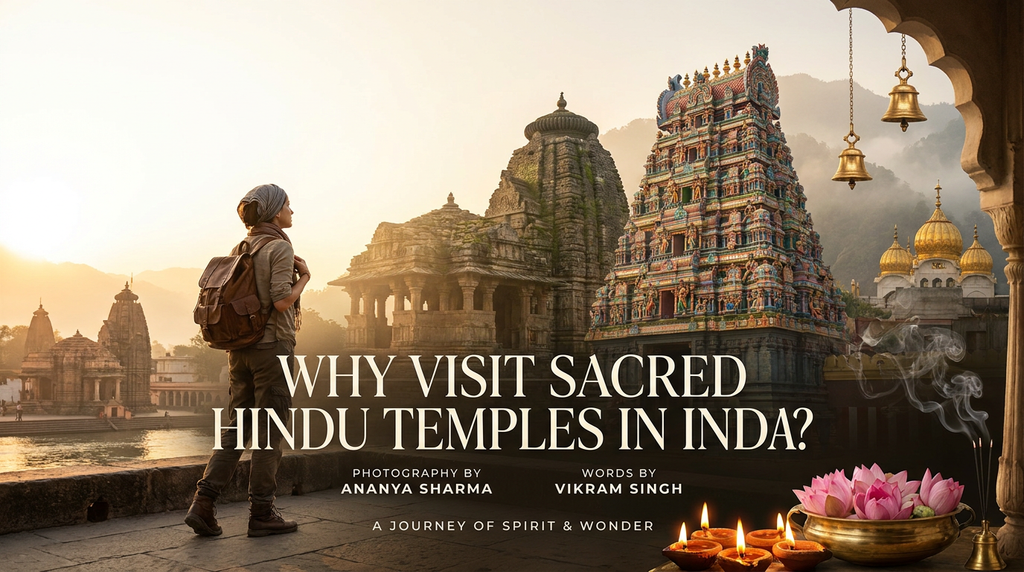
For many travelers, an India temple journey is about much more than sightseeing. Temples are living cultural spaces where religion, architecture, music, food, festivals, history, and community traditions come together.
For American visitors, visiting a Hindu temple can also provide a deeper understanding of Indian culture. Some temples are more than a thousand years old, while others are important pilgrimage centers connected with major Hindu traditions and sacred stories.
You do not need to be Hindu to appreciate the architecture and cultural heritage. However, visitors should enter with respect and understand that these are active places of worship rather than simply tourist attractions.
20 Sacred Hindu Temples in India You Should Visit Once
The following list combines major pilgrimage destinations with temples known for extraordinary architecture, history, religious importance, or cultural value.
Kashi Vishwanath Temple Varanasi, Uttar Pradesh
Kashi Vishwanath is one of India’s most revered Shiva temples and stands in the sacred city of Varanasi on the banks of the Ganges.
The temple is dedicated to Lord Shiva as Vishwanath, meaning “Lord of the Universe.” Varanasi itself is considered one of Hinduism’s most sacred cities.
Many pilgrims combine a temple visit with the Ganga ghats, especially Dashashwamedh Ghat, where visitors can experience the famous evening Ganga Aarti.
Best for: Spiritual travelers, first-time visitors to Varanasi, Shiva devotees.
USA traveler tip: Varanasi can feel intense and crowded. Plan extra time and keep your belongings secure.
Kedarnath Temple Uttarakhand
Kedarnath is among the most important Shiva pilgrimage sites in India and is one of the Char Dham destinations of Uttarakhand.
Located high in the Himalayas, the temple is surrounded by dramatic mountain scenery. Reaching Kedarnath traditionally requires a demanding trek, although helicopter services may be available depending on weather and government regulations.
Because of its altitude and seasonal access, this is not an ordinary sightseeing stop.
Best for: Adventure travelers, pilgrims, mountain lovers.
Badrinath Temple Uttarakhand
Dedicated to Lord Vishnu, Badrinath is another major pilgrimage destination in the Himalayan region.
The temple sits beside the Alaknanda River and forms part of the traditional Char Dham pilgrimage. Its mountain setting makes the journey especially memorable.
Visitors should remember that access is seasonal and road conditions can vary.
Best for: Vishnu devotees, Himalayan pilgrimage travelers, spiritual journeys.
Tirumala Venkateswara Temple Andhra Pradesh
Located in Tirumala near Tirupati, this temple is dedicated to Lord Venkateswara, a form of Vishnu.
It is among the world’s most visited and well-known Hindu pilgrimage centers. The temple complex receives huge numbers of devotees, making advance planning especially important.
The Tirumala Tirupati Devasthanams (TTD) manages temple services, accommodation, and visitor systems.
Best for: Pilgrims, cultural travelers, religious tourism.
USA traveler tip: Check official TTD booking information before traveling. Do not rely on unofficial agents for tickets or special-entry arrangements.
Somnath Temple Gujarat
Somnath is one of the most famous Shiva temples in western India and is traditionally associated with the Jyotirlinga tradition.
The temple overlooks the Arabian Sea, creating a striking combination of spiritual heritage and coastal scenery.
Visitors can combine Somnath with other Gujarat destinations such as Dwarka and Ahmedabad.
Best for: Shiva devotees, history lovers, coastal travelers.
Dwarkadhish Temple Gujarat
Dwarkadhish Temple in Dwarka is associated with Lord Krishna and is an important pilgrimage destination in Gujarat.
Dwarka is traditionally regarded as one of the sacred Char Dham locations. The town’s connection with Krishna gives it special importance in Vaishnava traditions.
Best for: Krishna devotees, religious history enthusiasts, Gujarat road trips.
Jagannath Temple Puri, Odisha
Jagannath Temple is one of India’s most important Vaishnava pilgrimage centers.
The temple is dedicated to Lord Jagannath, along with Balabhadra and Subhadra. Puri is also famous for the annual Rath Yatra, when the deities are traditionally taken in enormous chariots.
Important visitor note: Entry rules are specific, and non-Hindu visitors have historically not been permitted inside the main temple. Travelers should check current official rules before visiting.
You can still experience Puri’s broader spiritual and cultural atmosphere from permitted areas.
Meenakshi Amman Temple Madurai, Tamil Nadu
Meenakshi Amman Temple is one of India’s most spectacular examples of South Indian temple architecture.
Its enormous gopurams, covered with colorful sculptural figures, create one of the most recognizable temple landscapes in India.
The temple is dedicated to Goddess Meenakshi and Lord Sundareswarar.
Best for: Architecture lovers, photographers, culture travelers, history enthusiasts.
If you enjoy historic architecture, spend enough time exploring Madurai beyond the temple itself.
Ramanathaswamy Temple Rameswaram, Tamil Nadu
Ramanathaswamy Temple is dedicated to Lord Shiva and is one of the traditional Char Dham pilgrimage destinations.
It is particularly famous for its long corridors and numerous ornate pillars.
Rameswaram is also an excellent destination for travelers interested in India’s southern coastline and religious geography.
Best for: Pilgrims, architecture lovers, spiritual travelers.
Brihadeeswarar Temple Thanjavur, Tamil Nadu
Brihadeeswarar Temple is a masterpiece of Chola architecture and a UNESCO World Heritage Site as part of the Great Living Chola Temples.
The enormous stone temple was built under the Chola dynasty and demonstrates the engineering and artistic skills of medieval South India.
Unlike some pilgrimage-focused destinations, this temple is especially rewarding for architecture and history lovers.
Best for: UNESCO heritage travelers, history buffs, photographers, architecture enthusiasts.
Mahakaleshwar Jyotirlinga Ujjain, Madhya Pradesh
Mahakaleshwar Temple is one of the traditionally recognized 12 Jyotirlinga shrines dedicated to Shiva.
Ujjain itself is an ancient sacred city and an important pilgrimage center.
One of the temple’s most famous rituals is Bhasma Aarti. Because access arrangements can be specific and change over time, visitors should use official temple information.
Best for: Shiva devotees and travelers interested in traditional Hindu rituals.
Sree Padmanabhaswamy Temple Thiruvananthapuram, Kerala
Sree Padmanabhaswamy Temple is dedicated to Lord Vishnu, depicted in a reclining form.
The temple is renowned for its religious importance, distinctive Kerala-Dravidian architectural character, and association with the historic royal family of Travancore.
Temple entry rules are particularly important here, so visitors should verify current requirements before arriving.
Best for: Architecture lovers, cultural travelers, Vishnu devotees.
Kamakhya Temple Guwahati, Assam
Kamakhya Temple is one of India’s major Shakti pilgrimage sites.
Located on Nilachal Hill in Guwahati, it is associated with Goddess Kamakhya and the broader Shakta tradition.
The temple is especially significant during Ambubachi Mela, an annual festival that attracts large numbers of devotees.
Best for: Spiritual travelers, Shakti tradition enthusiasts, Northeast India explorers.
Virupaksha Temple Hampi, Karnataka
Virupaksha Temple is one of the most important surviving monuments of Hampi and remains an active place of worship.
Dedicated to Lord Shiva as Virupaksha, the temple forms part of the spectacular landscape of the former Vijayanagara capital.
Travelers can combine the temple with Hampi’s UNESCO-listed archaeological landscape.
Best for: History lovers, photographers, architecture enthusiasts.
Lingaraj Temple Bhubaneswar, Odisha
Lingaraj Temple is one of Odisha’s most significant historic Hindu temples.
The temple is dedicated to Harihara, a form combining aspects of Shiva and Vishnu. It is a major example of Kalinga temple architecture.
Non-Hindu entry restrictions may apply, so visitors should check current policies and use permitted viewing areas where necessary.
Best for: Architecture enthusiasts and cultural travelers.
Vaishno Devi Shrine Jammu & Kashmir
The Vaishno Devi shrine is one of India’s most popular pilgrimage destinations.
The shrine is located in the Trikuta Mountains and is traditionally associated with Mata Vaishno Devi.
Reaching the shrine involves a significant uphill journey, although options such as battery cars, ponies, and helicopter services may be available under applicable rules and conditions.
Best for: Pilgrims, mountain travelers, families seeking a major pilgrimage experience.
Tip: Wear comfortable shoes and allow enough time for the journey.
Akshardham Temple Delhi
Delhi’s Akshardham is a modern Hindu cultural complex known for its elaborate architecture, gardens, exhibitions, and cultural presentation.
It provides a very different experience from ancient pilgrimage temples.
Best for: Families, first-time India visitors, architecture lovers.
Practical note: Security procedures can be strict, and photography restrictions may apply in certain areas.
Modhera Sun Temple Gujarat
The Sun Temple at Modhera is an extraordinary historic temple dedicated to Surya, the Sun God.
Its architecture, geometric design, detailed carvings, and famous stepped tank make it one of Gujarat’s most impressive heritage sites.
Although it is no longer a functioning place of worship in the same way as active pilgrimage temples, it remains an important part of India’s Hindu architectural heritage.
Best for: History travelers, photographers, architecture lovers.
Konark Sun Temple Odisha
The Konark Sun Temple is one of India’s most celebrated monuments and a UNESCO World Heritage Site.
Built in the 13th century, the temple was designed as a monumental chariot associated with Surya, featuring elaborate stone carvings and enormous wheels.
For USA visitors interested in ancient engineering and art, Konark is one of the most rewarding stops in eastern India.
Best for: UNESCO travelers, photographers, architecture and history enthusiasts.
Dakshineswar Kali Temple Kolkata, West Bengal
Located beside the Hooghly River, Dakshineswar Kali Temple is dedicated to Goddess Kali.
The temple is strongly associated with the 19th-century mystic Sri Ramakrishna, making it an important spiritual and historical destination.
Its riverside setting makes it especially beautiful around sunrise and sunset.
Best for: Spiritual travelers, Kolkata visitors, history lovers.
Sacred Hindu Temples in India: Quick Comparison
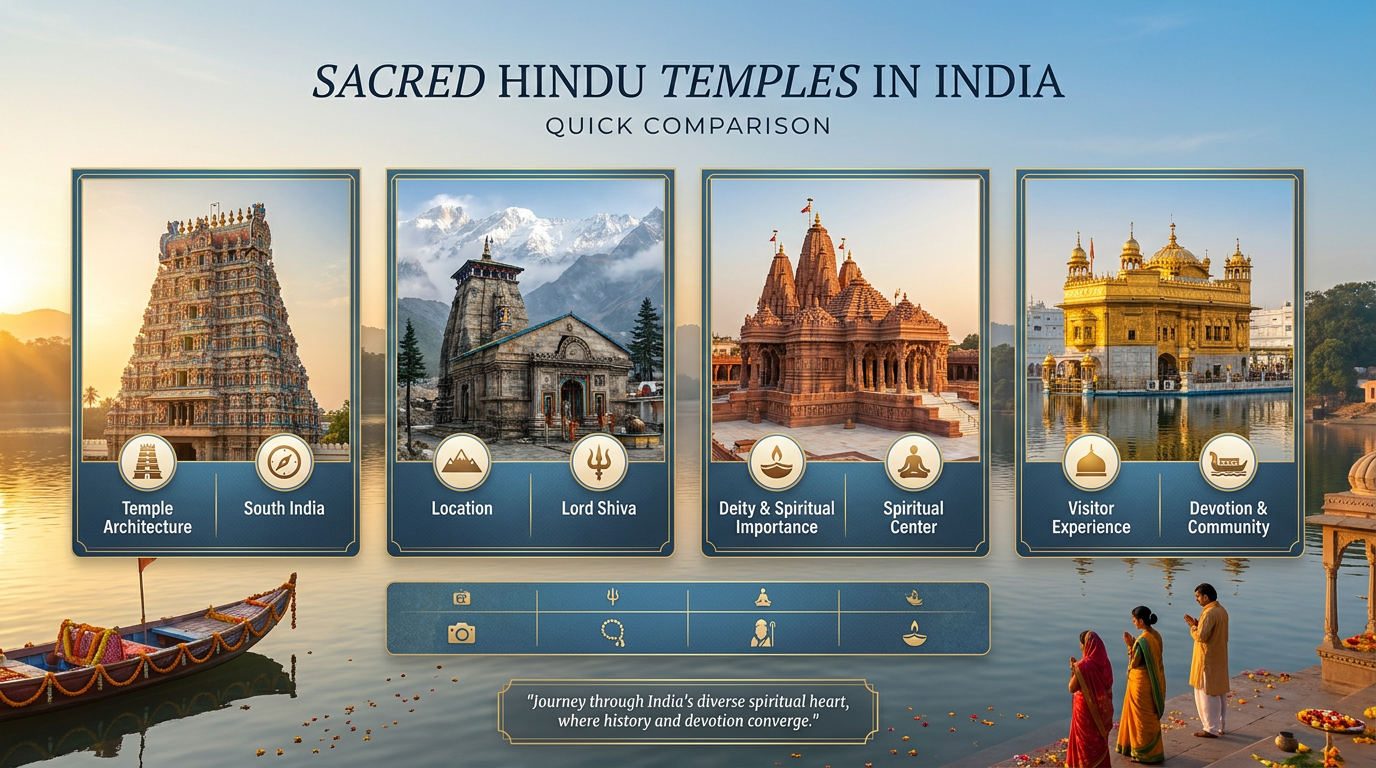
| Temple | Location | Main Deity/Tradition | Best For |
| Kashi Vishwanath | Varanasi | Shiva | Spiritual experience |
| Kedarnath | Uttarakhand | Shiva | Himalayan pilgrimage |
| Badrinath | Uttarakhand | Vishnu | Char Dham pilgrimage |
| Tirumala Venkateswara | Andhra Pradesh | Vishnu | Major pilgrimage |
| Somnath | Gujarat | Shiva | Coastal pilgrimage |
| Dwarkadhish | Gujarat | Krishna | Krishna pilgrimage |
| Jagannath | Puri | Jagannath | Festivals & culture |
| Meenakshi Amman | Madurai | Meenakshi & Shiva | Architecture |
| Ramanathaswamy | Rameswaram | Shiva | Temple architecture |
| Brihadeeswarar | Thanjavur | Shiva | Chola heritage |
| Mahakaleshwar | Ujjain | Shiva | Jyotirlinga pilgrimage |
| Padmanabhaswamy | Kerala | Vishnu | Heritage & architecture |
| Kamakhya | Assam | Shakti | Shakta tradition |
| Virupaksha | Hampi | Shiva | History |
| Lingaraj | Bhubaneswar | Harihara | Kalinga architecture |
| Vaishno Devi | Jammu & Kashmir | Devi | Mountain pilgrimage |
| Akshardham | Delhi | Hindu traditions | Architecture & culture |
| Modhera Sun Temple | Gujarat | Surya | Heritage |
| Konark Sun Temple | Odisha | Surya | UNESCO heritage |
| Dakshineswar Kali | Kolkata | Kali | Spiritual history |
Best Temple Regions to Add to Your India Trip
Instead of trying to visit all 20 temples in one vacation, organize your trip by region.
Northern India
Consider:
- Kashi Vishwanath
- Kedarnath
- Badrinath
- Vaishno Devi
- Akshardham
Western India
Consider:
- Somnath
- Dwarkadhish
- Modhera Sun Temple
Southern India
Consider:
- Tirumala Venkateswara
- Meenakshi Amman
- Ramanathaswamy
- Brihadeeswarar
- Padmanabhaswamy
Eastern India
Consider:
- Jagannath Temple
- Konark Sun Temple
- Lingaraj Temple
- Kamakhya
- Dakshineswar Kali Temple
Central India
Consider:
- Mahakaleshwar
- Virupaksha if combining with a Karnataka itinerary
How to Plan a Hindu Temple Tour from the USA
Traveling from the United States to India requires more planning than simply booking a flight.
First, determine whether your trip is primarily a pilgrimage, cultural vacation, architecture tour, or combination itinerary.
For a first India visit, avoid packing too many cities into one trip. India’s size, traffic, domestic flights, and railway travel can make apparently short distances surprisingly time-consuming.
Recommended planning steps
- Choose one or two regions.
- Check India’s current visa requirements.
- Confirm international and domestic flights.
- Check temple opening times and entry policies.
- Reserve accommodation near major pilgrimage centers.
- Research festival-season crowds.
- Purchase travel insurance.
- Keep digital and printed copies of important documents.
- Carry appropriate clothing for religious sites.
- Build rest days into your itinerary.
Hindu Temple Etiquette for American Visitors
Respectful behavior is one of the most important parts of visiting an Indian temple.
Follow these basic guidelines:
- Dress modestly.
- Remove shoes where required.
- Follow photography rules.
- Ask before photographing people.
- Do not touch sacred objects unless permitted.
- Follow queues and instructions.
- Avoid loud conversations.
- Keep phones silent.
- Respect worshippers.
- Follow food and donation rules.
- Check whether non-Hindu visitors are permitted inside.
Temple customs vary considerably across India, so never assume that one temple’s rules apply everywhere.
Pros and Cons of Visiting India’s Sacred Temples
| Pros | Cons |
| Deep cultural experience | Large crowds at famous temples |
| Incredible architecture | Some journeys are physically demanding |
| Historic and spiritual significance | Entry rules can vary |
| Opportunity to experience festivals | Long queues are possible |
| Excellent photography opportunities | Weather can affect travel |
| Diverse regional traditions | Some temples restrict photography |
| Great addition to India itineraries | Certain temples restrict non-Hindu entry |
Common Mistakes First-Time Temple Travelers Make
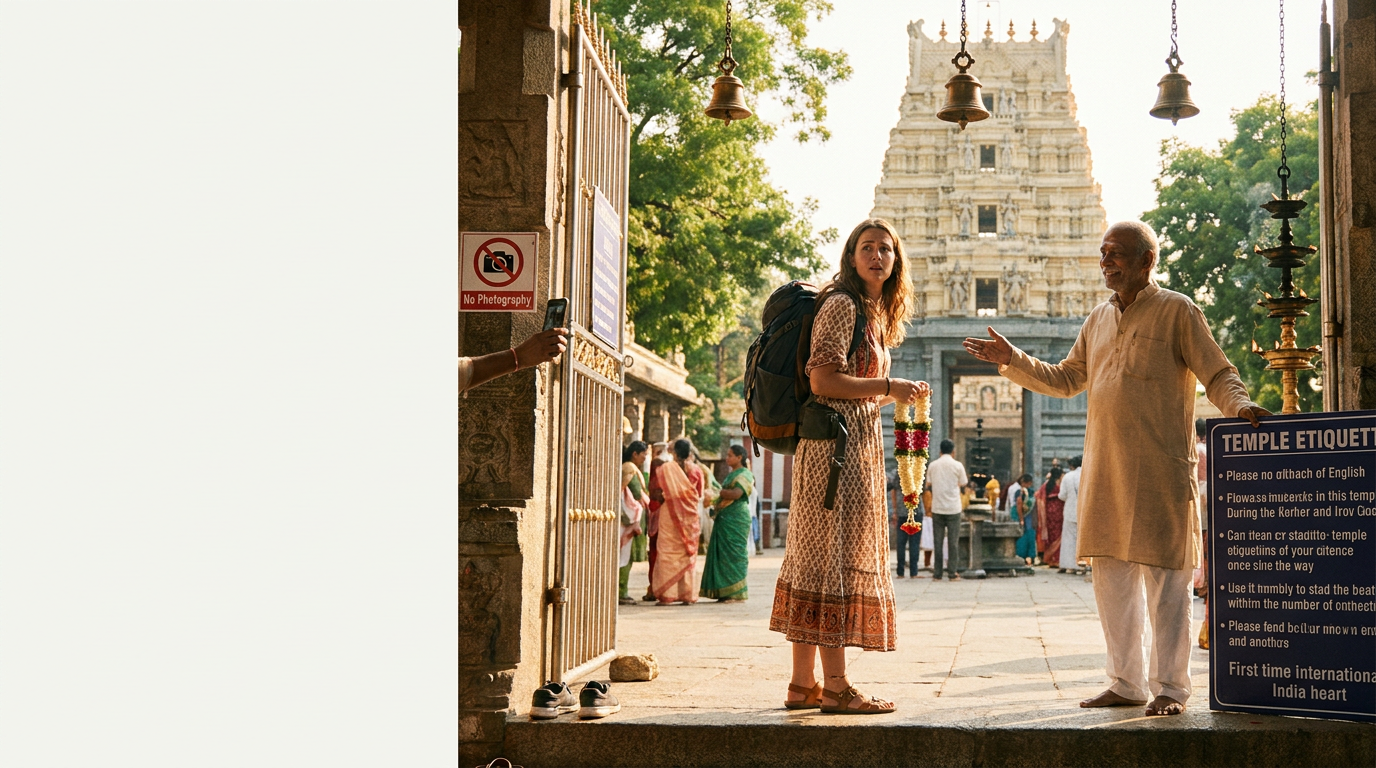
Treating every temple like a tourist attraction
Many temples are active religious institutions. Visitors should behave accordingly.
Ignoring dress codes
Shorts, sleeveless clothing, or unsuitable outfits may not be accepted at some temples.
Arriving without checking entry rules
Some temples have restrictions based on religion, clothing, photography, or special ceremonies.
Underestimating travel time
A map may show a short distance, but Indian traffic and mountain roads can dramatically increase travel time.
Traveling during major festivals without preparation
Festivals can be unforgettable, but crowds, accommodation demand, and transport pressure can be much higher.
Using unofficial ticket sellers
For major pilgrimage centers, always verify booking information through official temple or government sources.
Assuming rituals are performances
Religious ceremonies are meaningful to worshippers. Observe quietly and respectfully.
Carrying prohibited items
Security rules can be strict. Check the temple’s official visitor information before arrival.
Expert Tips for Visiting Hindu Temples in India
Start early.
Early morning often offers cooler weather and a calmer atmosphere.
Check official sources.
Temple schedules, entry rules, booking systems, and festival arrangements can change.
Carry small essentials.
A scarf, water bottle, comfortable footwear, and a small bag can be useful.
Separate sightseeing from pilgrimage.
Allow enough time to experience a temple rather than rushing in for a photograph.
Respect local customs.
When uncertain, observe what locals do or politely ask temple staff.
Plan around weather.
Himalayan temples can have very different accessibility conditions from temples in South India.
Consider a knowledgeable local guide.
A reputable guide can explain architectural details, local history, and customs that are easy for first-time visitors to miss.
Keep flexibility in your itinerary.
India travel can involve delays, especially during festivals or peak pilgrimage seasons.
Sacred Temple Trip Checklist for USA Travelers
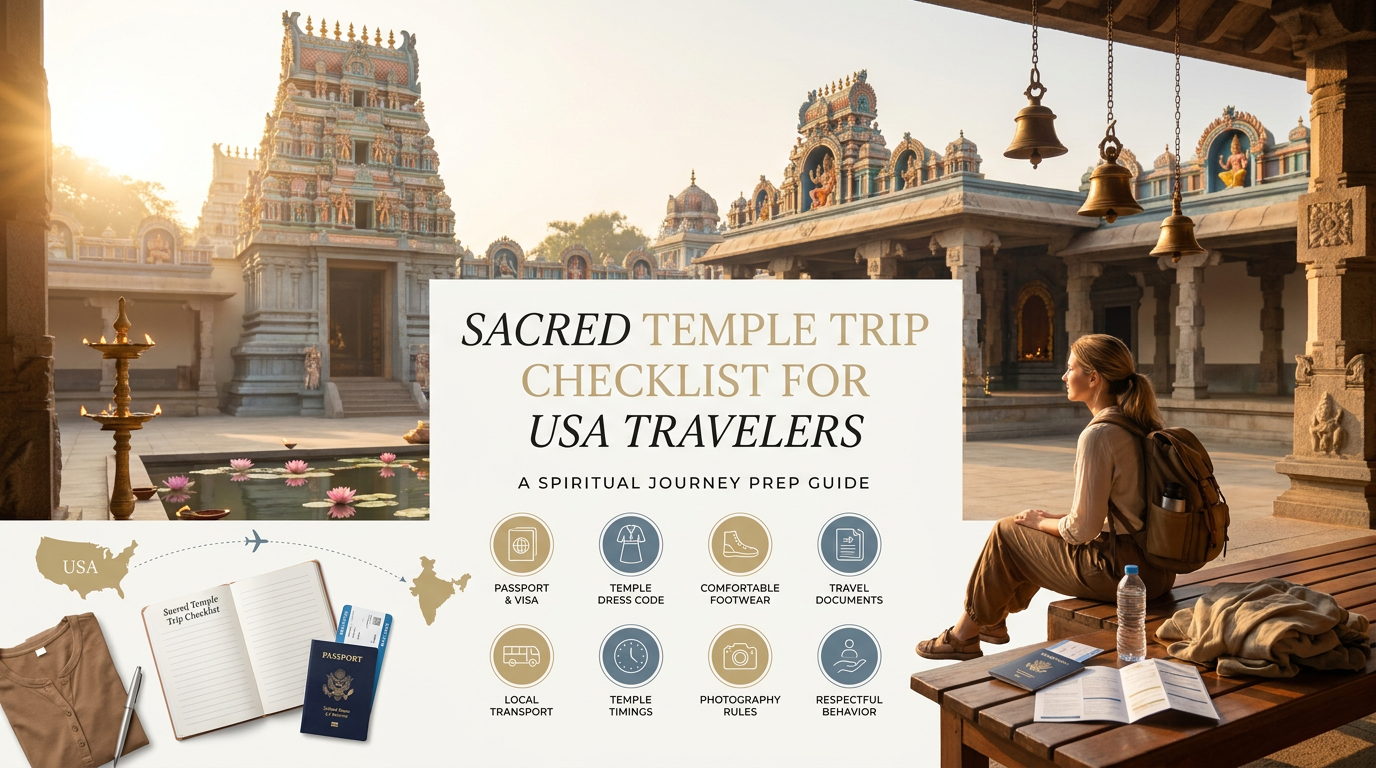
Use this checklist before leaving for India:
- Passport checked
- Indian visa/eVisa requirements verified
- Flights confirmed
- Travel insurance arranged
- Hotels booked
- Domestic transportation planned
- Temple entry rules checked
- Festival dates checked
- Appropriate clothing packed
- Comfortable walking shoes packed
- Prescription medicines packed
- Digital document backups created
- Emergency contacts saved
- Local transportation researched
- Official temple booking information verified
- Cash/card payment options checked
Best Time to Visit India’s Hindu Temples
There is no single best month for all 20 temples because India has several climate zones.
October to March
This is generally a comfortable period for many destinations, especially northern and central India.
Summer
Southern and central areas can become very hot. Mountain destinations may offer a different climate, but high-altitude travel still requires preparation.
Monsoon
Rain can dramatically affect transportation in parts of India. However, landscapes may become lush and beautiful.
Festival Season
Major festivals can provide the most memorable cultural experiences but also bring huge crowds.
For a first-time USA visitor, the ideal timing depends on the specific temples and region rather than simply choosing one national travel season.
FAQs
What are the most sacred Hindu temples in India?
Major sacred temples include Kashi Vishwanath, Kedarnath, Badrinath, Tirumala Venkateswara, Somnath, Dwarkadhish, Jagannath Puri, Meenakshi Amman, Ramanathaswamy, Mahakaleshwar, and Kamakhya.
Which Hindu temple should I visit first in India?
For a first-time visitor, Kashi Vishwanath in Varanasi offers a powerful combination of temple tradition, the Ganges, historic ghats, and Indian culture. Travelers interested mainly in architecture may prefer Meenakshi Amman or Brihadeeswarar.
Can non-Hindus visit Hindu temples in India?
It depends on the temple. Many temples welcome visitors regardless of religion, while some have restrictions on entry to the inner temple areas or the entire complex. Always check the current rules before visiting.
What should I wear to an Indian temple?
Modest clothing is the safest choice. Cover your shoulders and knees, and carry a lightweight scarf or shawl when appropriate. Specific requirements vary by temple.
Can I take photographs inside Hindu temples?
Photography rules vary. Some temples allow photography in certain areas, while others prohibit cameras and phones completely. Always follow posted signs and staff instructions.
Which Indian temple is best for architecture?
Meenakshi Amman, Brihadeeswarar, Virupaksha, Konark, Modhera, and the major Odisha temples are excellent choices for travelers interested in architecture.
What is the best Hindu pilgrimage route in India?
Popular pilgrimage routes include the Char Dham, Jyotirlinga pilgrimage, South Indian temple circuits, Gujarat’s Dwarka-Somnath route, and North Indian pilgrimage circuits.
How long should I spend visiting temples in India?
A two- to three-week trip can cover several temples in one or two regions. Trying to visit all 20 during one short vacation is usually impractical.
Are Hindu temples free to visit?
Many temples do not charge a basic entrance fee, but special ceremonies, queues, guided experiences, donations, or accommodation may involve charges. Rules vary by temple.
Should American travelers hire a guide?
A reputable local guide can be valuable, especially at historic temple complexes. Choose licensed or well-reviewed guides and verify information independently when necessary.
Final Thoughts:
India’s temples tell stories that stretch across centuries. Some are powerful pilgrimage centers, some are architectural masterpieces, and others are living cultural institutions where ancient traditions continue today.
The 20 Sacred Hindu Temples in India You Should Visit Once are not simply a checklist of famous buildings. They represent different regions, traditions, architectural styles, landscapes, festivals, and spiritual practices across India.
For a traveler coming from the USA, the best approach is to slow down and choose a route that matches your interests. You might explore Varanasi and the Himalayas, follow a Gujarat pilgrimage route, discover the magnificent temples of Tamil Nadu, or combine Odisha’s sacred architecture with its coastal heritage.
Most importantly, travel respectfully. Learn a little about the tradition before arriving, follow temple rules, and leave enough time to experience the surrounding community.
Read More:Best Brunch Places in London Bridge: 11 Amazing Spots You Need to Know About
