

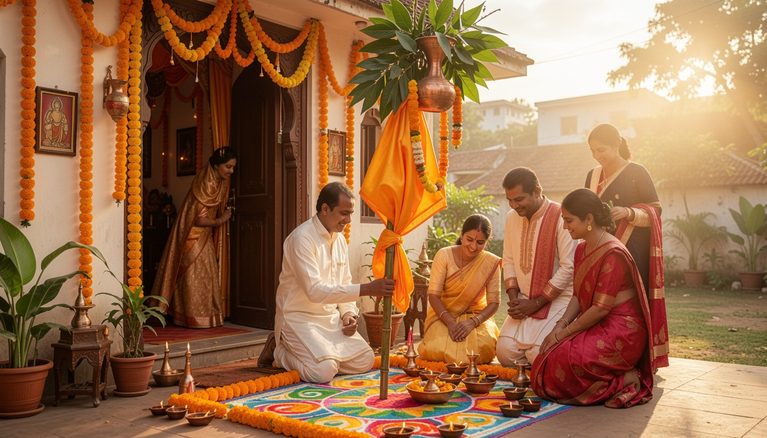
Gudi Padwa 2026, also known as Chaitra Shukla Pratipada, marks the beginning of the traditional New Year for many Maharashtrian and Hindu communities. Celebrated on the first day of the bright fortnight of the Chaitra month, this auspicious festival symbolizes new beginnings, prosperity, hope, and the victory of good over adversity. In 2026, families in India and across the USA will come together to welcome the New Year with prayers, colorful decorations, traditional foods, and the ceremonial raising of the Gudi.
For Hindu families living in the United States, Gudi Padwa is also an opportunity to preserve cultural traditions while adapting celebrations to local communities and schedules. From performing a simple puja at home to joining cultural programs at Hindu temples, there are many meaningful ways to celebrate Gudi Padwa 2026.
This guide explains the Gudi Padwa 2026 date, religious significance, traditional rituals, Gudi decoration, festive foods, and practical ways to celebrate in the USA, helping families understand and enjoy this important Hindu festival with devotion and cultural pride.
Quick Answer:
Gudi Padwa 2026 marks Chaitra Shukla Pratipada, the first day of the bright half of the Hindu lunar month of Chaitra. It is especially celebrated as the Marathi and Konkani New Year and is observed with prayers, a decorated Gudi flag, rangoli, traditional food, family gatherings, and cultural events.
In 2026, Gudi Padwa is expected to fall on Thursday, March 19, 2026, according to the Hindu lunisolar calendar. Exact sunrise-based tithi timings can vary by location, so people in the United States should check a local Hindu calendar or temple schedule for the precise observance time.
For Marathi and other Hindu families living in the USA, Gudi Padwa is a meaningful opportunity to welcome the new year while preserving language, food, family traditions, and cultural identity.
What Is Gudi Padwa?
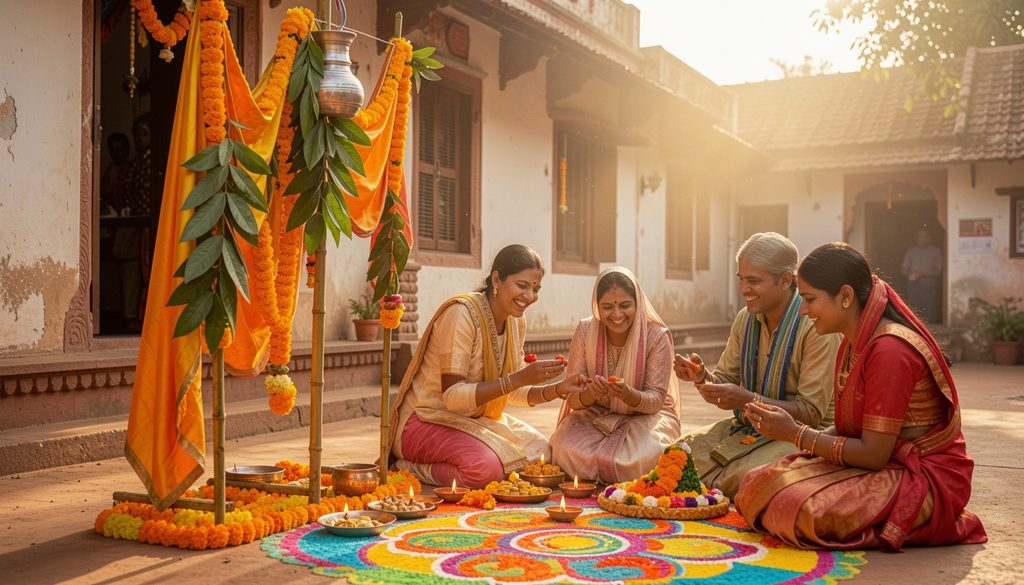
Gudi Padwa is an important Hindu festival associated with the beginning of a new year in Maharashtra and parts of the Konkan region. The word “Gudi” refers to the decorated ceremonial flag or standard displayed outside homes, while “Padwa” comes from Pratipada, meaning the first lunar day.
The festival begins on Chaitra Shukla Pratipada, the first day of the waxing phase of the moon in the month of Chaitra. Because the Hindu calendar follows lunar and solar movements, the Gregorian date changes every year.
Gudi Padwa has several layers of cultural and religious meaning. It represents renewal, prosperity, victory, hope, and a fresh beginning. Traditional beliefs also connect the day with the beginning of creation by Lord Brahma.
For many Maharashtrian families, however, Gudi Padwa is more than a religious observance. It is a cultural celebration that brings relatives together and marks the beginning of a new chapter.
Why Is the Gudi Important?
The Gudi is usually made by placing a bright cloth over a bamboo stick and decorating it with a metal or copper vessel, neem leaves, mango leaves, flowers, and other auspicious items.
It is raised prominently near the entrance of the home.
Traditionally, the Gudi can symbolize:
- Victory and good fortune
- Protection from negativity
- Prosperity and success
- A fresh beginning
- The arrival of spring
- Family and community traditions
Gudi Padwa 2026 Date and Chaitra Shukla Pratipada
The most important calendar question is: When is Gudi Padwa in 2026?
Gudi Padwa 2026 Date
Gudi Padwa 2026 is observed on Thursday, March 19, 2026, corresponding to Chaitra Shukla Pratipada.
The festival date is determined by the Hindu lunisolar calendar rather than the fixed Gregorian calendar. The exact beginning and ending of the Pratipada tithi depend on astronomical calculations and local sunrise.
This is especially important for Hindu families in the United States because sunrise and sunset times differ from India.
What Does Chaitra Shukla Pratipada Mean?
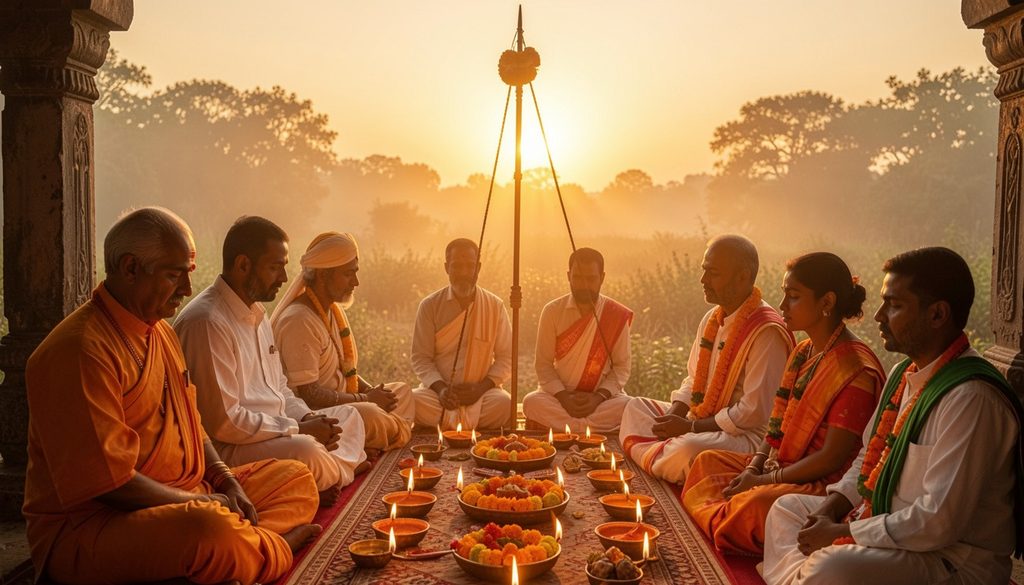
The term can be understood in three parts:
| Term | Meaning |
| Chaitra | A Hindu lunar month |
| Shukla | The bright or waxing half of the lunar month |
| Pratipada | The first lunar day |
Therefore, Chaitra Shukla Pratipada means the first lunar day of the bright half of Chaitra.
Why Does the Date Change Every Year?
Unlike the Gregorian calendar, Hindu festival dates are based on lunar and solar calculations. As a result, Gudi Padwa may fall on a different date each year, usually in March or April.
Important USA Tip: If you need the exact puja muhurat for your city, use a reputable regional Hindu calendar or ask your local temple. Do not automatically use an India-based timing for a U.S. ceremony.
Gudi Padwa Significance and Spiritual Meaning
Gudi Padwa carries deep spiritual and cultural meaning. At its heart, the festival encourages people to leave behind the difficulties of the previous year and begin the new year with positive thoughts and actions.
Symbol of a New Beginning
Chaitra is traditionally connected with spring and renewal. Gudi Padwa therefore represents a clean start.
Families may clean their homes, decorate entrances, wear new clothes, and begin the year with prayers.
Symbol of Victory
The raised Gudi is commonly viewed as a symbol of victory and auspiciousness. It creates a visual reminder that positive energy should guide the household into the new year.
Connection With Creation
Traditional Hindu beliefs associate Chaitra Shukla Pratipada with the beginning of creation by Lord Brahma.
This gives the festival a cosmic dimension: the first day of the new year becomes a time to reflect on creation, life, duty, and renewal.
Respect for Nature
Many Gudi Padwa customs incorporate natural ingredients such as:
- Neem leaves
- Mango leaves
- Flowers
- Coconut
- Seasonal fruits
These ingredients connect the celebration with the changing season.
Family and Community
Gudi Padwa strengthens family relationships. Sharing meals, visiting relatives, attending temple programs, and teaching children traditional customs all help preserve cultural heritage.
Gudi Padwa Rituals and Traditions
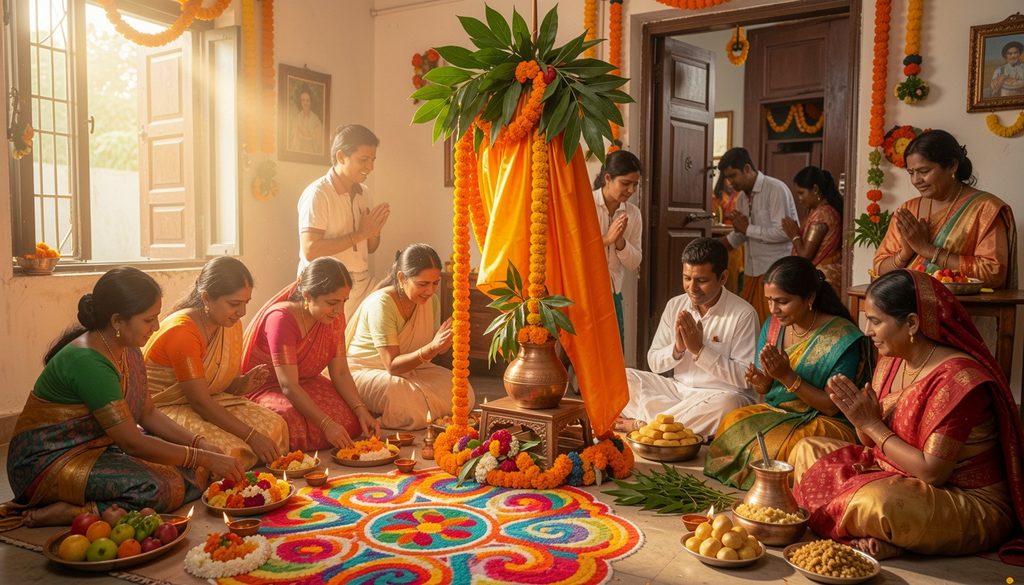
Gudi Padwa rituals can vary between families and regions, but several customs are widely recognized.
Early Morning Preparation
Many families begin the festival by waking early and preparing for the day. Traditionally, people may take an oil bath before putting on festive clothing.
The home is cleaned and decorated before the main celebration begins.
Rangoli at the Entrance
A colorful rangoli is created near the entrance of the home.
Traditional rangoli designs may feature:
- Flowers
- Geometric patterns
- Diyas
- Peacock-inspired designs
- Traditional Maharashtrian motifs
In the USA, families can easily adapt this tradition to apartments or smaller homes by using removable rangoli designs or flower petals.
Raising the Gudi
The Gudi is prepared and displayed outside or near the entrance.
A typical Gudi may include:
- A bamboo stick
- Bright silk or decorative cloth
- Neem leaves
- Mango leaves
- Flowers or garlands
- A copper or silver-colored vessel placed upside down at the top
The exact design differs by family.
Puja
Families perform a simple puja dedicated to God and seek blessings for health, peace, prosperity, and success.
Some families also visit a Hindu temple for special New Year prayers.
Sharing Festive Food
Food is an important part of the celebration. Maharashtrian households may prepare traditional dishes and sweets to share with family and guests.
New Clothes
Wearing new or traditional clothing is another popular custom.
Women may wear a Nauvari saree or other traditional Maharashtrian attire, while men may choose a kurta-pajama, dhoti, or traditional regional clothing.
How to Make and Display a Gudi at Home
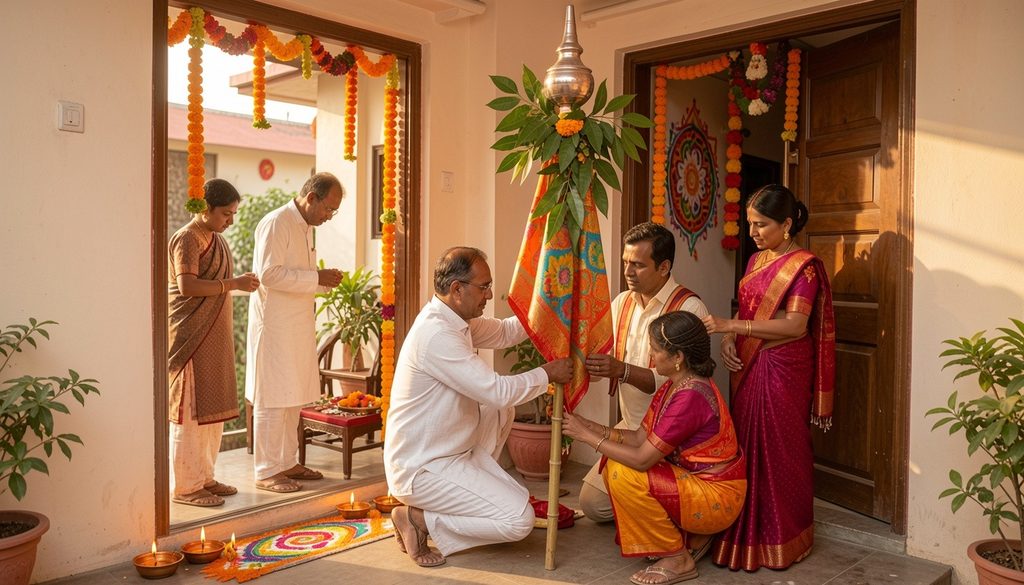
Making a Gudi can be a meaningful family activity, especially when children are involved.
Basic Gudi Materials
You can prepare a simple Gudi using:
- Bamboo or a suitable decorative pole
- Bright silk cloth
- Copper or brass kalash
- Neem leaves
- Mango leaves
- Marigold or seasonal flowers
- Decorative garland
- String or ribbon
Simple Steps
Clean the materials and prepare the decorative cloth.
Attach the cloth securely near the top of the pole.
Add neem and mango leaves.
Decorate the top with flowers or a garland.
Place the metal vessel securely at the top.
Position the Gudi in a clean, visible, and safe location.
Apartment-Friendly USA Option
If you live in an apartment, condominium, or rental property where outdoor displays are restricted, you can create a smaller indoor Gudi near your puja area or entryway.
Always prioritize safety. Secure the pole so it cannot fall, and never place fabric or flowers near an open flame.
Traditional Gudi Padwa Food and Recipes
Food adds warmth and meaning to Gudi Padwa. Traditional menus vary between families, but Maharashtrian cuisine provides many popular choices.
Shrikhand
Shrikhand is a creamy sweet made primarily with strained yogurt and sugar. It is often flavored with cardamom and saffron and may include nuts.
Puran Poli
Puran poli is a famous Maharashtrian sweet flatbread filled with a mixture of cooked lentils, jaggery, and spices.
It is particularly associated with festive meals.
Pooran Poli With Ghee
Many families serve warm puran poli with ghee. It is rich, filling, and ideal for a celebratory meal.
Batata Bhaji
A simple potato preparation can complement the festive meal.
Coconut-Based Dishes
Coconut is commonly used in Maharashtrian cooking and can appear in both savory and sweet preparations.
Neem and Jaggery
One symbolic tradition involves tasting a mixture or preparation containing neem and jaggery. The contrasting bitter and sweet flavors can represent the different experiences of life.
The lesson is simple: a new year brings both pleasant and difficult moments, and we should face both with balance.
Gudi Padwa Celebration in the USA
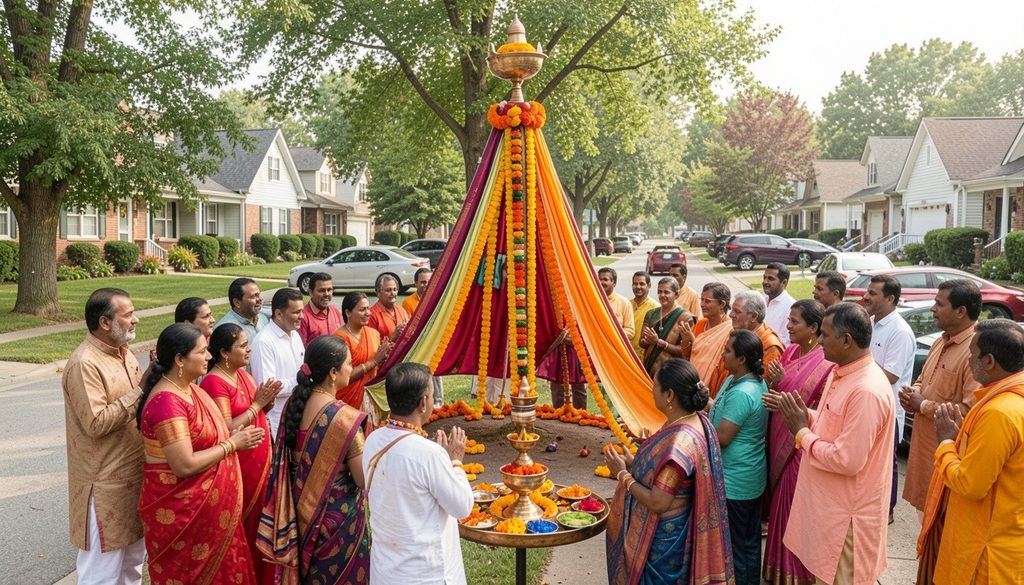
For Indian-American families, celebrating Gudi Padwa in the United States can combine traditional customs with local community life.
Large Hindu temples and cultural organizations in cities with established Indian communities may organize New Year programs, cultural performances, pujas, food events, and family activities.
Where Can You Celebrate?
Look for Gudi Padwa events through:
- Local Hindu temples
- Marathi associations
- Indian cultural organizations
- Community centers
- University Indian student groups
- Regional Indian organizations
- Local social and cultural groups
Popular U.S. Celebration Activities
A Gudi Padwa event in the USA may include:
- Special temple puja
- Gudi decoration
- Marathi music
- Classical or folk performances
- Traditional clothing
- Community lunch
- Children’s cultural programs
- Rangoli competitions
- Marathi language activities
- Cultural workshops
Major U.S. Cities With Indian Cultural Communities
You may find celebrations or related cultural events in metropolitan areas such as:
| U.S. Area | What to Look For |
| New York / New Jersey | Marathi associations and Hindu temples |
| Chicago | Indian cultural organizations and temples |
| Dallas–Fort Worth | Hindu temples and community events |
| Houston | Hindu temples and Indian cultural groups |
| San Francisco Bay Area | Marathi and broader Indian cultural communities |
| Seattle | Indian community organizations |
| Washington, D.C. area | Temples and regional associations |
| Atlanta | Hindu temples and Indian cultural programs |
Event availability changes every year, so confirm the 2026 schedule directly with the organizer before traveling.
Gudi Padwa vs. Ugadi: What Is the Difference?
Gudi Padwa and Ugadi occur around the same time and both mark the beginning of a new year in different regional Hindu traditions.
However, they are not simply two names for exactly the same festival.
| Feature | Gudi Padwa | Ugadi |
| Main regions | Maharashtra, Goa/Konkan communities | Karnataka, Andhra Pradesh, Telangana |
| New Year | Marathi/Konkani traditions | Kannada/Telugu traditions |
| Calendar | Chaitra Shukla Pratipada | Chaitra Shukla Pratipada |
| Major symbol | Gudi flag | Ugadi pachadi and other regional customs |
| Traditional food | Puran poli, shrikhand and regional dishes | Ugadi pachadi and regional dishes |
| Cultural focus | Maharashtrian heritage | Telugu and Kannada heritage |
Both festivals highlight renewal, gratitude, family, and a fresh start.
Traditional vs. Modern Gudi Padwa Celebration
Traditions can remain meaningful even when families adapt them to modern lifestyles.
| Traditional Celebration | Modern Adaptation |
| Large outdoor Gudi | Compact indoor Gudi |
| Handmade rangoli | Reusable or digital rangoli patterns |
| Family cooking | Homemade plus professionally prepared dishes |
| Temple visit | Temple livestream or local community program |
| Visiting relatives in person | Video calls with family overseas |
| Traditional clothing | Traditional clothing mixed with modern fashion |
| Community gathering | Online cultural events and social groups |
Modernization does not have to mean abandoning tradition. The goal is to preserve the meaning while adapting the practice to your home, schedule, and location.
Gudi Padwa Pros and Cons for Families in the USA
Celebrating Gudi Padwa in the USA has many benefits, although families may face practical challenges.
| Pros | Cons |
| Preserves cultural heritage | Work and school schedules may conflict |
| Teaches children family traditions | Traditional ingredients may not be easy to find |
| Builds community connections | Temple events may require travel |
| Encourages family time | Apartment rules may limit outdoor decorations |
| Introduces children to Marathi culture | Family members may live in different states |
| Creates meaningful annual memories | Exact Hindu calendar timings can be confusing |
The benefits usually outweigh the challenges when families focus on the spirit of the festival rather than trying to reproduce every custom exactly as it is practiced in India.
Gudi Padwa Celebration Checklist
Use this simple checklist to prepare for Gudi Padwa 2026.
- Confirm the local Gudi Padwa 2026 date and tithi
- Check your local temple’s festival schedule
- Clean the home
- Prepare or purchase Gudi materials
- Arrange flowers and leaves
- Plan a rangoli design
- Choose traditional or festive clothing
- Plan the puja
- Prepare traditional food or sweets
- Contact family members
- Plan children’s cultural activities
- Check apartment or HOA rules if displaying a Gudi outdoors
- Keep candles and diyas away from curtains and other flammable materials
- Take family photos and preserve the memories
Common Mistakes to Avoid During Gudi Padwa 2026
Even a simple celebration can become more meaningful when you avoid common mistakes.
Using the Wrong Date or Timing
Do not assume that the Indian tithi timing is automatically the correct timing for your U.S. location.
Treating the Gudi as Just Decoration
The Gudi has cultural and spiritual meaning. Take time to explain its significance to children.
Forgetting Cultural Context
If children grow up outside India, they may know the festival mainly through food and decorations. Explain why the family celebrates it.
Ignoring Safety
Secure the Gudi properly. Keep diyas, candles, and incense away from curtains, paper, and other flammable objects.
Making the Celebration Too Complicated
You do not need an elaborate event. A clean home, small Gudi, family prayer, traditional food, and time together can create a meaningful celebration.
Assuming Every Family Celebrates Identically
Regional and family customs vary. Avoid presenting one family’s practice as the only correct version.
Expert Tips for a Meaningful Gudi Padwa in the USA
Start Planning Early
If you need traditional clothing, specialty ingredients, or decorations, shop early. Indian grocery stores and online retailers may carry many necessary items.
Check Your Local Temple
A temple can be an excellent place to learn about local celebrations and connect with other families.
Involve Children
Give children age-appropriate roles such as:
- Making a small rangoli
- Decorating flowers
- Learning Marathi greetings
- Helping arrange the puja area
- Learning about the Gudi
- Preparing a simple sweet
Respect Regional Differences
Gudi Padwa traditions differ between households. Focus on your family’s authentic tradition rather than trying to follow every custom found online.
Make It a Cultural Learning Day
Read a short story about the festival, play Marathi music, cook a traditional recipe, or teach children a few Marathi words.
Connect With Relatives in India
A video call can turn a local U.S. celebration into a global family gathering.
Keep the Spiritual Meaning Central
Decorations and food are enjoyable, but the heart of Gudi Padwa is renewal, gratitude, hope, and family.
Gudi Padwa Travel and Cultural Experience Ideas
If you enjoy cultural travel, Gudi Padwa can become part of a broader Indian heritage experience.
A trip to Maharashtra around the festival season can provide opportunities to experience local food, historic neighborhoods, temples, markets, music, and traditional celebrations.
Cultural Experiences to Consider
- Explore Mumbai’s historic neighborhoods
- Visit Pune’s cultural landmarks
- Experience Maharashtrian cuisine
- Visit important Hindu temples
- Explore traditional markets
- Attend an organized cultural festival
- Learn about Marathi history and literature
- Photograph traditional architecture and spring decorations
For travelers from the USA, check festival dates and local event schedules before booking flights. Large cultural events can affect hotel availability and transportation.
FAQs
When is Gudi Padwa 2026?
Gudi Padwa 2026 is observed on Thursday, March 19, 2026, marking Chaitra Shukla Pratipada. Exact local tithi details should be confirmed with a regional Hindu calendar or temple.
What is Chaitra Shukla Pratipada?
Chaitra Shukla Pratipada is the first lunar day of the bright half of the Hindu month of Chaitra. It marks the beginning of the new year in several Hindu regional traditions.
Is Gudi Padwa the Marathi New Year?
Yes. Gudi Padwa is widely celebrated as the Marathi New Year, particularly in Maharashtra and among Marathi communities worldwide.
What does the Gudi symbolize?
The Gudi is traditionally associated with victory, prosperity, auspiciousness, protection, and a new beginning.
How do you celebrate Gudi Padwa at home?
Clean your home, create a rangoli, prepare a Gudi, perform prayers, wear festive clothes, prepare traditional food, and spend time with family.
Can I celebrate Gudi Padwa in the USA?
Absolutely. Indian-American families can celebrate at home, attend a Hindu temple, join Marathi cultural organizations, or organize a small community gathering.
What food is eaten on Gudi Padwa?
Popular Maharashtrian festive foods include puran poli, shrikhand, batata bhaji, rice dishes, coconut-based preparations, and festive sweets. Family menus vary.
What is the difference between Gudi Padwa and Ugadi?
Both occur around the beginning of the Hindu month of Chaitra and mark regional New Year traditions, but Gudi Padwa is especially associated with Maharashtrian and Konkani communities, while Ugadi is strongly associated with Telugu and Kannada traditions.
Why is neem used during Gudi Padwa?
Neem’s bitter taste can symbolize the difficult experiences of life. When paired with sweet ingredients such as jaggery, it represents accepting both happiness and challenges with balance.
Should I follow Indian puja timings in the USA?
Not necessarily. Hindu festival timings can depend on local sunrise and other location-based calculations. For a precise observance time, use a reliable calendar calculated for your U.S. city or consult a local temple.
Conclusion
Gudi Padwa 2026, celebrated on Chaitra Shukla Pratipada, marks the beginning of a new year and a season of fresh hopes, prosperity, and spiritual renewal. From traditional rituals, colorful rangoli, and the raising of the Gudi to festive foods and family gatherings, the festival beautifully preserves Maharashtra’s rich cultural heritage.
For Hindu families in the USA, Gudi Padwa is also a meaningful way to connect with Indian traditions while creating new memories with the next generation. Whether celebrated at home, in a temple, or through a community event, the spirit of Gudi Padwa remains the same: new beginnings, gratitude, positivity, and prosperity.
As you welcome Gudi Padwa 2026, take the opportunity to celebrate its traditions with your family and share the cultural significance of this special Hindu festival with your community.
Read More:Thaipusam 2026 in Malaysia: Festival Date, How to Celebrate, Best Places & Complete Travel Guide
