

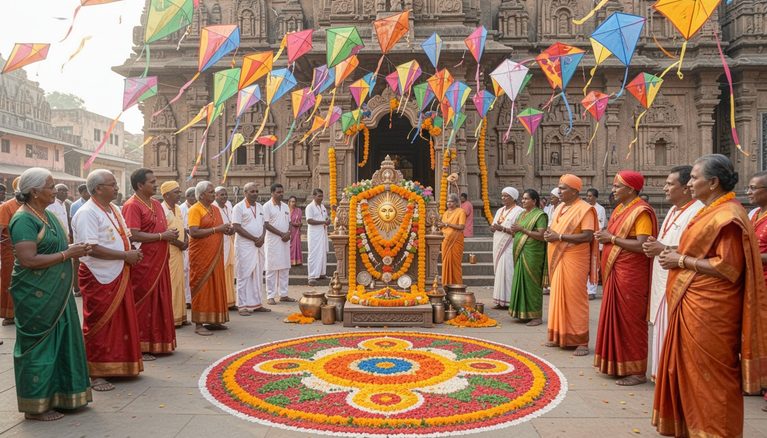
मकर संक्रांति (Makar Sankranti 2026) – सनातन संस्था is a meaningful Hindu festival that combines spirituality, seasonal change, gratitude, community, and traditional food. Unlike many Hindu festivals that follow a lunar calendar, Makar Sankranti is primarily based on the solar calendar. It marks the Sun’s entry into the zodiac sign of Capricorn, or Makara.
For millions of Hindus, the festival represents a positive transition. It is traditionally considered a favorable period for spiritual activities, acts of charity, prayers, and beginning meaningful work. Across India, the same seasonal occasion is celebrated under different names and with different customs, including Uttarayan, Pongal, Magh Bihu, Maghi, and Khichdi, depending on the region.
For Hindu communities living in the USA, Makar Sankranti offers a wonderful opportunity to preserve cultural traditions while creating new family memories. You do not need to recreate a large Indian festival to celebrate meaningfully. A simple home prayer, traditional meal, donation, or family activity can capture the spirit of the day.
Quick Answer:
Makar Sankranti 2026 will be observed on Wednesday, January 14, 2026. It is one of the major Hindu solar festivals and marks the Sun’s transition into Makara (Capricorn). The festival is associated with the beginning of the Sun’s northward journey, known as Uttarayana, and is traditionally connected with harvest, charity, spiritual practice, gratitude, and new beginnings.
For Hindu families in the United States, Makar Sankranti can be celebrated at home or at a temple with Surya Puja, prayers, sesame and jaggery offerings, charity, traditional food, family gatherings, and kite flying where local conditions and regulations allow.
What Is Makar Sankranti?
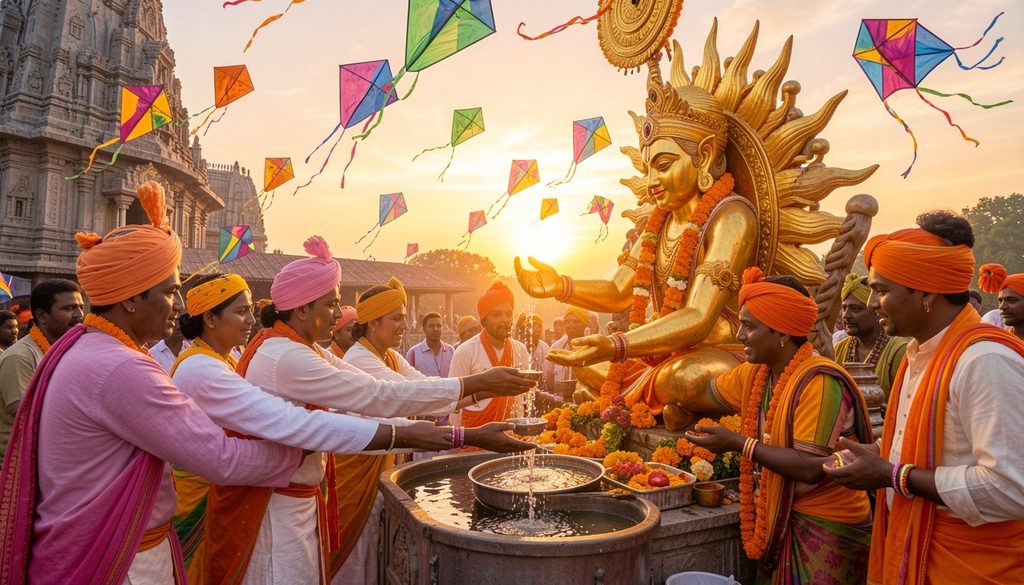
Makar Sankranti is a Hindu solar festival celebrated when the Sun enters Makara Rashi, traditionally identified with Capricorn. The word Sankranti refers to the Sun’s transition from one zodiac sign to another.
The festival is particularly important because it is associated with Uttarayana, the Sun’s apparent northward movement. In traditional Hindu thought, this period is regarded as spiritually significant and auspicious.
Makar Sankranti also has a strong agricultural connection. January falls around the harvest season in several parts of India, so communities traditionally express gratitude for crops, nature, sunlight, cattle, farmers, and the forces that support life.
Why Is Makar Sankranti Different From Many Hindu Festivals?
Many Hindu festivals are determined using the lunar calendar, while Makar Sankranti is connected to the Sun’s movement. This is why its date generally falls around January 14, although astronomical calculations and calendar conventions can sometimes shift the observance.
Makar Sankranti vs. Uttarayan
The terms are closely related but are not always used identically.
- Makar Sankranti: The Sun’s entry into Makara.
- Uttarayana: The Sun’s northward movement, an important seasonal and spiritual concept.
- Uttarayan: In Gujarat, this name is commonly used for the kite-flying festival associated with Makar Sankranti.
Makar Sankranti 2026 Date and Timing
When Is Makar Sankranti 2026?
Makar Sankranti 2026 falls on Wednesday, January 14, 2026.
Because Makar Sankranti is based on solar calculations, the exact Sankranti moment and Puja Muhurat should be calculated for the place where you are celebrating.
This matters particularly in the USA because the United States has multiple time zones.
Makar Sankranti 2026 in the USA
If you live in:
- New York or another Eastern Time location
- Chicago or another Central Time location
- Denver or another Mountain Time location
- Los Angeles or another Pacific Time location
your local time will differ from Indian Standard Time.
For this reason, do not automatically copy an India-based Puja time into your U.S. celebration schedule.
Simple Planning Tip
A practical approach is:
- Confirm January 14, 2026 as the festival date.
- Identify your exact U.S. city.
- Check a trusted Panchang for local Sankranti timing.
- Check your local Hindu temple’s event calendar.
- Plan prayers and family activities around the local schedule.
Makar Sankranti Significance and Spiritual Meaning
Makar Sankranti carries several layers of meaning in Hindu tradition.
Honoring Surya Dev
The Sun is central to Makar Sankranti. Surya Dev, the Sun deity, represents light, energy, vitality, discipline, and life itself.
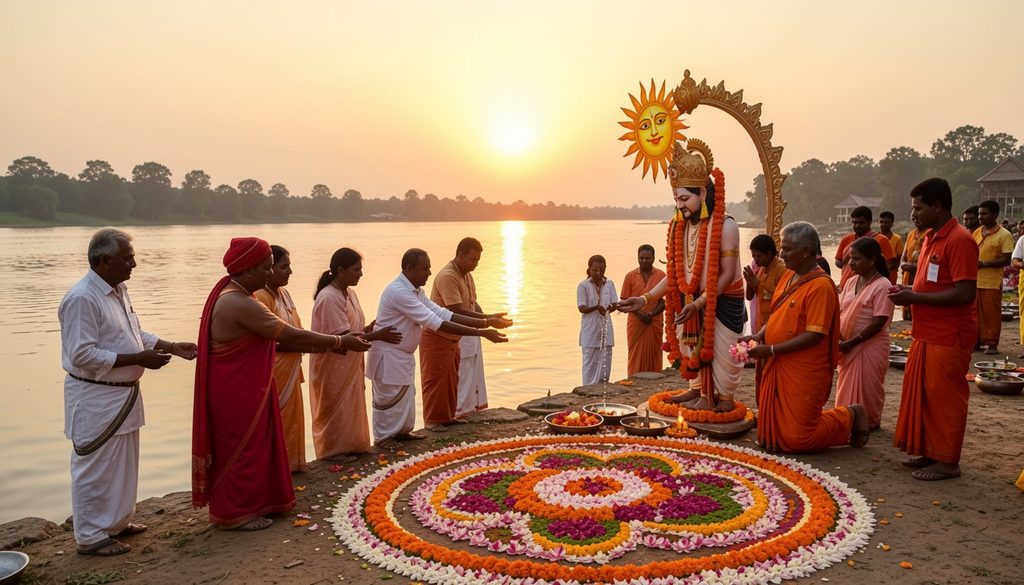
Devotees may offer water to the rising Sun, recite prayers, meditate, or express gratitude.
Symbol of New Beginnings
The festival is often viewed as a transition toward a brighter and more favorable period. This makes it a natural time for setting positive intentions.
Families may use the occasion to:
- Begin a spiritual routine
- Practice gratitude
- Donate to people in need
- Resolve family conflicts
- Start a meaningful project
- Spend time with elders
Importance of Charity
Daan, or charitable giving, is an important part of many Makar Sankranti traditions.
Common charitable items include:
- Food
- Warm clothing
- Sesame
- Jaggery
- Blankets
- Money
- Household essentials
In the USA, families can adapt this tradition by donating to a food bank, shelter, community organization, temple charity, or another reputable nonprofit.
Spiritual Purification
Many Hindu traditions associate the festival period with purification and disciplined living. Taking a bath, praying, fasting according to one’s tradition, and avoiding negative thoughts can become part of the observance.
Makar Sankranti Rituals and Traditions
Makar Sankranti rituals differ between families and regions. There is no single universal procedure followed by every Hindu household.
Surya Puja
One of the most recognizable practices is offering Arghya, or water, to the rising Sun.
A simple home practice can include:
- Wake up and bathe.
- Wear clean clothes.
- Prepare a clean prayer space.
- Fill a copper or suitable vessel with water.
- Face the rising Sun.
- Offer water respectfully.
- Pray according to your family tradition.
- Express gratitude and seek blessings.
If performing any ritual at home, follow the tradition taught by your family, temple, or trusted spiritual teacher.
Sesame and Jaggery
Sesame seeds, called til, and jaggery, called gud, are strongly associated with Makar Sankranti.
Popular foods include:
- Til ladoo
- Til chikki
- Sesame-jaggery sweets
- Peanut chikki
- Til-gud mixtures
The famous sentiment “Tilgul ghya, goad goad bola” from Maharashtra expresses the idea of eating sesame and jaggery and speaking sweetly.
Charity and Giving
Giving is often considered one of the most meaningful ways to observe Makar Sankranti.
Instead of focusing only on elaborate decorations, families can make the day about helping others.
Bathing and Purification
Traditional observances may include an early morning bath, particularly in sacred rivers in India. In the USA, families can simply observe personal cleanliness and prayer at home without attempting to reproduce rituals that require a specific sacred location.
Makar Sankranti Celebrations Across India
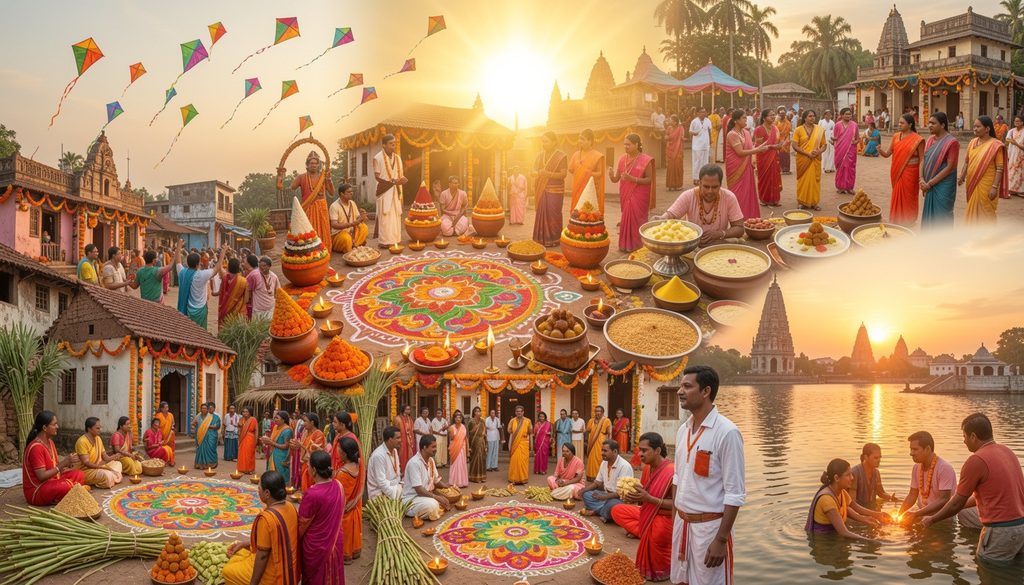
One reason Makar Sankranti is fascinating for travelers is that the festival changes dramatically from one region to another.
| Region | Popular Name | Major Tradition |
| Gujarat | Uttarayan | Kite flying |
| Maharashtra | Makar Sankranti | Tilgul and social visits |
| Punjab | Maghi | Community gatherings and food |
| Tamil Nadu | Pongal | Harvest celebration and Pongal cooking |
| Assam | Magh Bihu | Feasting and harvest traditions |
| Karnataka | Sankranti | Traditional foods and social customs |
| Uttar Pradesh | Khichdi/Sankranti | Charity, bathing and food traditions |
| West Bengal | Poush Sankranti | Sweets, fairs and traditional foods |
| Rajasthan | Makar Sankranti | Kite flying and festive foods |
This regional diversity makes Makar Sankranti more than a single ceremony. It is a broad celebration of sunlight, harvest, nature, family, generosity, and cultural identity.
Travel Perspective
If you visit India around January, Makar Sankranti can be an excellent cultural travel experience. Gujarat is particularly famous for large-scale kite celebrations, while Tamil Nadu’s Pongal festivities offer a different view of the same seasonal period.
How to Celebrate Makar Sankranti 2026 in the USA
You can celebrate Makar Sankranti in the USA in a simple and authentic way.
At Home
A family celebration could include:
- Cleaning the prayer area
- Wearing traditional clothes
- Performing Surya Puja
- Preparing til-gud sweets
- Cooking a regional meal
- Calling relatives
- Donating to charity
- Teaching children about the festival
- Flying kites where permitted
At a Hindu Temple
Many Hindu temples and cultural organizations organize special events around Makar Sankranti. Programs may include:
- Puja
- Bhajans
- Community meals
- Cultural performances
- Children’s activities
- Religious talks
- Social gatherings
Check your local temple’s official calendar before traveling because event dates, times, and registration requirements can change.
With Children
Makar Sankranti is a great educational opportunity.
Teach children:
- What Makara means
- Why the Sun is important
- What Uttarayana means
- Why sesame and jaggery are used
- How different Indian states celebrate
- Why charity is important
Traditional Makar Sankranti Food and Offerings
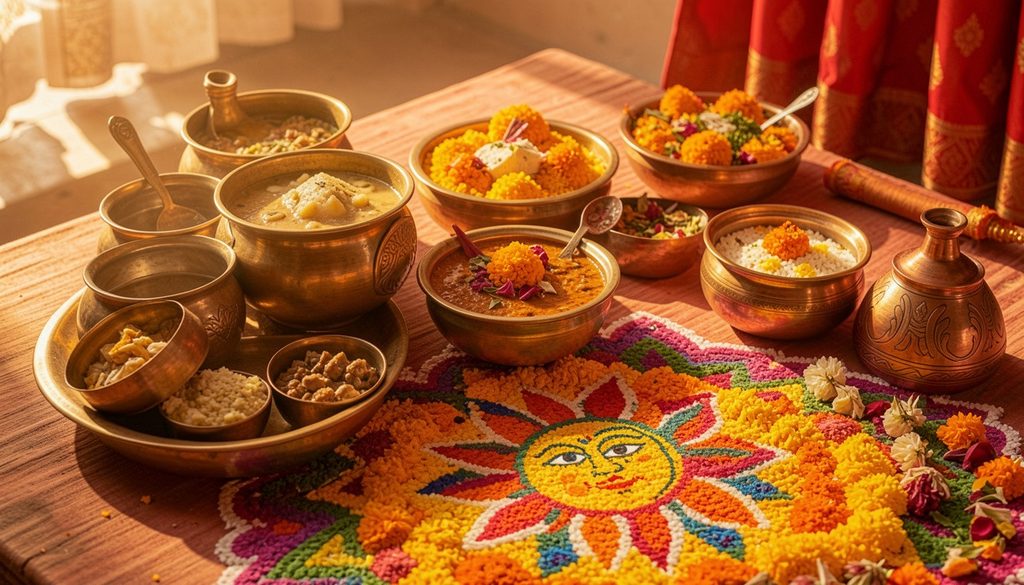
Food is one of the most enjoyable parts of the festival.
Popular Makar Sankranti Foods
Depending on regional tradition, families may prepare:
- Til ladoo
- Peanut chikki
- Sesame-jaggery sweets
- Khichdi
- Pongal
- Undhiyu
- Puran poli
- Sugarcane
- Seasonal vegetables
- Rice-based dishes
Why Sesame and Jaggery?
Sesame and jaggery are deeply connected with winter traditions in many Indian communities. They also make practical seasonal foods.
The combination has become a cultural symbol of warmth, sweetness, sharing, and goodwill.
Simple USA-Friendly Makar Sankranti Menu
A family in the USA could prepare:
Starter: Roasted peanuts and sesame snacks
Main: Vegetable khichdi or regional Pongal
Side: Seasonal vegetables
Sweet: Til-gud ladoo
Drink: Warm milk or traditional spiced beverage
There is no requirement to prepare every traditional dish. Choose foods connected to your family’s region and heritage.
Makar Sankranti Kite Flying: Tradition and Safety
Kite flying is especially famous during Uttarayan in Gujarat and has become an iconic part of Makar Sankranti imagery.
For families in the USA, kite flying can be a fun outdoor activity, but safety should come first.
Kite-Flying Safety Checklist
- Check local park rules.
- Avoid power lines.
- Stay away from roads and airports.
- Choose an open area.
- Supervise young children.
- Avoid dangerous or prohibited kite string.
- Check weather and wind conditions.
- Clean up discarded string afterward.
Never treat kite flying as a competition at the expense of safety.
Makar Sankranti in the USA vs. India
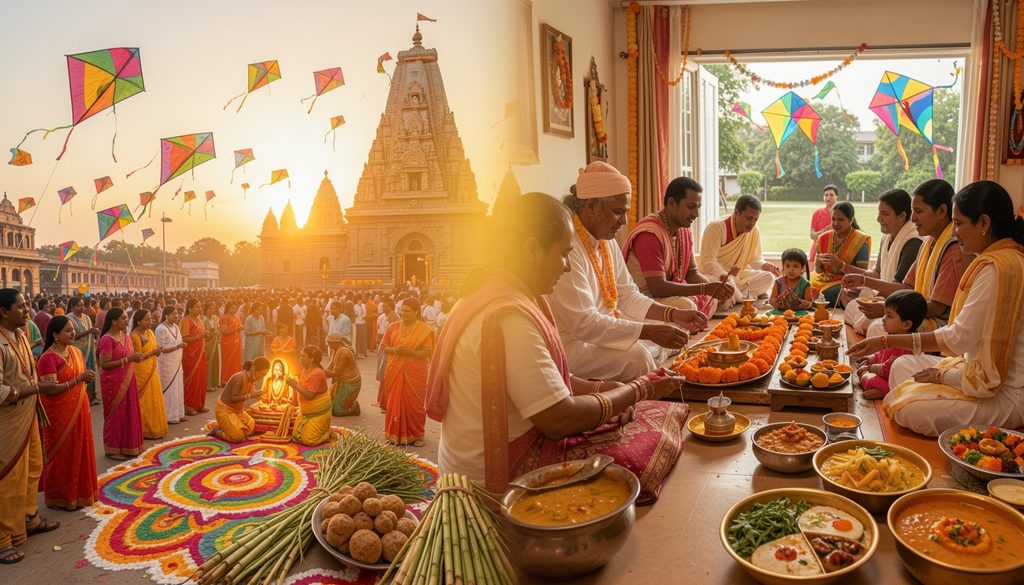
Celebrating in the USA may look different from celebrating in India, but the core values can remain the same.
| Aspect | India | USA |
| Community size | Often very large | Usually smaller community events |
| Temple events | Widely available | Available in major metro areas |
| Kite festivals | Very popular in some states | Usually smaller/private events |
| Food | Regional ingredients readily available | Adapted with local ingredients |
| Family gathering | Often extended family | Family and diaspora community |
| Charity | Temple/community based | Food banks, nonprofits and temples |
| Weather | Varies widely | Often cold in January |
| Ritual timing | Local Indian Panchang | U.S. city-specific timing is important |
The goal is not to copy India perfectly. A meaningful celebration can preserve the values and traditions while fitting your American lifestyle.
Makar Sankranti Pros and Cons for Families
| Pros | Cons |
| Encourages family bonding | Outdoor events can be weather-dependent |
| Teaches children Indian culture | Traditional ingredients may be harder to find |
| Promotes charity | Temple programs may require advance planning |
| Encourages gratitude | Ritual timing can be confusing across time zones |
| Offers healthy cultural traditions | Kite flying requires safety precautions |
| Connects diaspora families | Celebrations may be smaller than in India |
Overall, the benefits usually outweigh the challenges when families keep the celebration simple and meaningful.
Makar Sankranti Celebration Checklist
Use this simple checklist to organize your January 14 celebration.
- Confirm the local Makar Sankranti date.
- Check your city’s local Panchang for timings.
- Find a nearby Hindu temple event.
- Clean your prayer space.
- Prepare a diya and puja items.
- Buy sesame and jaggery.
- Prepare a traditional sweet.
- Plan a family meal.
- Arrange a charitable donation.
- Teach children about the festival.
- Plan safe kite flying if appropriate.
- Contact relatives and friends.
- Take family photos.
- Clean the area after outdoor activities.
Common Mistakes to Avoid During Makar Sankranti 2026
Using the Wrong Time Zone
A Puja Muhurat listed for India may not be appropriate for your U.S. city.
Treating Every Regional Tradition as Universal
Gujarat’s kite traditions, Tamil Nadu’s Pongal customs, and Maharashtra’s tilgul traditions are different. Respect regional diversity.
Focusing Only on Food
Makar Sankranti is also about spirituality, gratitude, charity, and community.
Ignoring Kite Safety
Do not fly kites near electrical infrastructure, roads, or restricted areas.
Forgetting Local Temple Schedules
U.S. temples may hold celebrations on a weekend rather than exactly on January 14 to accommodate working families.
Overcomplicating Home Puja
Families do not need an elaborate setup to celebrate sincerely. Follow your family’s established tradition or guidance from a trusted temple.
Assuming One Calendar Works Everywhere
Festival calculations and local timings can vary. Always verify location-specific information.
Expert Tips for Celebrating Makar Sankranti in the USA
Start With Your Family Tradition
Ask parents, grandparents, or elders how your family traditionally observes Sankranti.
Choose One Meaningful Ritual
If you are busy, focus on one practice such as Surya Arghya, charity, or a family prayer.
Make It Educational
Children are more likely to remember a festival when they understand its story and meaning.
Support Local Hindu Communities
Attend a temple event or cultural program if one is available nearby.
Buy Ingredients Early
Indian grocery stores may have increased demand for sesame, jaggery, peanuts, sugarcane, and specialty ingredients around the festival.
Adapt, Don’t Abandon
Living in the USA does not mean traditional celebrations have to disappear. Adapt recipes, locations, and schedules while keeping the cultural meaning.
Verify Religious Guidance
For specific ritual procedures, Muhurats, or regional customs, use guidance from your family tradition, temple priest, or recognized Hindu organization.
Makar Sankranti Travel Ideas for USA-Based Hindu Families
Makar Sankranti can also become part of a cultural travel weekend.
Consider visiting:
- A major Hindu temple
- A Hindu cultural center
- An Indian-American community festival
- A South Asian food market
- A regional Indian restaurant
- A cultural museum
- A local Indian arts event
Major metropolitan areas often have larger South Asian communities, so event availability can be better in areas such as New York/New Jersey, Chicago, Houston, Dallas-Fort Worth, Atlanta, the San Francisco Bay Area, and Southern California.
Before traveling, confirm event dates and registration requirements with the organizer.
Internal Linking Opportunities for a Travel Website
For a travel-focused website, Makar Sankranti content can naturally connect with related cultural and destination articles.
Suggested internal links include:
- Best Hindu Temples in the USA – link from the USA temple celebration section.
- Hindu Festivals Celebrated in the USA – link from the introduction.
- Diwali in the USA – compare festival traditions.
- Pongal Travel Guide – connect through the South Indian celebration section.
- Best Indian Cultural Festivals in the USA – connect from the travel section.
- Indian-American Cultural Events – link from community celebration content.
- Best Indian Restaurants in [City] – link from the traditional food section.
- Indian Grocery Stores in the USA – useful for festival ingredient planning.
- Best Hindu Temples in New Jersey/California/Texas – location-specific temple links.
- India Cultural Travel Guides – connect readers interested in experiencing Makar Sankranti in India.
Use descriptive anchor text rather than generic phrases such as “click here.”
Suggested External Authority Sources
For factual verification and additional research, consider authoritative sources such as:
- Local Hindu temple organizations
- Recognized Hindu religious organizations
- Official Panchang or Hindu calendar publishers
- NASA or reputable astronomical references for solar/astronomical context
- Smithsonian cultural resources
- Government tourism boards for Indian regional festivals
- Official city or park authorities for kite-flying rules
- Reputable nonprofit organizations for charitable giving information
For exact 2026 Puja timing, prioritize a location-specific Panchang or local temple guidance.
FAQs
When is Makar Sankranti 2026?
Makar Sankranti 2026 will be celebrated on Wednesday, January 14, 2026.
What is the meaning of Makar Sankranti?
Makar Sankranti marks the Sun’s transition into Makara, or Capricorn, and is associated with Uttarayana, harvest traditions, spiritual practices, gratitude, and charity.
Is Makar Sankranti a Hindu festival?
Yes. Makar Sankranti is an important Hindu festival, although its regional celebrations and names vary widely across India.
What should we do on Makar Sankranti?
Common practices include Surya Puja, offering water to the Sun, charity, eating sesame and jaggery foods, visiting temples, spending time with family, and participating in cultural activities.
Can I celebrate Makar Sankranti in the USA?
Absolutely. Hindu families in the USA can celebrate at home, visit a temple, prepare traditional food, donate to charity, and join local Indian-American cultural events.
What food is eaten on Makar Sankranti?
Popular foods include til ladoo, sesame-jaggery sweets, peanut chikki, khichdi, Pongal, regional vegetables, and other traditional harvest foods.
Why are sesame and jaggery important?
Sesame and jaggery are traditional winter foods and are strongly associated with Makar Sankranti. They also symbolize sweetness, sharing, and goodwill in several regional traditions.
Is kite flying compulsory on Makar Sankranti?
No. Kite flying is especially important in some regions, such as Gujarat, but it is not a compulsory part of every family’s Makar Sankranti observance.
What time should I perform Makar Sankranti Puja in the USA?
The appropriate time depends on your location and religious tradition. Check a city-specific Panchang or consult your local Hindu temple for the correct 2026 timing.
What is the difference between Makar Sankranti and Pongal?
Both are connected with the same seasonal solar transition, but Pongal is the major Tamil harvest festival with its own distinctive customs, foods, prayers, and four-day celebration structure.
Final Thoughts:
मकर संक्रांति (Makar Sankranti 2026) – सनातन संस्था is much more than a date on the Hindu calendar. It is a celebration of sunlight, seasonal change, gratitude, harvest, family, spirituality, generosity, and cultural continuity.
For Hindu families in the USA, the festival can be both traditional and modern. You can begin the morning with Surya Puja, prepare til-gud sweets, visit a nearby temple, teach children about Indian traditions, donate to someone in need, or safely enjoy kite flying with your community.
The most important part is not how large the celebration is. It is the meaning behind the celebration.
As January 14, 2026 approaches, choose a few traditions that connect your family to its heritage and make them part of your annual celebration. Share this guide with family and friends, and start planning your Makar Sankranti 2026 celebration today.
Read More:Akshay Tritiya 2026: Date, Puja, Significance, Rituals & Complete USA Guide
