

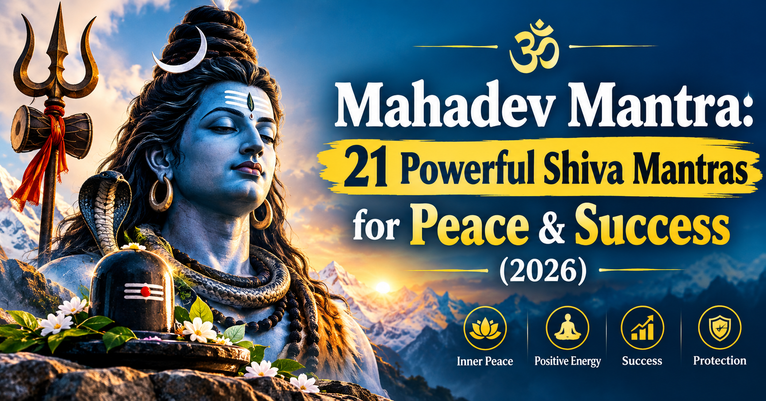
In Hindu spirituality, Lord Shiva, also known as Mahadev, represents transformation, inner strength, peace, and spiritual awareness. For millions of devotees around the world, chanting Shiva mantras is a meaningful daily practice that helps create a sense of calm, focus, devotion, and connection.
Whether you are new to meditation or already follow a spiritual routine, learning a Mahadev mantra can be a simple way to introduce mindfulness into your day. Many people chant mantras in the morning, during meditation, before important events, or whenever they need a moment of inner peace.
This guide explores 21 powerful Shiva mantras, their traditional meanings, and practical ways to include them in your routine. The goal is not to promise guaranteed results, but to help you understand the spiritual significance of these sacred chants and use them respectfully.
Quick Answer:
A Mahadev mantra is a sacred phrase or prayer dedicated to Lord Shiva. In Hindu traditions, mantras are repeated during prayer, meditation, and spiritual practices to support concentration, devotion, and inner reflection.
The most widely known Shiva mantra is:
Om Namah Shivaya
It is often translated as “I bow to Shiva” or “Salutations to Lord Shiva.” Many devotees consider it one of the simplest and most meaningful mantras for meditation and spiritual practice.
What Is a Mahadev Mantra and Why Do People Chant It?
A mantra is traditionally understood as a sacred sound, word, or phrase repeated with intention. In Hinduism, mantras are commonly used during worship, meditation, yoga, and personal prayer.
Lord Shiva is associated with qualities such as:
- Inner peace
- Transformation
- Wisdom
- Strength
- Compassion
- Detachment
- Spiritual awareness
People chant Shiva mantras for different personal reasons. Some use them as part of religious devotion, while others find repetitive chanting helpful for mindfulness and relaxation.
It is important to understand that spiritual practices are personal. A mantra may offer emotional comfort, focus, or a sense of connection, but it should not replace professional medical, financial, or mental health advice.
21 Powerful Mahadev Mantras for Peace, Success & Spiritual Growth
Below are 21 traditional and widely recognized Shiva mantras. Each section includes the mantra, its meaning, and a simple explanation of how devotees commonly use it.
Om Namah Shivaya Mantra
Mantra:
Om Namah Shivaya
Meaning:
“I bow to Lord Shiva.”
This is one of the most famous and widely practiced Shiva mantras. It is known as the Panchakshara Mantra, meaning the five-syllable mantra excluding “Om.”
Many devotees repeat Om Namah Shivaya during meditation, prayer, or quiet reflection.
Why People Chant It:
- For inner calm
- To improve concentration
- As a daily spiritual practice
- To connect with Lord Shiva
This is an excellent mantra for beginners because it is short, simple, and easy to remember.
Maha Mrityunjaya Mantra
Mantra:
Om Tryambakam Yajamahe Sugandhim Pushtivardhanam
Urvarukamiva Bandhanan Mrityor Mukshiya Maamritat
Meaning:
This ancient Vedic mantra is associated with Lord Shiva as Tryambaka, the three-eyed one. It is traditionally chanted as a prayer for healing, protection, strength, and spiritual liberation.
The Maha Mrityunjaya Mantra is one of the most respected mantras in Shaivism and Hindu spiritual traditions.
Traditional Significance:
Devotees often chant this mantra during prayer for loved ones, during difficult times, or as part of personal spiritual discipline.
It is important to note that chanting should not be considered a substitute for medical treatment.
Om Shivaya Namah
Mantra:
Om Shivaya Namah
Meaning:
“Salutations to Shiva.”
This is another simple form of Shiva devotion. It can be used during meditation, prayer, or quiet moments of reflection.
Its simplicity makes it suitable for people who want to develop a consistent daily chanting habit.
Om Hara Hara Mahadev
Mantra:
Om Hara Hara Mahadev
Meaning:
“O Mahadev, remover of difficulties and Lord of all.”
The phrase “Hara Hara Mahadev” is commonly heard in Hindu devotional gatherings, temples, and religious celebrations.
It expresses devotion, respect, and surrender to Lord Shiva.
Best For:
- Devotional chanting
- Group prayers
- Spiritual celebrations
- Building a sense of connection and faith
Shiva Gayatri Mantra
Mantra:
Om Tatpurushaya Vidmahe
Mahadevaya Dhimahi
Tanno Rudrah Prachodayat
Meaning:
“We meditate upon the Supreme Being, Mahadev. May Rudra guide and inspire our minds.”
The Shiva Gayatri Mantra is traditionally associated with wisdom, spiritual awareness, and divine guidance.
Many practitioners include it in meditation routines when seeking clarity and inner focus.
Om Rudraya Namah
Mantra:
Om Rudraya Namah
Meaning:
“Salutations to Rudra.”
Rudra is one of the ancient names and forms associated with Lord Shiva.
This mantra is traditionally connected with courage, transformation, and overcoming inner obstacles.
It may be particularly meaningful for those going through periods of personal change.
Om Maheshwaraya Namah
Mantra:
Om Maheshwaraya Namah
Meaning:
“Salutations to the Great Lord.”
Maheshwara is a revered name of Lord Shiva that represents his supreme and powerful nature.
Devotees may chant this mantra as an expression of respect and surrender.
Om Shankaraya Namah
Mantra:
Om Shankaraya Namah
Meaning:
“Salutations to Shankara, the one who brings auspiciousness.”
The name Shankara is associated with goodness, peace, and benevolence.
This mantra is often connected with positive intentions and spiritual devotion.
Om Neelakanthaya Namah
Mantra:
Om Neelakanthaya Namah
Meaning:
“Salutations to the blue-throated Lord.”
Neelakantha is an important name of Shiva associated with the famous Samudra Manthan story in Hindu mythology.
The mantra symbolizes sacrifice, endurance, and the ability to face challenges with strength.
Om Gangadharaya Namah
Mantra:
Om Gangadharaya Namah
Meaning:
“Salutations to the Lord who holds the River Ganga.”
According to Hindu tradition, Lord Shiva is associated with the descent of the sacred River Ganga.
This mantra is meaningful for devotees who connect Shiva with purity, compassion, and divine wisdom.
Om Somnathaya Namah
Mantra:
Om Somnathaya Namah
Meaning:
“Salutations to the Lord of the Moon.”
Somnath is one of the revered forms of Lord Shiva and is also associated with the famous Somnath Temple in Gujarat, India.
This mantra may be especially meaningful for devotees interested in Shiva temples and pilgrimage traditions.
Om Natarajaya Namah
Mantra:
Om Natarajaya Namah
Meaning:
“Salutations to Nataraja, the Lord of Dance.”
Nataraja is the cosmic dancing form of Shiva. His dance symbolizes creation, preservation, destruction, and transformation.
This mantra can inspire reflection on life’s constant changes and the importance of balance.
Om Pashupataye Namah
Mantra:
Om Pashupataye Namah
Meaning:
“Salutations to the Lord of all living beings.”
Pashupati is an ancient and respected title of Lord Shiva.
This mantra reflects compassion, connection with nature, and respect for all forms of life.
Om Kapalibhyo Namah
Mantra:
Om Kapalibhyo Namah
Meaning:
“Salutations to the Lord associated with spiritual renunciation and transformation.”
This form of Shiva represents the deeper aspects of spiritual practice, detachment, and awareness of life’s temporary nature.
It is often meaningful for advanced spiritual reflection.
Om Bhairavaya Namah
Mantra:
Om Bhairavaya Namah
Meaning:
“Salutations to Bhairava.”
Bhairava is a powerful manifestation associated with Lord Shiva.
This mantra is traditionally connected with courage, protection, and facing fears.
People may use it as part of devotional practices focused on strength and spiritual confidence.
Om Tryambakaya Namah
Mantra:
Om Tryambakaya Namah
Meaning:
“Salutations to the three-eyed Lord.”
Tryambaka is one of Lord Shiva’s most recognized names.
The third eye is often interpreted symbolically as wisdom, awareness, and the ability to see beyond ordinary perception.
Om Sadashivaya Namah
Mantra:
Om Sadashivaya Namah
Meaning:
“Salutations to the Eternal and Auspicious Shiva.”
Sadashiva represents the timeless and eternal aspect of Lord Shiva.
This mantra is often associated with peace, spiritual reflection, and devotion.
Om Ishwaraya Namah
Mantra:
Om Ishwaraya Namah
Meaning:
“Salutations to the Supreme Lord.”
Ishwara is a Sanskrit term often used to refer to the divine or supreme consciousness.
This mantra can be included in personal prayer and meditation practices.
Om Kedaraya Namah
Mantra:
Om Kedaraya Namah
Meaning:
“Salutations to Lord Kedara.”
Kedara is associated with Lord Shiva and the sacred Kedarnath Temple in the Himalayas.
For many Hindu devotees, Kedarnath represents faith, pilgrimage, devotion, and spiritual endurance.
Om Vishwanathaya Namah
Mantra:
Om Vishwanathaya Namah
Meaning:
“Salutations to the Lord of the Universe.”
Vishwanath is one of the most important names of Shiva and is associated with the famous Kashi Vishwanath Temple in Varanasi.
This mantra reflects the universal and all-encompassing nature attributed to Lord Shiva.
Om Mahadevaya Namah
Mantra:
Om Mahadevaya Namah
Meaning:
“Salutations to the Great God.”
Mahadev means “Great God” and is one of the most beloved names of Lord Shiva.
This mantra is simple, devotional, and suitable for people who want to begin or end their spiritual practice with a respectful invocation.
Benefits of Chanting Mahadev Mantras

Many people ask about the benefits of chanting Shiva mantras. While scientific research does not prove supernatural outcomes from mantras, repetitive chanting and meditation may support relaxation, attention, and emotional well-being for some individuals.
Here are commonly reported spiritual and practical benefits.
Supports Inner Peace
Repeating a mantra can help create a quiet and focused environment. Many people find that chanting reduces distractions and encourages mindful breathing.
Encourages Meditation
A mantra gives the mind something simple to focus on. This can make meditation easier for beginners.
Builds Spiritual Discipline
Daily chanting can become a meaningful habit that encourages consistency, reflection, and personal growth.
Promotes Emotional Calm
Slow repetition and controlled breathing may help people feel more relaxed during stressful moments.
Encourages Positive Reflection
Many Shiva mantras focus on devotion, wisdom, transformation, and compassion. Reflecting on these values can support personal development.
Creates a Sense of Community
Group chanting in temples, spiritual centers, or family gatherings can create feelings of connection and belonging.
How to Chant a Mahadev Mantra Correctly
There is no single universal rule that every person must follow. Different Hindu traditions and spiritual teachers may recommend different practices.
However, beginners can follow these simple steps.
Choose a Quiet Place
Find a comfortable location where you can sit without interruptions.
Select One Mantra
Start with a simple mantra such as:
Om Namah Shivaya
You do not need to memorize 21 mantras at once.
Sit Comfortably
You may sit on a chair, cushion, or floor. Keep your posture relaxed and upright.
Breathe Slowly
Take a few calm breaths before beginning.
Repeat the Mantra
Chant the mantra quietly or mentally. Focus on pronunciation, meaning, and intention.
Practice Consistently
Even five to ten minutes of mindful chanting can be a helpful starting point.
End with Gratitude
After chanting, sit quietly for a moment and reflect on your intention.
How Many Times Should You Chant a Shiva Mantra?
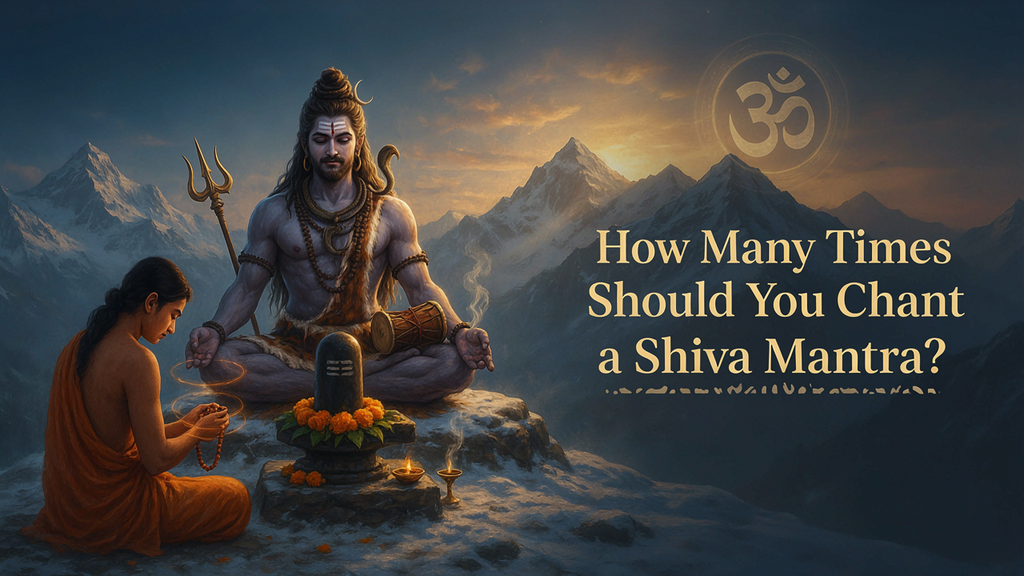
There is no universally required number for everyone.
Traditional practices may use specific counts, including 11, 21, 27, 54, or 108 repetitions. These numbers often have religious and symbolic significance.
For beginners, consistency is usually more important than a large number of repetitions.
Simple Beginner Routine:
| Experience Level | Suggested Practice |
| Beginner | 5 minutes daily |
| Regular Practitioner | 11 or 21 repetitions |
| Experienced Devotee | Traditional mala-based chanting |
| Meditation Practice | 10–15 minutes |
The most important thing is to practice respectfully and comfortably.
Best Time to Chant Mahadev Mantras
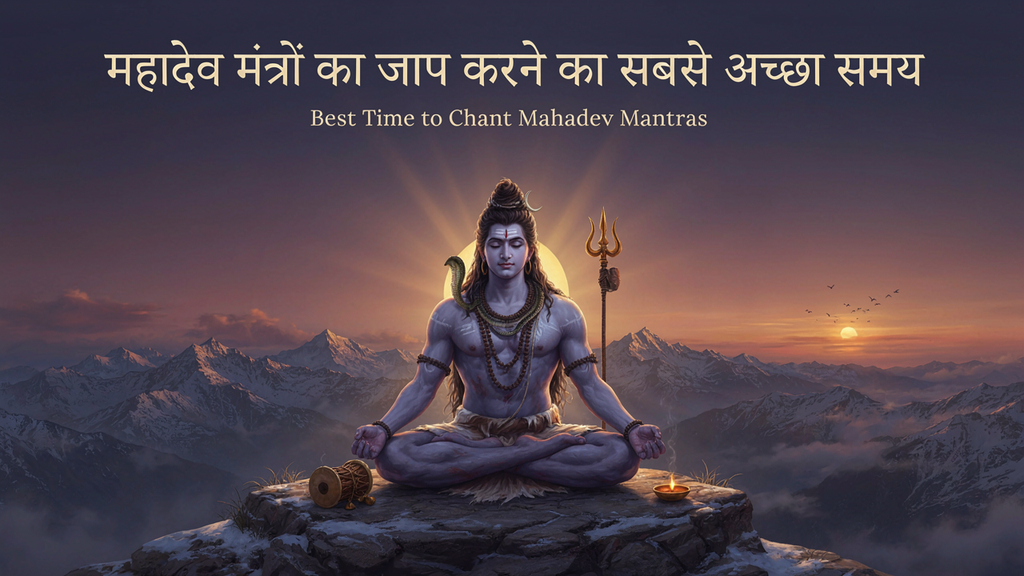
Many devotees prefer chanting during the early morning hours because the environment is often quiet and peaceful.
Other suitable times include:
- After waking up
- Before meditation
- During evening prayer
- After yoga practice
- Before bedtime
- During personal worship
There is no need to feel guilty if you miss a particular time. Spiritual practice should support your well-being rather than create unnecessary stress.
Mahadev Mantra for Different Intentions
Different people choose Shiva mantras based on their spiritual goals.
| Intention | Suggested Mantra |
| Peace and Calm | Om Namah Shivaya |
| Spiritual Protection | Om Bhairavaya Namah |
| Wisdom and Focus | Shiva Gayatri Mantra |
| Courage | Om Rudraya Namah |
| Devotion | Om Mahadevaya Namah |
| Transformation | Om Natarajaya Namah |
| Spiritual Reflection | Om Tryambakaya Namah |
| Daily Prayer | Om Shivaya Namah |
These associations are based on traditional interpretations and devotional practices rather than guaranteed outcomes.
Mahadev Mantra vs Other Hindu Mantras
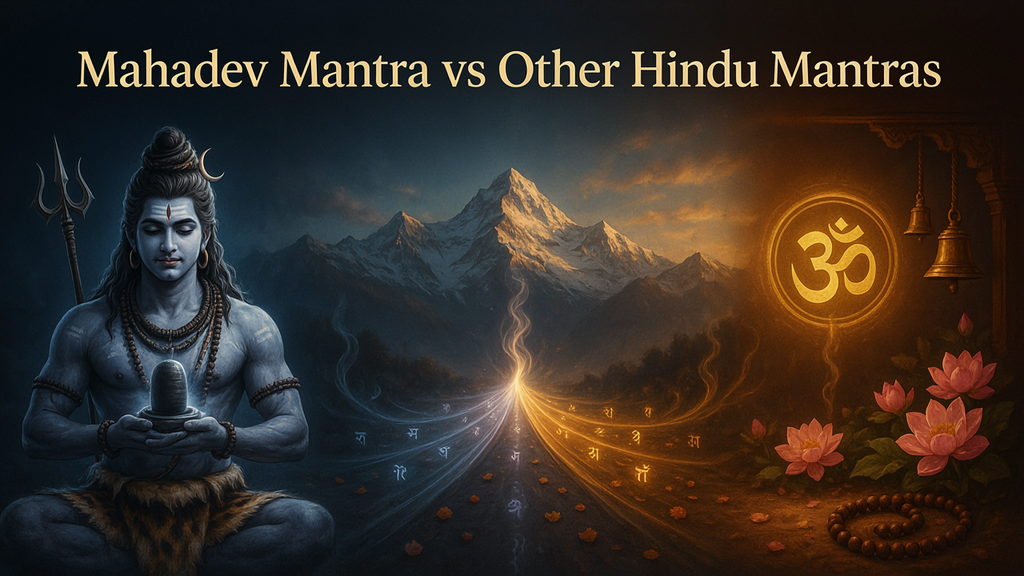
Shiva mantras are part of a much larger tradition of Hindu devotional chanting.
| Feature | Mahadev Mantras | Other Hindu Mantras |
| Main Deity | Lord Shiva | Different deities |
| Common Purpose | Devotion, meditation, transformation | Varies by tradition |
| Popular Example | Om Namah Shivaya | Om Gan Ganapataye Namah |
| Practice Style | Personal or group chanting | Personal or group chanting |
| Spiritual Focus | Shiva’s qualities and symbolism | Depends on deity and tradition |
There is no need to choose one tradition over another. Spiritual practices are deeply personal and often shaped by family, culture, and religious beliefs.
Pros and Cons of Chanting Shiva Mantras
Pros
| Advantages | Explanation |
| Easy to Practice | Many mantras are short and simple |
| Supports Mindfulness | Repetition may help improve focus |
| Spiritual Connection | Encourages devotion and reflection |
| Flexible Routine | Can be practiced at home or in a temple |
| Low Cost | Requires no special equipment |
Cons
| Challenges | Explanation |
| Requires Consistency | Benefits of meditation habits may take time |
| Pronunciation Concerns | Sanskrit pronunciation may require guidance |
| Personal Expectations | Spiritual practices should not promise guaranteed results |
| Cultural Understanding | Beginners should learn the meaning and context respectfully |
| Not Medical Treatment | Mantras should not replace professional care |
Common Mistakes When Chanting Mahadev Mantras
Even a simple spiritual practice can become confusing for beginners. Here are some common mistakes to avoid.
Expecting Instant Results
A mantra is not a guaranteed shortcut to wealth, success, or problem-solving.
Focusing Only on Numbers
Chanting 108 times is meaningful in some traditions, but mindful intention and consistency also matter.
Ignoring Meaning
Understanding the meaning behind a mantra can make spiritual practice more meaningful.
Feeling Pressure to Be Perfect
You do not need a perfect voice, special clothing, or expensive religious items to begin a personal meditation practice.
Making Medical Claims
Mantras may support relaxation and spiritual comfort, but they should never replace medical advice or treatment.
Disrespecting Cultural Traditions
When sharing or practicing sacred mantras, it is important to approach Hindu traditions with respect and avoid treating them as entertainment or superstition.
Expert Tips for a Meaningful Mahadev Mantra Practice
Here are practical suggestions for beginners and regular practitioners.
Start Small
Begin with one mantra rather than trying to memorize all 21 at once.
Learn the Meaning
Understanding what you are chanting can improve your connection with the practice.
Create a Routine
Choose a realistic time that fits your daily schedule.
Focus on Breathing
Let your breathing remain natural and relaxed.
Avoid Comparisons
Everyone’s spiritual journey is different.
Use Authentic Guidance
If you want to learn advanced Sanskrit pronunciation or traditional rituals, consider learning from a qualified teacher or respected religious institution.
Keep Expectations Balanced
Use chanting as a spiritual or mindfulness practice, not as a replacement for practical action.
Mahadev Mantra Daily Practice Checklist
Use this simple checklist to build a consistent routine.
- Choose one Shiva mantra.
- Find a quiet and comfortable place.
- Set aside 5–10 minutes.
- Sit with a relaxed posture.
- Take a few deep breaths.
- Repeat the mantra mindfully.
- Reflect on its meaning.
- End with gratitude.
- Practice consistently without pressure.
Can Americans Practice Mahadev Mantras?
Yes. Hindu spiritual practices are followed by people around the world, including the United States.
Many Americans explore meditation, yoga, mindfulness, and spiritual traditions from different cultures. Mahadev mantras can be approached respectfully as part of Hindu devotional practice or personal meditation.
If you are new to Hindu traditions, learning from reliable cultural and religious sources can help you understand the history and significance of these practices.
FAQs
What is the most powerful Mahadev mantra?
Om Namah Shivaya is one of the most widely known and respected Shiva mantras. Its simplicity makes it suitable for both beginners and experienced devotees.
Which Shiva mantra is best for peace?
Many devotees use Om Namah Shivaya for meditation, inner peace, and spiritual reflection.
Can I chant Mahadev mantras every day?
Yes. Many people include Shiva mantras in their daily prayer or meditation routines. Choose a schedule that feels comfortable and sustainable.
How many times should I chant Om Namah Shivaya?
Traditional practices may include specific repetition counts such as 11, 21, or 108 times. Beginners can start with a few minutes of mindful repetition.
Can I chant Shiva mantras without knowing Sanskrit?
Yes. Beginners can learn gradually. Understanding the meaning and practicing respectfully are important parts of the process.
What is the Maha Mrityunjaya Mantra used for?
Traditionally, the Maha Mrityunjaya Mantra is associated with healing prayers, protection, strength, and spiritual liberation. It should not replace professional medical treatment.
Is chanting a mantra a form of meditation?
Yes, mantra repetition is commonly used as a meditation technique in Hindu and other spiritual traditions.
Can I chant Mahadev mantras before sleeping?
Yes. Some people prefer evening chanting because it creates a calm environment before bedtime.
Do Mahadev mantras guarantee success?
No spiritual practice can guarantee specific financial, professional, or personal results. Mantras may support focus, reflection, and emotional calm, while practical action remains important.
What is the best Mahadev mantra for beginners?
Om Namah Shivaya is often considered a good starting point because it is short, meaningful, and widely practiced.
Conclusion
Mahadev mantras hold a special place in Hindu spiritual traditions and continue to inspire millions of devotees around the world. Whether you choose the simple Om Namah Shivaya, the Maha Mrityunjaya Mantra, or another traditional Shiva chant, the practice can become a meaningful part of meditation, prayer, and personal reflection.
The key is to approach chanting with respect, consistency, and realistic expectations. Spiritual growth is not measured only by the number of repetitions but also by the intention, awareness, and values behind the practice.
If you are beginning your journey with Mahadev mantras, start with one simple chant, learn its meaning, and create a peaceful daily routine that works for you.
Which Mahadev mantra is your favorite? Share your thoughts and spiritual experiences in the comments below.
Read More:404 | Holidify [2026]: What It Means, Why It Happens & How to Find Your Travel Guide
