


Ekadashi 2026 Dates are important for Hindu devotees who observe fasting and worship Lord Vishnu throughout the year. Ekadashi occurs on the eleventh day of both the waxing and waning phases of the Moon, known as Shukla Paksha and Krishna Paksha. These sacred days hold special significance in Hindu traditions and are often observed through prayers, meditation, fasting, and devotional activities. Knowing the dates in advance helps devotees prepare for each observance.
The Ekadashi 2026 Dates calendar includes the names of each Ekadashi, its corresponding Paksha, and the month in which it occurs. Some well-known observances include Nirjala Ekadashi, Devshayani Ekadashi, Utpanna Ekadashi, and Mokshada Ekadashi. Each day has its own traditional story and religious importance. A complete list makes it easier to follow the Hindu calendar and remember important fasting occasions.
Checking Ekadashi 2026 Dates is also helpful for understanding the correct fasting and Parana schedule. Parana refers to breaking the Ekadashi fast, generally on the following Dwadashi during an appropriate time window. The exact observance date and Parana timing can vary according to location, local sunrise, and traditional calendar calculations. Therefore, devotees should consult a reliable Panchang for accurate timings in their city.
Many people follow Ekadashi 2026 Dates to strengthen their spiritual routine and maintain their family traditions. Devotees may observe a complete fast, eat permitted foods, chant Vishnu mantras, read religious texts, or visit temples. Fasting practices differ according to personal beliefs, family customs, and health needs. Anyone with medical concerns should choose a suitable approach rather than undertaking a strict fast without proper advice.
This complete guide to Ekadashi 2026 Dates will help you explore the monthly fasting calendar, Ekadashi names, Shukla Paksha and Krishna Paksha observances, and essential fasting information. You will also learn why these sacred days matter and how to check the correct dates for your location. Whether you observe every Ekadashi or only selected occasions, this guide will make planning your religious activities throughout 2026 easier and more organized.
Quick Calendar Overview
| Information | Details |
| Topic | Ekadashi fasting calendar for 2026 |
| Religious tradition | Hinduism, including Vaishnava traditions |
| Deity associated with the observance | Lord Vishnu |
| Frequency | Generally twice in a lunar month |
| Main lunar divisions | Krishna Paksha and Shukla Paksha |
| Main observances | Fasting, prayer, mantra chanting, charity and puja |
| Fast-breaking day | Dwadashi, subject to the applicable tradition |
| Calendar reference | India-based Panchang; local dates may differ |
| Travel relevance | Vishnu temples, ISKCON temples and pilgrimage planning |
| Best preparation | Confirm the local vrat date and Parana window |
Ekadashi 2026 Dates: Complete List with Names and Paksha
The following table uses a commonly published India-based fasting calendar. Ekadashi observances may fall on different civil dates depending on sunrise calculations and whether a Smarta or Vaishnava calendar is followed. Confirm the date for your location before observing a fast.
| No. | Date in 2026 | Day | Ekadashi name | Paksha |
| 1 | January 14 | Wednesday | Shattila Ekadashi | Krishna |
| 2 | January 29 | Thursday | Jaya Ekadashi | Shukla |
| 3 | February 13 | Friday | Vijaya Ekadashi | Krishna |
| 4 | February 27 | Friday | Amalaki Ekadashi | Shukla |
| 5 | March 15 | Sunday | Papamochani Ekadashi | Krishna |
| 6 | March 29 | Sunday | Kamada Ekadashi | Shukla |
| 7 | April 13 | Monday | Varuthini Ekadashi | Krishna |
| 8 | April 27 | Monday | Mohini Ekadashi | Shukla |
| 9 | May 13 | Wednesday | Apara Ekadashi | Krishna |
| 10 | May 27 | Wednesday | Padmini Ekadashi | Adhik Maas, Shukla |
| 11 | June 11 | Thursday | Parama Ekadashi | Adhik Maas, Krishna |
| 12 | June 25 | Thursday | Nirjala Ekadashi | Shukla |
| 13 | July 10 | Friday | Yogini Ekadashi | Krishna |
| 14 | July 25 | Saturday | Devshayani Ekadashi | Shukla |
| 15 | August 9 | Sunday | Kamika Ekadashi | Krishna |
| 16 | August 23 | Sunday | Shravana Putrada Ekadashi | Shukla |
| 17 | September 7 | Monday | Aja Ekadashi | Krishna |
| 18 | September 22 | Tuesday | Parivartini (Parsva) Ekadashi | Shukla |
| 19 | October 6 | Tuesday | Indira Ekadashi | Krishna |
| 20 | October 22 | Thursday | Papankusha Ekadashi | Shukla |
| 21 | November 5 | Thursday | Rama Ekadashi | Krishna |
| 22 | November 20 | Friday | Devutthana Ekadashi | Shukla |
| 23 | December 4 | Friday | Utpanna Ekadashi | Krishna |
| 24 | December 20 | Sunday | Mokshada Ekadashi | Shukla |
Calendar note: This is a practical reference list, not a universal ruling for every sampradaya or location. Some calendars publish additional or differently dated observances in Adhik Maas, and some list a fast on the adjacent day. For example, ISKCON calendars may differ from general Hindu calendars. Check the relevant temple or local Panchang before relying on a date or Parana time.
What Is Ekadashi and Why Is It Important?
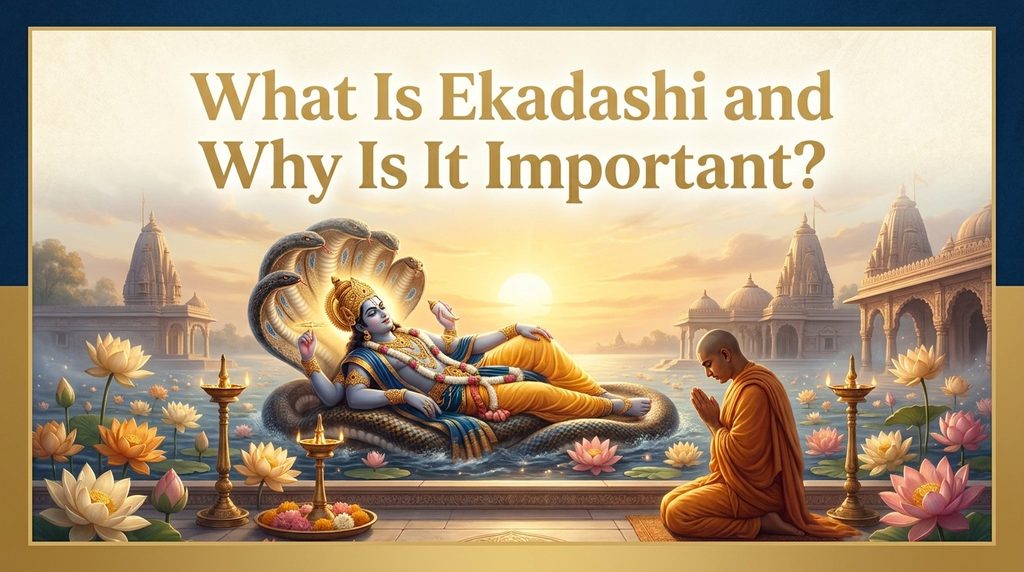
Ekadashi is the eleventh tithi of a Hindu lunar fortnight. It occurs twice during a lunar month: once while the Moon is waxing and once while it is waning. The observance is especially associated with devotion to Lord Vishnu and is followed by many Hindu families and Vaishnava communities.
Devotees may observe Ekadashi through fasting, prayers, reading sacred texts, chanting Vishnu’s names, visiting temples, and giving to those in need. The precise practices depend on family customs, religious tradition, health, and personal circumstances.
For many people, Ekadashi is also a regular opportunity to pause from daily routines and focus on spiritual discipline. Its meaning is not limited to food restrictions; prayer, kindness, self-control, and sincere devotion are also important.
Image Caption: Devotees offering prayers to Lord Vishnu during a traditional Ekadashi observance.
Understanding Krishna Paksha and Shukla Paksha
The Hindu lunar month is divided into two fortnights, known as Paksha. Understanding these terms makes it easier to read an Ekadashi calendar and recognize the type of observance.
| Term | Meaning | Position in the lunar cycle |
| Shukla Paksha | The bright or waxing fortnight | From the new Moon toward the full Moon |
| Krishna Paksha | The dark or waning fortnight | From the full Moon toward the new Moon |
| Ekadashi | The eleventh lunar tithi | Occurs in both fortnights |
| Dwadashi | The twelfth lunar tithi | Often relevant to breaking the Ekadashi fast |
A date table may show the civil date on which the fast is observed, while the tithi itself begins or ends at another time. That is why the Paksha, local sunrise, and applicable religious tradition all matter when selecting the correct date.
Important Ekadashi Observances in 2026
Although every Ekadashi has religious significance, several are especially well known. Their stories and practices may vary among regional traditions.
Nirjala Ekadashi
Nirjala Ekadashi is associated with a particularly strict fast. Traditionally, Nirjala means without water, but such a fast can be physically demanding. Anyone who is pregnant, unwell, taking medication, elderly, or otherwise at risk should seek appropriate medical advice and follow a safe form of observance rather than attempting a dry fast.
Devshayani Ekadashi
Devshayani Ekadashi is traditionally associated with Lord Vishnu entering a period of cosmic rest. It marks an important point in the Chaturmas period in many Hindu traditions. Devotees may increase their prayers, charitable activities, and devotional practices around this observance.
Devutthana Ekadashi
Also called Prabodhini Ekadashi or Dev Uthani Ekadashi in some regions, this observance is associated with Lord Vishnu awakening. It has significance in several regional religious calendars and may coincide with ceremonies marking the resumption of auspicious activities.
Mokshada Ekadashi
Mokshada Ekadashi is associated with the spiritual goal of liberation, or moksha. In many Hindu calendars, it also coincides with the observance of Gita Jayanti, commemorating the Bhagavad Gita.
Padmini and Parama Ekadashi
Padmini and Parama Ekadashi are associated with Adhik Maas, the additional lunar month used to align the lunar calendar with the solar year. These observances are particularly relevant when preparing a calendar for 2026. Because published date lists can differ, check the specific calendar tradition you follow.
Image Caption: A decorated Vishnu shrine with flowers, lamps, and devotional offerings for Ekadashi.
How to Observe Ekadashi Vrat in 2026
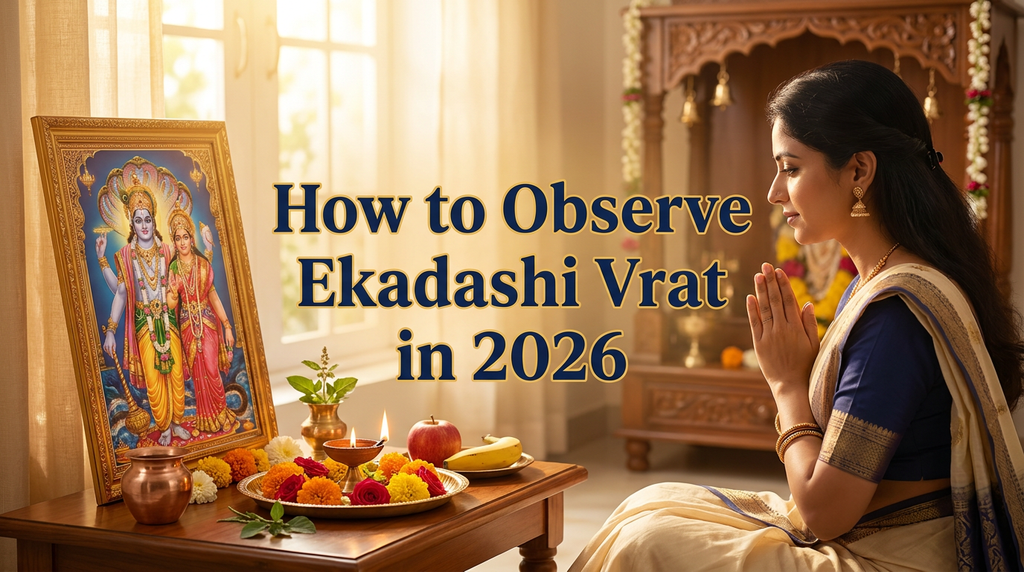
The way a person observes Ekadashi depends on their family tradition, spiritual teacher, and health. Some devotees keep a complete fast, while others eat fruit, drink milk, or prepare simple fasting meals.
A practical approach is to prepare in advance and confirm the fasting rules with a trusted religious source.
Before Ekadashi
- Check the date using a reliable Panchang for your city.
- Review any food restrictions followed in your tradition.
- Buy suitable fasting ingredients before the observance.
- Plan time for prayer, meditation, or temple visits.
- If you take regular medication, do not change your treatment to accommodate fasting without medical guidance.
On Ekadashi
- Begin the day with personal prayers and a bath, if customary.
- Worship Lord Vishnu or a form of the deity revered in your tradition.
- Chant a devotional mantra or read a sacred text.
- Avoid grains and other restricted foods if that is part of your chosen observance.
- Practice patience, compassion, and charity.
On Dwadashi
Dwadashi is the lunar day following Ekadashi. Many devotees break their fast during a prescribed Parana window on Dwadashi. The correct window depends on the local Panchang and the rules of the tradition being followed, so avoid relying on a generic time copied from another city.
Ekadashi Fasting Rules and Food Guide
Fasting rules are not identical across all Hindu communities. The table below outlines common approaches rather than prescribing one rule for everyone.
| Fasting style | Common practice | Important consideration |
| Nirjala fast | Avoiding both food and water | Can be risky; not suitable for everyone |
| Complete fast with water | Avoiding food while drinking water | Consider individual health and medical needs |
| Phalahar | Fruit, milk, and permitted fasting foods | Ingredients vary by tradition |
| Partial fast | Eating one or more simple permitted meals | Follow your family or temple’s rules |
| Devotional observance without strict fasting | Prayer, chanting, charity, and avoiding restricted foods | A meaningful option for those unable to fast |
Many traditions avoid grains and beans during Ekadashi. Some also restrict particular vegetables, spices, or processed foods. Check labels carefully, since packaged foods can contain ingredients that do not fit your chosen rules.
Important: Fasting is not a medical treatment or a requirement to endanger your health. Children, pregnant or breastfeeding people, older adults, and people with medical conditions may need modified practices or may need to avoid fasting altogether.
How to Calculate Ekadashi and Parana Timings
An accurate Ekadashi calendar depends on more than the date displayed on a standard civil calendar.
The tithi is a lunar period, and its beginning or ending may fall at any time of day or night. Hindu observance rules often consider whether Ekadashi tithi is present at sunrise, along with specific rules for selecting the fasting day. Different traditions may apply these rules differently.
Use the following checklist to find the relevant timings:
- Select your city or nearest location in a trusted Panchang.
- Confirm the Ekadashi tithi and the recommended fasting date.
- Check whether the calendar follows Smarta, Vaishnava, or another specific tradition.
- Find the Dwadashi Parana window for the following day.
- Confirm whether any special rules apply to the observance.
| Calendar detail | Why it matters |
| Sunrise | Can determine the civil date assigned to the observance |
| Ekadashi tithi | Identifies the relevant lunar day |
| Dwadashi tithi | Helps determine the appropriate fast-breaking period |
| Parana window | Provides the prescribed period for ending the fast |
| Local city | Accounts for location-dependent sunrise and clock times |
| Religious tradition | Determines which fasting-date rules apply |
Never assume that a Parana time published for Delhi, Mumbai, London, Dubai, or another city will automatically apply to your location.
Visiting a Vishnu or ISKCON Temple on Ekadashi
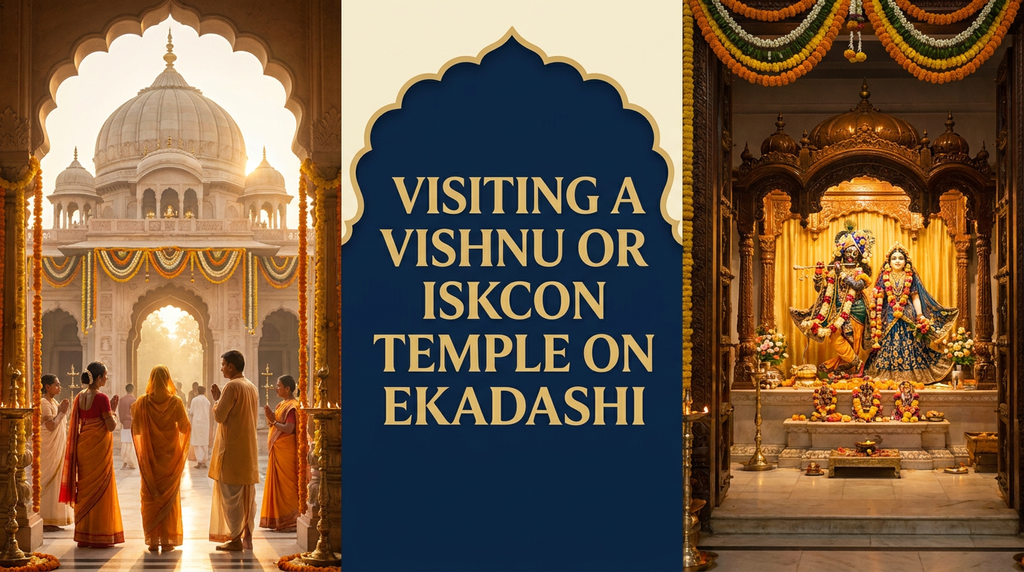
A temple visit can be a meaningful way to observe Ekadashi, particularly for people who enjoy community worship and devotional singing. Temples dedicated to Lord Vishnu, Krishna, and other Vaishnava forms may organize special prayers or other activities on Ekadashi.
Before visiting, check the temple’s official website or contact its office for the current schedule. Not every temple holds the same program, and opening hours or special arrangements can change.
Tips for a respectful temple visit
- Wear clothing appropriate to the temple’s dress expectations.
- Check whether photography is allowed.
- Follow instructions regarding footwear, offerings, and worship areas.
- Avoid assuming that every temple permits visitors to bring food or flowers.
- If a special festival attracts a large crowd, allow extra time for entry and worship.
If you are traveling specifically for Ekadashi, confirm the local fasting date first. A temple may follow a different observance calendar from a general online date list.
Image Caption: Visitors offering prayers at a Hindu temple dedicated to Lord Vishnu.
Planning a Pilgrimage or Family Visit Around Ekadashi
Ekadashi can provide a helpful theme for a short spiritual outing. Rather than treating it as a conventional sightseeing trip, build the day around prayer, reflection, and a manageable schedule.
A simple plan could include:
- Morning: Check the day’s Panchang and attend a temple service if available.
- Late morning: Spend time in prayer, mantra chanting, or reading a sacred text.
- Afternoon: Rest, volunteer, or participate in a charitable activity, depending on local arrangements.
- Evening: Attend an available devotional program or continue personal worship at home.
Families traveling with children or older relatives should avoid overly long schedules, especially when someone is fasting. Plan access to drinking water, rest areas, transport, and appropriate meals for anyone who is not fasting.
There is no universal recommended duration for an Ekadashi pilgrimage. A single temple visit may be enough, while those traveling farther may prefer a two-day trip that includes the observance and the Dwadashi Parana.
Where to Stay During an Ekadashi Pilgrimage
Accommodation depends entirely on the town or city you plan to visit. Since this calendar covers the whole year rather than one destination, it would be misleading to recommend specific hotels or quote a single accommodation price.
Consider the following options when planning a temple visit:
| Accommodation type | Best suited for | What to check |
| Budget guesthouse | Solo travelers and short stays | Cleanliness, transport access, check-in hours |
| Mid-range hotel | Couples and families | Location, meals, cancellation terms |
| Family accommodation | Groups and travelers with children | Room capacity, accessibility, nearby food options |
| Temple guesthouse | Pilgrims, where available | Eligibility, booking rules, facilities and quiet hours |
| Premium hotel | Travelers prioritizing comfort | Distance from the temple, transport and total cost |
Book through a reliable provider, verify the property’s address, and check whether any special arrangements are available during festivals. Temple accommodation is not always open to the public, and availability can be limited on major observance days.
Food and Meal Planning for Ekadashi
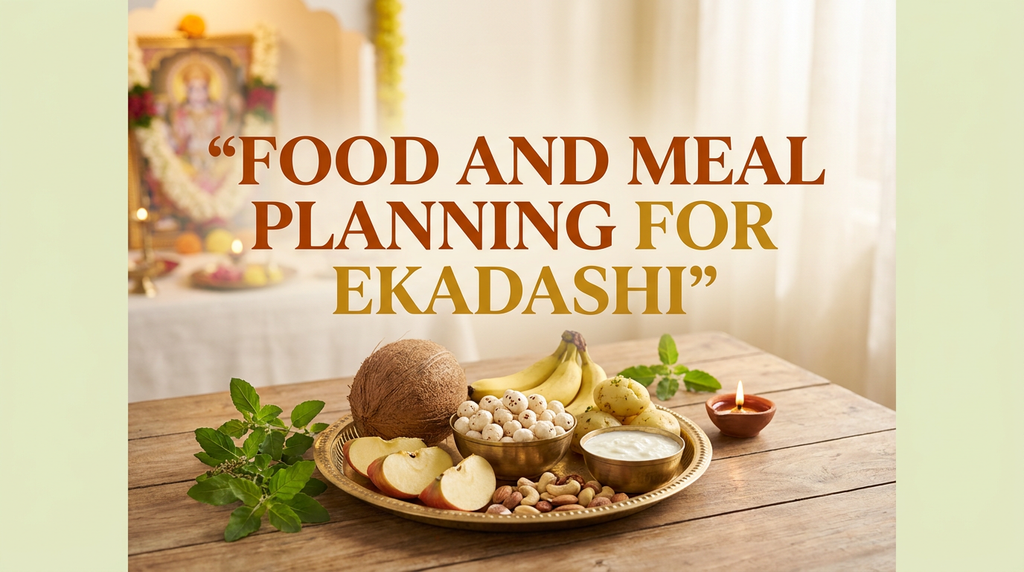
Food planning is particularly important when an Ekadashi observance involves fasting restrictions. The ingredients permitted on the day can differ between traditions, so prepare meals that fit your own rules.
Common fasting foods in some traditions include fruit, milk, nuts, and dishes made with permitted ingredients such as buckwheat flour or water chestnut flour. These are examples, not a universal list of approved foods.
| Food category | Examples | Planning tip |
| Fruit | Bananas, apples, seasonal fruit | Wash and prepare in advance |
| Dairy, where permitted | Milk or plain yogurt | Check personal dietary needs |
| Nuts and seeds | Almonds or other permitted varieties | Keep portions appropriate |
| Fasting flours | Buckwheat or water chestnut flour | Check whether the ingredient is allowed in your tradition |
| Regular meals for non-fasting family members | Ordinary balanced meals | Prepare separately if needed |
Avoid assuming that a dish is Ekadashi-friendly simply because it is vegetarian. Regular rice, wheat, lentils, and beans are restricted in many fasting traditions.
For people traveling, it is wise to carry suitable snacks and confirm restaurant ingredients before ordering. If you are not fasting, maintain regular hydration and eat balanced meals.
Travel Budget and Expenses for an Ekadashi Visit
There is no single travel budget for observing Ekadashi because the date list covers multiple regions and countries. Transport, accommodation, meals, and temple arrangements depend on where you live and where you intend to go.
Instead of inventing a daily price, use this checklist to estimate your costs:
| Expense | Budget option | Mid-range option | Higher-comfort option |
| Transport | Public transport, where available | Taxi or a mix of transport options | Private vehicle or premium transfer |
| Accommodation | Basic guesthouse | Standard hotel | Premium hotel |
| Food | Home-prepared or permitted simple meals | Casual dining | Full-service dining |
| Temple visit | Check for free entry or donations | Voluntary donation, if desired | Optional donation or special services where officially available |
| Other activities | Walking and free public spaces | Paid attractions where relevant | Guided experiences, where available |
Before finalizing a budget, check current fares, accommodation rates, entry requirements, and any booking fees. Donations should be voluntary, and no particular payment should be assumed to be necessary for a religious observance.
One-Day and Two-Day Ekadashi Planning Itinerary

These sample schedules are designed for a general temple visit. They do not assume a particular destination, temple timetable, or fasting method.
One-day plan
| Time of day | Suggested activity |
| Early morning | Review the local Panchang and prepare for worship |
| Morning | Visit a nearby temple if open |
| Late morning | Spend time in prayer, chanting, or sacred reading |
| Afternoon | Rest or take part in a suitable charitable activity |
| Evening | Attend a devotional program if one is scheduled |
| Night | Follow your chosen observance and rest |
Two-day plan
| Day | Morning | Afternoon | Evening |
| Ekadashi | Prayer and temple visit | Rest and devotional reading | Worship or a scheduled temple program |
| Dwadashi | Check the Parana window and break the fast according to tradition | Have a suitable meal and rest | Return home or enjoy a low-key local visit |
Do not schedule the second day’s meal without first checking the appropriate Parana timing. If you are traveling, allow enough flexibility for traffic, temple queues, and changes in local schedules.
Family-Friendly and Peaceful Places for Reflection
The best setting for an Ekadashi observance is one that supports your religious practice without making the day unnecessarily tiring. Depending on your location, you may have several options:
- Temple courtyards: Suitable for prayer where public access is permitted.
- Public gardens: A quiet place for walking or reflection, subject to local rules.
- Riverside or lakeside areas: Potentially peaceful outdoor spaces, provided they are safe and accessible.
- Home prayer spaces: Often the simplest option for families who prefer to observe together.
- Community centers: Some religious organizations host devotional gatherings or charitable activities.
Check opening hours, accessibility, local weather, and any restrictions before traveling. Avoid strenuous outdoor activities if you are fasting, particularly during hot weather.
Image Caption: A peaceful garden near a place of worship, offering space for quiet reflection.
Photography and Visual Ideas for Ekadashi Content
If you are creating a blog post or documenting a temple visit, focus on respectful, authentic images rather than staged scenes that misrepresent the observance.
Useful photography subjects include:
- A decorated shrine featuring flowers and traditional lamps.
- A devotional book or prayer beads beside a simple puja arrangement.
- A temple exterior photographed from a permitted public area.
- A plate of fasting foods prepared according to a specific tradition.
- A peaceful prayer space with natural morning light.
- A calendar showing the Ekadashi date and Paksha.
Always follow temple photography rules and ask permission before photographing worshippers. Avoid photographing private ceremonies or individuals without consent.
Image Caption: Traditional puja items arranged neatly for an Ekadashi prayer.
Local Customs, Traditions, and Respectful Observance
Ekadashi is observed in many parts of India and by Hindu communities around the world. Practices can differ by region, language, family custom, and religious lineage.
Some devotees emphasize strict fasting, while others focus on chanting, scripture, charity, or temple worship. ISKCON communities may follow Vaishnava fasting rules that differ from the general calendar followed by some other Hindu households.
Respect these differences when discussing dates or planning a temple visit. Avoid presenting one community’s practice as the only correct approach for all Hindus.
If you are attending a public religious gathering, follow the host organization’s guidance on clothing, footwear, food, offerings, and photography. When uncertain, ask politely rather than assuming a custom applies everywhere.
Safety, Health, and Practical Tips
A meaningful observance should be compatible with your well-being. If you plan to fast, consider your health, the weather, and any travel demands.
- Do not attempt a dry fast if it could endanger your health.
- Follow medical advice about medication, meals, and hydration.
- Keep children and older relatives comfortable during temple visits.
- Check local weather before walking or standing outdoors for extended periods.
- Carry essential medication and emergency contact information.
- Keep valuables secure in crowded places.
- Confirm temple schedules through official channels.
- Avoid relying on unverified social media posts for fasting dates or Parana timings.
- If traveling internationally, check visa requirements and entry rules through official sources.
If fasting causes severe dizziness, confusion, fainting, or other concerning symptoms, stop the fast and seek appropriate medical help.
Ekadashi Packing Checklist
For a short temple visit or pilgrimage, a simple checklist can prevent unnecessary stress.
- A reliable local Ekadashi calendar or Panchang reference.
- Comfortable, modest clothing appropriate for the temple.
- Suitable footwear that is easy to remove if required.
- Personal medication and medical essentials.
- Drinking water and permitted snacks for those who need them.
- A phone with the temple’s official contact details.
- Payment method and a small amount of local cash, if useful.
- Travel documents for longer or international trips.
- A prayer book, mala, or other personal devotional item.
- A light bag and any weather-appropriate clothing.
For a home observance, most travel items are unnecessary. The most useful preparations are a confirmed calendar date, permitted food if needed, and enough time for prayer and rest.
FAQs
What are the Ekadashi 2026 Dates for all months?
Ekadashi occurs twice during most lunar months, once in Shukla Paksha and once in Krishna Paksha. The exact dates depend on the Hindu lunar calendar and your location.
How many Ekadashi 2026 Dates are there in the Hindu calendar?
There are generally 24 regular Ekadashi observances in a lunar year. Some years include additional observances during an extra lunar month, making the total 26.
What are the Ekadashi 2026 Dates in January?
January 2026 includes both Shattila Ekadashi and Jaya Ekadashi. Check a location-specific Hindu calendar for the correct fasting dates and Parana timings.
What are the Ekadashi 2026 Dates in February?
February includes Vijaya Ekadashi and Amalaki Ekadashi in the traditional Hindu calendar. Their observance dates and fasting schedules should be checked against a reliable Panchang.
What are the Ekadashi 2026 Dates in March?
March includes Papamochani Ekadashi and Kamada Ekadashi. Devotees observe these days with prayers, fasting, and worship of Lord Vishnu.
What are the Ekadashi 2026 Dates in April?
April includes Varuthini Ekadashi and Mohini Ekadashi. The exact fasting dates can vary depending on the local calendar and traditional observance rules.
What are the Ekadashi 2026 Dates in May?
May includes Apara Ekadashi and Nirjala Ekadashi. Nirjala Ekadashi is especially known for its strict fasting tradition among devotees who observe it.
What are the Ekadashi 2026 Dates in June?
June includes Yogini Ekadashi and Devshayani Ekadashi. Devshayani Ekadashi is associated with the beginning of Chaturmas in many Hindu traditions.
What are the Ekadashi 2026 Dates in July?
July includes Kamika Ekadashi and Shravan Putrada Ekadashi. Devotees may observe these occasions through fasting, prayers, and Vishnu worship.
What are the Ekadashi 2026 Dates in August?
August includes Aja Ekadashi and Parsva Ekadashi, depending on the lunar calendar and regional observance. Check the correct local Panchang before observing a fast.
What are the Ekadashi 2026 Dates in September?
September includes Indira Ekadashi and Papankusha Ekadashi. These observances hold religious significance for devotees who follow the Ekadashi fasting tradition.
What are the Ekadashi 2026 Dates in October?
October includes Rama Ekadashi and Devutthana Ekadashi. Devutthana Ekadashi is traditionally associated with Lord Vishnu awakening from his cosmic rest.
What are the Ekadashi 2026 Dates in November?
November includes Utpanna Ekadashi and Mokshada Ekadashi. Mokshada Ekadashi is also associated with the observance of Gita Jayanti in many Hindu calendars.
What are the Ekadashi 2026 Dates in December?
December includes Saphala Ekadashi and Pausha Putrada Ekadashi. Devotees commonly observe these days through fasting, meditation, and prayers to Lord Vishnu.
What is the difference between Shukla Paksha and Krishna Paksha Ekadashi?
Shukla Paksha Ekadashi falls during the waxing phase of the Moon, while Krishna Paksha Ekadashi falls during the waning phase. Both are traditionally dedicated to Lord Vishnu.
Why do Ekadashi 2026 Dates sometimes differ between calendars?
Differences can occur because of location, time zone, tithi timings, and regional fasting rules. Some traditions follow specific sunrise-based calculations to determine the correct observance day.
What is the best time to break an Ekadashi fast in 2026?
The fast is generally broken on Dwadashi, the lunar day following Ekadashi, during the prescribed Parana period. Check a reliable local Panchang for the exact time.
Can I observe Ekadashi fasting without eating food all day?
Fasting practices vary according to health, personal ability, and family tradition. Some devotees avoid grains, while others follow fruit-based or water-based fasts; health needs should always come first.
Which Ekadashi in 2026 is important for Lord Vishnu devotees?
All Ekadashis are considered spiritually significant by many Vaishnava devotees. Nirjala, Devshayani, Prabodhini (Devutthana), and Mokshada Ekadashi are among the widely observed occasions.
Where can I find a complete list of Ekadashi 2026 Dates with names and Paksha?
You can consult a reliable Hindu Panchang or calendar that lists each Ekadashi by date, name, and Paksha. Choose your city to check local fasting and Parana timings.
Conclusion
The Ekadashi 2026 Dates guide helps devotees plan their fasting days, prayers, and religious observances throughout the year. Each Ekadashi has a traditional name and spiritual significance connected with Lord Vishnu. Understanding the difference between Shukla Paksha and Krishna Paksha makes it easier to follow the Hindu lunar calendar. A complete date list also helps families prepare for upcoming festivals and fasting rituals. Always verify the dates with a reliable Panchang for your location.
By following the Ekadashi 2026 Dates, you can prepare for each observance with greater confidence and keep track of important religious occasions. Remember that fasting dates and Parana timings may vary according to local sunrise, tithi calculations, and regional traditions. Choose a fasting practice that suits your health and personal beliefs. Whether you observe every Ekadashi or only selected occasions, the calendar can support your spiritual routine. Keep this guide handy throughout the year for easy reference.
Read More: ISKCON Ekadashi Calendar 2026-2027 Dates, Fasting Guide and ISKCON Bangalore Temple Visit
