

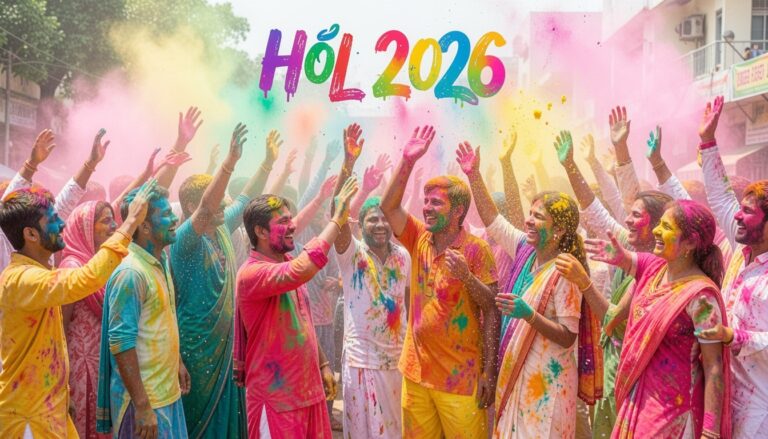
Holi 2026 is one of India’s most colorful and joyful festivals, celebrated with vibrant colors, music, traditional foods, and gatherings with family and friends. Known as the Festival of Colors, Holi represents the arrival of spring and the victory of good over evil. In 2026, people in India and communities around the world—including the USA—will come together to enjoy this lively cultural celebration.
Whether you are celebrating Holi for the first time or continuing a family tradition, knowing the Holi 2026 date, celebration customs, popular events, safety tips, and what to expect can help you enjoy the festival with confidence. This guide explains how and where to celebrate Holi, what to wear, how to enjoy traditional foods, and practical tips for a fun and respectful experience.
Quick Answer:
Holi 2026 will be celebrated on Wednesday, March 4, 2026, with Rangwali Holi, the main day of colors. Holika Dahan, the traditional bonfire ceremony, falls on Tuesday, March 3, 2026.
In India, Holi is celebrated according to the Hindu lunar calendar, so the exact dates change each year. For travelers and families in the United States, local temple, community, and cultural organizations may hold Holi events on nearby weekends for convenience.
Holi is famous as the Festival of Colors, but it is much more than throwing colored powder. The celebration brings together family, friends, food, music, dancing, prayer, and a spirit of forgiveness and renewal.
What Is Holi and Why Is It Celebrated?
Holi is one of the most widely recognized Hindu festivals and is often called the Festival of Colors. It traditionally marks the arrival of spring and celebrates joy, friendship, renewal, and the triumph of good over evil.
The festival has deep religious and cultural roots. One of its best-known stories centers on Prahlada and Holika. According to Hindu tradition, Prahlada was devoted to Lord Vishnu, while his father, King Hiranyakashipu, demanded that everyone worship him. Holika, who was believed to have a special protection from fire, attempted to harm Prahlada by sitting with him in a fire. The story ends with Prahlada surviving while Holika is destroyed.
This story is remembered during Holika Dahan, when communities gather around a ceremonial bonfire.
The following day is Rangwali Holi, when people traditionally play with colored powders and water. People greet each other with phrases such as “Happy Holi!” and enjoy festive foods and drinks.
For visitors in the United States, understanding this background can make a Holi celebration more meaningful. It also helps travelers participate respectfully rather than viewing the festival only as a colorful photo opportunity.
Holi 2026 Date and Festival Calendar

The two most important dates for Holi 2026 are:
| Festival | Date in 2026 | What Happens |
| Holika Dahan | Tuesday, March 3 | Ceremonial bonfire and prayers |
| Rangwali Holi | Wednesday, March 4 | Main celebration with colors |
| Dhulandi/Dhuleti | March 4 in many traditions | Regional names for the color celebration |
Holika Dahan
Holika Dahan takes place on the evening before the main Holi celebration. Families and communities may gather around a bonfire, offer prayers, and reflect on the victory of good over evil.
The precise Holika Dahan muhurat can vary by location because Hindu festival timings depend on local sunrise, sunset, and lunar calculations. If you are observing the ritual in the USA, use a reliable local Hindu calendar or check with your temple rather than automatically using an Indian timing.
Rangwali Holi
Rangwali Holi is the colorful day most international visitors recognize. People gather outdoors, apply colored powder to one another, dance, sing, eat festive food, and enjoy community celebrations.
Because Holi events in America are often organized by temples, universities, Indian associations, and cultural groups, the public event may take place on a weekend close to March 4 rather than on the exact festival date.
How to Celebrate Holi 2026
You do not need to travel to India to enjoy Holi. Indian-American communities across the United States organize public celebrations, temple events, cultural festivals, university programs, and family gatherings.
Attend a Local Holi Event
Search for Holi celebrations organized by:
- Hindu temples
- Indian cultural associations
- South Asian community groups
- Universities
- Indian-American organizations
- Local parks and event centers
- Restaurants and cultural venues
Check the event rules before attending. Some celebrations require advance tickets, while others may be free.
Wear Clothes You Do Not Mind Staining
Traditional Holi colors can leave stains. Choose inexpensive white or light-colored clothing if you want the classic Holi look.
An old cotton T-shirt, comfortable pants, and closed shoes are practical choices.
Use Skin-Friendly Colors
Choose non-toxic, skin-safe, washable Holi colors. Avoid unknown powders that may contain irritating chemicals.
Natural colors made from flowers, turmeric, or other plant-based ingredients can be a good option, but always check the product ingredients.
Enjoy Traditional Holi Food
Holi celebrations often include:
- Gujiya
- Samosas
- Pakoras
- Chaat
- Puran poli
- Dahi vada
- Jalebi
- Thandai
- Regional sweets and snacks
Recipes and traditions vary significantly by region, so do not assume every Indian community celebrates Holi in exactly the same way.
Celebrate With Music and Dance
Music is a major part of many Holi events. You may hear Bollywood songs, regional Indian music, devotional songs, and modern DJ sets.
If you are attending a community event as a visitor, join in when invited and respect the event’s cultural setting.
Best Places to Celebrate Holi in the USA
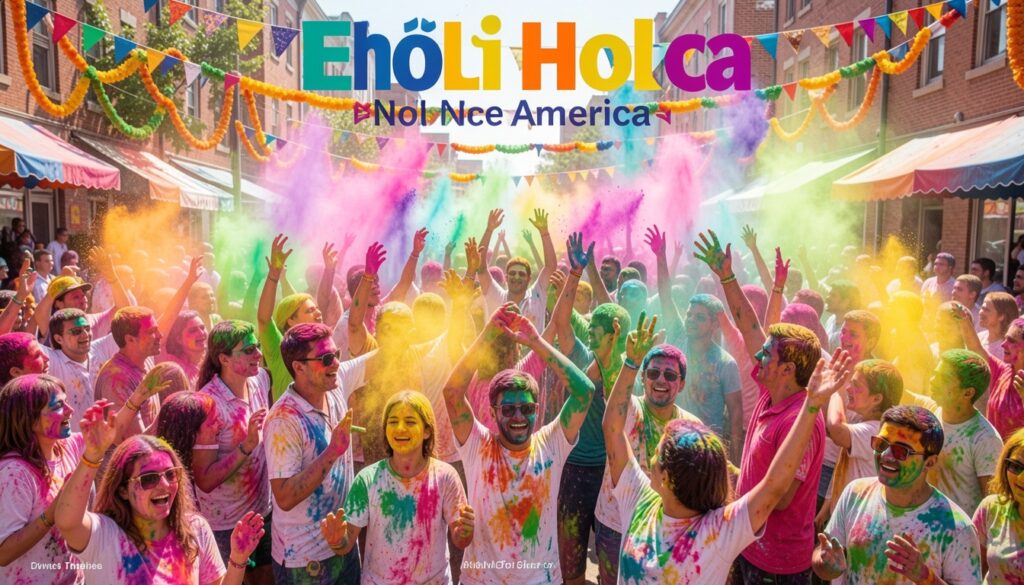
The United States has a growing number of Holi celebrations. The largest and most recognizable events can be found in cities with established Indian and South Asian communities.
New York and New Jersey
The New York metropolitan area has a large Indian-American population and frequently hosts South Asian cultural events. Look for Holi celebrations at temples, community organizations, cultural centers, and public venues in New York and New Jersey.
Houston, Texas
Houston is home to a large and diverse South Asian community. Indian cultural associations and temples may organize Holi events featuring food, music, dancing, and color activities.
Dallas–Fort Worth
The Dallas–Fort Worth area is another strong destination for Indian cultural celebrations. Visitors can check local Hindu temples and Indian community organizations for Holi programs.
Chicago, Illinois
Chicago and its suburbs have a long-established Indian-American community. Holi events may range from temple gatherings to large outdoor cultural festivals.
Los Angeles and Southern California
Southern California offers numerous Indian cultural events throughout the year. Holi celebrations can be found through temples, community groups, universities, and cultural organizations.
Bay Area, California
The San Francisco Bay Area and surrounding communities have a large South Asian population and frequently host Indian cultural festivals.
Washington, D.C., Maryland, and Northern Virginia
The D.C. metropolitan area is another excellent place to look for Holi celebrations. Events may be hosted by temples, Indian associations, and community organizations.
How to Find Holi Events Near You
Because event dates and locations change every year, search for:
“Holi 2026 near me”
“Holi festival 2026 [your city]”
“Holi celebration [your state]”
Also check the official websites and social pages of local temples and Indian cultural organizations.
Holi in India vs. Holi in the USA
Holi can feel very different depending on where you celebrate.
| Experience | India | USA |
| Community size | Often very large | Varies by city |
| Public celebrations | Extremely common | Common in major metro areas |
| Festival date | Based on Hindu calendar | Same religious date, but events may be scheduled differently |
| Color play | Often widespread | Usually controlled at organized events |
| Temple rituals | Widely observed | Available through Hindu temples |
| Food | Regional and diverse | Often catered or community-prepared |
| Travel demand | High around major destinations | Usually concentrated around local events |
| Event rules | Vary widely | Often more structured |
| Best for visitors | Immersive cultural experience | Convenient community experience |
If you are visiting India specifically for Holi, cities such as Mathura, Vrindavan, Jaipur, Delhi, and Udaipur are popular choices, although each offers a different experience.
Mathura and Vrindavan are especially associated with Krishna traditions and have distinctive Holi celebrations.
Holi 2026 Festival Tips for First-Time Visitors

If this is your first Holi celebration, a little preparation can make the day much easier.
Protect Your Phone and Camera
Colored powder and water can damage electronics. Use a waterproof phone pouch or protective case.
If you are using a professional camera, protect it carefully and avoid taking expensive equipment into dense color-play areas.
Protect Your Eyes
Do not allow powder to be thrown directly into your eyes. Sunglasses or protective eyewear can help during outdoor celebrations.
If you wear contact lenses, consider asking your eye-care professional about the safest approach before participating in heavy color play.
Apply Oil or Moisturizer
Some participants apply coconut oil or another suitable moisturizer to their hair and skin before the celebration. This can make washing off color easier.
Avoid putting products into your eyes or using anything that irritates your skin.
Keep Your Distance From Aggressive Crowds
Holi should be fun, not uncomfortable. If someone does not want color applied, respect that choice.
Likewise, do not assume that every person wants to be touched or sprayed with water.
Bring a Change of Clothes
Pack a clean outfit for afterward. A plastic bag can also help separate colorful clothing from the rest of your belongings.
Holi Safety Tips
A successful Holi celebration starts with basic safety.
Choose Safe Colors
Avoid industrial dyes, unknown powders, and products without ingredient information. Buy colors from reputable sellers or established event organizers.
Stay Hydrated
Outdoor Holi events can involve hours of activity. Drink water regularly, especially if the weather is warm.
Protect Your Skin
People with sensitive skin should take extra care. Consider doing a small patch test with a new product before the festival.
Be Careful With Water
Water balloons and water sprays can create slippery surfaces. Wear shoes with good grip.
Watch Children Closely
Young children may enjoy Holi but can become overwhelmed by loud music, crowds, powder, and water. Give them a quiet area to take breaks.
Respect Consent
This is one of the most important modern Holi etiquette rules.
Never force color, water, food, or physical contact on another person.
A respectful “Happy Holi!” and a gentle application of color are much better than an unwanted interaction.
Holi Food, Sweets, and Drinks

Food is an important part of the festival.
Popular Holi Foods
Gujiya: A sweet pastry filled with ingredients such as khoya, nuts, coconut, and sugar.
Samosas: Savory pastries commonly filled with potatoes and spices.
Pakoras: Crispy fritters made with vegetables or other ingredients.
Chaat: A broad category of flavorful Indian street-food snacks.
Jalebi: A bright, crispy, syrup-soaked sweet often served during celebrations.
Thandai: A traditional festive drink that may contain milk, nuts, spices, saffron, and other ingredients. Some versions may contain cannabis-derived ingredients, so always ask about ingredients before drinking.
If you are attending a public event in the USA, check food labels and ask about common allergens such as nuts, dairy, wheat, and sesame.
Traditional Holi Celebration vs. Modern Holi Events
Holi traditions continue to evolve, especially in the United States.
| Traditional Celebration | Modern Community Event |
| Family and neighborhood focused | Large public gathering |
| Religious rituals | Cultural entertainment |
| Traditional foods | Food trucks and catered meals |
| Natural or homemade colors | Commercial skin-safe colors |
| Local music | DJs and live performances |
| Home-based celebration | Parks and event venues |
| Informal participation | Ticketed or organized activities |
Neither approach is automatically “more authentic.” Holi has many regional traditions, and communities naturally adapt celebrations to their local environment.
Pros and Cons of Celebrating Holi in the USA
| Pros | Cons |
| Easy access for Indian-American families | Events may not fall exactly on March 4 |
| Organized public celebrations | Tickets may sell out |
| Family-friendly options are available | Large crowds can be busy |
| Diverse Indian food and entertainment | Outdoor weather can be unpredictable |
| No international travel required | Smaller cities may have fewer events |
| Good option for first-time visitors | Some celebrations may feel less traditional |
The best choice depends on what you want. If you want convenience and community, a U.S. event can be excellent. If you want a deeply immersive cultural journey, celebrating in India may provide a broader experience.
Holi 2026 Travel Checklist
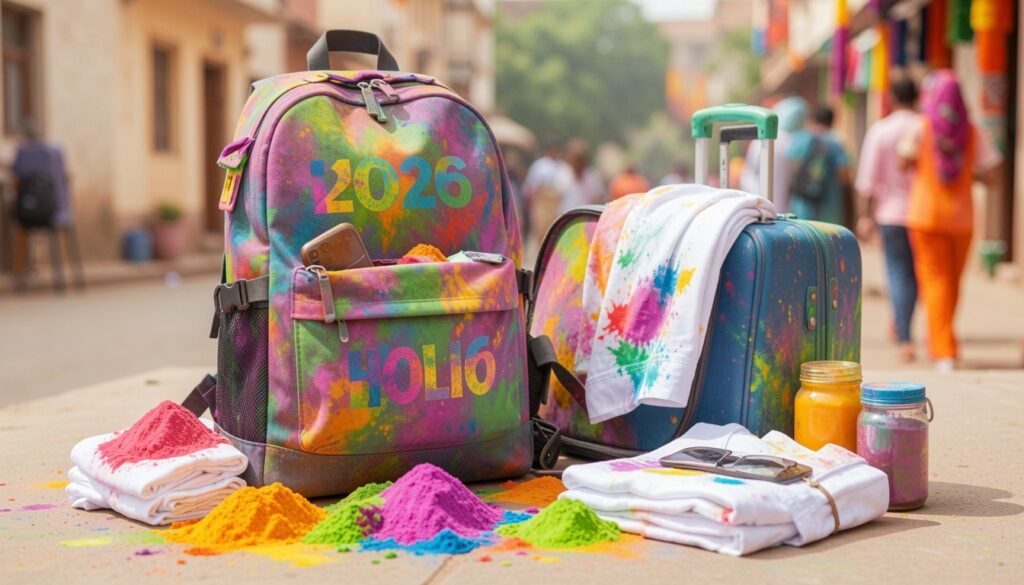
Before heading to a Holi celebration, use this simple checklist:
- Confirm the event date and location.
- Buy tickets in advance if required.
- Check whether the event allows outside food or drinks.
- Wear old clothes and comfortable shoes.
- Bring sunglasses or protective eyewear.
- Protect your phone from water and powder.
- Carry tissues or a small towel.
- Bring drinking water if the event permits it.
- Pack a change of clothes.
- Check the weather forecast.
- Read the event’s color and safety rules.
- Respect people’s personal boundaries.
- Ask about food allergens before eating.
- Plan transportation before the celebration begins.
Common Mistakes to Avoid During Holi
Wearing Expensive Clothing
Holi colors can stain clothing. Leave expensive outfits at home.
Bringing Unprotected Electronics
Powder and water can quickly damage phones and cameras.
Ignoring Event Rules
Organized U.S. celebrations often have rules about colors, water, food, alcohol, parking, and age restrictions.
Read them before arriving.
Assuming Everyone Wants Color
Holi is about joy and connection, but consent matters. Always respect a person’s choice.
Forgetting Transportation
Large festivals can create traffic and crowded parking areas. Plan your route in advance.
Using Unsafe Colors
Cheap or unlabeled powders may contain ingredients that irritate the skin, eyes, or respiratory system.
Relying on an Indian Festival Time for a U.S. Event
Religious observance times can depend on location. Check local Hindu calendars and your temple’s guidance.
Treating Holi Only as a Photo Opportunity
Take photographs, but also learn about the festival, interact respectfully, and appreciate its cultural meaning.
Expert Tips for a Better Holi 2026 Experience
Book Early
Popular Holi events can attract large crowds. If a festival requires tickets, purchase them through the organizer’s official channel.
Check the Weather
March weather can vary significantly across the United States. California, Texas, New York, and other regions can have very different conditions.
Choose the Right Event
Families with young children may prefer a daytime temple or community event. Adults looking for music and dancing may prefer a larger cultural festival.
Ask Before Photographing People
Holi creates incredible photographs, but cultural respect should come first. Ask before taking close-up portraits.
Learn a Few Hindi Greetings
You can simply say:
“Happy Holi!”
You may also hear “Bura na mano, Holi hai!”, traditionally associated with the playful spirit of the festival. However, modern celebrations should still respect consent and personal boundaries.
Keep Your Schedule Flexible
If you are traveling for Holi, leave extra time for traffic, parking, security checks, and crowds.
Follow Local Temple Guidance
Hindu traditions differ across communities and regions. Local organizers can explain the customs they follow.
Holi Etiquette for International Visitors
If you are unfamiliar with Holi, these simple rules can help:
- Ask before applying color.
- Do not throw powder into someone’s face.
- Respect people who choose not to participate.
- Dress appropriately for the venue.
- Ask permission before taking close-up photos.
- Follow temple and event instructions.
- Avoid making jokes about religious traditions.
- Be careful with food allergies.
- Keep public spaces clean.
- Thank event organizers and volunteers.
The goal is to participate with curiosity and respect.
FAQ s
When is Holi 2026?
Holi 2026 is on Wednesday, March 4, 2026. This is the main Rangwali Holi or color celebration. Holika Dahan is observed on March 3.
What is Holi 2026 called?
The main color celebration is commonly called Rangwali Holi, while regional names include Dhulandi and Dhuleti.
Is Holi a public holiday in the USA?
Holi is not a federal public holiday in the United States. However, schools, universities, temples, businesses, and cultural organizations may host Holi events.
Where can I celebrate Holi in the USA?
Look for celebrations in major Indian-American communities, including areas around New York and New Jersey, Houston, Dallas–Fort Worth, Chicago, Southern California, the San Francisco Bay Area, and the Washington, D.C. region.
What should I wear to Holi?
Wear inexpensive clothing that you do not mind staining. White or light-colored clothing is popular because the colors show clearly.
Are Holi colors safe?
Choose reputable, clearly labeled, non-toxic and skin-safe colors. Avoid unknown powders and keep powder away from the eyes.
What food is eaten during Holi?
Popular foods include gujiya, samosas, pakoras, chaat, jalebi, dahi vada, and thandai. Recipes vary by region and family.
Can non-Hindus celebrate Holi?
Many public cultural Holi events welcome people from different backgrounds. Participate respectfully, follow event rules, and learn about the festival’s cultural meaning.
Is Holi suitable for children?
Yes, many community events are family-friendly. Parents should choose organized events and supervise children around crowds, powder, water, loud music, and unfamiliar foods.
How do I find Holi events near me?
Search for “Holi 2026 near me” or “Holi festival 2026 + your city.” Then verify the event through the organizer’s official website or social channel because dates and locations can change.
Conclusion
Holi 2026 is more than a festival of colors—it is a joyful celebration of love, friendship, family, and the spirit of new beginnings. Whether you celebrate at home, visit a local temple, or join a community Holi event in the USA, the festival offers a wonderful opportunity to experience Indian culture and create lasting memories.
To enjoy Holi safely, plan ahead, use skin-friendly colors, stay hydrated, protect your eyes and valuables, and respect personal boundaries. With the right preparation and a positive spirit, Holi 2026 can be a colorful, meaningful, and unforgettable celebration for everyone.
Read More:Sawan Month 2026: Dates, Rituals & Spiritual Significance Archyam
