

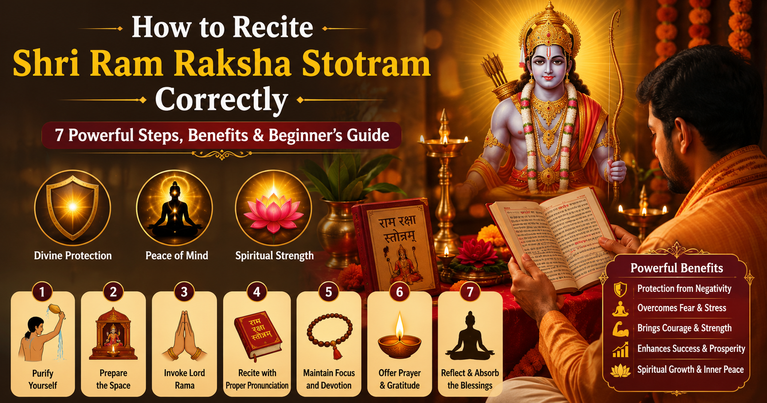
Shri Ram Raksha Stotram is a traditional Hindu devotional hymn dedicated to Lord Rama. Many devotees recite it as part of their daily prayer, spiritual practice, or personal routine. For beginners, however, the Sanskrit verses and traditional pronunciation can initially feel difficult.
Learning how to recite Shri Ram Raksha Stotram correctly does not mean that you need to memorize everything on your first attempt. A better approach is to learn gradually, understand the basic meaning, listen carefully to a reliable recitation, and build a regular practice.
For readers in the United States, the practice can also fit easily into a modern schedule. You can recite the stotram at home, during a quiet morning routine, or as part of a family prayer. The key is to create a respectful environment and approach the prayer with sincerity.
This guide explains the traditional background, beginner-friendly recitation method, pronunciation tips, common mistakes, practical routines, benefits, and frequently asked questions.
Quick Answer:
If you are wondering how to recite Shri Ram Raksha Stotram correctly, begin with a clean and quiet space, settle your mind, and recite the stotram slowly with attention to pronunciation. Traditionally, devotees recite it as a devotional prayer to Lord Rama.
A simple beginner routine is:
- Take a bath or wash your hands and face.
- Sit in a clean, peaceful place.
- Keep an image or murti of Lord Rama nearby if it helps your focus.
- Light a diya if this is part of your personal tradition.
- Begin with a respectful prayer to Lord Rama.
- Recite the Shri Ram Raksha Stotram slowly and clearly.
- Focus on the meaning rather than rushing through the Sanskrit.
- End with a short prayer and gratitude.
There is no need to treat the practice as a competition. Correct pronunciation, concentration, devotion, and consistency are more important than speed.
What Is Shri Ram Raksha Stotram?
Shri Ram Raksha Stotram, also called Ram Raksha Stotra, is a Sanskrit devotional hymn associated with Lord Rama.
The title can be understood broadly as:
- Shri an auspicious and respectful honorific
- Ram Lord Rama
- Raksha protection
- Stotram/Stotra a hymn of praise
The prayer is traditionally attributed to Budha Kaushika Rishi. Traditional accounts connect its revelation with Lord Shiva and a dream experience described in the opening portion of the text.
The stotram praises Lord Rama and invokes different aspects and names associated with him. It also contains protective imagery, asking for divine protection of different parts of the body.
Why Do Devotees Recite It?
Devotees may include Ram Raksha Stotram in their spiritual routine for several reasons:
- To express devotion to Lord Rama
- To cultivate inner confidence and faith
- To create a peaceful prayer routine
- To remember Rama’s qualities
- To develop concentration
- To begin or end the day with prayer
- To connect with a family or cultural tradition
These are spiritual and devotional purposes. Claims that a religious hymn can diagnose, treat, or prevent a medical condition should not replace professional medical care.
How to Recite Shri Ram Raksha Stotram Correctly: Step-by-Step
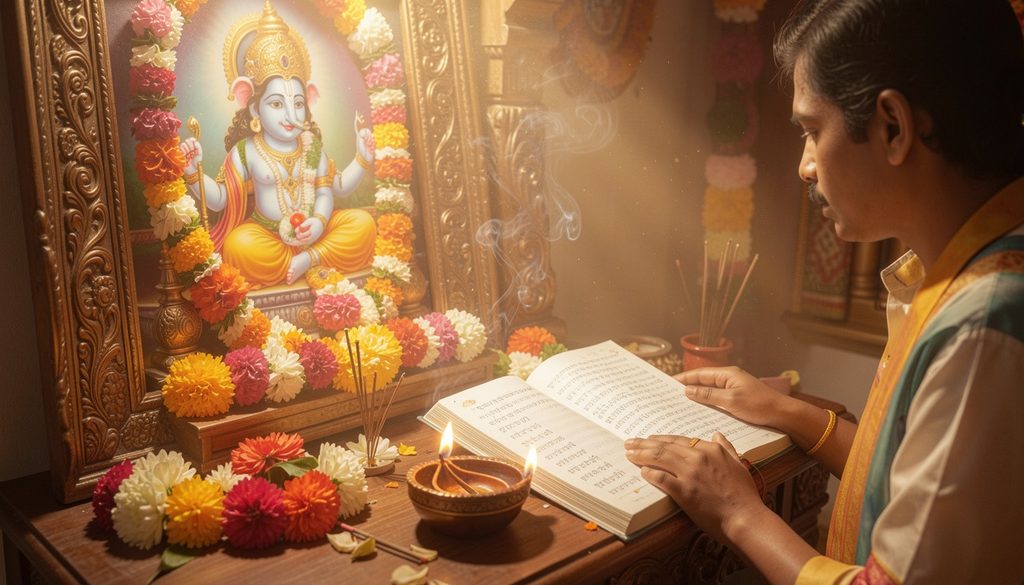
The best way for a beginner to learn how to recite Shri Ram Raksha Stotram correctly is to break the practice into simple stages.
Choose a Quiet and Clean Place
Find a location where you can pray without unnecessary interruptions.
You do not need an elaborate prayer room. A clean corner of your home can be enough.
For USA-based devotees, this may be:
- A home puja area
- A meditation corner
- A quiet bedroom
- A family prayer space
- A clean outdoor area
The purpose is to create a setting where you can concentrate.
Prepare Yourself
Traditional Hindu practices often emphasize cleanliness before prayer.
A simple routine can include:
- Bathing before prayer when practical
- Wearing clean clothes
- Washing your hands and face
- Sitting comfortably
- Keeping your phone on silent
You do not need to create stress around these steps. If you are learning the stotram, sincerity and attention are more useful than worrying about perfection.
Sit Comfortably
You can sit on the floor, on a meditation cushion, or on a chair.
The important thing is to maintain a comfortable and reasonably upright posture.
If sitting on the floor is difficult, using a chair is perfectly practical. Devotional practice should not become physically uncomfortable.
Begin With a Calm Mind
Before starting the verses, take a few slow breaths.
Close your eyes briefly and remember Lord Rama.
You may silently express a simple intention such as:
“May I recite this prayer with devotion, attention, and respect.”
This short pause can help separate your prayer time from the distractions of daily life.
Start the Stotram Slowly
Beginners should avoid rushing.
Listen to a reliable traditional recitation and follow the Sanskrit text carefully. If you do not know Sanskrit, first focus on hearing the syllables correctly.
A useful learning pattern is:
Listen → Repeat → Check → Practice → Recite independently
This method is often easier than trying to memorize the entire prayer immediately.
Pay Attention to Pronunciation
Sanskrit pronunciation can change depending on how syllables are spoken.
Try to distinguish:
- Short and long vowel sounds
- Aspirated consonants
- Combined consonants
- Word endings
- Pauses between phrases
If possible, learn from a knowledgeable Sanskrit teacher, traditional reciter, or trusted temple resource.
Do not become discouraged by mistakes during your first few attempts.
Finish With Gratitude
After completing the stotram, sit quietly for a moment.
You may offer a simple prayer to Lord Rama, such as a personal expression of gratitude and devotion.
The ending does not have to be complicated.
Shri Ram Raksha Stotram Pronunciation: Beginner Tips

Pronunciation is one of the most important parts of learning how to recite Shri Ram Raksha Stotram correctly.
Because the stotram is written in Sanskrit, a Roman transliteration can help beginners, but transliteration cannot always reproduce every Sanskrit sound perfectly.
Listen Before You Memorize
Instead of repeatedly guessing the pronunciation, listen to a trusted recitation.
Pay attention to:
- The length of vowels
- Where the reciter pauses
- How consonant combinations sound
- The rhythm of each verse
Break Long Verses Into Smaller Parts
A long Sanskrit verse can look intimidating.
Divide it into short phrases.
For example:
Phrase 1 → Pause → Phrase 2 → Pause → Phrase 3
Practice each part separately before joining them together.
Avoid Excessive Speed
Fast recitation may sound impressive, but it can make pronunciation harder for beginners.
Start slowly.
Once you become familiar with the words, your natural pace may increase.
Learn Devanagari Gradually
If you are comfortable learning languages, consider learning basic Devanagari.
Understanding the script can eventually help you identify Sanskrit sounds more accurately than relying only on English transliteration.
Understanding the Meaning While You Recite
A common beginner question is whether they must understand every Sanskrit word before reciting.
Understanding the meaning is helpful, but you do not need to become a Sanskrit scholar before beginning devotional practice.
The stotram contains praises and protective invocations connected with Lord Rama.
Some sections describe Rama’s qualities, while others traditionally invoke different forms or names of Rama in connection with protection.
Why Meaning Matters
When you understand what you are saying, the prayer can become more meaningful.
Instead of treating the stotram as a collection of unfamiliar sounds, you can connect the verses with ideas such as:
- Dharma
- Courage
- Compassion
- Truthfulness
- Devotion
- Protection
- Self-discipline
Lord Rama is traditionally remembered as an embodiment of righteous conduct, and these values can become part of personal reflection.
Beginner Learning Method
Try this three-step approach:
Week 1: Listen and learn pronunciation.
Week 2: Read a translation alongside the Sanskrit.
Week 3: Recite without constantly checking the translation.
This approach makes the practice easier and more natural.
Best Time to Recite Shri Ram Raksha Stotram
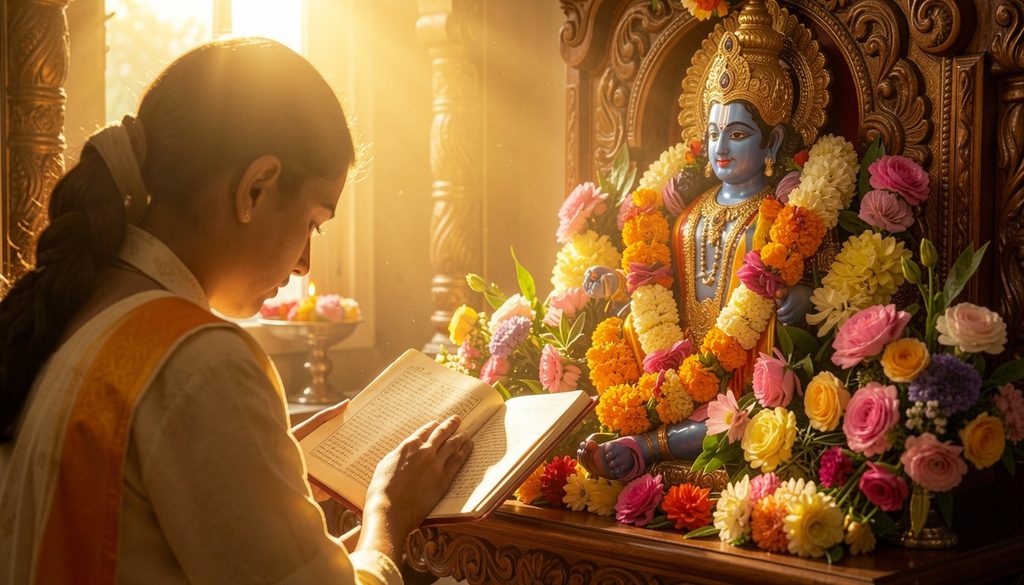
There is no single universally required time that every Hindu tradition follows.
Many devotees prefer morning prayer, when the surroundings are quiet and the mind may feel fresh.
Others recite devotional hymns in the evening or before going to sleep.
Morning Recitation
Morning practice may work well because:
- The environment can be quieter.
- You can begin the day with prayer.
- It can become part of a consistent routine.
Evening Recitation
Evening can be practical for people with work, school, or family responsibilities.
A short evening prayer routine may help create a peaceful transition between the day’s activities and personal spiritual time.
Can You Recite It at Night?
Many devotees include prayers in their nighttime routine. However, exact practices can differ among traditions.
The most useful approach is to choose a time you can follow consistently and respectfully.
Is There a Required Number of Times?
There is no need for a beginner to assume that more repetitions automatically mean better devotion.
If your family or spiritual teacher has given you a specific practice, follow that guidance.
Otherwise, begin with one attentive recitation.
Shri Ram Raksha Stotram Benefits: Spiritual and Practical Perspectives
Devotees traditionally associate Ram Raksha Stotram with spiritual protection, devotion, courage, and inner strength.
It is important to describe these benefits carefully. Religious faith is personal, and spiritual benefits are not the same as scientifically proven medical effects.
Encourages Regular Prayer
A daily recitation can create structure in your spiritual routine.
Supports Focus
Repeating a familiar Sanskrit hymn requires attention to words, sounds, and rhythm.
Encourages Reflection
The qualities associated with Lord Rama can encourage reflection on courage, duty, truth, and compassion.
Creates a Sense of Devotional Connection
For believers, regular prayer can strengthen their connection with their faith and tradition.
Builds a Family Tradition
Parents and grandparents can teach children the prayer, helping preserve cultural traditions across generations.
Provides a Quiet Daily Pause
A few minutes of focused prayer can create a deliberate break from screens, work, and daily distractions.
Encourages Spiritual Confidence
Devotees may experience a personal sense of faith and reassurance through prayer.
Spiritual Benefits vs Medical Claims
| Traditional devotional benefit | What it should not be presented as |
| Spiritual protection | A guaranteed medical treatment |
| Greater devotion | A substitute for professional care |
| Inner confidence | A guaranteed cure for anxiety or disease |
| Focused prayer | A replacement for therapy or medication |
| Cultural connection | A scientifically guaranteed supernatural outcome |
Prayer can be meaningful while still being approached responsibly.
Traditional Practice vs Modern Beginner Routine

Modern schedules can make traditional prayer routines difficult.
That does not mean you must abandon the practice.
Instead, adapt the routine while preserving its devotional purpose.
| Traditional-style practice | Modern beginner approach |
| Full bathing ritual | Wash hands and face when time is limited |
| Dedicated puja room | Clean prayer corner |
| Oil or ghee diya | Safe lamp according to household rules |
| Sanskrit text | Sanskrit text with transliteration |
| Memorized recitation | Read from a trusted text |
| Longer prayer routine | Short, consistent practice |
| Family-led learning | Online learning plus qualified guidance |
The goal is not to turn a sacred practice into a rushed task.
Instead, create a sustainable routine that respects the tradition.
For Busy USA Families
A practical routine could be:
Morning: 10–20 minutes of prayer
Weekend: Longer family recitation
Children: Learn a few lines at a time
Beginners: Listen and read along before memorizing
Pros and Cons of Reciting Shri Ram Raksha Stotram
| Pros | Cons / Challenges |
| Encourages regular devotional practice | Sanskrit pronunciation can be difficult |
| Helps preserve cultural traditions | Memorization takes time |
| Can create a quiet daily routine | Busy schedules can interrupt consistency |
| Can be practiced at home | Different traditions may teach variations |
| Supports reflection on Rama’s qualities | Transliteration may not capture every Sanskrit sound |
| Suitable for individual or family prayer | Beginners may feel overwhelmed by the full text |
The “cons” are mostly learning challenges rather than disadvantages of devotional practice.
Common Mistakes When Reciting Shri Ram Raksha Stotram
Learning how to recite Shri Ram Raksha Stotram correctly also means knowing what to avoid.
Rushing Through the Verses
Speed can reduce clarity.
Better approach: Start slowly and increase your pace only when you are comfortable.
Guessing Sanskrit Pronunciation
English speakers may naturally pronounce Sanskrit according to English spelling.
Better approach: Listen to a reliable Sanskrit recitation.
Treating Transliteration as Perfect Pronunciation
Roman letters are useful but have limitations.
Better approach: Compare transliteration with Devanagari and audio.
Focusing Only on Quantity
Reciting a certain number of times is not the only measure of devotional practice.
Better approach: Focus on attention, respect, and consistency.
Becoming Anxious About Small Errors
Beginners naturally make mistakes.
Better approach: Correct yourself, learn gradually, and continue respectfully.
Making Medical Claims About the Stotram
A devotional hymn should not be presented as a substitute for healthcare.
Better approach: Describe spiritual and personal benefits as matters of faith and individual experience.
Ignoring Your Own Tradition
Different families and lineages may have specific practices.
Better approach: Follow your guru, family tradition, or temple guidance when available.
Expert Tips for Better Recitation

Prioritize Accuracy Over Speed
Slow and clear practice is better for learning than racing through the verses.
Use One Reliable Version
Do not switch between many texts while learning.
Choose a trusted version and stay consistent.
Learn the Meaning
Even a basic understanding of the verses can make your practice more meaningful.
Record Yourself
If you are comfortable doing so, record your recitation and compare it with a trusted traditional recording.
This can help you notice unclear syllables.
Practice Small Sections
Instead of trying to memorize the entire stotram in one day, learn a few lines at a time.
Create a Fixed Routine
For example:
Wake up → freshen up → sit quietly → recite → short prayer → begin the day.
A repeatable routine is easier to maintain.
Ask a Sanskrit Teacher
If pronunciation is important to you, personal instruction can be valuable.
A qualified teacher can explain sounds that are difficult to understand from English transliteration alone.
Shri Ram Raksha Stotram Daily Recitation Checklist
Use this simple checklist to make your practice consistent:
- Choose a clean and quiet place.
- Wash or bathe according to your usual routine.
- Wear clean, comfortable clothing.
- Keep your prayer text ready.
- Sit comfortably.
- Take a few calm breaths.
- Remember Lord Rama with devotion.
- Recite slowly and clearly.
- Check difficult Sanskrit words.
- Avoid rushing.
- Focus on the meaning where possible.
- End with gratitude.
- Keep your practice consistent.
A Simple 7-Day Beginner Plan
If you are completely new to the stotram, try this seven-day approach.
| Day | Practice |
| Day 1 | Listen to a reliable recitation |
| Day 2 | Read the Sanskrit while listening |
| Day 3 | Practice difficult words |
| Day 4 | Recite short sections independently |
| Day 5 | Complete a slow recitation with the text |
| Day 6 | Review pronunciation and meaning |
| Day 7 | Complete the stotram calmly and reflect on its meaning |
After seven days, repeat the cycle as needed.
The goal is familiarity and confidence—not speed.
How to Recite Shri Ram Raksha Stotram Correctly With Children
Families in the USA may want to introduce Sanskrit prayers to children.
Keep the experience positive.
Start Small
Children do not need to memorize the whole prayer immediately.
Start with:
- The name of Lord Rama
- A short opening prayer
- A few lines
- Simple explanations of Rama’s qualities
Explain the Meaning
Tell children that devotional prayers can be a way to remember values such as:
- Truth
- Courage
- Kindness
- Duty
- Respect
Make It a Family Activity
A weekly family recitation can be easier for children than a demanding daily requirement.
Avoid making pronunciation mistakes feel embarrassing.
Can Beginners Recite Ram Raksha Stotram Without Knowing Sanskrit?
Yes, beginners can learn the stotram even if they do not know Sanskrit.
Start with a reliable text and audio pronunciation guide.
However, if your goal is precise traditional pronunciation, studying Sanskrit pronunciation with a knowledgeable teacher is the strongest approach.
Remember that transliteration is a learning aid, not necessarily a perfect representation of every Sanskrit sound.
Is There a Special Ritual Required Before Recitation?
Practices vary.
Some devotees follow a detailed puja routine, while others simply sit quietly and recite the stotram with devotion.
If your family tradition includes specific preparations, you can follow them.
For beginners without a specific tradition, a simple routine of cleanliness, a quiet space, concentration, and respectful prayer is a practical starting point.
Can I Recite Shri Ram Raksha Stotram From a Phone?
Yes, if that is the most practical way for you to learn.
However, some devotees prefer a physical prayer book because it reduces digital distractions.
If you use a phone:
- Turn off notifications.
- Open the prayer text before beginning.
- Use a reliable source.
- Avoid multitasking.
- Keep the device clean and secure.
The important thing is your attention and respect for the practice.
How Long Does Shri Ram Raksha Stotram Take to Recite?
The time depends on the version, pronunciation, pauses, and speed of the reciter.
A beginner reading carefully may take longer than an experienced devotee who has memorized the prayer.
Do not rush simply to finish within a specific number of minutes.
Can I Recite It Every Day?
Many devotees choose to include Ram Raksha Stotram in a regular prayer routine.
Daily practice can make pronunciation and memorization easier.
However, consistency should be realistic. If your schedule is busy, choose a routine you can maintain without stress.
What Should I Focus on While Reciting?
Focus on three things:
1. Sound: Try to pronounce the Sanskrit carefully.
2. Meaning: Understand the basic ideas expressed in the hymn.
3. Devotion: Remember Lord Rama with sincerity.
If your mind wanders, gently bring it back to the prayer.
Is Ram Raksha Stotram a Mantra?
Ram Raksha Stotram is generally described as a stotra or hymn of praise, rather than simply being classified as one short mantra.
It contains devotional verses and sacred names associated with Lord Rama.
Using the broader term “Ram prayer” may be easier for beginners, but understanding the traditional distinction can improve accuracy.
What Are the Main Spiritual Themes of Ram Raksha Stotram?
Important themes include:
- Devotion to Lord Rama
- Divine protection
- Courage
- Dharma
- Faith
- Purity of intention
- Remembrance of Rama
- Spiritual confidence
These themes can make the stotram more than a memorization exercise.
FAQs
How to recite Shri Ram Raksha Stotram correctly for the first time?
Start in a clean, quiet place. Use a reliable Sanskrit text and audio recording, recite slowly, and focus on pronunciation. You do not need to memorize the entire stotram immediately.
What is the best time to recite Shri Ram Raksha Stotram?
Many devotees prefer morning prayer, but evening or another quiet time can also work. There is no need to force a schedule that you cannot maintain.
Can I recite Ram Raksha Stotram without knowing Sanskrit?
Yes. Beginners can use transliteration and audio guidance. For more accurate pronunciation, learning basic Sanskrit sounds or studying with a qualified teacher is helpful.
How many times should I recite Ram Raksha Stotram?
The appropriate number can vary according to tradition and personal practice. Beginners can start with one attentive recitation rather than focusing only on repetition.
Can women and men both recite Ram Raksha Stotram?
Devotional practices can vary across communities and traditions. Many devotees include Rama prayers in their personal and family worship. If you follow a particular lineage, observe its guidance.
Can children learn Shri Ram Raksha Stotram?
Yes. Children can learn it gradually. Start with short sections, explain the basic meaning, and make the learning experience positive rather than stressful.
Should I memorize the whole stotram?
Memorization is optional for many personal devotional practices. Reading from a trusted text while learning is completely practical.
What if I pronounce a Sanskrit word incorrectly?
Correct it when you learn the proper pronunciation, but do not become discouraged. Beginners naturally make mistakes. Consistent learning is more useful than anxiety.
Can I listen to Ram Raksha Stotram instead of reciting it?
Listening can be a useful learning method, especially for pronunciation. If you want to develop a personal recitation practice, gradually read and repeat the verses yourself.
Does Ram Raksha Stotram provide guaranteed protection?
The stotram is traditionally regarded by devotees as a prayer for divine protection. Such protection is a matter of religious faith and should not be presented as a scientifically guaranteed outcome.
Final Thoughts:
Learning how to recite Shri Ram Raksha Stotram correctly is a gradual process. You do not need perfect Sanskrit pronunciation or complete memorization on your first day.
Start with a clean and peaceful setting. Listen to a reliable recitation, practice difficult sounds slowly, learn the basic meaning, and build a routine that fits your life. If you belong to a specific family, temple, or spiritual tradition, respect its guidance on pronunciation and ritual practice.
Most importantly, approach the stotram with sincerity rather than pressure. For devotees, the prayer is not simply a collection of Sanskrit verses—it is an opportunity to remember Lord Rama and reflect on values such as courage, dharma, devotion, compassion, and truth.
If you are beginning today, keep your first practice simple: sit calmly, listen carefully, recite slowly, and learn one step at a time.
Call to Action: Save this guide for your daily prayer routine, share it with someone learning Ram Raksha Stotram, and explore related Hindu festival and spiritual travel guides to deepen your understanding of Indian devotional traditions.
Read More:Shri Ram Raksha Stotram Daily Chanting Benefits: 15 Powerful Spiritual Benefits & Expert Guide
