


Shri Ram Raksha Stotram daily chanting benefits are often discussed in Hindu devotional traditions as a combination of spiritual protection, devotion, courage, concentration, and inner peace. This Sanskrit hymn is dedicated to Lord Shri Ram and is traditionally viewed as a protective prayer. For many devotees, chanting it regularly is not simply about asking for protection it is also a way to remember Rama’s qualities and bring greater discipline into daily life.
A daily prayer routine can be especially meaningful when it is approached with sincerity rather than fear or expectation of guaranteed results. Reciting Shri Ram Raksha Stotram can provide a quiet moment away from a busy schedule, allowing you to focus on prayer, pronunciation, reflection, and devotion.
In this guide, we explore the 15 important spiritual benefits associated with daily chanting, the traditional meaning behind the practice, the best time to recite it, beginner-friendly methods, common mistakes, and practical tips. We will also separate traditional spiritual beliefs from claims that should not be presented as guaranteed medical or worldly outcomes.
Quick Answer:
The Shri Ram Raksha Stotram daily chanting benefits traditionally associated with regular recitation include:
- Encouraging devotion to Lord Rama
- Supporting a calm prayer routine
- Improving concentration during spiritual practice
- Encouraging courage and inner strength
- Developing consistency and discipline
- Creating time for reflection
- Strengthening faith
- Encouraging positive thinking
- Supporting a sense of spiritual protection
- Helping beginners establish a meditation-like routine
- Encouraging remembrance of dharma and righteous conduct
- Creating a peaceful start or end to the day
- Deepening familiarity with Sanskrit prayer
- Providing a meaningful pre-travel or pre-event prayer
- Creating a stronger personal connection with Hindu devotional traditions
These are spiritual and personal benefits, not guaranteed medical, financial, or supernatural results.
What Is Shri Ram Raksha Stotram?
Shri Ram Raksha Stotram is a Sanskrit devotional hymn associated with Lord Shri Ram. The word Raksha means protection, while Stotram means a hymn of praise.
The traditional text identifies Budha Kaushika Rishi as the seer of the hymn and Sita-Ramachandra as its deity. Its opening section also presents the prayer as a protective spiritual practice.
The hymn is particularly known for its kavacha, or protective imagery. It invokes different names and forms of Rama while connecting them with protection of different parts of the devotee’s body.
This protective structure helps explain why the prayer has remained important in devotional practice.
Why do people chant it daily?
People may choose daily recitation for different reasons. Some want a regular prayer routine, while others are attracted to the traditional idea of divine protection. Others simply appreciate the discipline, rhythm, Sanskrit language, and opportunity to remember Lord Rama.
There does not need to be one reason for everyone.
15 Shri Ram Raksha Stotram Daily Chanting Benefits

Encourages Devotion to Lord Rama
The first and most important benefit is devotional.
Regularly repeating the names and qualities associated with Rama keeps the mind focused on the deity. For devotees, this repeated remembrance can strengthen bhakti, or devotional connection.
Instead of treating chanting as a quick task, you can use it as a daily opportunity to reflect on qualities traditionally associated with Rama, including righteousness, courage, responsibility, compassion, and self-control.
Creates a Peaceful Daily Routine
Modern life can become crowded with work, school, family responsibilities, travel, and digital distractions.
A daily recitation creates a fixed period when you step away from those distractions.
Even a simple routine such as:
Wake up → freshen up → sit quietly → recite → reflect for two minutes
can create a sense of structure.
The peaceful environment surrounding prayer may be just as important to some practitioners as the words themselves.
Supports Focus and Concentration
Sanskrit recitation requires attention to sounds, words, rhythm, and pronunciation.
When you chant carefully, you cannot give your full attention to unrelated thoughts at the same moment.
This makes recitation a useful focus practice, although it should not be described as a guaranteed treatment for concentration problems.
For beginners, starting slowly can make the practice more useful than trying to complete the entire stotram quickly.
Encourages Courage and Inner Strength
Rama is widely viewed within Hindu tradition as an example of dharma, courage, duty, and righteous action.
Remembering these qualities during daily chanting can become a personal reminder to face difficult situations with greater steadiness.
For example, before a stressful workday, you might use your prayer time to remind yourself:
“I will remain calm, act honestly, and do my best.”
That connects spiritual practice with everyday behavior.
Strengthens Faith
Daily practice can strengthen a person’s sense of spiritual connection.
For believers, repeatedly turning toward Rama during prayer can create a feeling of trust and surrender.
Faith is personal, so the experience will differ from one person to another. A responsible guide should therefore describe this as a potential spiritual experience, rather than promising the same result to everyone.
Encourages Discipline and Consistency
One of the most practical Shri Ram Raksha Stotram daily chanting benefits is the development of routine.
A practice that takes place every morning or evening requires commitment.
Over time, that consistency can become part of a broader lifestyle of:
- regular prayer
- reflection
- mindfulness
- self-discipline
- gratitude
- intentional living
The goal is not to force yourself into a complicated religious schedule. A simple routine that you can maintain is often more realistic.
Provides a Sense of Spiritual Protection
Protection is at the heart of the hymn’s traditional identity.
Devotees may recite it with the intention of seeking Rama’s protection from fear, uncertainty, and difficulties.
However, spiritual protection should not be confused with guaranteed physical protection.
For example, chanting before a road trip can be a meaningful devotional practice, but it should not replace wearing a seat belt, checking the vehicle, or following traffic laws.
Prayer and practical responsibility can work together.
Promotes Reflection on Dharma
Rama is strongly associated with dharma, often translated as righteous duty or moral order.
Daily recitation can therefore become an opportunity to ask:
- Am I acting honestly?
- Am I keeping my promises?
- Am I treating people fairly?
- Am I responding to problems with courage?
- Am I fulfilling my responsibilities?
This makes the practice more meaningful than simply repeating sounds without reflection.
Can Create a Calmer Start to the Day
Morning chanting can provide a peaceful transition between sleep and the demands of the day.
Instead of immediately checking email, social media, or news, you can begin with a few minutes of prayer.
A simple morning routine might look like:
| Time | Activity |
| 6:30 AM | Wake up |
| 6:40 AM | Freshen up |
| 6:50 AM | Sit in prayer |
| 6:52 AM | Begin recitation |
| 7:05 AM | Quiet reflection |
| 7:10 AM | Begin daily activities |
The exact timing does not matter as much as consistency.
Supports Evening Reflection
Daily chanting does not have to happen in the morning.
Some people find evening prayer more comfortable because the day’s responsibilities are finished.
An evening recitation can provide a transition from a busy day into rest.
You might combine it with a short reflection:
What went well today? What can I improve tomorrow?
This can turn the prayer into a meaningful daily ritual.
Helps Build Familiarity With Sanskrit
For people interested in Sanskrit, repeated recitation provides regular exposure to traditional vocabulary and pronunciation.
Beginners can start with Roman transliteration and gradually become familiar with Devanagari.
It is important to use a trustworthy version of the text. Sacred Sanskrit passages should not be copied from random websites without verification.
Encourages Positive Spiritual Habits
A regular devotional routine can encourage other positive habits.
For example, someone who begins each morning with prayer may also become more intentional about:
- gratitude
- meditation
- reading
- mindful breathing
- charitable actions
- respectful behavior
The prayer itself does not automatically create these habits. Rather, it can become a starting point for a more intentional lifestyle.
Provides Comfort During Difficult Times
People often turn toward prayer when life feels uncertain.
Daily chanting may provide a familiar spiritual routine during stressful periods.
For a devotee, repeating a familiar prayer can create a sense of connection and emotional comfort.
However, if someone is experiencing serious mental or physical health concerns, devotional practice should complement appropriate professional care rather than replace it.
Can Become Part of Travel and Pilgrimage Traditions
For travelers visiting Hindu temples or spiritual destinations, learning a traditional prayer can make the cultural experience more meaningful.
Someone visiting Ayodhya, for example, may already have an interest in Rama-centered traditions.
The prayer can become part of a broader exploration of:
- Hindu traditions
- Indian temple culture
- Sanskrit literature
- pilgrimage
- devotional music
- religious architecture
For American travelers visiting India, learning basic temple etiquette alongside the religious background is especially useful.
Deepens Personal Spiritual Connection
Perhaps the most personal benefit is the sense of connection that develops over time.
A prayer repeated every day can become associated with important moments in a person’s life celebrations, difficult decisions, travel, family events, or quiet mornings.
That personal relationship cannot be measured by a simple number.
For many devotees, this is the deepest reason to continue.
Traditional Spiritual Benefits vs. Evidence-Based Claims
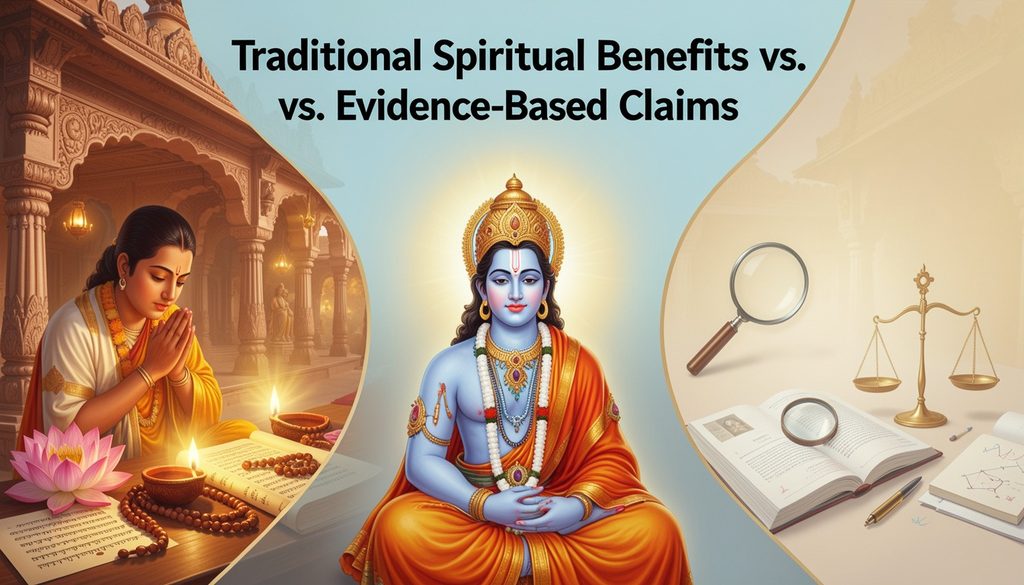
This distinction is important for creating trustworthy religious content.
| Traditional belief | Responsible interpretation |
| Divine protection | A devotional belief and spiritual intention |
| Removal of fear | May provide personal comfort and confidence |
| Greater peace | A possible subjective experience |
| Better concentration | Recitation requires focused attention, but results vary |
| Protection during travel | A personal prayer, not a substitute for safety |
| Healing illness | Should never be presented as a guaranteed medical treatment |
| Financial success | Not a guaranteed result of chanting |
| Guaranteed victory | A faith-based claim, not an established outcome |
Why does this matter?
EEAT-focused content should respect religious beliefs without presenting them as scientific facts.
You can write:
“Devotees traditionally believe…”
rather than:
“Chanting definitely cures…”
This small difference makes an article more accurate and trustworthy.
Best Time for Daily Ram Raksha Stotram Chanting
There is no universal clock time that every devotee must follow.
Morning
Early morning is a popular choice because the environment may be quieter and the mind less occupied.
Evening
Evening prayer can work well for people with busy mornings.
Before travel
Some devotees may choose to recite the prayer before starting a journey.
Before meditation
The stotram can also become part of a larger spiritual routine.
The most important factor
Consistency matters more than choosing a “perfect” time.
If you can only recite in the evening, there is no practical reason to abandon the practice simply because you could not do it at sunrise.
How to Start Daily Chanting as a Beginner
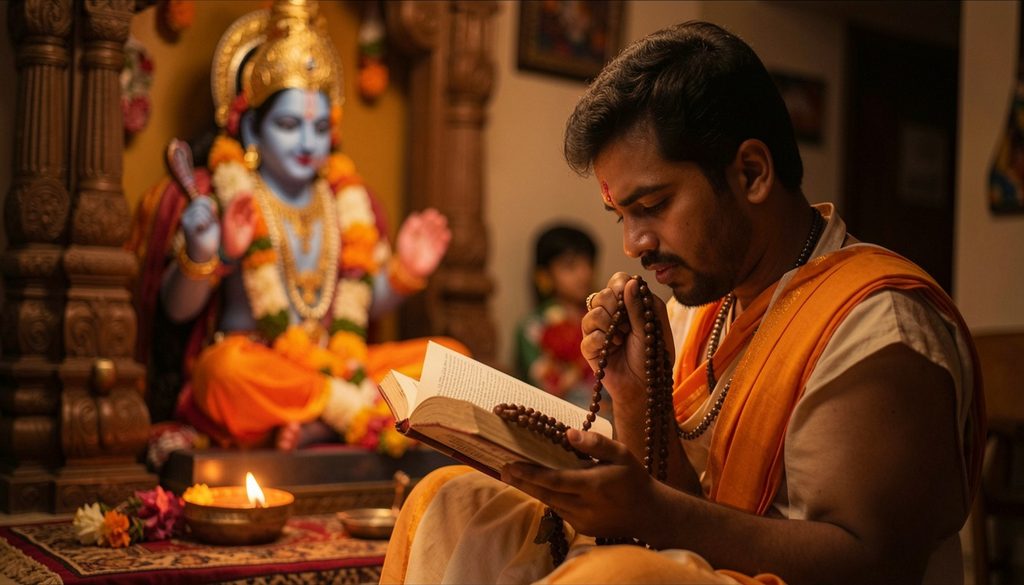
You do not need to memorize the complete stotram on your first day.
A simple seven-day plan
| Day | Practice |
| 1 | Listen to a reliable recitation |
| 2 | Read along with transliteration |
| 3 | Practice pronunciation slowly |
| 4 | Recite the opening sections |
| 5 | Continue through the full text |
| 6 | Focus on difficult words |
| 7 | Complete one calm, attentive recitation |
After the first week, create a routine that fits your schedule.
Expert Tips for Better Recitation
Understand the meaning
Knowing what you are saying can make devotional practice more personal.
Do not rush
Clear pronunciation is more useful than speed.
Use one reliable version
Switching between multiple versions can create confusion.
Listen carefully
A reputable audio recitation can help you learn pronunciation and rhythm.
Keep your space simple
You do not need an expensive altar.
A clean space and sincere attention are enough.
Make it sustainable
If 20 minutes feels unrealistic, build a routine that you can actually maintain.
Avoid fear-based thinking
Missing one day should not make you believe something bad will happen.
Connect prayer with action
Let the qualities associated with Rama influence your behavior outside the prayer space.
Common Mistakes to Avoid
Chanting too quickly
Speed can make pronunciation unclear.
Treating prayer as a guarantee
Traditional beliefs should not be presented as guaranteed outcomes.
Ignoring meaning
Understanding the basic message can make recitation more engaging.
Using incorrect Sanskrit
Always verify sacred text before publishing, designing graphics, or reciting.
Expecting instant results
Spiritual practice is not necessarily about immediate external results.
Creating unnecessary fear
A devotional practice should encourage faith and courage, not anxiety.
Replacing practical action
Prayer before travel is meaningful, but travelers still need to plan responsibly.
Trying to memorize everything immediately
Learn gradually.
Pros and Cons of Daily Ram Raksha Stotram Chanting
| Pros | Considerations |
| Encourages regular devotion | Sanskrit may take time to learn |
| Creates a structured routine | Full recitation can take practice |
| Supports focused prayer | Benefits vary by individual |
| Encourages reflection | Traditional claims should be understood in context |
| Can provide spiritual comfort | Should not replace professional care |
| Connects users with Hindu traditions | Different traditions may follow different customs |
Shri Ram Raksha Stotram Daily Chanting for Travelers

For travelers, religious practices can also become a way to connect with the culture of a destination.
If you are traveling from the USA to India, learning about Rama traditions before visiting temples can provide useful cultural context.
Before a pilgrimage
You might spend a few weeks learning:
- basic Sanskrit pronunciation
- the meaning of the stotram
- temple etiquette
- appropriate clothing
- photography rules
- local customs
- the significance of major temples
This can make your trip more respectful and rewarding.
Important travel reminder
A prayer should never replace practical travel preparation.
Before a journey, also check:
- transportation
- weather
- accommodation
- local advisories
- travel documents
- health and medication needs
- emergency contacts
Spiritual preparation and practical preparation can coexist.
Shri Ram Raksha Stotram SVG: Design and SEO Considerations
If you’re targeting the keyword “Shri Ram Raksha Stotram SVG,” the search intent is likely different from someone searching for spiritual benefits.
They may want a:
- Rama vector illustration
- Sanskrit devotional design
- printable graphic
- website icon
- temple-themed SVG
- prayer-themed digital artwork
SVG best practices
If you publish an SVG on your website:
- Use original artwork or properly licensed graphics.
- Verify every Sanskrit character.
- Optimize the SVG file size.
- Add descriptive alt text where appropriate.
- Avoid putting important SEO text only inside the image.
- Keep the design readable at different sizes.
Suggested SVG image alt text
“Shri Ram Raksha Stotram devotional Lord Rama SVG illustration”
Avoid stuffing the alt attribute with multiple unrelated keywords.
Quick Daily Chanting Checklist
- Choose a regular time.
- Find a quiet place.
- Keep a verified text nearby.
- Sit comfortably.
- Take a few calm breaths.
- Begin slowly.
- Focus on pronunciation.
- Reflect on the meaning.
- Avoid rushing.
- End with a moment of silence.
- Continue consistently.
- Keep traditional claims in their proper spiritual context.
FAQs
What are the main Shri Ram Raksha Stotram daily chanting benefits?
The main traditional benefits include devotion, spiritual protection, courage, focus, discipline, faith, reflection, and inner peace. These are spiritual or personal benefits rather than guaranteed medical or worldly results.
Can I chant Ram Raksha Stotram every day?
Yes. Daily recitation can become part of a personal devotional routine. Choose a time that is realistic and sustainable for you.
What is the best time to chant Ram Raksha Stotram?
Many people prefer early morning or evening. There is no need to become overly concerned about finding one exact time. Regular and sincere practice is more important.
Can beginners chant Shri Ram Raksha Stotram?
Yes. Beginners can start by listening to a reliable recitation, following Roman transliteration, and gradually improving pronunciation.
Does Ram Raksha Stotram protect you from danger?
The hymn is traditionally regarded as a protective prayer. However, it should not be presented as a guarantee against physical danger. Normal safety measures remain essential.
Can I chant it before traveling?
Yes. You can include it in a personal prayer before travel if that is meaningful to you. It should complement normal travel preparation and safety practices.
How long should I chant Ram Raksha Stotram?
There is no single required duration for everyone. Focus on clear pronunciation, attention, and sincerity rather than trying to finish as quickly as possible.
Do I need to know Sanskrit?
No. You can begin with transliteration and an English explanation. Over time, you can learn the Sanskrit pronunciation more accurately.
Can chanting Ram Raksha Stotram cure health problems?
It should not be promoted as a guaranteed treatment for any medical condition. Prayer may be personally meaningful, but health concerns should receive appropriate professional attention.
What does Ram Raksha Stotram mean?
It can be understood as a devotional hymn invoking the protection of Lord Rama. The prayer praises Rama and uses protective imagery throughout the text.
Conclusion
The Shri Ram Raksha Stotram daily chanting benefits are best understood through the lens of devotional practice rather than promises of guaranteed results. For many devotees, regular chanting creates a meaningful space for prayer, remembrance, courage, concentration, discipline, and spiritual reflection.
If you are new to the stotram, start slowly. Choose a peaceful time, use a reliable text, learn the pronunciation, and take time to understand the basic meaning. You do not need a complicated setup or a perfect routine. What matters most is approaching the practice with sincerity and consistency.
For travelers and readers interested in Indian culture, Shri Ram Raksha Stotram can also offer a deeper introduction to Rama-centered traditions and the spiritual heritage behind places such as Ayodhya.
Start with one calm recitation, learn the meaning, and allow the practice to become a positive part of your daily routine. Jai Shri Ram.
Read Mre:Shri Ram Raksha Stotram Recitation Guide: 15 Powerful Rules, Benefits & Beginner Tips
