

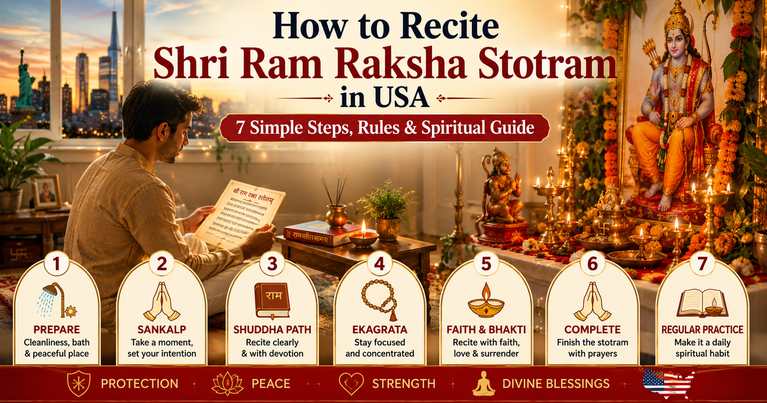
For many Hindu families living in the United States, maintaining daily spiritual traditions can be a meaningful way to stay connected with faith, culture, and family values. Shri Ram Raksha Stotram is a revered Sanskrit devotional hymn dedicated to Lord Rama and is traditionally recited with devotion and concentration. Whether you live in New York, California, Texas, Florida, or another part of the USA, you can include this sacred recitation in your home prayer routine without needing an elaborate setup.
If you are wondering how to recite Shri Ram Raksha Stotram in USA, the process can be simple and practical. You can choose a quiet corner of your home, keep a reliable copy of the stotram, sit comfortably, and recite the verses slowly while focusing on their meaning and pronunciation. Traditional practices may include cleanliness, a diya, or a dedicated puja space, but families can adapt their routine to their circumstances while respecting their own religious traditions.
This guide explains the 7 simple steps for reciting Shri Ram Raksha Stotram, including preparation, pronunciation, suitable times, home practice, common mistakes, and practical tips for Hindu families in America. It also explains how beginners can gradually build a consistent devotional routine while learning the Sanskrit verses with confidence and respect.
Quick Answer:
To recite Shri Ram Raksha Stotram in the USA, choose a clean and quiet place, preferably in the morning or evening. Sit comfortably, calm your mind, and begin with a short prayer to Lord Rama. Read the stotram slowly in Sanskrit, focusing on correct pronunciation and devotion rather than speed.
You do not need a special temple or elaborate setup. A small home shrine, clean room, or peaceful corner can be enough. Families in the USA can also recite it together on weekends, before important occasions, or as part of a regular spiritual routine.
Simple routine:
- Take a bath or wash your hands and face.
- Wear clean, comfortable clothes.
- Sit in a quiet place facing a suitable direction.
- Light a diya if it is safe and practical.
- Remember Lord Rama and Hanuman with devotion.
- Recite Shri Ram Raksha Stotram slowly and clearly.
- End with a short prayer and gratitude.
What Is Shri Ram Raksha Stotram?

Shri Ram Raksha Stotram is a traditional Sanskrit devotional hymn dedicated to Lord Rama. The title is commonly understood as “the hymn of protection of Lord Rama.” It is traditionally associated with the sage Budha Kaushika and is widely recited by devotees seeking spiritual strength, devotion, courage, and a sense of divine protection.
The stotram describes Lord Rama and invokes different aspects of his divine presence. Its verses combine devotion, remembrance, and traditional concepts of spiritual protection.
For many Hindu families, reciting a stotram is not simply about repeating Sanskrit words. It can also be a way to develop concentration, maintain a daily spiritual practice, and remember values associated with Lord Rama, such as dharma, courage, truth, compassion, discipline, and responsibility.
Why Is It Relevant for Hindu Families in the USA?
Living in the USA does not prevent devotees from maintaining Indian spiritual traditions. Families may create a small puja space at home, visit a nearby Hindu temple, or join community prayer groups.
The practice can also be adapted to a modern schedule. Someone working a full-time job may recite the stotram before leaving for work, while a family may choose a weekend morning when everyone is available.
There is no requirement that the practice must happen in India. The devotional purpose remains meaningful wherever a person sincerely remembers Lord Rama.
How to Recite Shri Ram Raksha Stotram in USA: Step-by-Step Method
Learning how to recite Shri Ram Raksha Stotram in USA becomes easier when you separate the practice into simple steps.
Choose a Quiet and Clean Place
Start by selecting a peaceful area. You can use:
- A home mandir
- A clean corner of your bedroom
- A meditation area
- A quiet living-room space
- A Hindu temple
- A community prayer room
The most important point is to minimize distractions.
If you live in an apartment, you do not need a large puja room. A small shelf with a clean cloth and a picture or murti of Lord Rama can create a suitable devotional space.
Prepare Yourself
Traditional Hindu practice often emphasizes physical cleanliness before prayer.
If possible, take a bath before recitation. If your schedule does not allow a full bath, washing your hands, face, and feet can help you transition into a prayerful state.
Wear clean clothes and silence your phone.
The goal is not perfection. The goal is to approach the prayer with respect and attention.
Sit Comfortably
You can sit on a clean mat, cushion, or chair.
Traditional practitioners may sit cross-legged, but this is not necessary for everyone. Older adults or people who cannot sit on the floor can comfortably use a chair.
Keep your back reasonably straight and relax your shoulders.
Begin With a Short Prayer
Before opening the text, take a few calm breaths.
You may mentally remember:
Lord Rama, Sita Mata, Lakshmana, and Hanuman.
You can also offer a simple personal prayer such as:
“May this recitation help me develop devotion, courage, clarity, and peace.”
A short intention can make the practice more focused.
Recite Slowly
Open your Shri Ram Raksha Stotram text and begin.
If Sanskrit pronunciation is new to you, do not rush. Listen to a reliable traditional recitation and practice individual verses.
Understanding the meaning can also make the recitation more meaningful.
Maintain Attention
During recitation, your mind may wander. This is normal.
When you notice your attention moving elsewhere, gently return your focus to the words and the form of Lord Rama.
Avoid treating the stotram as a race.
Correct, attentive, devotional recitation is generally more useful than rushing through the verses.
End With Gratitude
After completing the stotram, sit quietly for a moment.
You may offer a short prayer for your family, community, or personal spiritual growth.
If you lit a diya, follow appropriate fire safety practices before leaving the area.
Best Time to Recite Shri Ram Raksha Stotram in the USA

There is no single time that every devotee must follow. Traditional practices may favor certain periods, while modern family schedules can require flexibility.
Morning Recitation
Morning is popular because the environment is often quieter and the mind may feel fresh.
A morning routine could look like:
6:30 AM → personal preparation → 5 minutes of quiet prayer → Shri Ram Raksha Stotram → short meditation
This can work well for people who prefer beginning their day with spiritual practice.
Evening Recitation
Evening is another practical option, especially for working adults and students.
After returning home, you can change clothes, wash your hands and face, and spend a few quiet minutes in prayer.
Weekend Practice
If weekday mornings are difficult, Saturday or Sunday can be a convenient time for family recitation.
The key is consistency rather than creating an unrealistic routine.
Can You Recite It at Any Time?
Many devotees choose a suitable daily time based on their tradition and circumstances. If your family follows a specific sampradaya, guru, temple tradition, or priest’s guidance, follow that guidance.
For a general home devotional practice, choosing a regular, peaceful time can make the habit easier to maintain.
Shri Ram Raksha Stotram Pronunciation and Sanskrit Recitation Tips
Pronunciation can feel challenging if Sanskrit is not your first language.
The best approach is gradual practice.
Listen Before You Recite
Use a reputable recording from a recognized Hindu temple, traditional teacher, or established spiritual organization.
Listen to one verse several times before attempting it yourself.
Break Long Verses Into Parts
Do not try to memorize the entire stotram immediately.
Divide it into smaller sections and repeat each section until the rhythm becomes familiar.
Learn Basic Sanskrit Sounds
Some Sanskrit sounds may not exist in everyday English. Pay attention to:
- Long and short vowels
- Aspirated consonants
- Retroflex sounds
- Nasal sounds
- Word endings
You do not need to become a Sanskrit scholar to begin devotional recitation.
Understand the Meaning
Knowing the basic meaning of the verses can improve concentration.
Instead of thinking only about pronunciation, connect the words with their devotional purpose.
Avoid Unverified Transliterations
Online versions can sometimes contain spelling differences or pronunciation mistakes.
When possible, use a Sanskrit text from a reliable publication or temple and compare transliteration carefully.
What Should You Keep for Shri Ram Raksha Stotram Recitation?

You do not need an elaborate puja arrangement to recite the stotram.
Simple Home Setup
A basic setup may include:
| Item | Purpose | Essential? |
| Shri Ram Raksha Stotram text | Recitation | Yes |
| Lord Rama image or murti | Devotional focus | Optional |
| Clean mat or seat | Comfortable sitting | Optional |
| Diya | Traditional worship | Optional |
| Flowers | Offering | Optional |
| Water | Traditional puja use | Optional |
| Incense | Traditional worship | Optional |
| Mala | Japa practice | Optional |
If you live in a dorm, apartment, or shared accommodation, keep the setup simple.
Safety in an American Home
If you use a diya or incense:
- Keep it away from curtains.
- Place it on a stable, heat-resistant surface.
- Never leave a flame unattended.
- Follow apartment or housing rules.
- Consider an electric diya if open flames are not permitted.
Spiritual practice should always be compatible with basic household safety.
Traditional Rules vs Modern Practice in the USA
Hindu devotional practices often have traditional guidelines, but families may adapt them to their environment.
| Traditional Approach | Modern USA-Friendly Approach |
| Recite after bathing | Wash hands and face when time is limited |
| Dedicated puja room | Small clean prayer corner |
| Sit on the floor | Use a chair if needed |
| Fixed daily schedule | Choose a consistent practical time |
| Oil or ghee diya | Electric diya where necessary |
| Sanskrit-only focus | Sanskrit with transliteration and meaning |
| Temple-centered practice | Home or temple practice |
| Family tradition | Family tradition adapted respectfully |
The purpose of adaptation is not to replace tradition but to make sincere practice possible.
If you have access to a Hindu temple or knowledgeable priest, you can ask about your family’s particular tradition.
Spiritual Benefits Traditionally Associated With Shri Ram Raksha Stotram

Devotees traditionally associate Shri Ram Raksha Stotram with spiritual protection and devotion.
Commonly discussed benefits include:
Developing Devotion
Regular remembrance of Lord Rama can strengthen a person’s connection with bhakti and Hindu spiritual traditions.
Encouraging Mental Focus
Reading or chanting a structured Sanskrit hymn requires attention. This may encourage a more focused prayer routine.
Creating a Peaceful Routine
A few quiet minutes of recitation can provide a deliberate pause in a busy day.
Strengthening Spiritual Confidence
Devotional traditions often describe Lord Rama as an ideal associated with dharma, courage, and righteous conduct. Remembering these qualities may inspire personal reflection.
Family Spiritual Connection
Parents can introduce children to Sanskrit pronunciation, Hindu stories, and family traditions through regular recitation.
Shri Ram Raksha Stotram Recitation: Pros and Cons
| Pros | Cons / Challenges |
| Can support a regular devotional routine | Sanskrit pronunciation may be difficult initially |
| Can be practiced at home | Requires consistent time and attention |
| Suitable for individuals or families | Some traditional rules vary by lineage |
| Does not require an elaborate setup | Online versions may contain errors |
| Can help preserve cultural traditions | Beginners may feel overwhelmed by long verses |
| Can be combined with temple visits | Busy USA schedules can make consistency difficult |
The “cons” are mostly practical challenges rather than disadvantages of the devotional practice itself.
A Simple 15-Minute Shri Ram Raksha Stotram Routine
Busy professionals and families can create a short routine.
Minute 1–2: Preparation
Wash your hands and face, sit comfortably, and silence your phone.
Minute 3: Centering
Take several slow breaths and remember Lord Rama.
Minute 4–12: Recitation
Read the stotram at a comfortable pace.
If you are still learning, use transliteration and an audio guide.
Minute 13–15: Reflection
Sit quietly and offer a short prayer.
This simple routine is easier to maintain than an ambitious schedule that becomes difficult after a few days.
Common Mistakes When Reciting Shri Ram Raksha Stotram
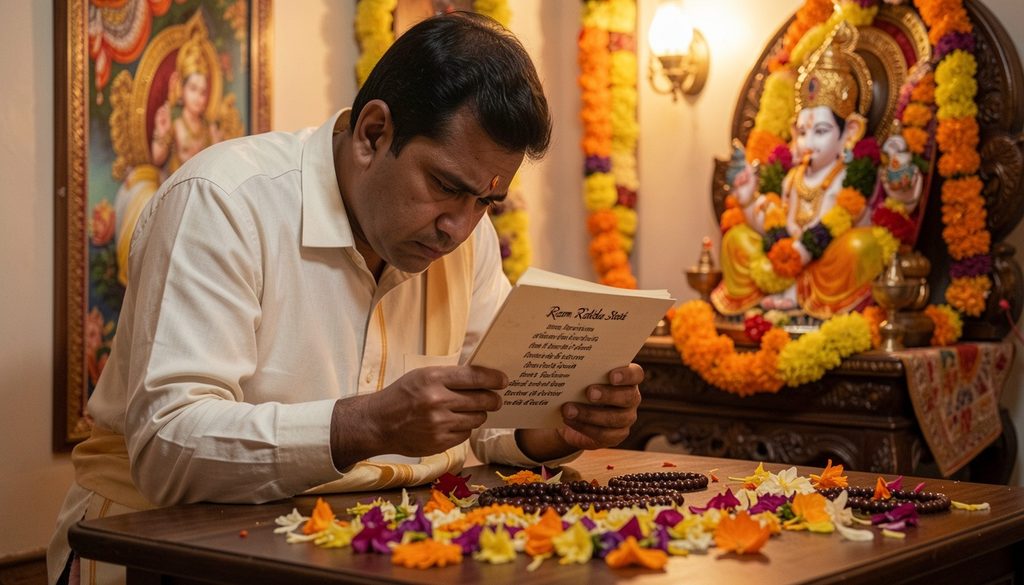
Avoiding common mistakes can make your practice more comfortable and meaningful.
Rushing Through the Verses
Fast recitation can make pronunciation difficult and reduce concentration.
Ignoring Pronunciation
Do not be afraid of making mistakes, but try to improve gradually.
Treating It Like a Mechanical Task
Devotional recitation involves attention and intention, not only sound.
Using Random Online Texts
Choose a reliable version rather than copying text from an unknown website.
Creating Unnecessary Pressure
Beginners sometimes worry that missing one day makes their entire practice invalid.
A sustainable routine is usually better than anxiety about perfection.
Ignoring the Meaning
Even a basic understanding of the prayer can make recitation more engaging.
Using Fire Carelessly
Never leave a diya or incense burning unattended.
Expert Tips for Reciting Shri Ram Raksha Stotram in USA
Here are practical tips for beginners and experienced devotees.
Choose Consistency Over Length
Ten focused minutes every day may be easier to sustain than an hour-long routine once a week.
Learn the Meaning
Read an authentic translation alongside the Sanskrit text.
Use a Temple as a Learning Resource
Many Hindu temples in the USA conduct Sanskrit classes, bhajan sessions, or devotional programs.
Teach Children Gradually
Start with a few lines or the meaning of Lord Rama’s story. Avoid forcing children to memorize long passages immediately.
Create a Technology-Free Prayer Period
Place your phone on silent or in another room.
Respect Your Family Tradition
If your family has specific instructions from a guru or priest, prioritize that guidance.
Make Pronunciation a Learning Journey
Record yourself privately and compare your pronunciation with a reliable traditional recitation.
Connect Recitation With Values
Use the prayer as an opportunity to reflect on truthfulness, responsibility, courage, and dharma.
Shri Ram Raksha Stotram Checklist for Beginners
- Choose a clean, quiet prayer space.
- Keep a reliable copy of the stotram.
- Use Sanskrit with trustworthy transliteration if needed.
- Wash your hands and face or bathe when practical.
- Sit comfortably.
- Silence your phone.
- Begin with a short prayer.
- Recite slowly and clearly.
- Learn the meaning gradually.
- End with gratitude.
- Practice consistently.
- Ask a qualified teacher or priest when unsure about tradition.
Can You Recite Shri Ram Raksha Stotram Without Knowing Sanskrit?
Yes, beginners can start learning even if they do not know Sanskrit.
The important distinction is between learning a traditional Sanskrit recitation and simply reading an English translation.
If you cannot read Devanagari, use a reliable transliteration. Listen to a traditional recitation and gradually improve your pronunciation.
You can also read the meaning before or after the Sanskrit verses.
A good learning method is:
Listen → Read → Repeat → Understand → Practice
This approach can be especially useful for second-generation Hindu Americans and families raising children in bilingual or multicultural homes.
How Families in the USA Can Practice Together
Family recitation can become a meaningful cultural tradition.
Parents can set aside a specific day each week. Grandparents can explain the story of Lord Rama and the significance of the prayer. Children can learn pronunciation gradually.
A family session might include:
- Light a safe diya or switch on an electric diya.
- Offer flowers if desired.
- Briefly explain who Lord Rama is.
- Recite together.
- Discuss one value from the Ramayana.
- End with a short prayer.
This turns recitation into more than memorization. It becomes an opportunity for faith, family connection, cultural education, and intergenerational learning.
Temple vs Home Recitation in the USA
Both settings can serve different needs.
| Feature | Home Recitation | Hindu Temple Recitation |
| Privacy | High | Moderate |
| Convenience | Excellent | Depends on location |
| Family participation | Excellent | Excellent |
| Priest guidance | Usually unavailable | Often available |
| Community connection | Limited | Strong |
| Daily practice | Easy | Less convenient |
| Learning pronunciation | Self-guided | May have group guidance |
A practical approach is to combine both.
For example, maintain a short home routine during the week and visit a local Hindu temple for community prayers or festivals when possible.
Internal Linking Opportunities for a Travel Website
If this article appears on a travel and culture website, strategic internal links can help readers explore related topics.
Suggested Internal Links
- Hindu Temples in the USA — link to a guide covering major temples and visitor etiquette.
- Best Hindu Temples to Visit in the USA — useful for travelers seeking religious and cultural experiences.
- What to Expect When Visiting a Hindu Temple — helpful for first-time visitors.
- Hindu Festivals in the USA — connect readers with annual celebrations.
- Ram Navami Guide — relevant to Lord Rama traditions.
- Hanuman Jayanti Guide — useful for readers interested in Hanuman devotion.
- Diwali in the USA — connects spiritual practice with a major Hindu festival.
- Indian Cultural Events in the USA — useful for community-focused travelers.
- Indian Restaurants Near Hindu Temples — a natural travel-planning connection.
- USA Temple Travel Guide — useful for visitors planning temple-focused trips.
Use descriptive anchor text instead of generic phrases such as “click here.”
Suggested External Authority Sources
For factual, cultural, and religious background, consider consulting authoritative sources such as:
- Established Hindu temples and their official publications
- Reputable Sanskrit scholars and academic institutions
- University departments specializing in South Asian religions
- Hindu religious organizations with established educational resources
- Museum and cultural institutions documenting Hindu traditions
- Original or academically translated Ramayana-related texts
For ritual instructions, prioritize the user’s family tradition, qualified priests, or established temple guidance when traditions differ.
FAQs
What is the best time to recite Shri Ram Raksha Stotram?
Many devotees prefer morning or evening when the environment is peaceful. Choose a time you can maintain consistently while respecting your family’s tradition.
Can I recite Shri Ram Raksha Stotram in English?
The traditional stotram is in Sanskrit. Beginners can use English translations and transliteration as learning aids while working toward accurate Sanskrit pronunciation.
Can I recite Shri Ram Raksha Stotram at home in the USA?
Yes. A clean and peaceful home prayer space is sufficient for a personal devotional practice. You do not need to live in India to maintain the tradition.
Do I need to take a bath before reciting it?
Traditional practices may recommend bathing before prayer. However, specific expectations vary. For a general home practice, personal cleanliness and a respectful mindset are practical starting points.
Can children recite Shri Ram Raksha Stotram?
Yes. Children can learn it gradually. Parents can begin with pronunciation, short sections, and the story and values associated with Lord Rama.
Do I need a diya or incense?
No. These are traditional worship items but are not necessary for simply reciting the stotram. Safety should always come first.
Can I recite the stotram if I do not know Sanskrit?
Yes, you can begin learning through reliable transliteration and audio guidance. Take time to improve pronunciation rather than worrying about being perfect immediately.
How often should I recite Shri Ram Raksha Stotram?
There is no single frequency that applies to every devotee. Some people recite it daily, while others practice on selected days. Follow your family or teacher’s tradition if you have one.
Is Shri Ram Raksha Stotram a medical treatment?
No. It is a Hindu devotional hymn. Traditional spiritual benefits should not be confused with scientifically established medical treatments.
Can I recite Shri Ram Raksha Stotram while traveling in the USA?
Yes, many people maintain personal prayer routines while traveling. You can use a quiet hotel room or another respectful private space and adapt the routine to your circumstances.
Conclusion:
Learning how to recite Shri Ram Raksha Stotram in USA does not require an elaborate temple, complicated ritual, or perfect knowledge of Sanskrit from day one. A clean space, a reliable text, focused attention, and sincere devotion can provide a practical starting point.
For Hindu families living in America, regular recitation can also become a way to preserve language, religious traditions, family values, and cultural connections across generations. Whether you practice for a few minutes at home, participate in temple programs, or recite while traveling, consistency and respect can make the tradition easier to maintain.
Start slowly. Learn the pronunciation. Understand the meaning. Follow your family’s authentic tradition when specific rules apply, and seek guidance from a qualified priest or Sanskrit teacher when you are unsure.
Ready to begin? Set aside a quiet 10–15 minutes today, open a reliable copy of Shri Ram Raksha Stotram, and begin your journey of learning and devotion to Lord Rama.
Read More:10 Best Places to Visit in November Outside India (2026): Ultimate International Travel Guide
