


For many Hindu families, devotional prayers are more than words recited from a book. They can become a daily way to pause, reflect, and connect with faith. The Shri Ram Raksha Stotram meaning for beginners is especially useful for people who have heard this powerful Sanskrit prayer but do not yet understand its structure or spiritual message.
The Ram Raksha Stotram is traditionally associated with Budha Kaushika Rishi. Traditional accounts describe the hymn as a sacred revelation connected with Lord Shiva and dedicated to Shri Ram. Like many Sanskrit devotional texts, it contains layers of meaning, symbolism, praise, and prayer that may feel difficult when you first encounter it.
For Hindu families in the USA, learning its meaning can make recitation more accessible. You do not need to understand every Sanskrit word before beginning. A respectful approach is to learn the basic meaning, pronounce the verses carefully, and gradually build a consistent practice.
Quick Answer:
The Shri Ram Raksha Stotram is a Sanskrit devotional hymn dedicated to Lord Shri Ram. The word Raksha means “protection,” while Stotram refers to a hymn of praise. For beginners, its central message can be understood as a prayer for divine protection, courage, devotion, inner discipline, and faith in Lord Ram.
The hymn traditionally describes different forms and qualities of Lord Ram and invokes His protection over different parts of the body and aspects of life. Its deeper meaning is not simply about physical safety. It also encourages devotees to develop qualities associated with Shri Ram, such as truthfulness, duty, self-control, compassion, courage, and righteousness.
What Is Shri Ram Raksha Stotram?

The Ram Raksha Stotram, also called Ram Raksha Stotra, is a traditional Sanskrit hymn devoted to Lord Rama.
It is found in the Hindu devotional tradition and is particularly known for its emphasis on raksha, or protection. The hymn invokes Lord Ram and various divine aspects associated with Him while asking for protection and spiritual strength.
What Does “Ram Raksha Stotram” Mean?
The name can be understood through three simple ideas:
| Word | Simple Meaning |
| Ram / Rama | Lord Shri Ram |
| Raksha | Protection or safeguarding |
| Stotram / Stotra | Hymn of praise or prayer |
Therefore, Ram Raksha Stotram can broadly be understood as a devotional hymn seeking the protection and grace of Lord Shri Ram.
For beginners, this simple definition provides a useful starting point before exploring the Sanskrit verses.
Who Composed Ram Raksha Stotram?
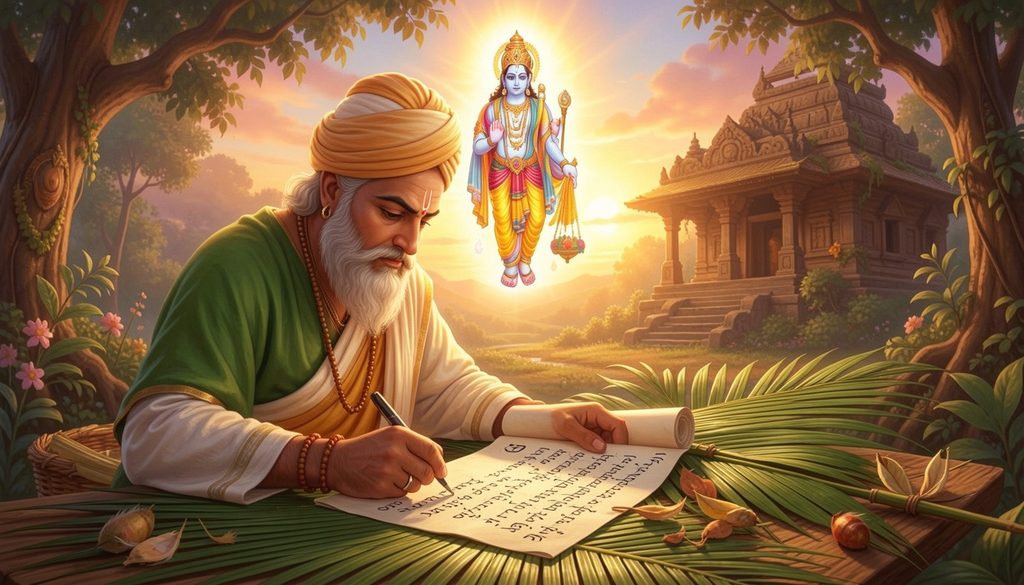
The hymn is traditionally attributed to Budha Kaushika Rishi, also known as Rishi Budha Kaushika.
According to traditional devotional accounts, Rishi Budha Kaushika received the hymn through a divine experience associated with Lord Shiva. The traditional story is part of the religious heritage surrounding the text, rather than something that should be treated as a modern historical record.
The attribution is important because Hindu stotras are often preserved through traditional lineages, manuscripts, oral recitation, and devotional practice.
Shri Ram Raksha Stotram Meaning for Beginners
Understanding the entire Sanskrit hymn word by word can take time. Beginners can first learn its major themes.
The central ideas include:
- Seeking divine protection
- Remembering Lord Ram
- Developing courage
- Following dharma
- Controlling the mind and senses
- Strengthening devotion
- Cultivating spiritual confidence
The prayer uses descriptions of Shri Ram’s qualities and forms to create a deeply devotional meditation on His presence.
Protection Through Divine Remembrance
One of the most recognizable themes is protection.
The word raksha means protection, and the hymn repeatedly turns the devotee’s attention toward Shri Ram.
For a beginner, this can be understood on two levels:
- Traditional devotional level: praying for Lord Ram’s protection and grace.
- Inner spiritual level: using remembrance and prayer to cultivate courage, steadiness, and faith.
This distinction is important. A devotional prayer should not be presented as a guaranteed replacement for practical safety, medical care, financial planning, or professional advice.
Instead, many devotees view prayer as a source of spiritual support alongside responsible action.
Shri Ram as an Ideal of Dharma
The story of Shri Ram in the Ramayana is strongly connected with dharma, often translated as righteous duty or moral responsibility.
The Ram Raksha Stotram’s praise of Shri Ram can therefore encourage devotees to reflect on qualities such as:
- honesty
- responsibility
- courage
- respect
- self-control
- compassion
- loyalty
- commitment to duty
For beginners, this is one of the most meaningful ways to approach the hymn.
Instead of thinking only, “What will this prayer give me?” you can also ask:
“What qualities of Shri Ram can I bring into my own life?”
That question turns recitation into personal reflection.
Powerful Spiritual Lessons in Shri Ram Raksha Stotram

Faith Can Create Inner Strength
Regular prayer can provide a structured moment of reflection.
For devotees, remembering Shri Ram can reinforce faith during uncertain or stressful periods. The spiritual lesson is not that difficulties will automatically disappear, but that a person can approach difficulties with greater courage and steadiness.
Dharma Matters in Everyday Life
Shri Ram is traditionally remembered as a figure of righteous conduct.
The hymn therefore connects naturally with the idea of living responsibly.
For a family, this might mean:
- keeping promises
- treating others respectfully
- helping people in need
- speaking truthfully
- fulfilling responsibilities
- practicing patience
This makes the Shri Ram Raksha Stotram meaning for beginners relevant beyond the prayer room.
Devotion Encourages Mental Focus
Sanskrit recitation requires attention to pronunciation, rhythm, and sequence.
A regular practice can become a focused devotional activity. Even when someone does not understand every Sanskrit word, carefully listening and reciting can help create a quiet routine.
Beginners should focus on steady learning rather than perfect pronunciation on the first day.
Courage Is an Important Theme
Lord Ram is traditionally associated with courage, righteousness, and protection.
For modern families, courage can mean more than facing physical danger. It can include:
- making ethical decisions
- handling setbacks
- standing up for what is right
- accepting responsibility
- remaining calm during challenges
This makes the hymn a meaningful source of reflection for both adults and children.
Family Prayer Can Preserve Tradition
Hindu families living outside India may sometimes find it difficult to maintain familiar religious practices.
A short family prayer routine can help children become familiar with:
- Sanskrit
- Hindu stories
- devotional traditions
- respectful prayer habits
- Indian cultural heritage
Parents can explain the meaning in simple English before or after recitation.
Consistency Can Be More Important Than Complexity
A beginner does not need an elaborate altar or complicated routine.
A quiet and respectful practice may be enough.
You can begin with:
- a clean space
- a small image of Shri Ram
- a diya if appropriate and safe
- a prayer book
- a few minutes of focused attention
The goal is to develop a sustainable devotional habit.
Prayer Can Lead to Self-Reflection
The deepest benefit of a devotional hymn may be the opportunity to reflect on one’s own actions.
After reciting, consider:
“Am I living with truth, courage, compassion, and responsibility?”
This transforms the prayer from a memorization exercise into a spiritual practice.
Traditional Benefits of Ram Raksha Stotram

Devotees traditionally associate Ram Raksha Stotram with several spiritual benefits.
These may include:
- a sense of divine protection
- increased devotion to Lord Ram
- courage during difficult situations
- greater spiritual discipline
- peace through prayer
- family bonding
- remembrance of dharma
- confidence rooted in faith
However, these should be understood as traditional religious beliefs and personal spiritual experiences, not scientifically established medical outcomes.
Traditional Benefits vs Practical Interpretation
| Traditional Belief | Practical Spiritual Interpretation |
| Protection from difficulties | Feeling supported through faith |
| Greater courage | Reflecting on Shri Ram’s qualities |
| Peace of mind | Creating a quiet prayer routine |
| Spiritual strength | Building consistency and devotion |
| Family protection | Strengthening shared religious practice |
| Removal of fear | Developing confidence and resilience |
How to Recite Ram Raksha Stotram: A Beginner-Friendly Routine
There is no need to make your first practice complicated.
Choose a Quiet Space
Select a clean and peaceful place in your home.
For families in the USA, this could be a small home shrine, meditation corner, or another respectful area.
Prepare Your Prayer Items
You may keep:
- Shri Ram image or murti
- Ram Raksha Stotram text
- diya
- flowers
- incense, if appropriate
- prayer beads
These are optional devotional supports rather than requirements for simply learning the hymn.
Sit Comfortably
Sit in a comfortable position and take a few calm breaths.
The purpose is to shift attention away from daily distractions.
Begin With Respect
Offer a simple prayer to Shri Ram.
You may mentally express your intention to recite with sincerity and attention.
Recite Slowly
Beginners should prioritize correct learning over speed.
Listen to a reliable traditional recitation and follow the written text where possible.
Reflect on the Meaning
After recitation, think about one quality of Shri Ram you want to practice that day.
For example:
“Today I will try to speak truthfully and patiently.”
Close the Practice
End with a short prayer of gratitude.
You can then return to your normal activities.
Best Time to Recite Ram Raksha Stotram
Many devotees prefer morning prayer because the environment can be quieter and the mind may feel fresh.
However, there is no need to abandon the practice simply because mornings are difficult.
A sustainable routine might be:
| Schedule | Suitable For |
| Early morning | People with quiet morning routines |
| Evening | Working families |
| Before bedtime | Those who prefer nighttime prayer |
| Weekend mornings | Busy families |
| Festival days | Extended devotional practice |
For beginners, consistency and sincerity are more practical than choosing a schedule you cannot maintain.
Ram Raksha Stotram for Hindu Families in the USA
Hindu families in the United States often balance school, work, travel, sports, community activities, and religious traditions.
A flexible prayer routine can help preserve cultural practices without making family life unnecessarily difficult.
A Simple USA Family Routine
Parents: Read or play the recitation.
Children: Listen and repeat selected portions.
Family: Discuss one simple lesson from Shri Ram.
Closing: Spend a few moments in quiet prayer.
Children do not necessarily need to memorize the entire stotram immediately. Parents can first explain who Shri Ram is and why the family values the prayer.
Traditional Practice vs Modern Family Routine
| Traditional-Style Practice | Modern Family Adaptation |
| Dedicated prayer room | Small home shrine |
| Fixed prayer time | Flexible family schedule |
| Sanskrit-only explanation | Sanskrit + English meaning |
| Full-length recitation | Gradual learning |
| Temple-centered practice | Home + temple practice |
| Individual recitation | Family recitation |
Both approaches can coexist respectfully.
Ram Raksha Stotram Pros and Cons
Pros
- Encourages regular devotional practice
- Connects families with Hindu traditions
- Provides an opportunity for reflection
- Introduces beginners to Sanskrit prayer
- Can strengthen family participation
- Encourages reflection on dharma
- Creates a structured spiritual routine
Cons or Challenges
- Sanskrit pronunciation can be difficult initially
- Long verses may be challenging to memorize
- Beginners may misunderstand symbolic language
- Busy schedules can make daily practice difficult
- Religious claims should not replace practical action or professional care
| Pros | Challenges |
| Builds devotional discipline | Requires regular practice |
| Preserves cultural tradition | Sanskrit may feel unfamiliar |
| Supports family prayer | Children may lose interest |
| Encourages reflection | Meaning takes time to learn |
| Flexible for home practice | Pronunciation needs attention |
Common Mistakes Beginners Should Avoid
Trying to Memorize Everything Immediately
Start slowly.
Understanding the prayer is more valuable than rushing through memorization.
Ignoring Pronunciation
Sanskrit pronunciation matters in traditional recitation.
Use a trusted recording or teacher when learning difficult words.
Treating the Prayer as a Guaranteed Solution
Devotional traditions may describe powerful spiritual benefits, but avoid treating the stotram as a substitute for medical, legal, financial, or other professional help.
Focusing Only on Material Benefits
The hymn can also be approached as a way to develop devotion and ethical qualities.
Making Children Feel Forced
Teach children the story and meaning first. Encourage participation naturally.
Comparing One Family’s Practice With Another
Hindu traditions can vary by family, region, lineage, and sampradaya.
A respectful approach recognizes that variation.
Expert Tips for Beginners
Learn Meaning Before Memorization
Read an English explanation of the verses before trying to memorize them.
Use a Reliable Text
Choose a well-established edition or learn from a knowledgeable teacher.
Practice Pronunciation
Break difficult Sanskrit words into smaller sounds.
Keep Your Routine Simple
Five focused minutes can be easier to maintain than an elaborate routine that you abandon after a week.
Teach Children Through Stories
Explain Shri Ram through age-appropriate stories from the Ramayana.
Connect Prayer With Action
Choose one value associated with Shri Ram and practice it during the day.
Visit a Hindu Temple
Families in the USA can supplement home practice with temple visits, satsang, Ramayana discussions, and community events.
Shri Ram Raksha Stotram Beginner Checklist
- Learn who Shri Ram is
- Understand the basic meaning of “Raksha Stotram”
- Choose a reliable Sanskrit text
- Find a trustworthy recitation for pronunciation
- Set aside a quiet prayer space
- Start with a manageable routine
- Learn the meaning gradually
- Encourage children without pressure
- Reflect on one value from Shri Ram
- Combine spiritual practice with responsible everyday action
How to Explain Ram Raksha Stotram to a Child
Parents can avoid complicated Sanskrit explanations at first.
Try saying:
“Ram Raksha Stotram is a traditional prayer to Lord Ram. We recite it to remember Him, ask for His protection, and learn qualities such as courage, truth, kindness, and responsibility.”
Then explain one idea at a time.
For example:
Courage: “Ram teaches us to be brave when something is difficult.”
Truth: “We should try to speak honestly.”
Responsibility: “We should do what is right even when it is not easy.”
This approach helps children understand the values behind the prayer rather than simply repeating unfamiliar sounds.
Understanding the Protective Imagery
One distinctive feature of the Ram Raksha Stotram is its use of protective imagery connected with different forms and names of Lord Ram.
For beginners, this can be viewed symbolically as a reminder that devotion can encompass the whole person.
The prayer’s imagery encourages devotees to place different aspects of life under divine remembrance.
This does not require a literal interpretation from every reader. Hindu devotional texts often communicate through symbolism, sacred names, poetic imagery, and theological ideas.
Ram Raksha Stotram and the Ramayana
Understanding the Ramayana can make the hymn easier to appreciate.
Shri Ram’s traditional story includes themes of:
- dharma
- family responsibility
- loyalty
- sacrifice
- courage
- leadership
- compassion
- devotion
- justice
The Ram Raksha Stotram praises Shri Ram through devotional language, while the Ramayana provides the larger narrative context.
Beginners may therefore find it helpful to read a reliable, age-appropriate Ramayana summary alongside their prayer practice.
Can Beginners Recite Ram Raksha Stotram Without Knowing Sanskrit?
Yes, beginners can learn the prayer even if they do not initially understand Sanskrit.
However, learning the meaning and pronunciation gradually can make the practice more meaningful.
A good approach is:
- Listen to a reliable recitation.
- Read the Sanskrit text.
- Learn a simple translation.
- Practice small sections.
- Gradually improve pronunciation.
- Reflect on the meaning.
For USA-based families, explaining the prayer in English while preserving the Sanskrit recitation can be an effective way to connect generations.
How Long Does It Take to Learn Ram Raksha Stotram?
The answer varies from person to person.
Someone familiar with Sanskrit or Hindu devotional recitation may learn it relatively quickly. A beginner may need more time.
Instead of setting an aggressive deadline, create a gradual learning plan:
Week 1
Understand the purpose and basic structure.
Week 2
Practice pronunciation and listen carefully.
Week 3
Learn small sections.
Week 4
Begin connecting recitation with meaning.
After that, continue reviewing and improving naturally.
FAQs
What is the Shri Ram Raksha Stotram meaning for beginners?
For beginners, it is a devotional hymn dedicated to Lord Shri Ram that traditionally seeks divine protection while encouraging devotion, courage, righteousness, and spiritual discipline.
Who wrote Ram Raksha Stotram?
The hymn is traditionally attributed to Budha Kaushika Rishi. Traditional accounts connect its revelation with Lord Shiva.
What does “Raksha” mean in Ram Raksha Stotram?
Raksha means protection or safeguarding. In the devotional context, it refers to seeking Lord Ram’s protection and grace.
What are the traditional benefits of Ram Raksha Stotram?
Devotees traditionally associate it with protection, courage, peace, devotion, spiritual discipline, and remembrance of Shri Ram. These are religious and personal spiritual beliefs rather than guaranteed medical outcomes.
Can children recite Ram Raksha Stotram?
Yes. Parents can introduce children gradually, explain the meaning in simple language, and encourage participation without pressure.
What is the best time to recite Ram Raksha Stotram?
Many people prefer morning prayer, but families can choose a time that fits their routine. A consistent and respectful practice is often easier to maintain.
Do I need to know Sanskrit to recite it?
No. Beginners can start by listening and learning pronunciation. Understanding the meaning gradually can deepen the experience.
Can I recite Ram Raksha Stotram at home?
Yes. Many devotees practice devotional prayers at home. A clean and peaceful space can help create a focused atmosphere.
Is Ram Raksha Stotram only for protection?
Protection is a major theme, but the hymn can also be approached as a devotional meditation on Lord Ram’s qualities, dharma, courage, and spiritual strength.
Can Hindu families in the USA maintain this tradition?
Absolutely. Families can combine home prayer with Hindu temple visits, community programs, festivals, children’s religious education, and family discussions about the Ramayana.
Final Thoughts
The Shri Ram Raksha Stotram meaning for beginners becomes easier to appreciate when you look beyond the Sanskrit words and explore the values behind the prayer. Protection, devotion, courage, dharma, discipline, and remembrance of Shri Ram are central themes that can make this traditional hymn meaningful for modern families.
For Hindu families in the USA, the practice can also become a bridge between generations. Parents can preserve Sanskrit recitation while explaining the meaning in English, helping children understand both the language and the values behind the tradition.
Start simply. Learn the meaning, practice pronunciation, recite respectfully, and reflect on one quality of Shri Ram in your daily life. If this guide helped you understand Ram Raksha Stotram, share it with family members or use it as a starting point for your next home prayer session.
