


The Shri Ram Raksha Stotra is a well-known Sanskrit prayer devoted to Lord Rama. Its verses remember Rama through different names and qualities and traditionally invoke his protection over different parts of the devotee’s body. For many devotees, the prayer is more than a collection of Sanskrit verses it is a daily reminder of faith, courage, dharma, discipline, and devotion.
For Hindu families in the USA, learning the Shri Ram Raksha Stotra can also be a meaningful way to connect with Sanskrit and Hindu traditions while living a modern lifestyle. It can be practiced at home, during family prayer, at a temple, or as part of a personal spiritual routine.
This guide explains the meaning, traditional benefits, spiritual significance, chanting method, pronunciation tips, beginner rules, common mistakes, FAQs, and practical ways to include the Shri Ram Raksha Stotra in everyday life.
Quick Answer:
Shri Ram Raksha Stotra is a traditional Sanskrit devotional hymn dedicated to Lord Shri Rama. The word Raksha means protection, while Stotra refers to a hymn of praise. The prayer is traditionally associated with Budha Kaushika Rishi and Sita-Ramachandra.
Devotees recite it as an expression of faith and devotion and traditionally regard it as a prayer for divine protection, courage, peace, and spiritual strength. Beginners can learn it gradually by listening to a reliable recitation, practicing pronunciation, understanding the meaning, and following a regular routine.
What Is Shri Ram Raksha Stotra?
The Shri Ram Raksha Stotra is a Sanskrit stotra centered on Lord Rama.
It is especially recognized for its protective verses. These verses invoke different names of Rama in connection with different parts of the body. This creates a devotional image of complete protection under Rama’s grace.
Meaning of the Name
The name can be understood simply:
- Shri — an honorific expressing auspiciousness and reverence
- Ram/Rama — Lord Rama
- Raksha — protection
- Stotra — devotional hymn or praise
Thus, Shri Ram Raksha Stotra can broadly be understood as a sacred hymn seeking the protective grace of Lord Rama.
Traditional Identity
| Element | Traditional association |
| Deity | Shri Sita-Ramachandra |
| Rishi | Budha Kaushika |
| Meter | Anushtubh |
| Shakti | Sita |
| Keelaka | Hanuman |
| Language | Sanskrit |
| Main theme | Devotion and protection |
The exact presentation can vary slightly among traditional editions, particularly in punctuation, transliteration, and formatting.
Who Is Shri Ram Raksha Stotra Associated With?

The traditional opening of the Shri Ram Raksha Stotra identifies Budha Kaushika Rishi as its associated rishi or seer.
The deity is traditionally identified as Shri Sita-Ramachandra. Sita is identified with Shakti, while Hanuman is traditionally mentioned as the Keelaka.
These details are significant because Sanskrit devotional texts often begin by identifying their traditional framework, including the rishi, deity, meter, and other elements.
Budha Kaushika Rishi
Budha Kaushika is traditionally connected with the revelation or composition of the Ram Raksha Stotra. Devotees therefore remember the rishi with respect when beginning the prayer.
The tradition emphasizes a relationship between:
Rishi → Mantra/Stotra → Deity → Devotee
This structure is common in many Sanskrit devotional and mantra traditions.
Shri Ram Raksha Stotra Sanskrit and Meaning
The traditional text is written in Sanskrit, commonly presented in Devanagari script.
A reliable edition should be used when learning the complete prayer because online versions can sometimes contain differences in punctuation, spelling, spacing, or transliteration.
Spiritual Significance of Shri Ram Raksha Stotra
The spiritual significance of the Shri Ram Raksha Stotra comes from its focus on Lord Rama and the qualities traditionally associated with him.
Rama is widely remembered as a symbol of:
- Dharma
- Truth
- Duty
- Courage
- Compassion
- Loyalty
- Self-control
- Responsible leadership
- Respect for family
- Righteous action
When devotees recite the stotra, they may reflect on these values while expressing their faith in Rama.
Protection as a Spiritual Idea
The word raksha means protection. In a devotional context, protection can have several meanings.
A devotee may understand it as:
- Protection from fear
- Strength during difficult times
- Guidance in uncertain situations
- Courage to make ethical choices
- Spiritual reassurance
- A stronger connection with faith
These are matters of personal belief and spiritual interpretation.
Remembering Rama Through His Names
One special feature of the prayer is its use of many names of Rama.
Each name can remind the devotee of a particular event, quality, or relationship associated with Rama.
This makes the prayer both a request for protection and a form of Rama remembrance.
15 Traditional Benefits of Shri Ram Raksha Stotra

Traditional devotees associate the Shri Ram Raksha Stotra with many spiritual and devotional benefits. These should be understood within the context of Hindu faith rather than as scientifically proven guarantees.
Encourages Devotion
Regular prayer can help a devotee maintain a daily connection with Lord Rama.
Creates a Sense of Spiritual Protection
The protective language of the stotra can provide devotional reassurance.
Encourages Concentration
Reciting Sanskrit verses requires attention to sound, rhythm, and words.
Builds Discipline
A regular prayer routine can encourage consistency.
Inspires Courage
Rama’s traditional example may inspire devotees to face challenges with courage.
Supports Peaceful Reflection
Prayer can create quiet time for personal reflection.
Preserves Cultural Tradition
Learning the stotra can help families maintain Sanskrit and Hindu devotional traditions.
Encourages Mindfulness
Careful recitation requires attention to the present moment.
Supports Family Worship
Parents and children can learn the prayer together.
Reinforces Positive Values
The life and character of Rama encourage reflection on dharma, truth, responsibility, and loyalty.
Creates a Structured Routine
A regular prayer time can bring structure to a busy day.
Encourages Gratitude
Devotional practice can provide time to reflect on blessings and responsibilities.
Improves Sanskrit Familiarity
Repeated exposure can make Sanskrit sounds and vocabulary more familiar.
Supports Spiritual Resilience
For believers, prayer may provide comfort and faith during challenging periods.
Keeps Rama in Daily Remembrance
For many devotees, the central benefit is simply remembering Lord Rama with sincerity.
How to Chant Shri Ram Raksha Stotra
Beginners do not need to memorize the entire prayer immediately.
A simple approach is:
Listen → Read → Repeat → Understand → Practice
Choose a Clean, Quiet Place
Find a peaceful space where you can concentrate without unnecessary distractions.
Keep Your Text Ready
Use a carefully verified Sanskrit edition.
Listen to a Reliable Recitation
Listening can help you understand rhythm and pronunciation.
Start Slowly
Do not worry about speed. Accuracy and attention are more useful for beginners.
Learn the Meaning
Read a simple translation alongside the Sanskrit.
Practice Regularly
Choose a time that fits your lifestyle.
End With a Moment of Reflection
After reciting, sit quietly for a short time and remember Lord Rama.
Best Time to Chant Shri Ram Raksha Stotra
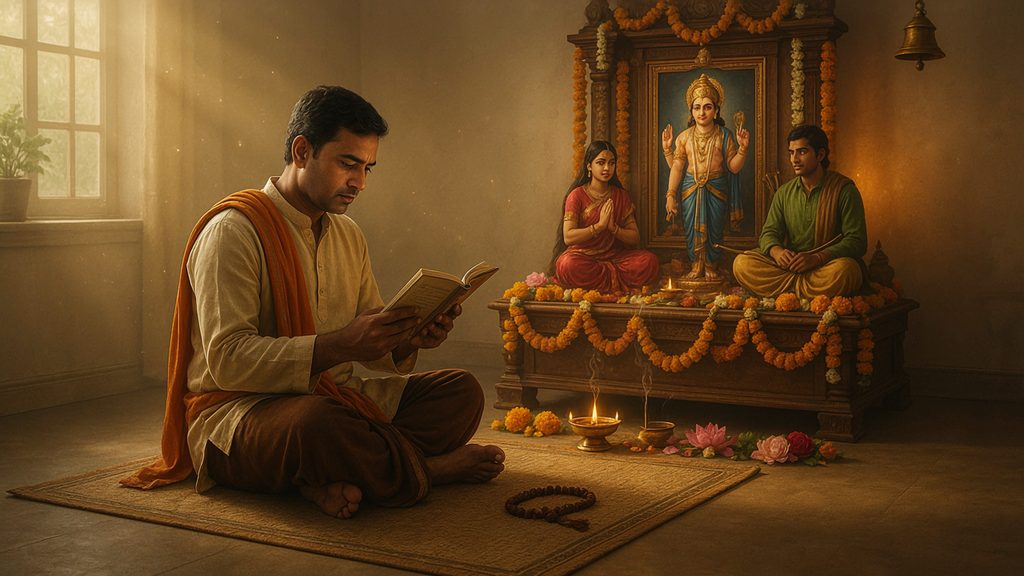
Many devotees prefer morning or evening for prayer because these periods can offer a calm environment.
Morning recitation can become part of a spiritual start to the day, while evening recitation can provide quiet reflection after work, school, or family responsibilities.
| Morning | Evening |
| Peaceful beginning | Calm end to the day |
| Often fewer distractions | Convenient after daily activities |
| Easy to combine with morning prayer | Works well with evening worship |
| Suitable for early risers | Useful for busy schedules |
What Is the Best Time?
There is no need to make your routine unnecessarily difficult.
For many beginners, the best time is the time they can follow consistently and respectfully.
If your family tradition or teacher recommends a specific time or method, follow that tradition.
Can Beginners Chant Shri Ram Raksha Stotra?
Yes. Beginners can learn the Shri Ram Raksha Stotra gradually.
You do not need to know Sanskrit fluently before beginning.
A Simple Four-Week Plan
| Week | Practice Goal |
| Week 1 | Learn the opening and meditation verse |
| Week 2 | Practice the first protection verses |
| Week 3 | Add more verses |
| Week 4 | Practice a complete recitation |
Do not treat this schedule as a religious requirement. It is simply a practical learning plan.
Tips for New Learners
- Start with a short section.
- Listen before attempting to memorize.
- Read the Sanskrit carefully.
- Use transliteration if helpful.
- Learn the basic meaning.
- Practice pronunciation slowly.
- Ask a qualified Sanskrit teacher if you need detailed guidance.
Shri Ram Raksha Stotra Pronunciation Tips
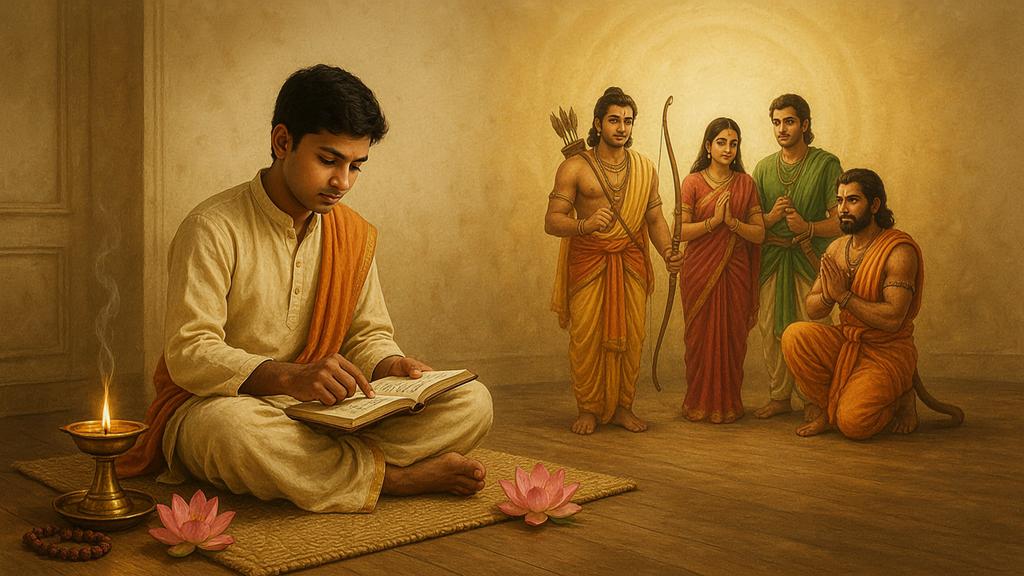
Sanskrit pronunciation can take time, especially for English speakers.
Listen Before Memorizing
Audio helps you hear vowel length, consonants, rhythm, and pauses.
Pay Attention to Long and Short Vowels
Sanskrit distinguishes vowel lengths, so avoid treating every vowel as the same.
Practice Retroflex Sounds
Sounds represented by letters such as ṭ, ṭh, ḍ, and ḍh require careful tongue placement.
Do Not Depend Entirely on English Spelling
English transliteration is useful, but it cannot perfectly represent every Sanskrit sound for every learner.
Practice One Line at a Time
Repeat each line several times before moving forward.
Avoid Excessive Speed
Fast chanting can make it harder for beginners to maintain clear pronunciation.
Traditional Chanting Rules vs. Practical Beginner Guidelines
Different Hindu families, teachers, temples, and traditions may follow different practices.
| Traditional Practice | Practical Beginner Approach |
| Bathe before prayer | Maintain personal cleanliness |
| Use a dedicated shrine | A clean, quiet space is fine |
| Follow a particular time | Choose a consistent time |
| Memorize the text | Use the book while learning |
| Observe family tradition | Respect established customs |
| Learn from a teacher | Seek guidance when needed |
| Follow specific rituals | Learn advanced rules from a qualified teacher |
A general internet article should not replace instructions from your guru, family tradition, or spiritual teacher.
Shri Ram Raksha Stotra Checklist for Beginners

Use this simple checklist before starting:
- Find a clean and quiet place.
- Keep a reliable Sanskrit text nearby.
- Listen to a trusted recitation.
- Practice difficult sounds slowly.
- Learn the basic meaning.
- Choose a regular time.
- Sit comfortably.
- Avoid rushing.
- Focus on the words.
- Respect your family or teacher’s tradition.
- End with quiet reflection.
Common Mistakes When Chanting Shri Ram Raksha Stotra
Copying Text From an Unverified Website
Online Sanskrit texts may contain spelling or formatting errors.
Better: Use a reliable published edition or trusted religious source.
Chanting Too Quickly
Beginners sometimes try to match the speed of experienced reciters.
Better: Begin slowly and clearly.
Ignoring the Meaning
Understanding the words can make devotional practice more meaningful.
Better: Study a simple translation.
Expecting Instant Results
Traditional spiritual claims should not be treated as guaranteed outcomes.
Better: Focus on devotion, discipline, reflection, and values.
Becoming Afraid of Small Mistakes
New learners naturally make pronunciation mistakes.
Better: Correct them patiently.
Comparing Yourself With Experienced Devotees
Someone who has practiced for years will naturally have greater fluency.
Better: Measure your progress against your own previous practice.
Treating One Tradition as Universal
Hindu practices can differ across families and lineages.
Better: Respect legitimate differences.
Expert Tips for a Meaningful Practice
Learn Meaning and Sanskrit Together
Understanding the prayer can make memorization easier and more meaningful.
Use Devanagari and Transliteration
Beginners who are not familiar with Devanagari may find transliteration helpful during the learning stage.
Practice Short Sessions
A focused short session can be easier to maintain than a long routine.
Record Your Recitation
Listening to your own pronunciation can help you identify areas that need practice.
Learn From a Qualified Teacher
If precise Sanskrit pronunciation matters to you, direct instruction can be valuable.
Keep the Routine Flexible
Work, school, travel, and family responsibilities can affect your schedule.
Focus on Sincerity
Devotional practice should support faith and reflection rather than unnecessary anxiety.
Shri Ram Raksha Stotra for Devotees in the USA
The Shri Ram Raksha Stotra can easily become part of a modern Hindu household in the United States.
Devotees may recite it:
- At home
- During family prayer
- At Hindu temples
- During festivals
- During personal meditation
- During spiritual retreats
- In the morning
- In the evening
- While visiting pilgrimage destinations
Creating a Simple Home Prayer Space
You do not need an elaborate shrine.
A simple setup may include:
- A picture or murti of Lord Rama
- A prayer book
- A clean mat
- Flowers
- Prayer beads
- A diya used safely
The goal is to create a space that supports focus and devotion.
Shri Ram Raksha Stotra and Spiritual Travel
For readers interested in combining pilgrimage with devotional practice, several destinations have strong connections with Rama traditions.
Ayodhya
Ayodhya is traditionally associated with Lord Rama and is one of the most important pilgrimage destinations for Rama devotees.
Chitrakoot
Chitrakoot is deeply connected with Ramayana traditions and is known for temples and spiritual sites.
Nashik and Panchavati
Panchavati in Nashik is associated with important Ramayana traditions.
Rameswaram
Rameswaram is an important Hindu pilgrimage destination with strong connections to Ramayana traditions.
A pilgrimage can deepen cultural and spiritual learning, but traveling to a sacred location is not required for personal prayer.
Shri Ram Raksha Stotra vs. Other Rama Devotional Practices
| Practice | Main Focus | Beginner-Friendly? |
| Shri Ram Raksha Stotra | Protection and devotion | Moderate |
| Rama Nama Japa | Repetition of Rama’s name | Very easy |
| Ramayana Reading | Story, values, devotion | Moderate |
| Ramcharitmanas | Rama bhakti and sacred narrative | Moderate to advanced |
| Rama Bhajans | Devotional singing | Easy |
These practices do not necessarily compete with one another. Many devotees use several forms of Rama worship according to their needs and traditions.
Pros and Considerations of Regular Recitation
| Potential Benefits | Considerations |
| Encourages devotional discipline | Sanskrit may take time to learn |
| Supports focused prayer | Pronunciation requires practice |
| Helps preserve cultural traditions | The full prayer may feel long initially |
| Can become a family activity | Different traditions may have different rules |
| Encourages reflection on Rama’s qualities | Traditional claims should remain clearly identified as beliefs |
| Creates a regular spiritual routine | Beginners should avoid unnecessary pressure |
FAQs
What is Shri Ram Raksha Stotra?
Shri Ram Raksha Stotra is a traditional Sanskrit devotional hymn dedicated to Lord Rama and centered strongly on the theme of divine protection.
Who wrote Shri Ram Raksha Stotra?
The traditional opening identifies Budha Kaushika Rishi as the rishi associated with the stotra.
What does Shri Ram Raksha Stotra mean?
It broadly means a devotional hymn seeking the protective grace of Lord Rama.
What language is Shri Ram Raksha Stotra written in?
The traditional prayer is written in Sanskrit, commonly presented in Devanagari script.
Can beginners chant Shri Ram Raksha Stotra?
Yes. Beginners can learn it gradually with a reliable text, audio guidance, pronunciation practice, and patience.
What are the traditional benefits of Shri Ram Raksha Stotra?
Traditional devotees associate the prayer with devotion, protection, courage, concentration, discipline, peace, and remembrance of Lord Rama.
What is the best time to chant Shri Ram Raksha Stotra?
Many devotees prefer morning or evening. A consistent, quiet time that fits your lifestyle can also work well.
Can children learn Shri Ram Raksha Stotra?
Yes. Children can learn it gradually with age-appropriate guidance and simple explanations.
Can I chant Shri Ram Raksha Stotra while traveling?
Yes. Devotees who include the prayer in their routine can use a printed or digital text while traveling.
Do I need to know Sanskrit before chanting?
No. Beginners can start by listening to a reliable recitation and learning the pronunciation step by step.
Conclusion
The Shri Ram Raksha Stotra is a traditional Sanskrit prayer that brings together devotion, remembrance of Lord Rama, and the spiritual idea of divine protection. Its many names of Rama encourage devotees to reflect not only on protection but also on courage, dharma, responsibility, loyalty, and inner strength.
If you are a beginner, there is no need to rush. Start with a reliable text, listen to an accurate recitation, practice one section at a time, and learn the meaning alongside the Sanskrit. If your family or spiritual teacher follows specific traditions, give those instructions priority.
For Hindu devotees in the USA, the Shri Ram Raksha Stotra can become a simple and meaningful part of home worship, family prayer, temple practice, or spiritual travel. The goal is not merely to finish the verses quickly, but to approach them with attention, respect, and sincere devotion.
Start small, practice consistently, understand the meaning, and let your connection with Lord Rama grow naturally.
I can also create a complete featured image prompt set for every H2 section in the same style.
